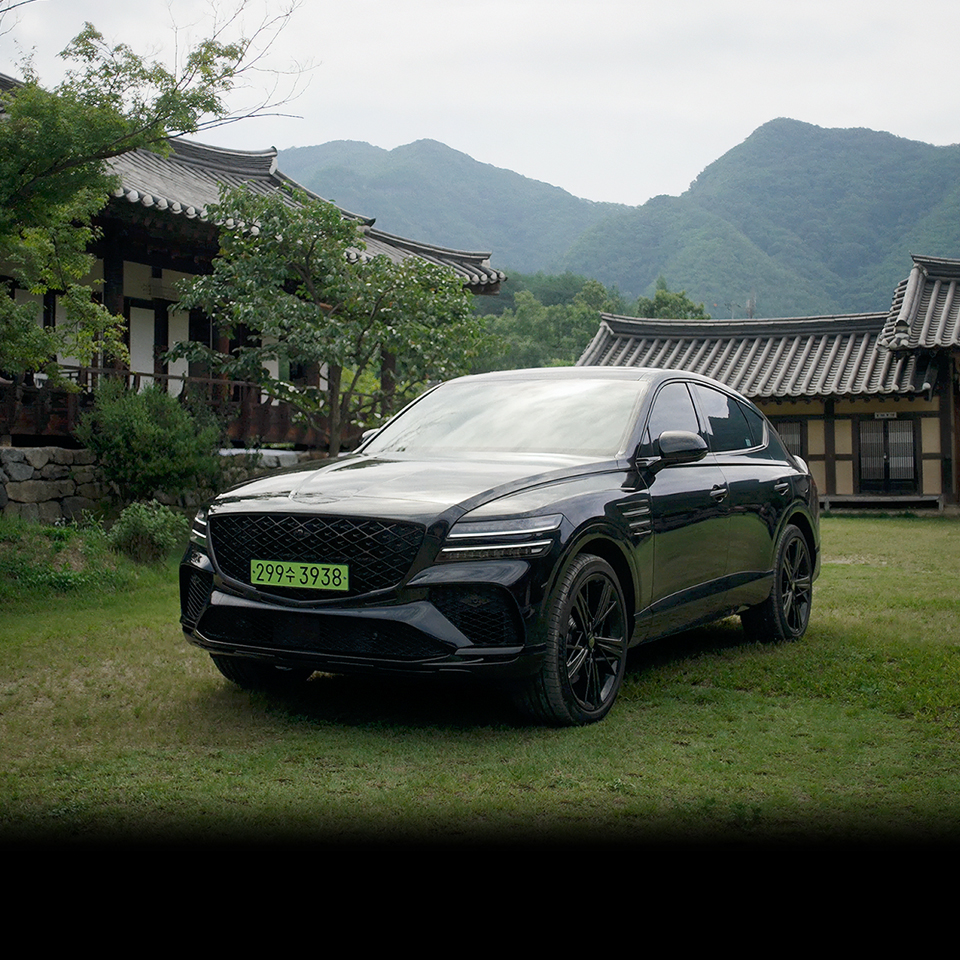
How are good spirits made? Good ingredients and enough time alone don't fully explain it. Even with the same ingredients and the same process, the outcome shifts depending on the maker’s choices: what to wait for, and what not to miss. Ultimately, it is the ability to discern subtle nuances that defines the taste of a single glass.
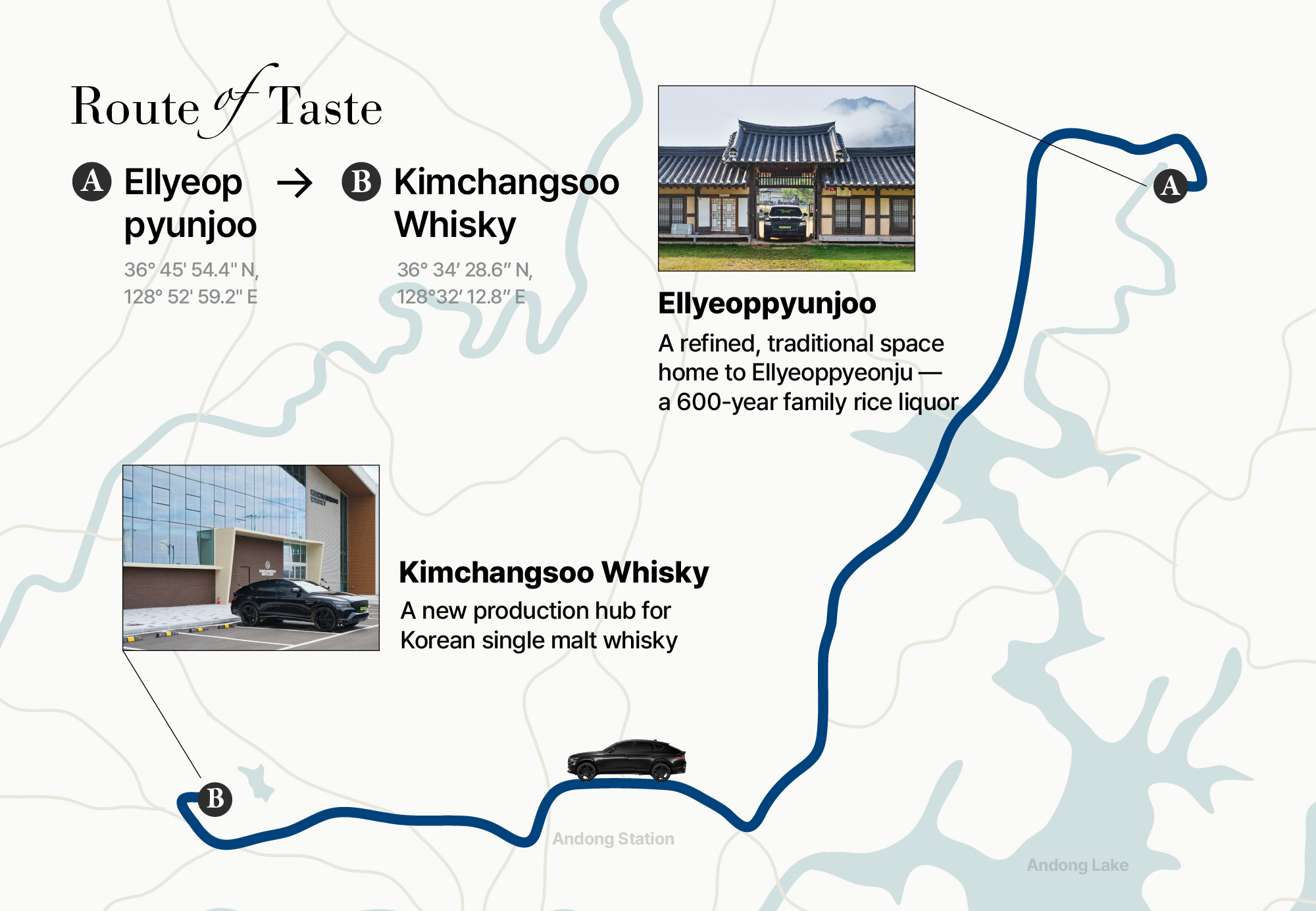
In Andong, two people make spirits in entirely different ways. Wonjeong Lee, jongbu (head matriarch) of Nongam Traditional House, crafts “Ellyeoppyunjoo” (a home-brewed rice-based liquor) while Changsoo Kim, founder of “Kimchangsoo Whisky”, is charting new possibilities for Korean single malt. One finds answers within longstanding traditional methods; the other pursues ways no one else has tried.
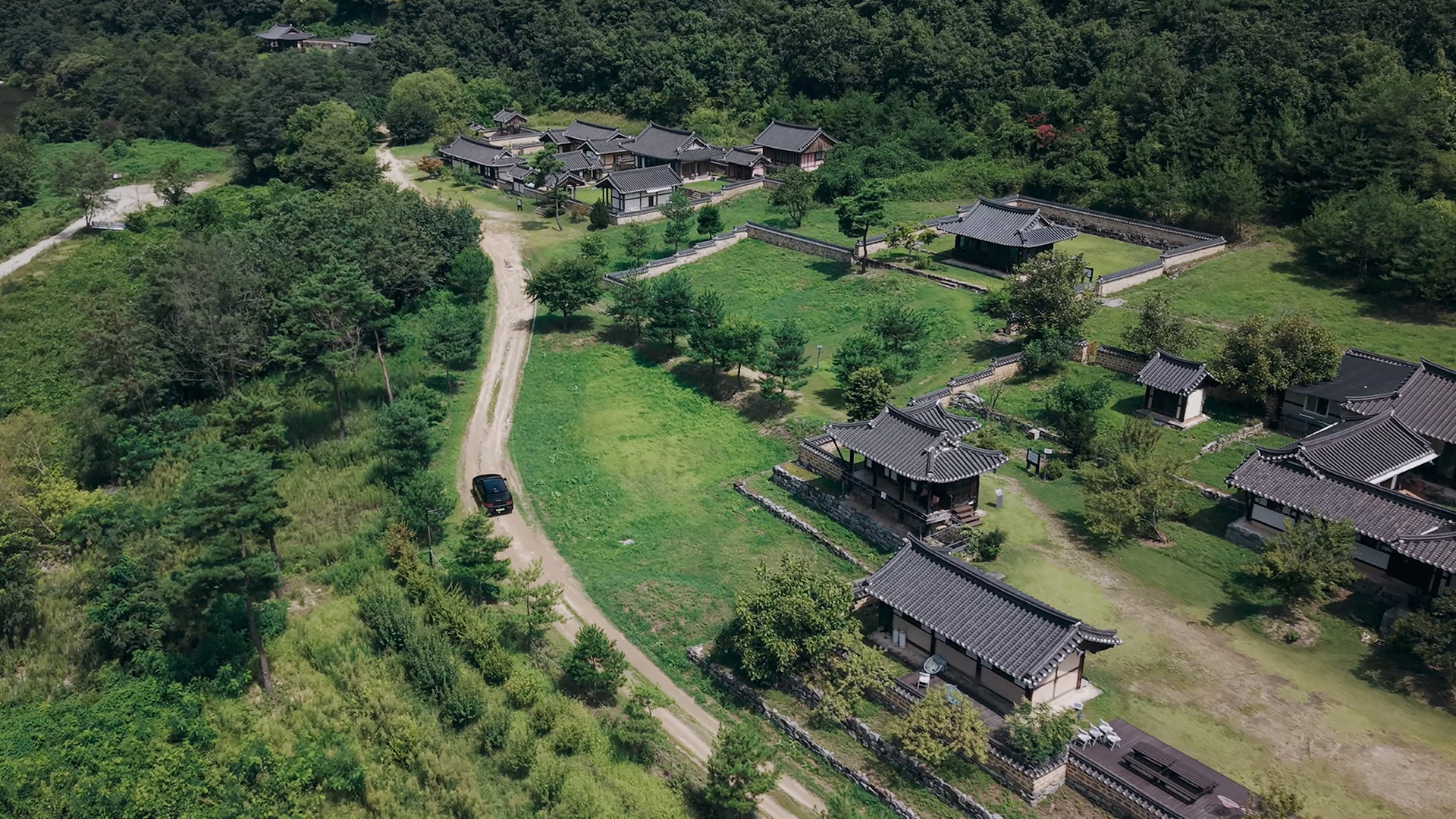
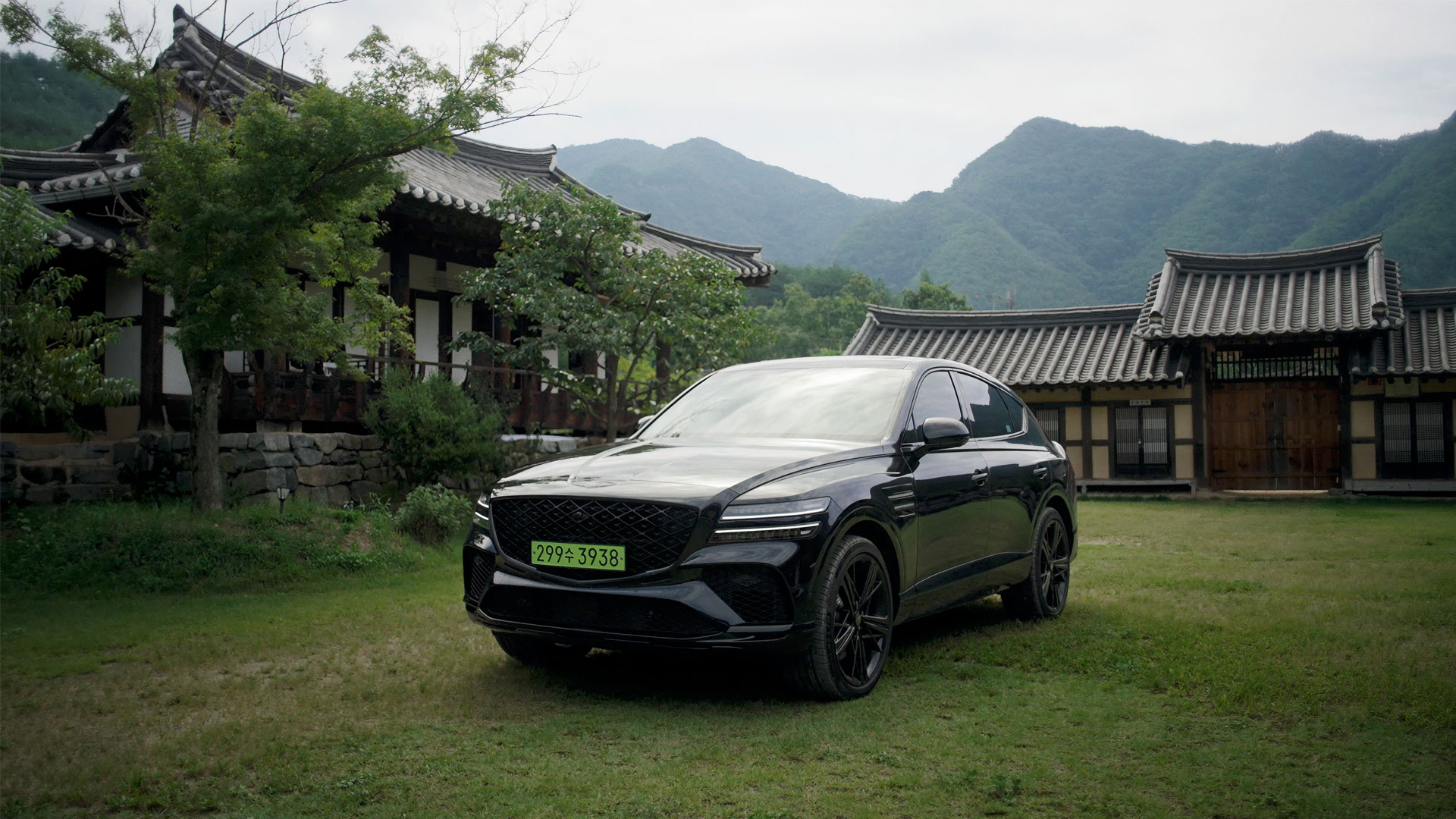
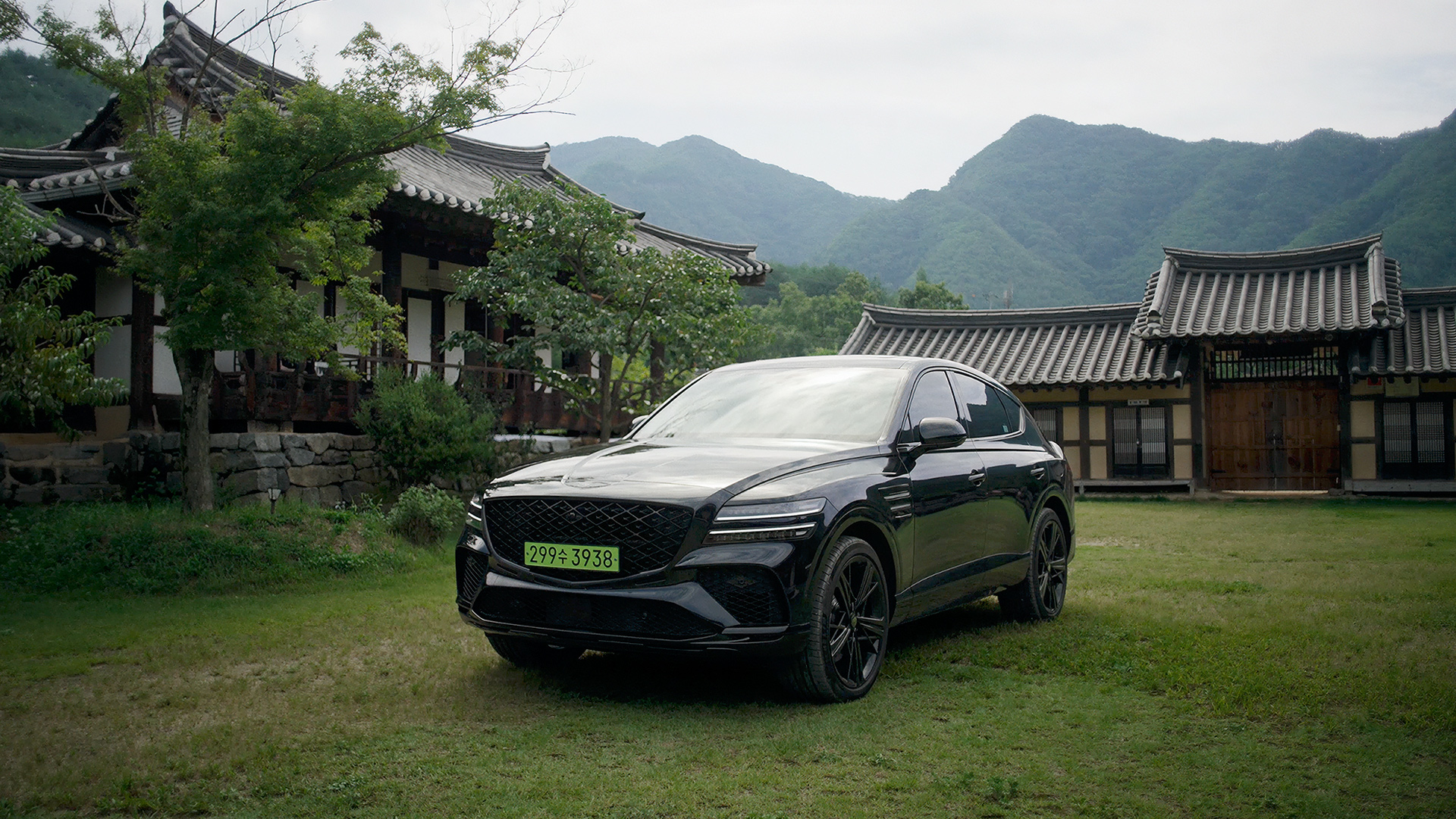
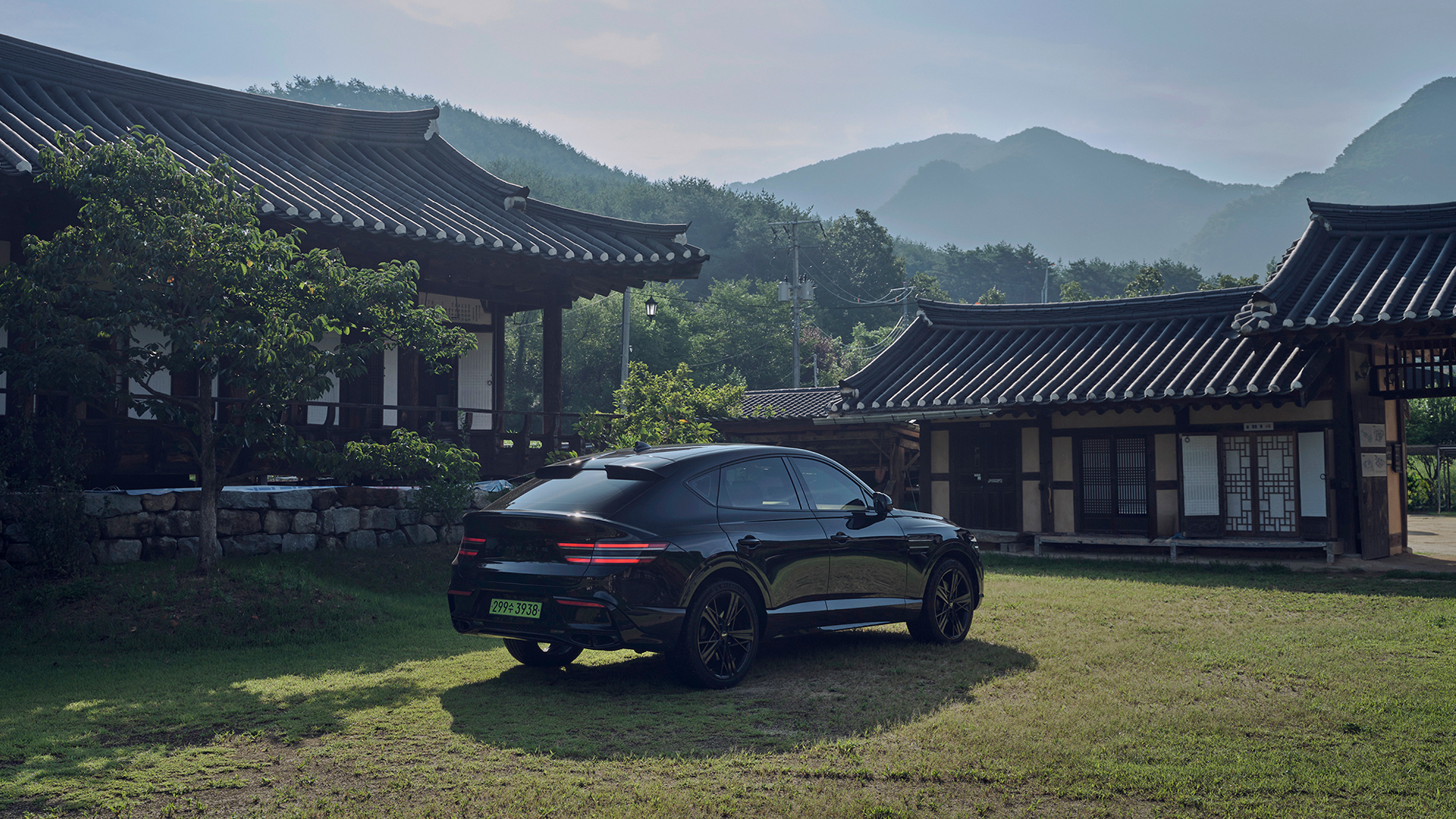
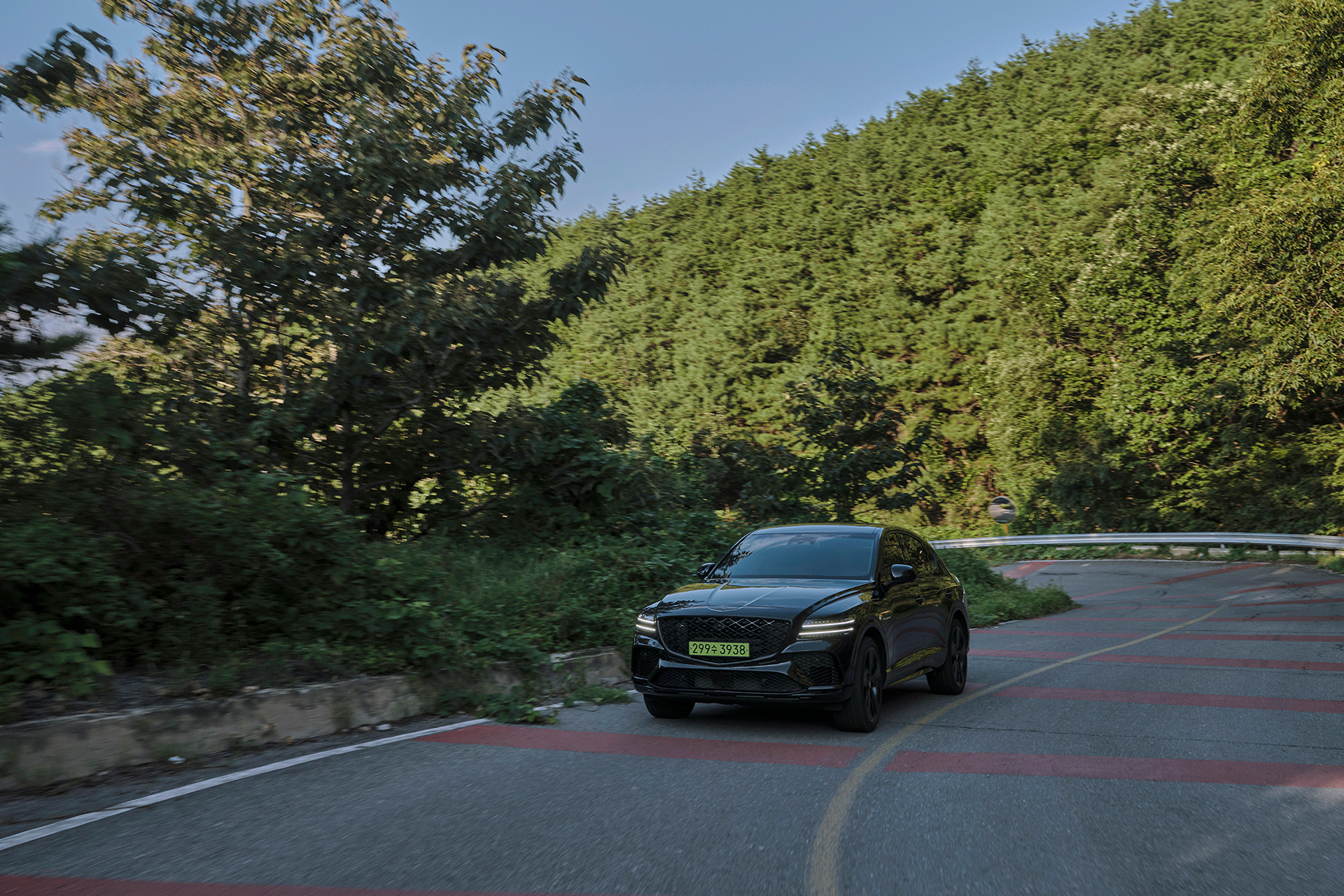
To meet them, we set out for Andong in a Genesis GV80 Coupe. Streams wind between the mountains, and beyond the curving road, an old village with low-slung tiled roofs comes into view. Gliding through this landscape is a GV80 Coupe, defined by its two-line Quad Lamps and sleek roofline. What do they see, and how do they make the right calls? Our first destination is Nongam Traditional House.
“Making spirits is just like raising a baby.”
Rows of earthenware jars line the brewing area at Nongam Traditional House. The scene appears tranquil on the surface, but inside, the yeast is alive and active, driving the fermentation process. This is why Wonjeong Lee compares brewing to raising a child — simply repeating a fixed method is never going to ensure proper fruition. The weather and humidity are never quite the same from one day to the next, and neither is the rice.
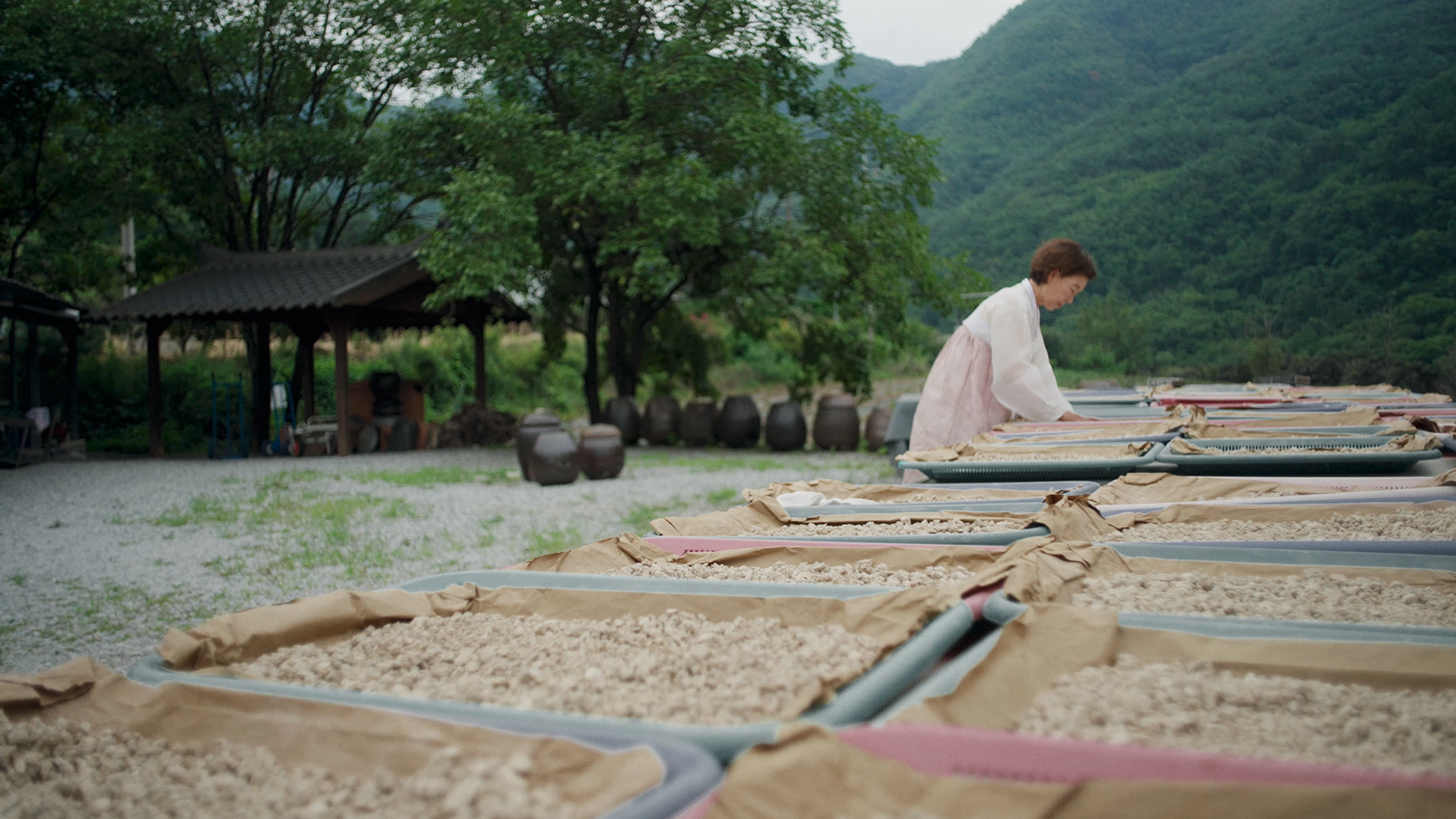
Depending on the condition of the rice, she adjusts the resting time for the godubap (steamed rice). Once fermentation begins, she keeps watch over the temperature of the jars. They are covered by layers of blankets, and each day she decides whether to remove one blanket or two, or leave them fully covered. In the early days, she opened the jars every two or three hours; now, she can gauge the state of fermentation largely from temperature alone. Only when she senses that it has fermented sufficiently does she finally lift the lid.
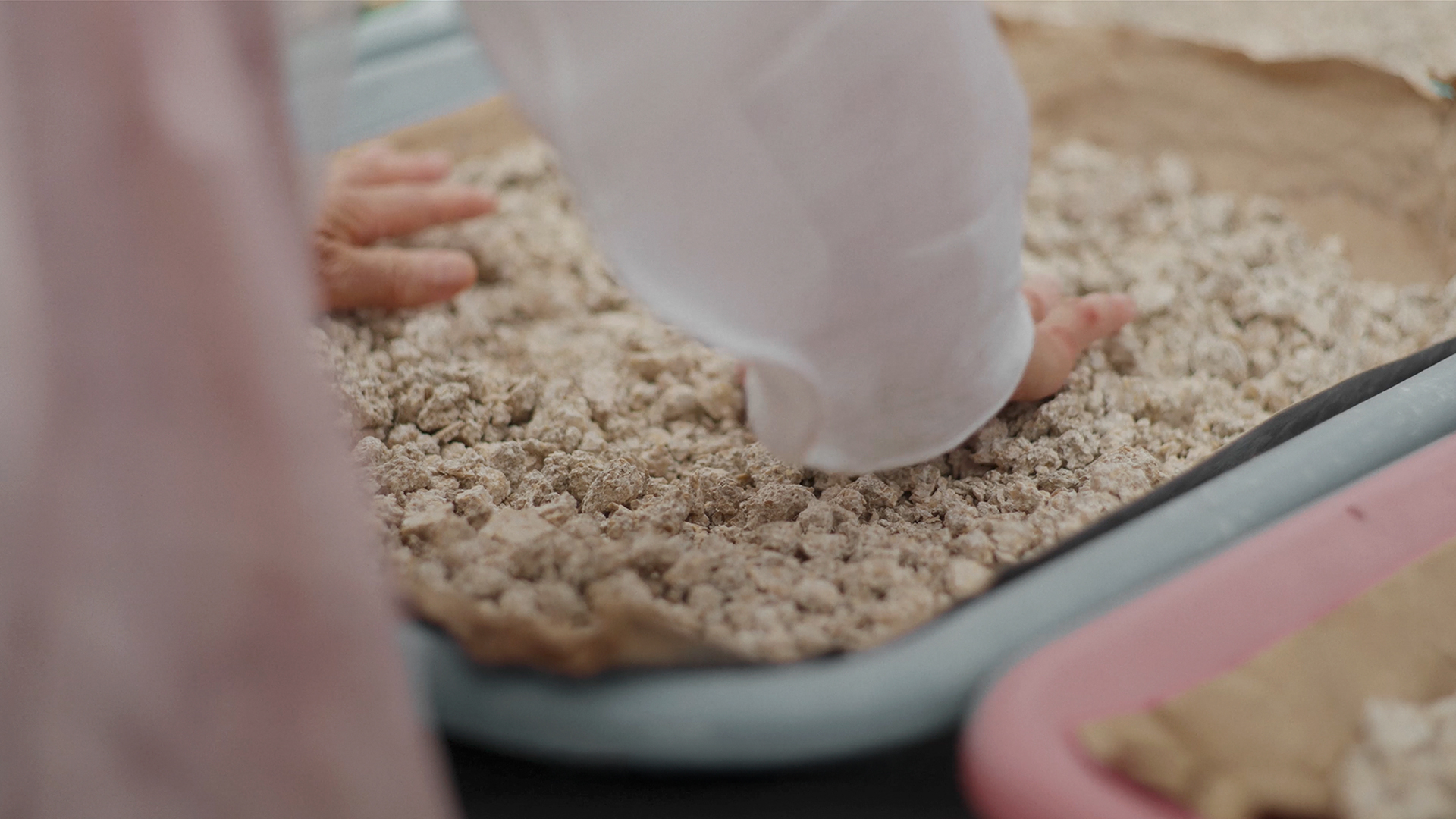
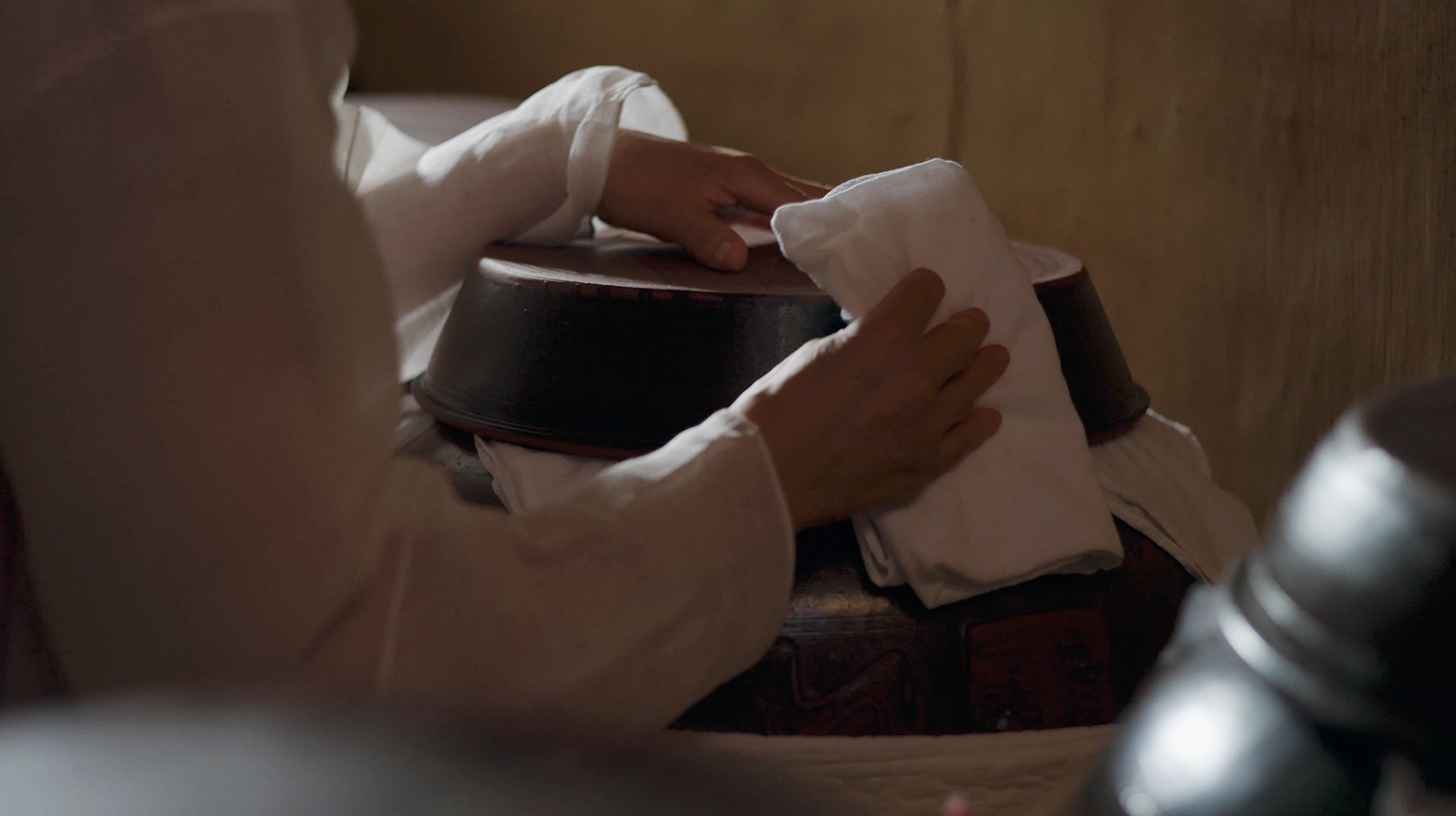
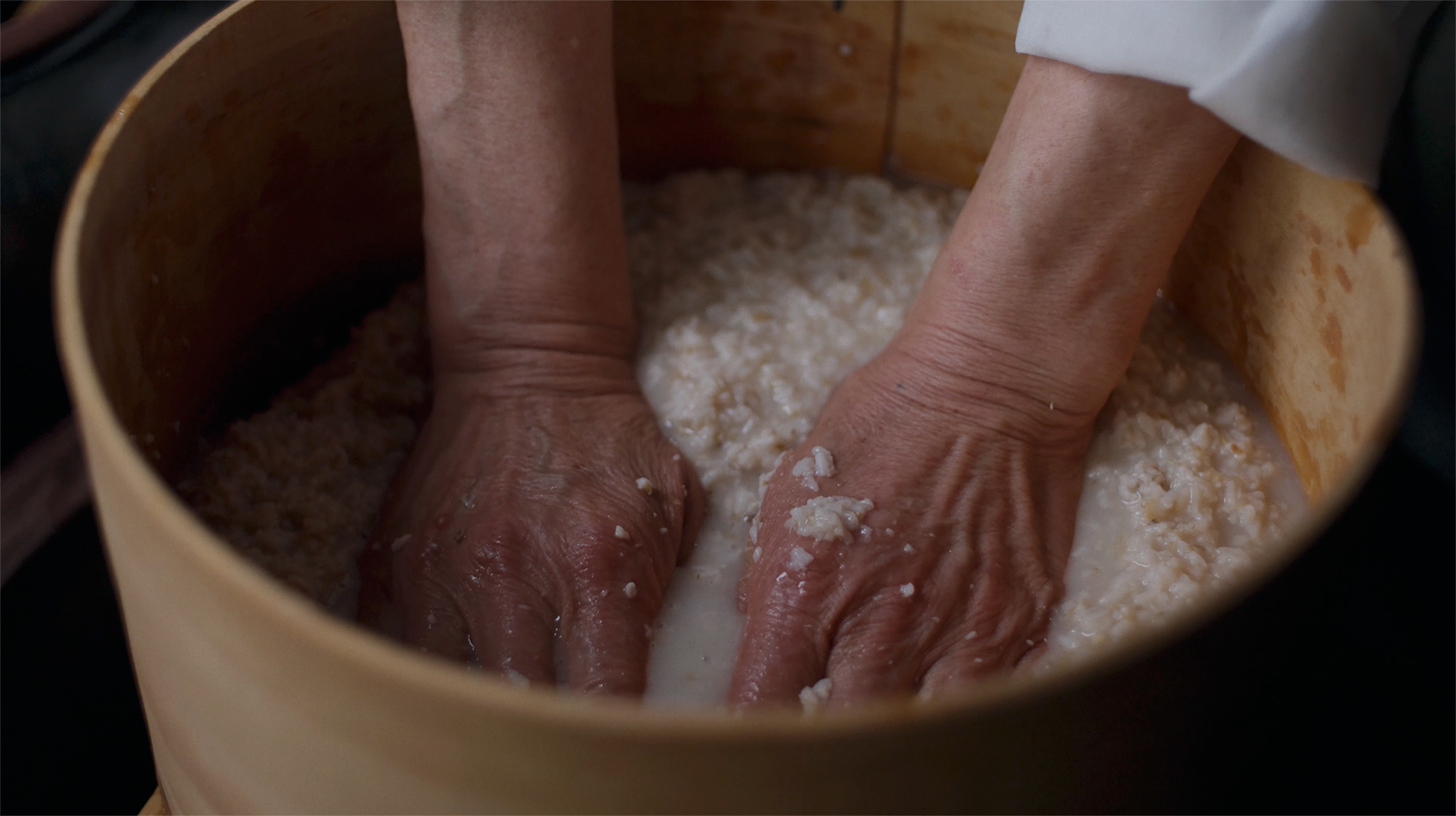
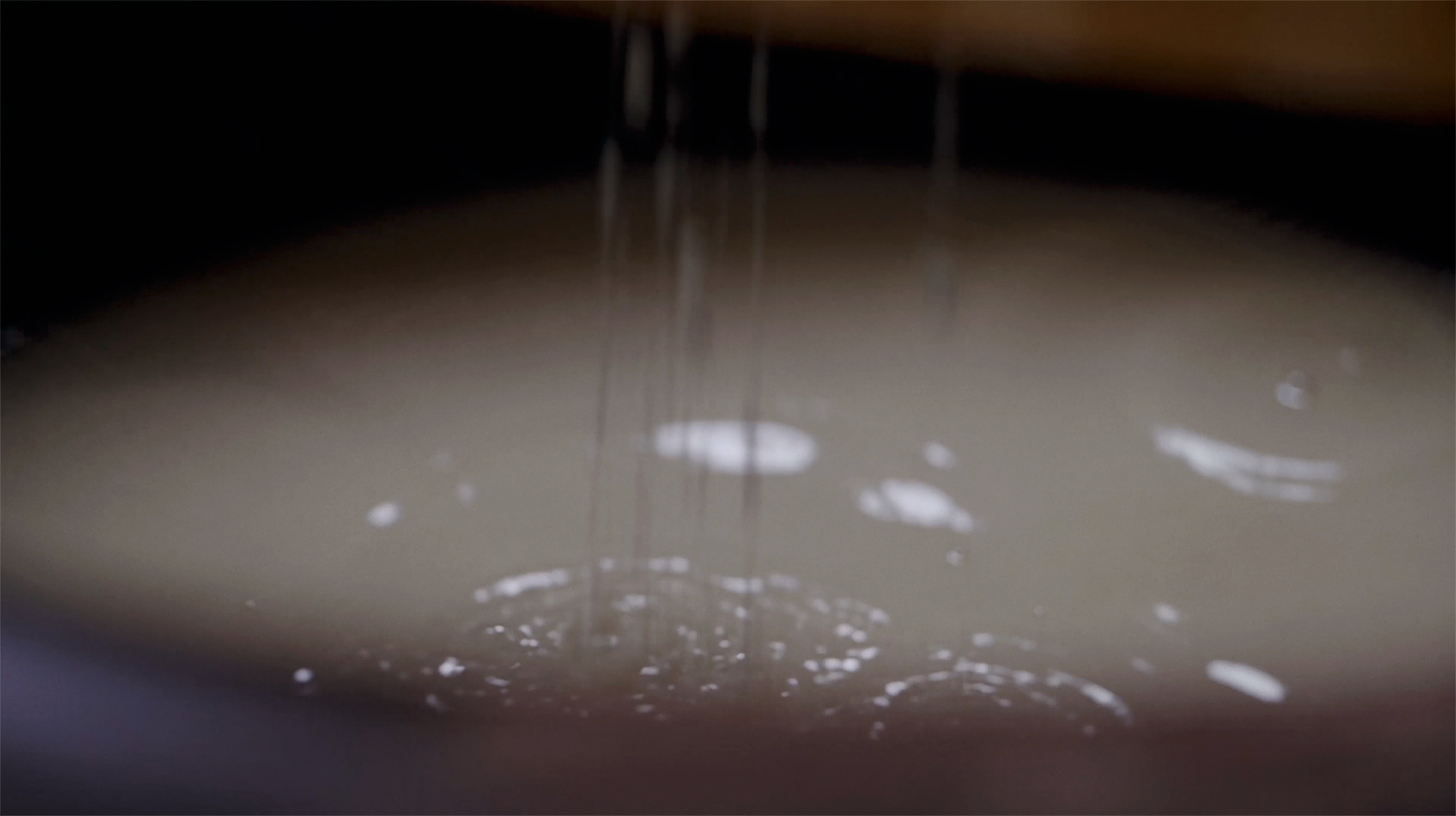
That same instinct is needed even after fermentation ends. If condensation forms inside the jars during storage, she wipes it away before it can drip into the liquor. After about 60 days, she drives in a yongsu (a cylindrical bamboo strainer) to draw off the clear liquor. Around day 70, she begins ladling it out. Even with identical ingredients and methods, no two jars taste exactly alike. So, she tastes each one herself before deciding whether to blend them together or keep each one separate.
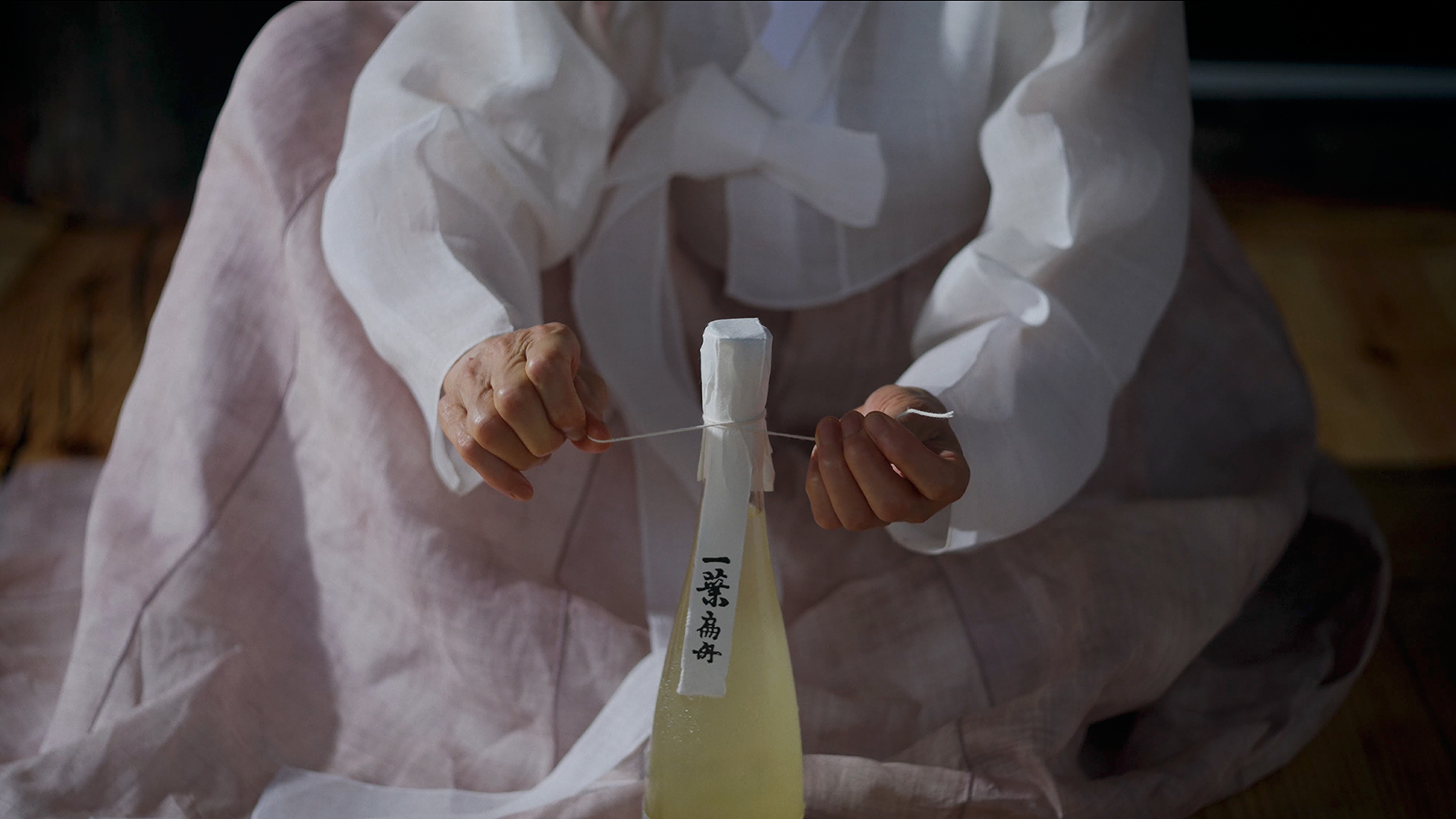
As the final step, she brushes ink onto a woodblock, presses hanji (traditional paper) over it, and makes the rubbing herself. The black-and-white image captures the mountains and water surrounding Nongam Traditional House. Each label made this way is then applied, one by one, to the bottles. Making good spirits, it seems, has less to do with repeating a fixed method than with recognizing the unique changes that occur each time within the same process.
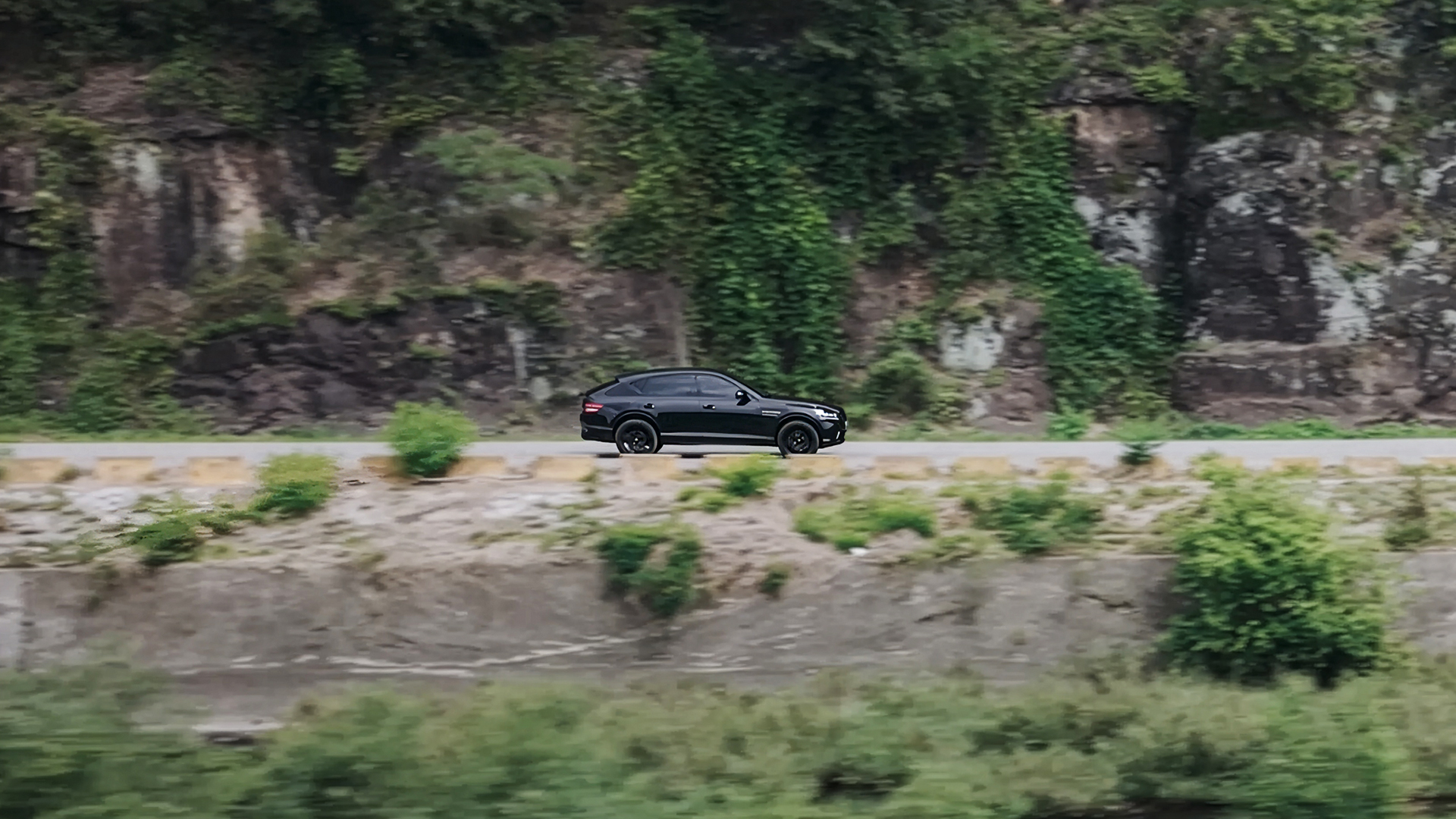
Leaving Nongam Traditional House, we get back into the GV80 Coupe. The tiled roofs fade into the distance as mountains and trees fill the windows. The mood inside the cabin barely shifts even though the tires make a different sound every time the surface of the road changes.
The Active Road Noise Control fitted to the GV80 Coupe analyzes the road noise generated while driving and produces sound waves in opposite phase, reducing the noise that reaches the cabin. What makes this particular quiet interesting isn't simply the noise reduction. It's that once unnecessary sounds fade, everything else comes through a little more clearly.
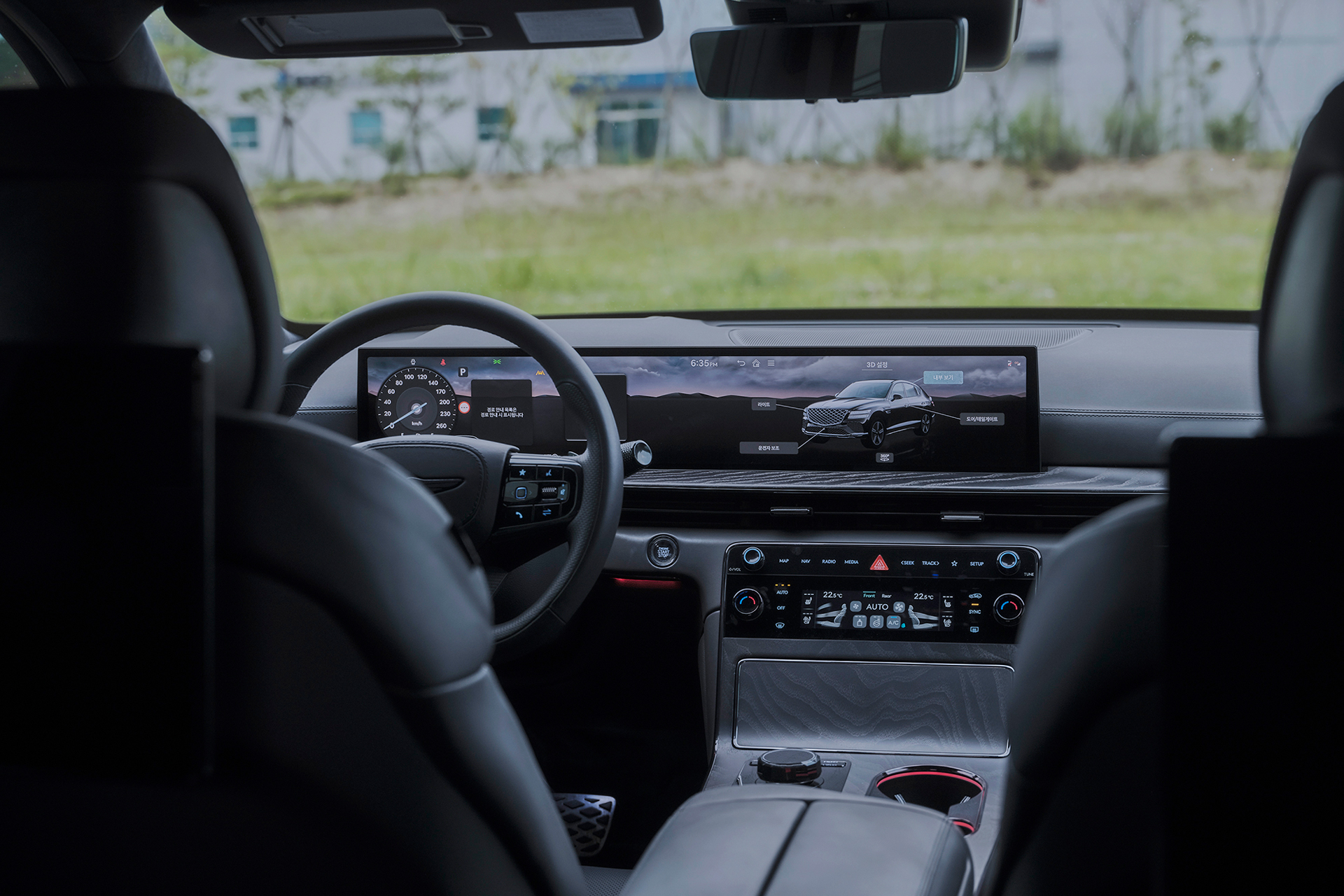
Conversations proceed naturally at the same volume, and our gaze rests on the mountains and trees drifting past the window whenever there’s a pause in the talking. The Nongam Traditional House and its story come back to mind. Ironically, taking something away — rather than adding to it — makes experiences richer.
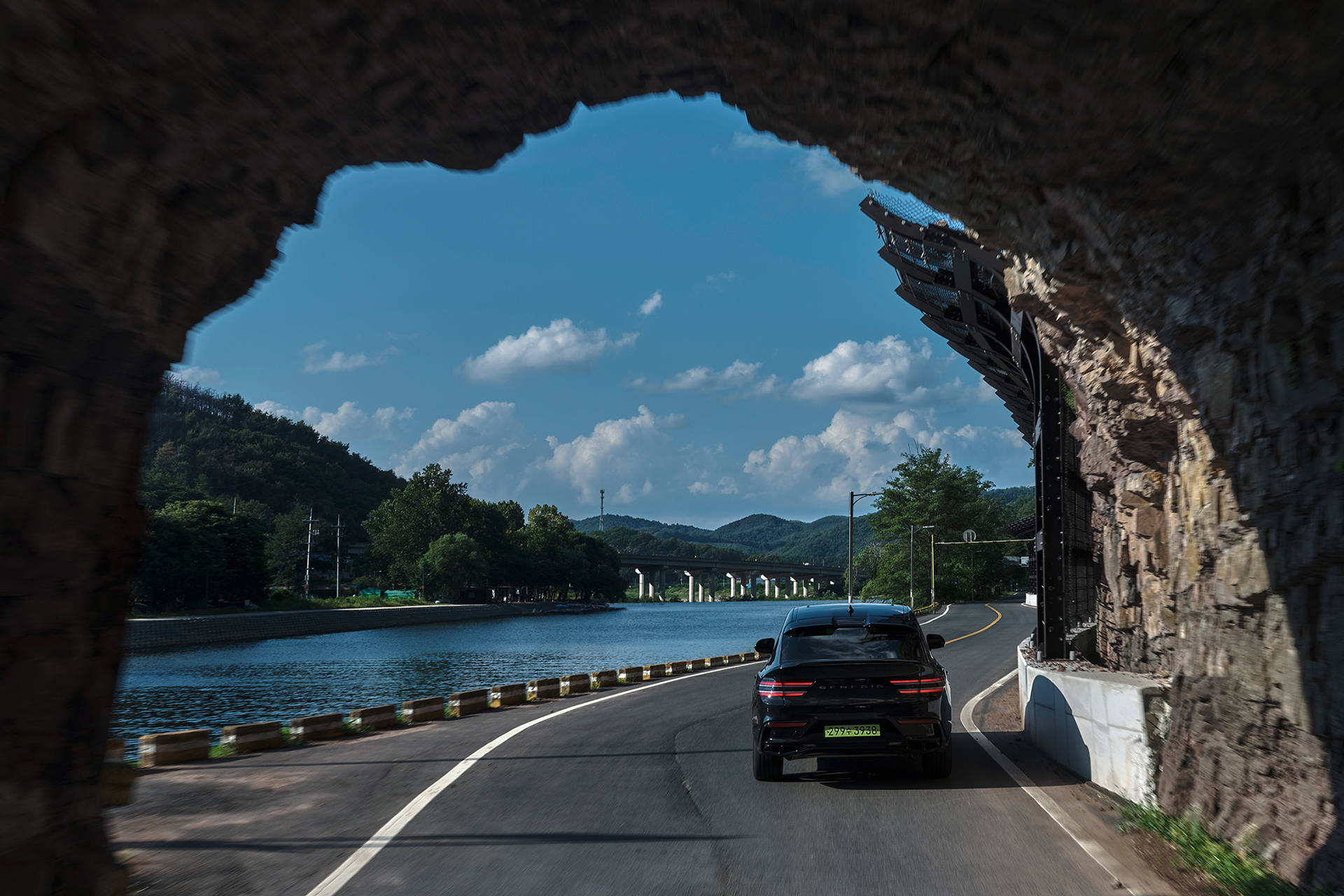
As we emerge from Amsan Tunnel, the scenery changes. At the end of the road that wound between old family estates and nature, a modern building comes into view. This is Kimchangsoo Whisky, our second destination.
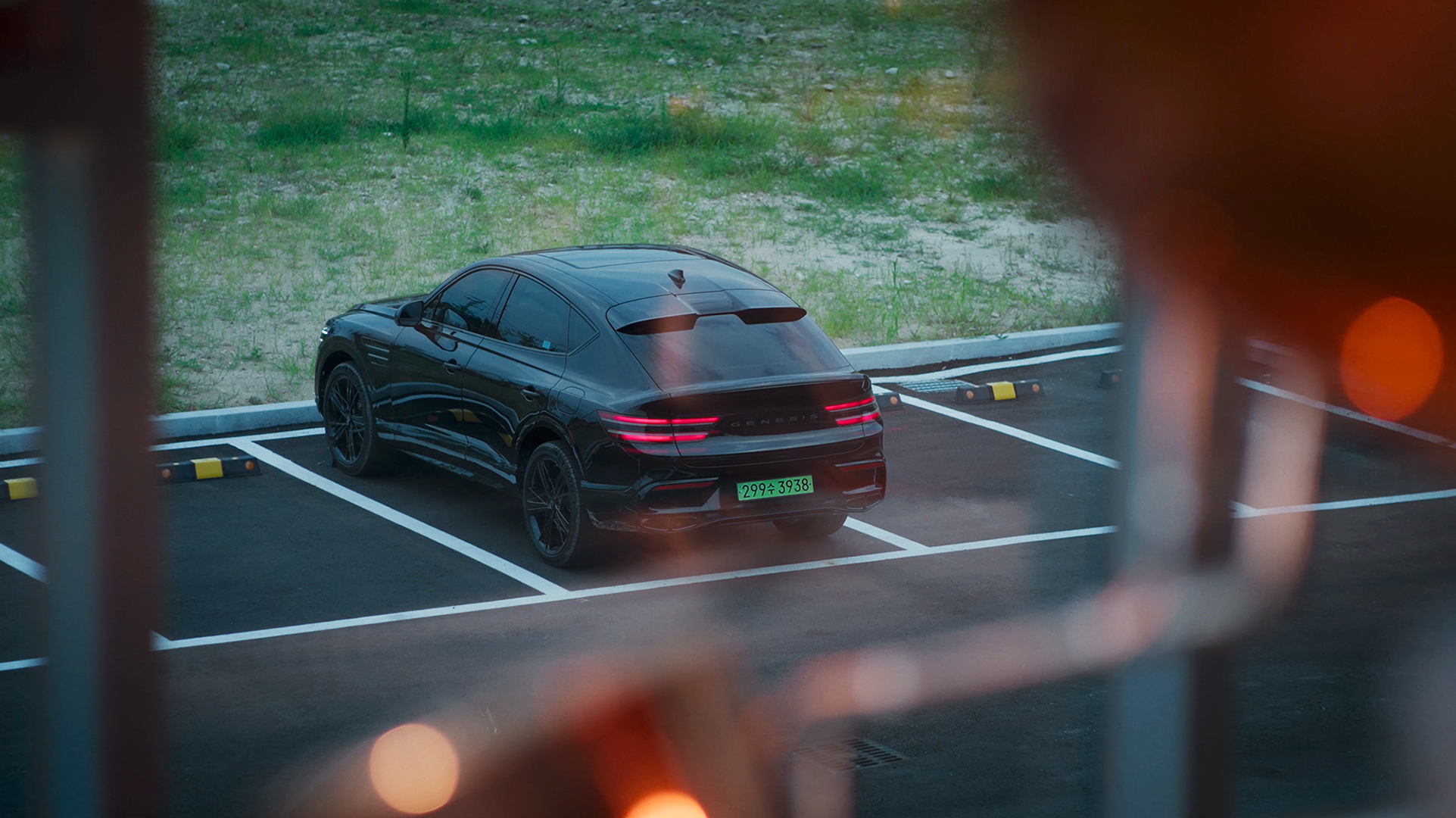
We asked Changsoo Kim for the one quality essential to making whisky.
“Imagination, I think.”
In whisky-making, imagination turns out to be a remarkably practical skill. The whiskies released under Kimchangsoo Whisky take three to five years to mature, which means the outcome of any choice made today won't be known for years. And yet every stage — selecting the barley, fermenting, distilling, aging in oak casks — brings a fresh set of choices. Kim says the number of possible combinations is close to infinite.
There's no way to test every possibility. So, before actually making anything, he imagines the taste first — anticipating which choices lead to which results, ruling out the less promising paths, and narrowing in on the direction he wants. In other words, he thinks through something he can't yet taste.
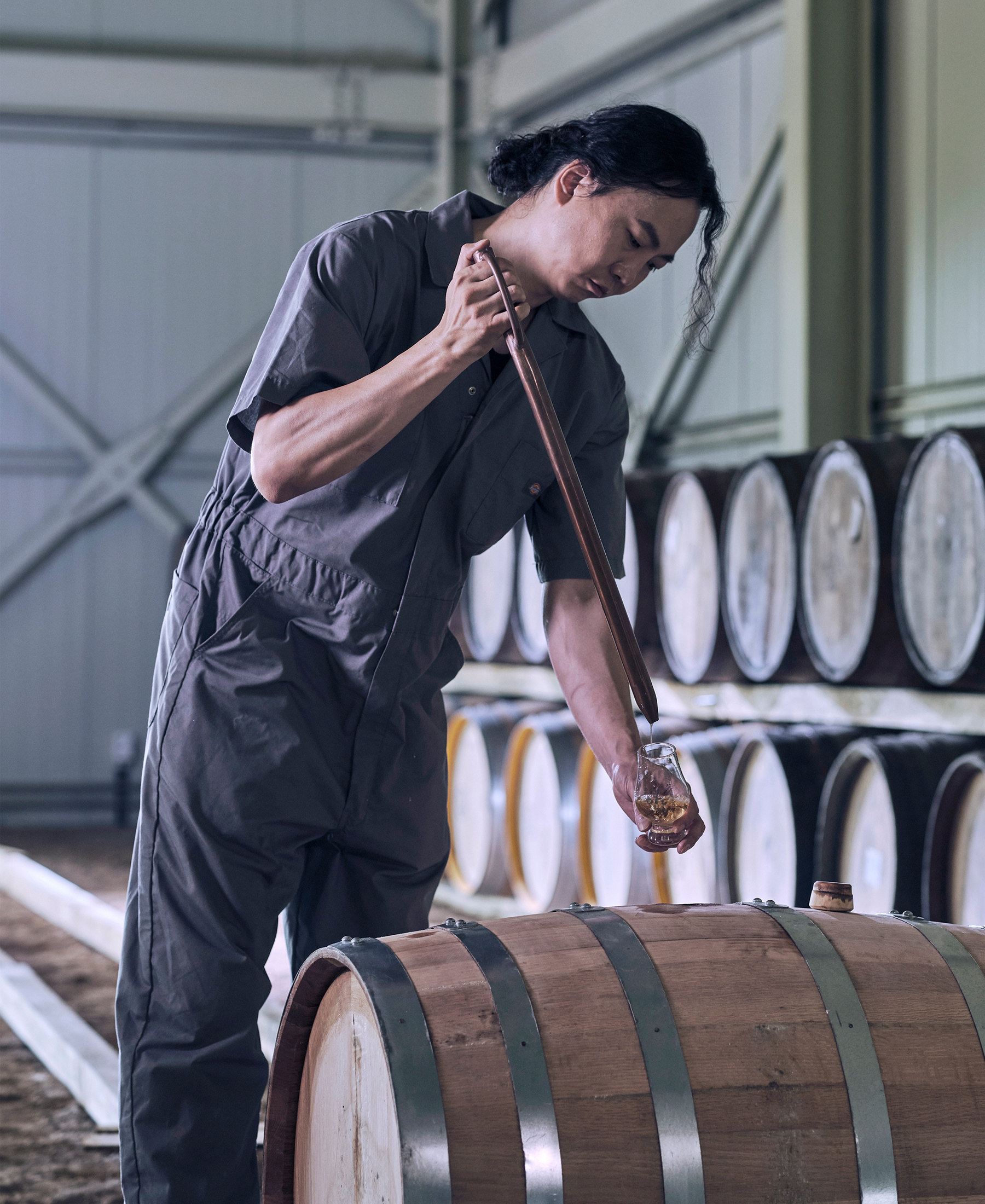
He hadn’t set out to make a distinctly “Korean whisky.” At first, he simply wanted to prove that whisky made in Korea could hold its own against Scotch. Once he'd proven that, the question changed: What actually makes a whisky Korean?
Being made in Korea wasn't enough. He began searching for ways to bring Korea’s climate, ingredients, and long liquor-making traditions into his whisky. The questions led him to Andong, a region with a long history of making soju. He now uses barley grown under contract in Andong, and he's trying to uncover connections between the way whisky and soju are made.
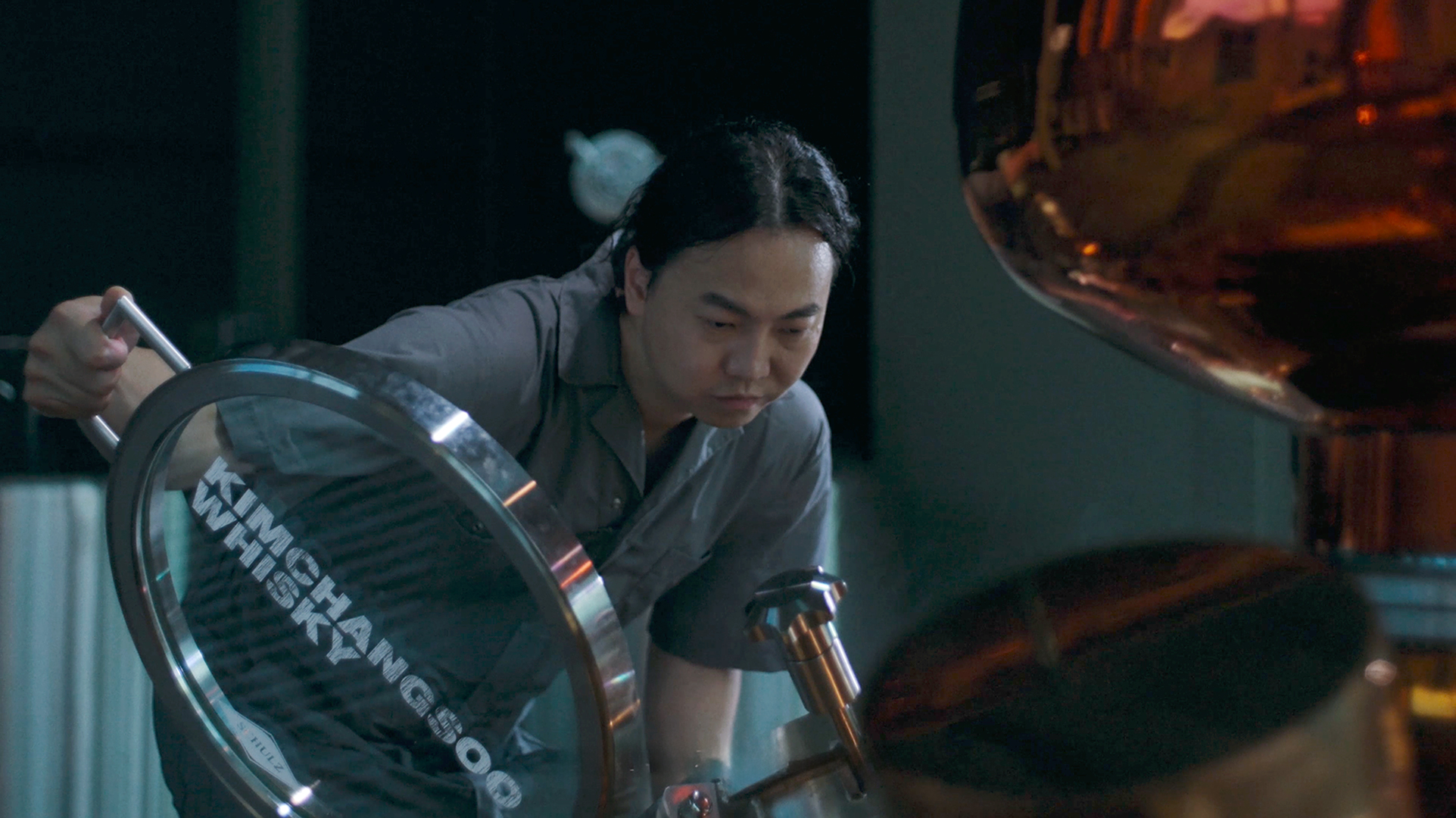
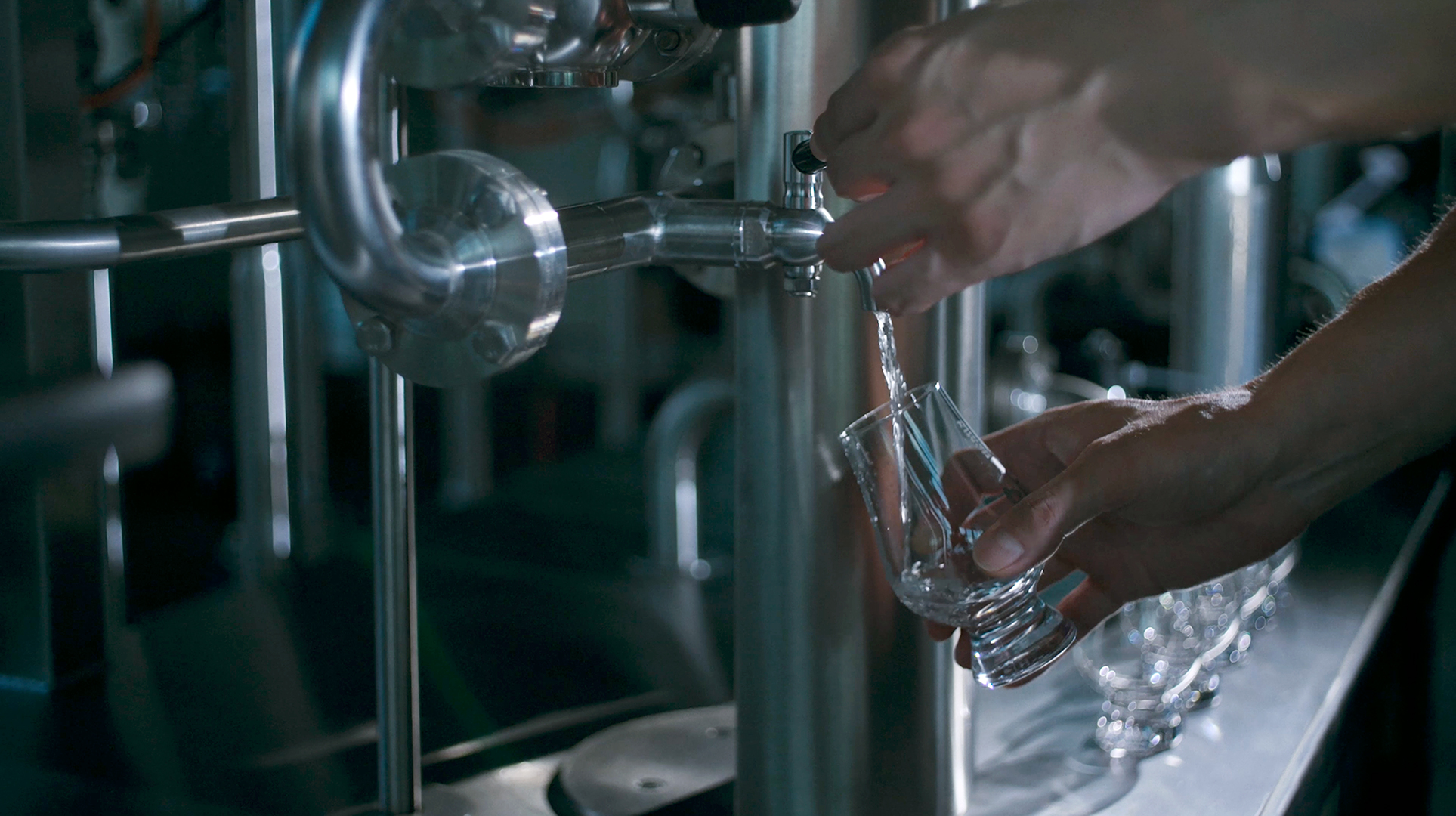
Imagination alone can't make whisky. Once distillation begins, the flavor that existed only in his mind becomes a matter of very concrete choices. Only about 10% of the distillate actually goes into the whisky. Flavor and aroma keep shifting as the run proceeds, and setting aside the portion he wants is a process known as “cutting.”
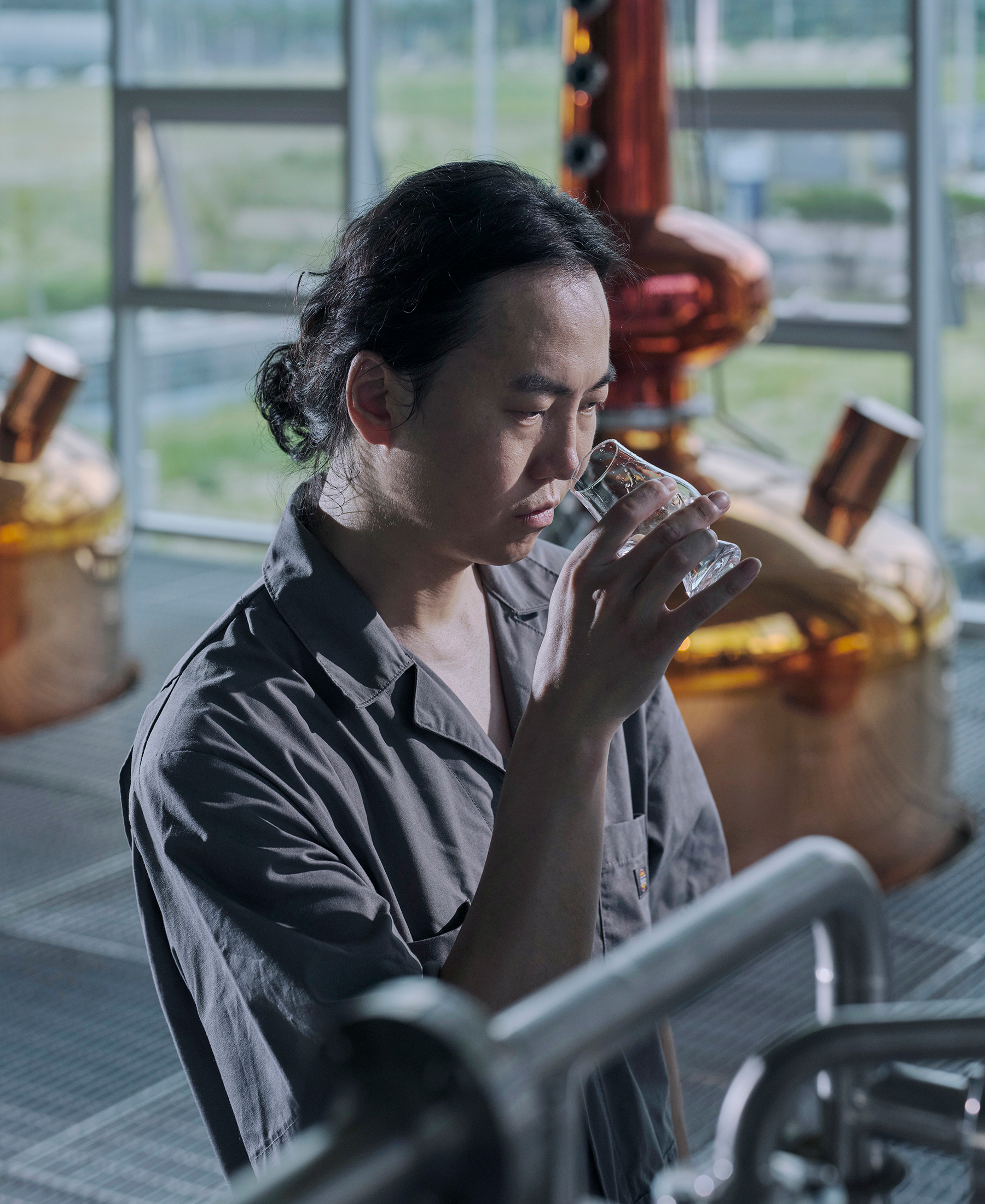
Time and alcohol strength provide a rough estimate of the range, but the final call is always made by tasting. “Once I get close to that stretch, I taste it second by second.”
The man who imagines flavors years in advance is now entirely focused on a single second — because once the moment he wants has passed, there's no going back. To make this possible, he had his equipment specifically built around the taste he had in mind. Equipment at his distillery was made in Germany, with even the shape of the stills and the length of the copper piping chosen to achieve the right level of copper contact.
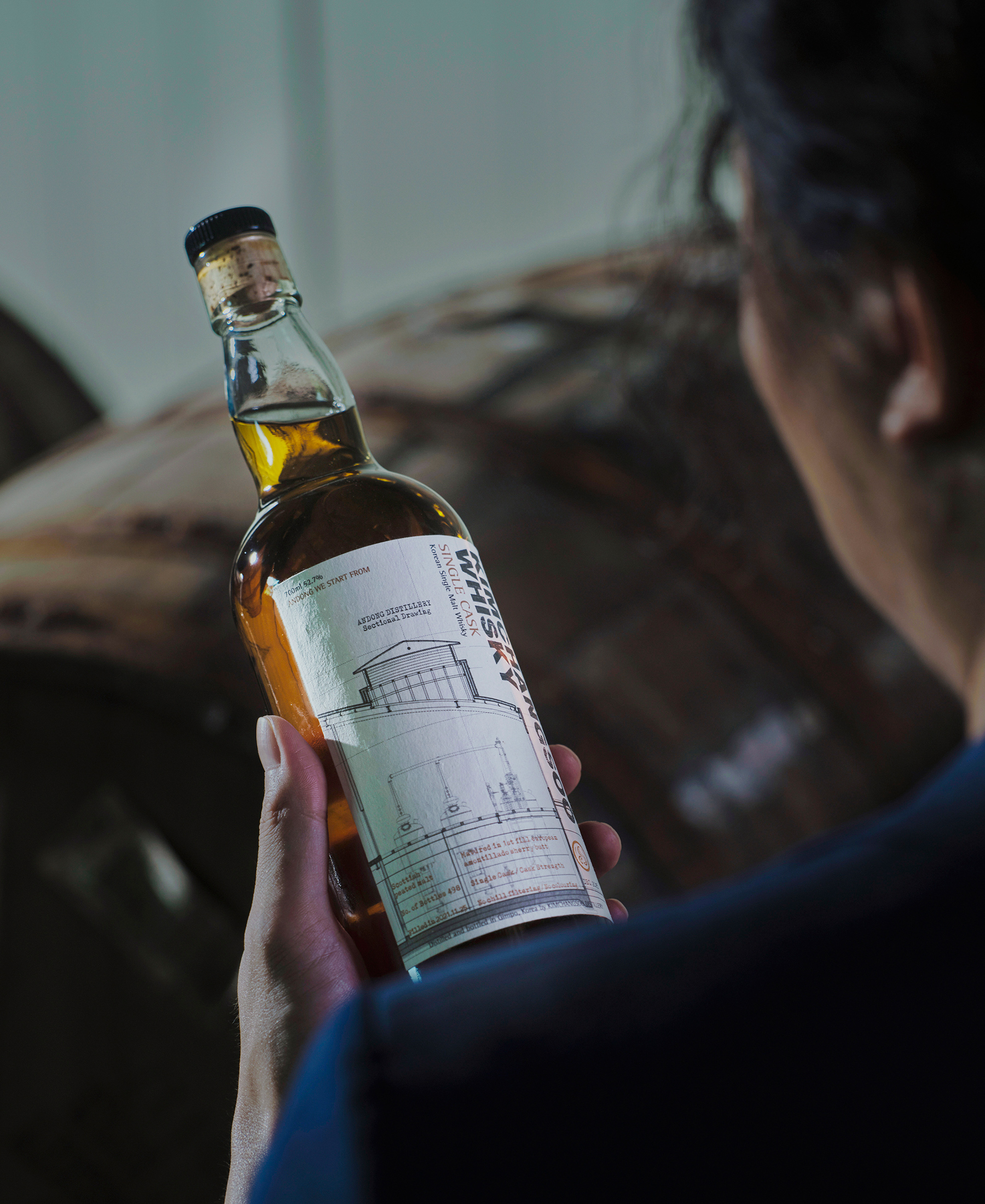
Once the cut is made, the spirit is moved into oak casks — and aging brings yet another set of variables. Even casks of the same size vary in the character of their wood, which means the matured spirit's taste and aroma differ too. What follows is the work of combining the individual personalities of different casks to create the taste he's after. Imagine, taste, select, wait longer. It's why he refuses to miss a one-second difference in his pursuit of a result that won't arrive for three to five years.
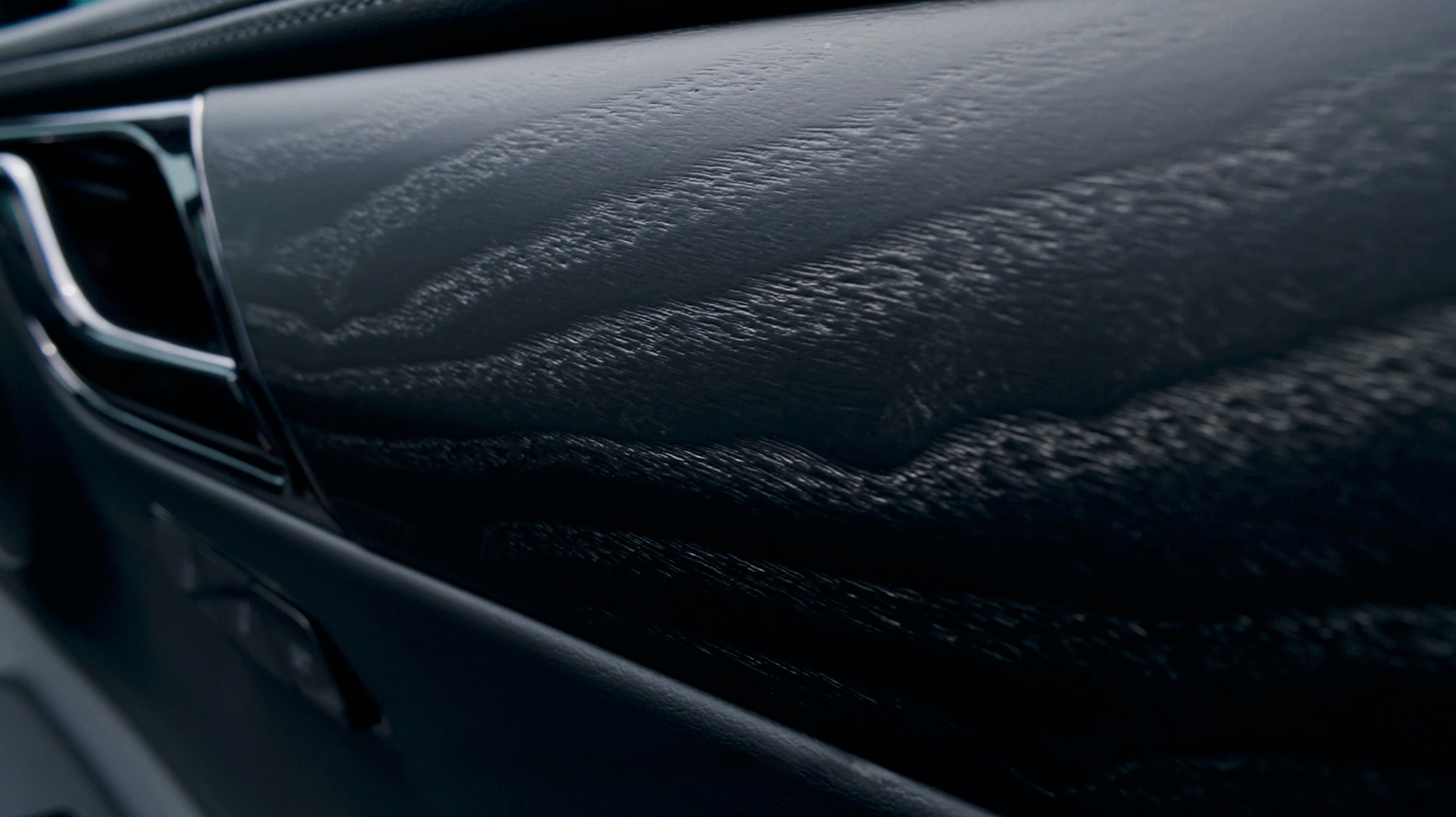
Leaving the distillery, we open the door of the GV80 Coupe. This time, the eye catches the black ash realwood trim running across the cabin — a material that lets the hand feel the natural grain of the timber. Perhaps because we'd just been walking among oak casks, its surface garners a little more attention than before.
Fingertips tracing the wood grain, we set off. The way back feels different from the way there. As the road curves through the mountains, another side of the GV80 Coupe emerges. It had gone unnoticed during the calm of the morning. Through every curve, the electronic limited-slip differential (e-LSD) varies the power sent to the left and right wheels, allowing the car to move naturally with the flow of the road.
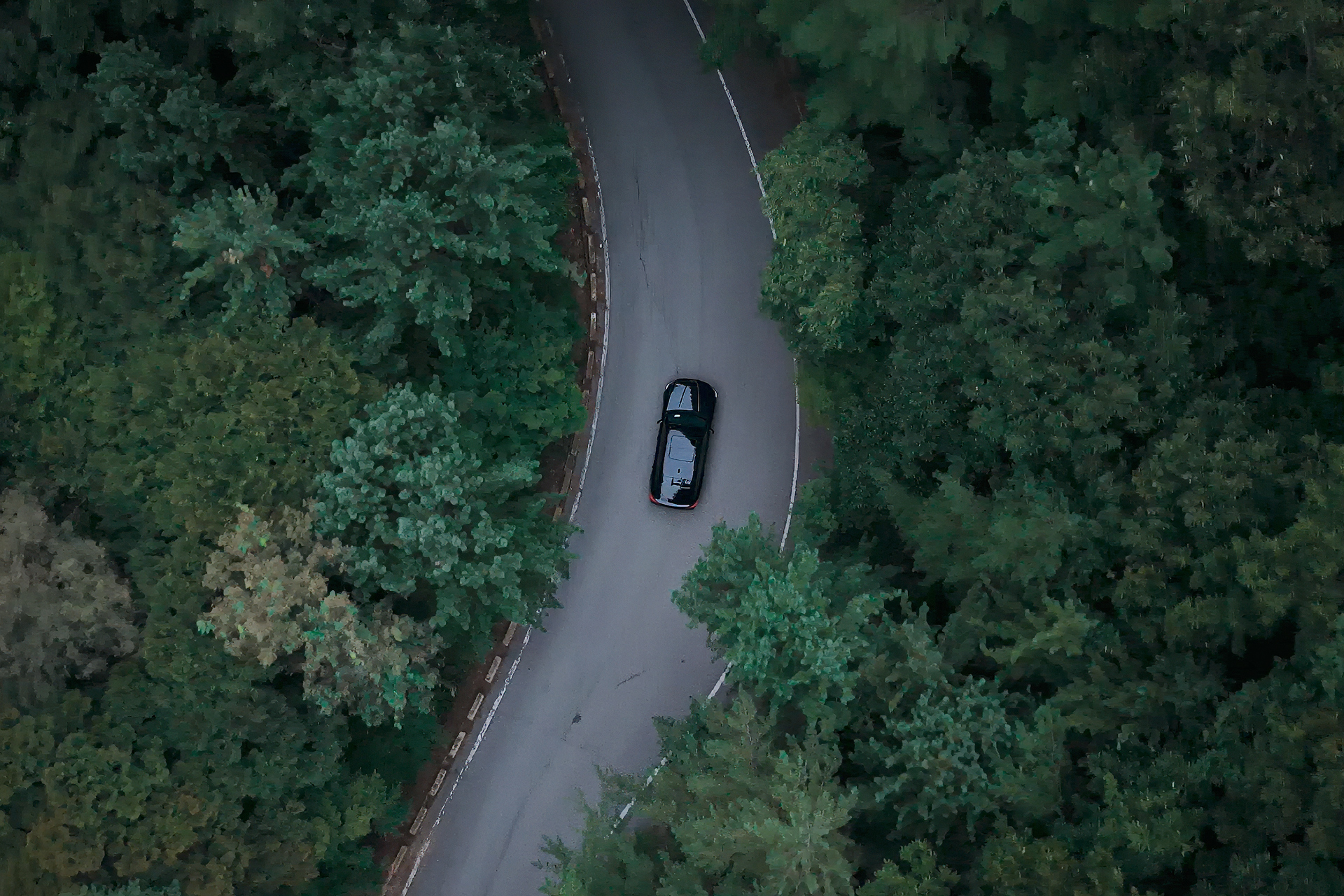
Calmness defined the morning; movement takes the lead on the way back. The same GV80 Coupe reveals a different side of itself depending on the road it meets.
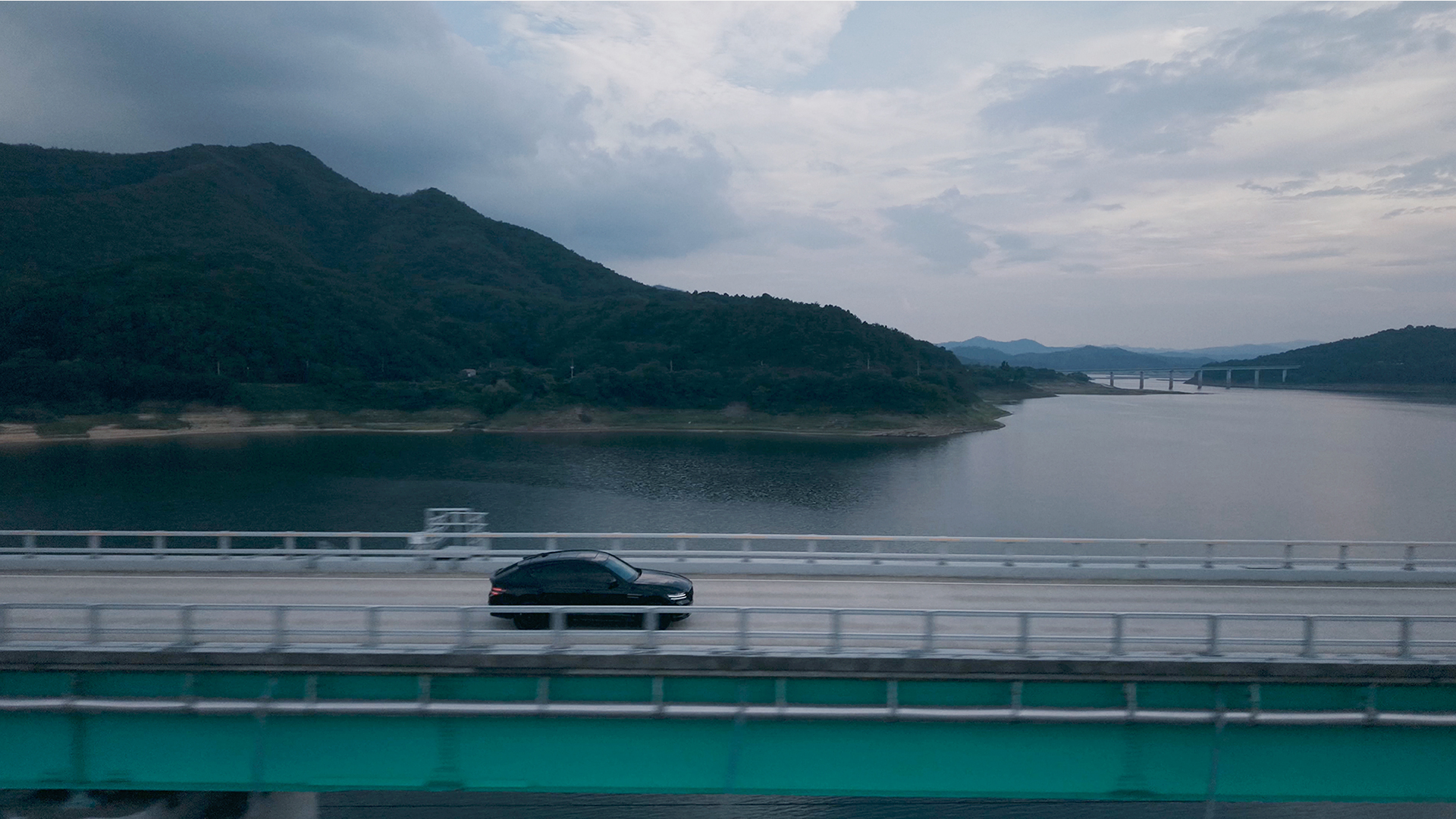
As the sun begins to set over the roads of Andong, the GV80 Coupe's two-line Quad Lamps stand out sharply again. Looking back on the road traveled since morning, different moments stand out even though we are inside the same car. On the way to Nongam Traditional House, it was the scenery beyond the window and the quiet cabin; after leaving Kimchangsoo Whisky, it was the black ash real wood beneath the fingertips and the car’s movement through the winding roads.
The two people we met in Andong were each making spirits in their own way. Wonjeong Lee senses the smallest changes through years of experience, and Changsoo Kim imagines a taste years ahead while never missing a single decisive moment.
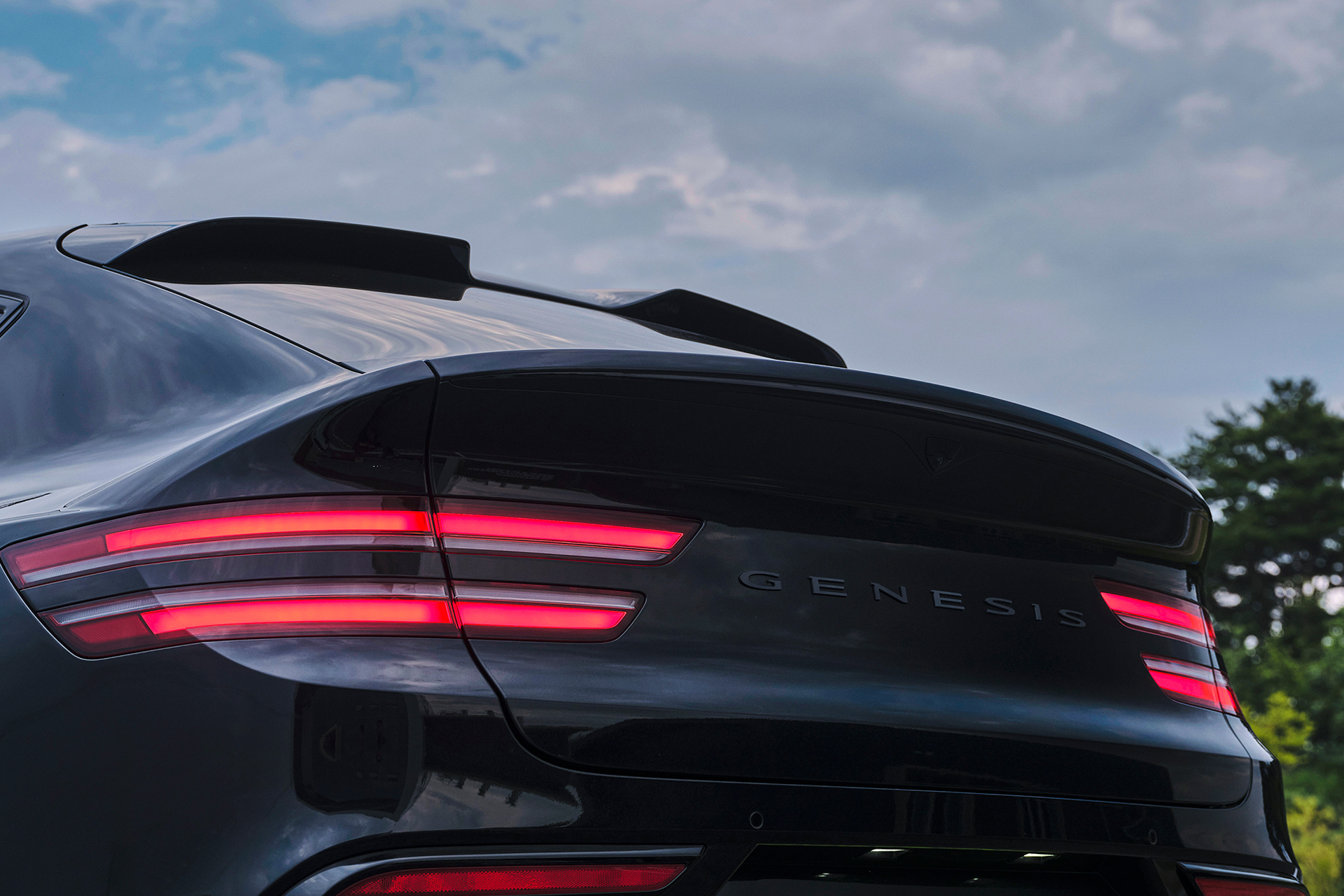
Following their stories, we see that depth only emerges once different experiences accumulate, layer by layer. The same was true of the journey with the GV80 Coupe. The calmness, the motion, the scenery taken in by the eyes and the wood grain lingering on the fingertips — no single element explains the whole car. Only after experiencing each of its many sides, one by one, does the GV80 Coupe come fully into view.
On the road out of Andong, the two-line Quad Lamps trace their way through the fading scenery. Some things only reveal themselves with time. The spirits and the people we met on this journey, the GV80 Coupe, all carried that same kind of depth.
Photo: Sangkuk Park
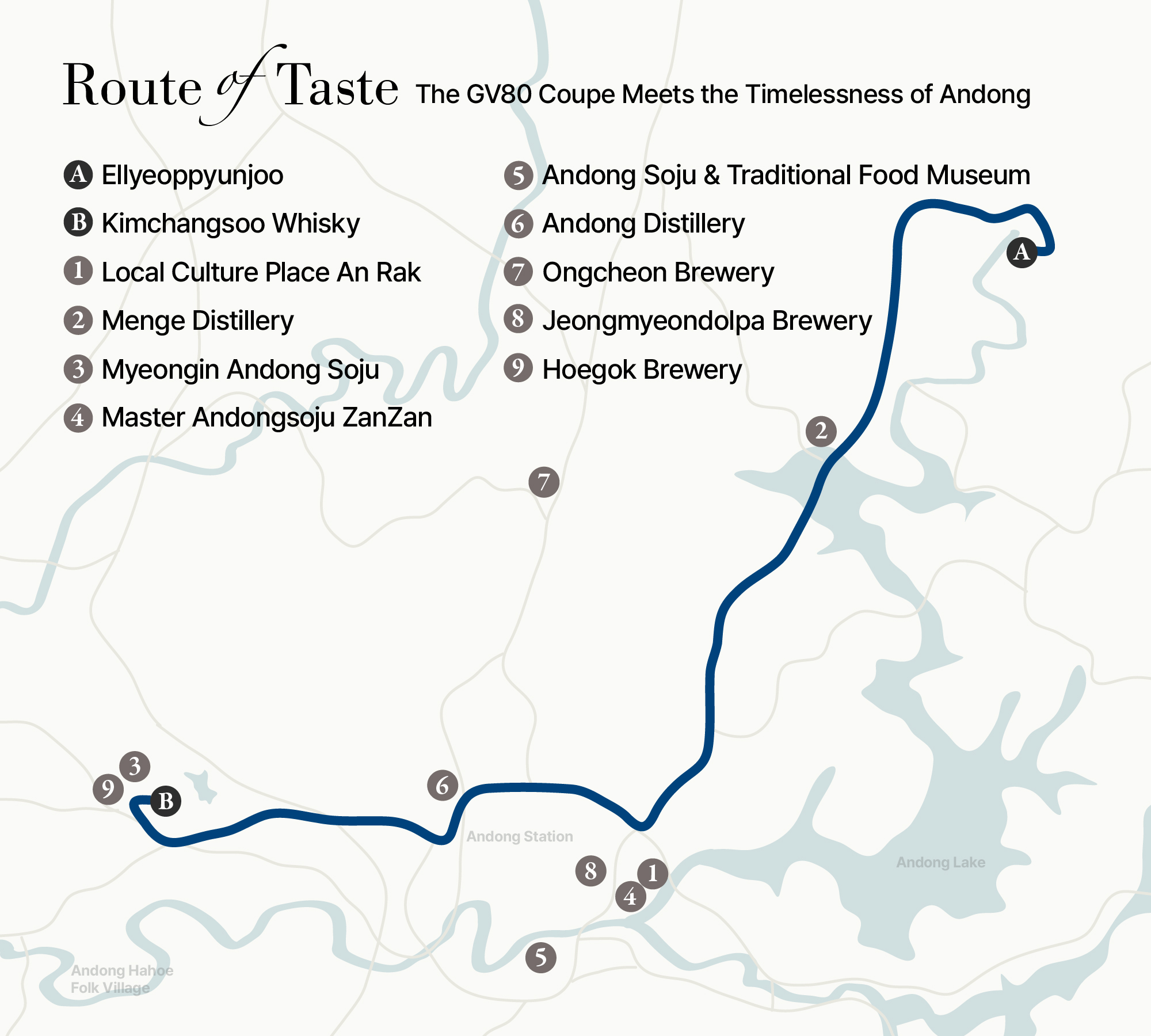
We've curated 11 traditional liquor spots on a map of Andong, including the destinations featured in this journey. Click the button below to access the list on Naver Maps.