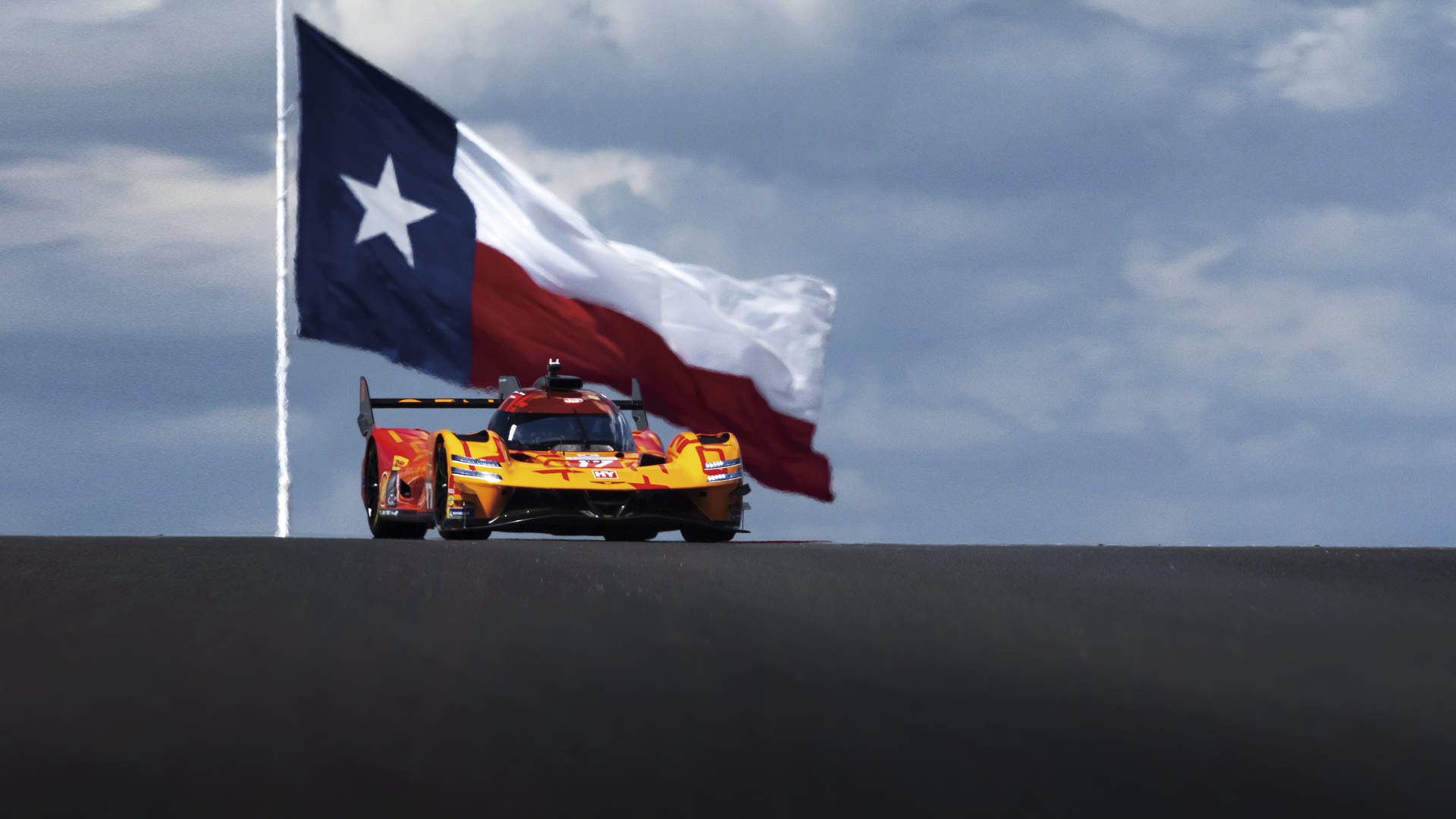
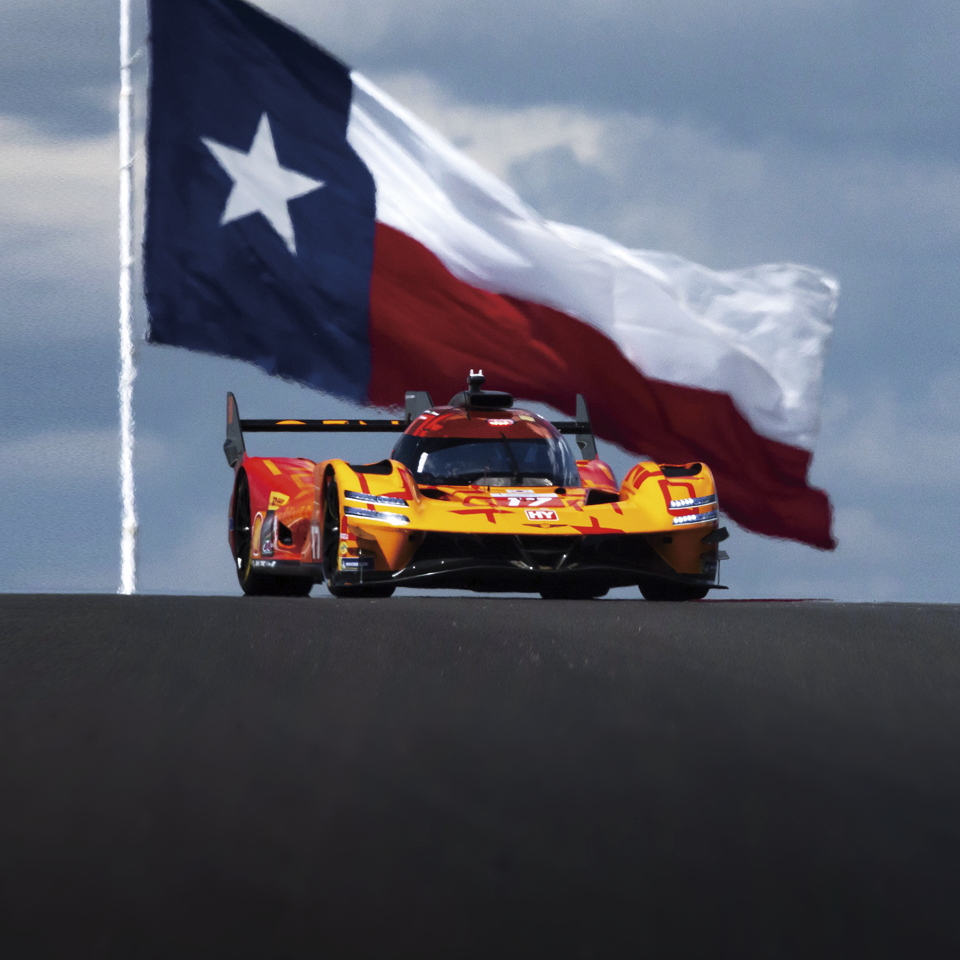
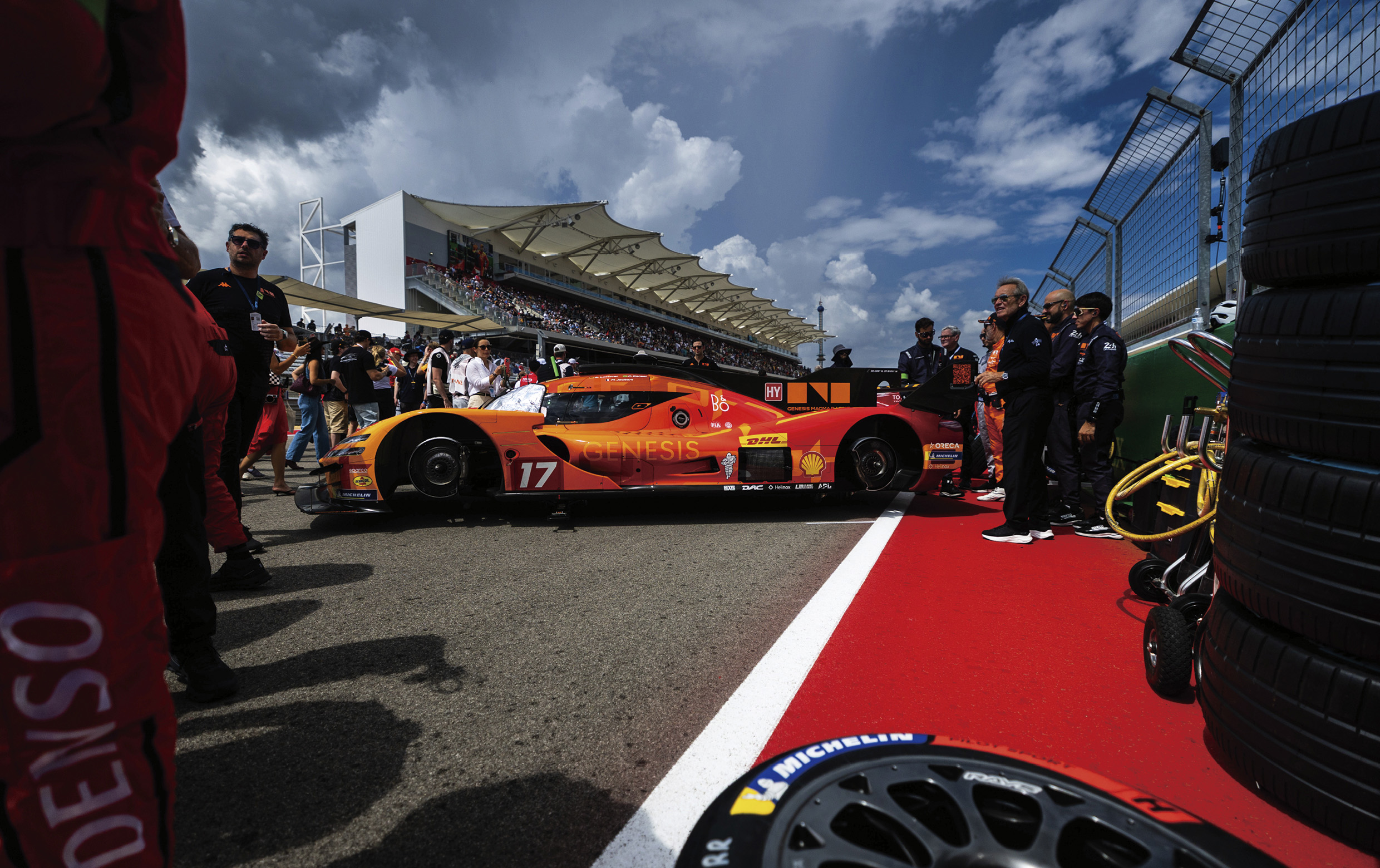
After more than a month off for the summer break, Genesis Magma Racing headed to Circuit of the Americas, better known as COTA, for Round 5 of the season. Located outside Austin, Texas, COTA is also home to Formula 1’s United States Grand Prix and stands apart from most American tracks with its counterclockwise layout, elevation changes, and distinctly European flavor. Lone Star Le Mans, first held in 2013, is one of the younger events on the WEC calendar.
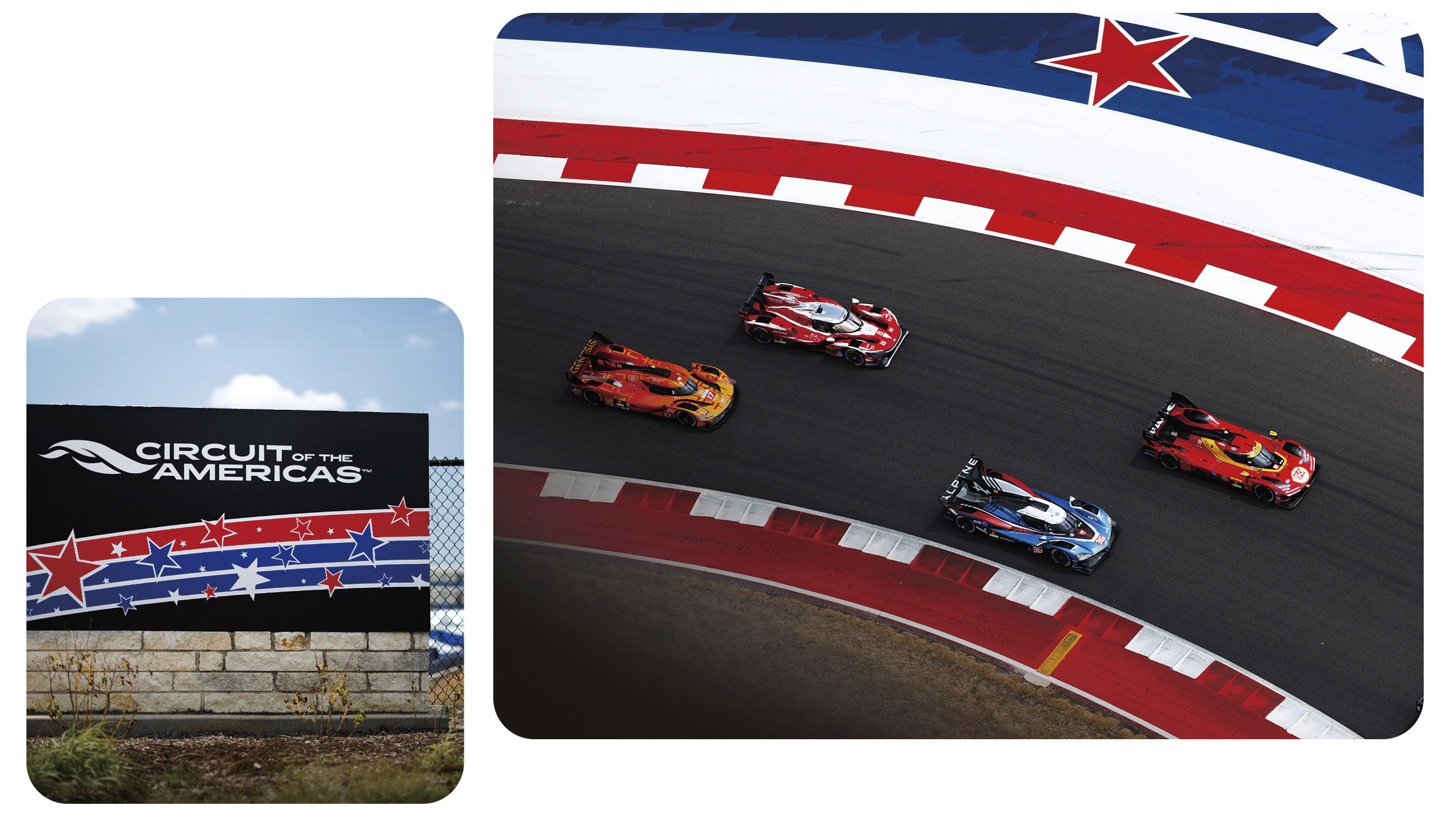
COTA opened in 2012, built in large part to bring Formula 1 back to the United States. F1’s previous U.S. home had been Indianapolis Motor Speedway, where the Grand Prix used part of the oval. But concerns over tire failures on the high-speed banking helped turn the event into a major controversy, and the U.S. Grand Prix disappeared after 2007. Austin’s answer was COTA: a purpose-built FIA Grade 1 circuit designed from the start for Formula 1.
But F1 was never the only show in town. Endurance racing arrived almost immediately. Beginning in 2013, WEC staged the 6 Hours of Circuit of the Americas here. From 2014 through 2016, the track even hosted an ambitious IMSA-WEC doubleheader. IMSA’s 2-hour, 45-minute Lone Star Le Mans ran during the day, followed by the WEC race from afternoon into the night. The regulations were completely different back then, so the cars did not share the same race the way converged prototype rules make possible today. Still, it was a proper endurance-racing festival: American Daytona Prototypes on one side, European LMP1 monsters on the other.
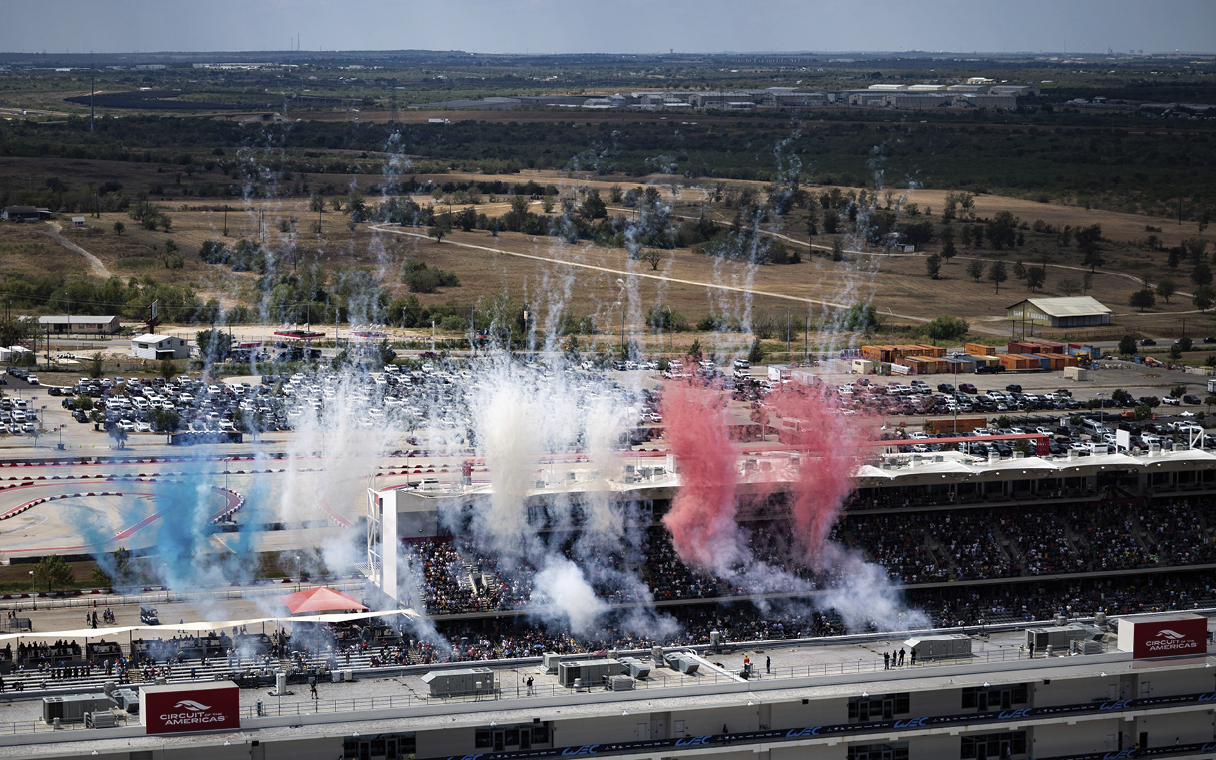
That run ended after 2017. With LMP1 in trouble, WEC moved to its unusual 2018–2019 “Super Season,” which began in May and ended at Le Mans the following June. Sebring became the U.S. round, and COTA dropped off the schedule. Lone Star Le Mans returned briefly in 2020 when São Paulo fell through because of promoter issues, then disappeared again as the COVID-19 pandemic forced WEC into a smaller calendar. By 2024, the championship had regained its footing, international logistics had stabilized, and both Barcelona and COTA were back.
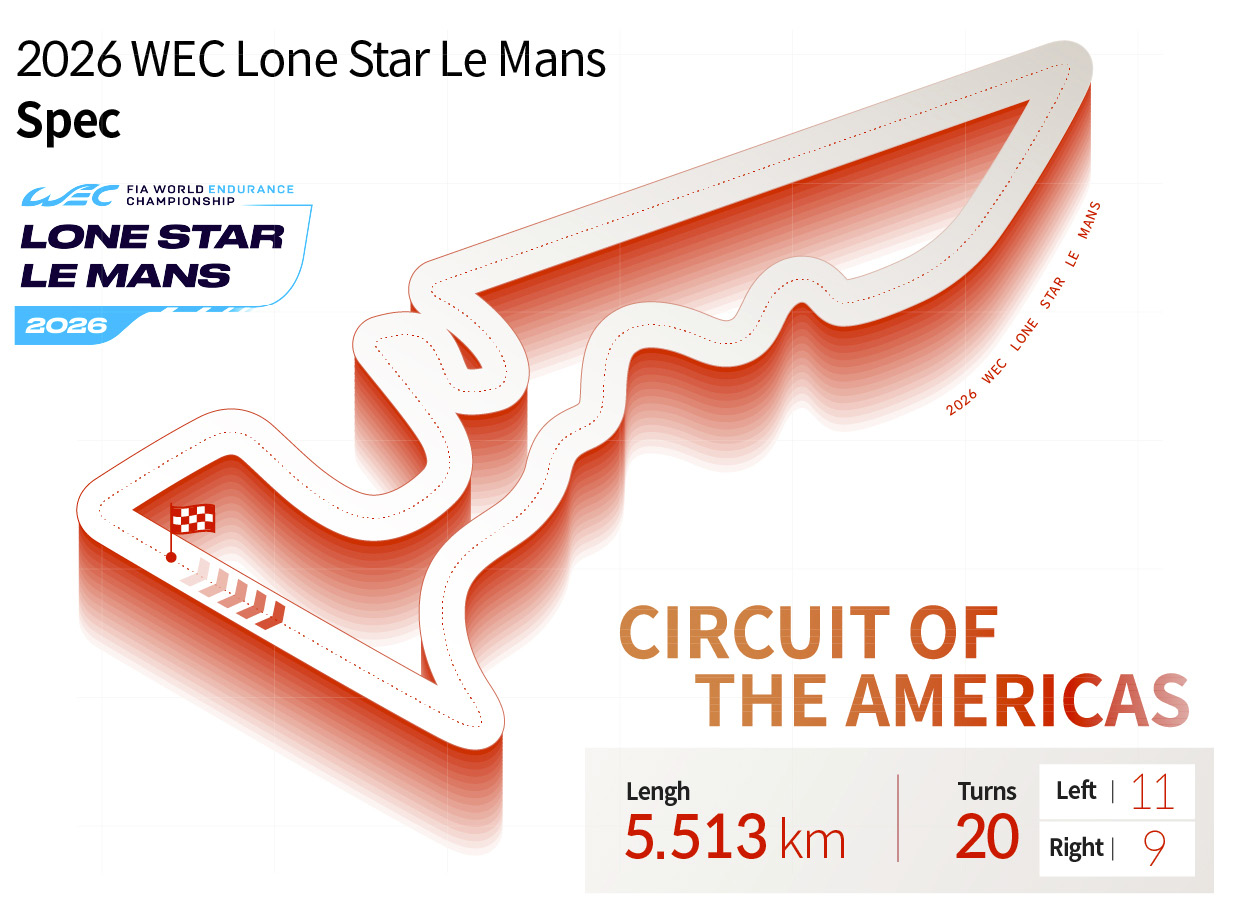
Designed by Hermann Tilke, COTA borrows ideas from some of the world’s most famous circuits. It is also one of the slower WEC tracks in average-speed terms, but that does not make it easy. Quite the opposite.
Right after the start, the track climbs more than 30 meters uphill into Turn 1, the highest point on the circuit. The apex is hard to see on approach, so drivers have to commit before they can really see where they are going. The track also gets dramatically wider there, making it one of the best passing zones—and one of the easiest places to get caught in a first-lap mess.
From Turns 2 onward, the circuit fires into a fast left-right sequence inspired by Maggotts and Becketts at Silverstone. Miss the rhythm by a little, and the whole section falls apart. Every correction costs speed. Traffic makes it worse. The road narrows, passing opportunities disappear, and a Hypercar caught behind a slower GT3 car can lose real time before there is a clean place to get by.
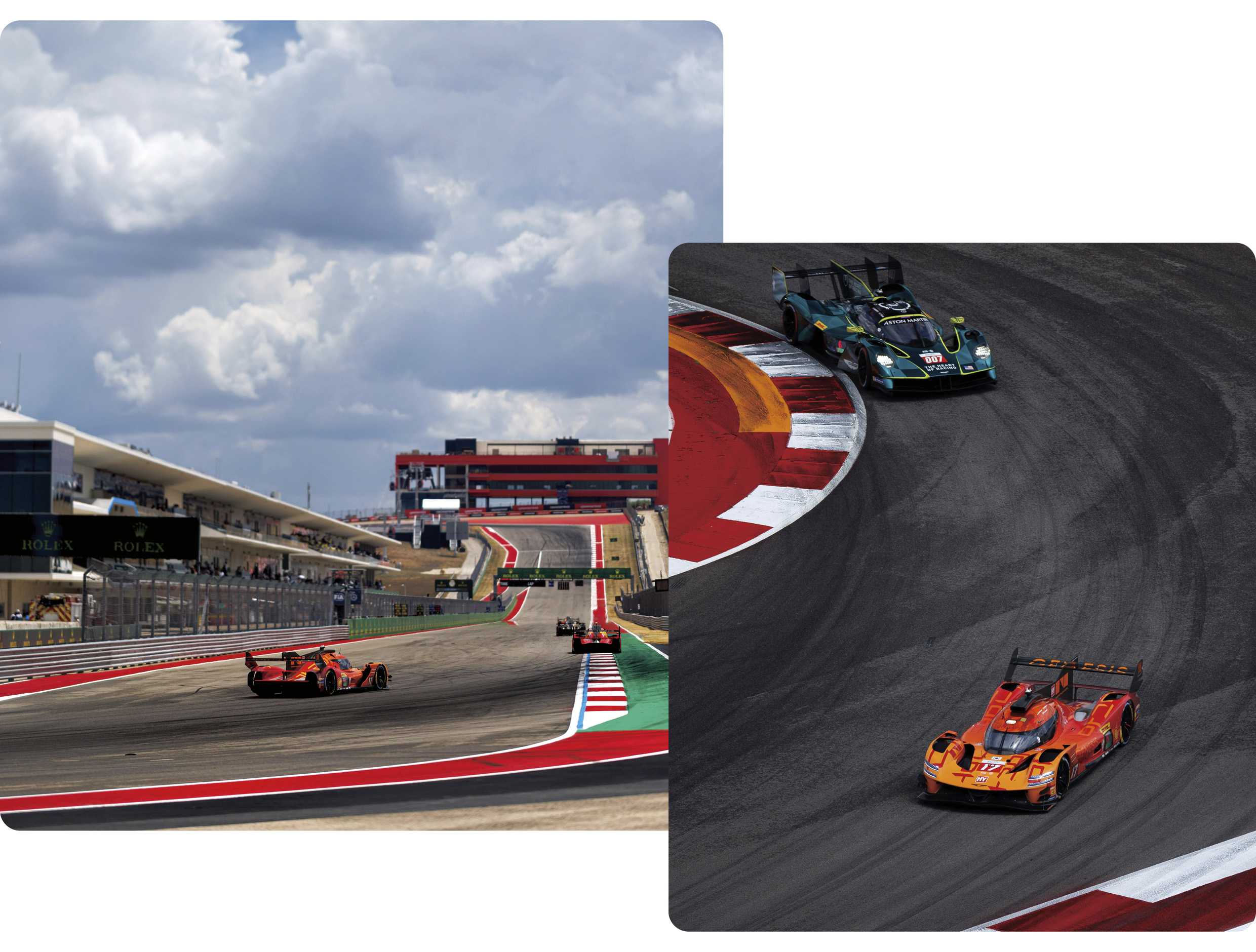
After the tight Turn 11, COTA finally lets the cars breathe on its longest straight. For the hybrids, this is one of the places where energy deployment and recovery strategy really matter. At the other end sits another major braking zone and passing opportunity. Then come Turns 17 and 18, a long, loaded right-hand sequence that leans hard on the drivers’ necks. The section takes inspiration from Istanbul Park’s famous multi-apex Turn 8. COTA’s version technically uses two corners, but drivers hit three apexes, which is why you will sometimes hear it called the Triple Right or Triple Apex.
And then there are the bumps. COTA’s uneven surface is almost as famous as the layout itself. The clay-heavy soil underneath the circuit expands and contracts, slowly changing the shape of the track from year to year. Engineers tried to solve the problem during construction by excavating and replacing the soil, but the bumps keep coming back. The track needs constant repair and resurfacing. Drivers have compared some sections to rallying, and for race engineers that means another headache: finding a setup that keeps the car controlled without making it too stiff everywhere else.
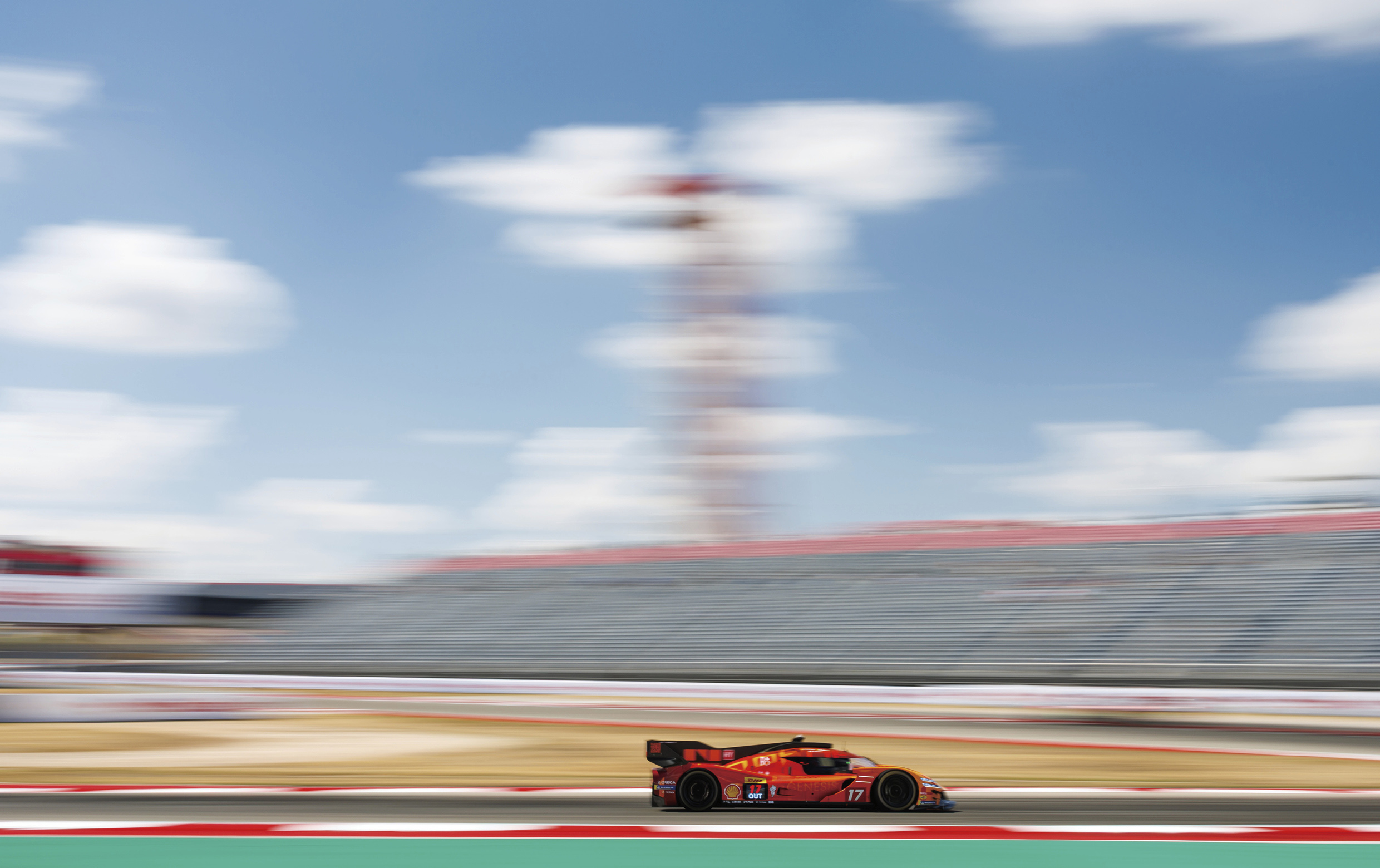
Austin weather only adds to the problem. Late-summer heat can chew through tires and wear down drivers over a long stint. Sudden gusts can upset aero balance. And when the rain really comes down, water collects in the low spots and across the bumps, creating standing-water problems fast. Last year was a perfect example. Heavy rain caused repeated incidents, and only about 2 hours 30 minutes of the six-hour race ran under anything close to normal conditions. This year, at least, the forecast looked friendlier. Michelin brought medium and hard Pilot Sport Endurance compounds for the Hypercar field, with wets ready if Austin decided to turn ugly again.
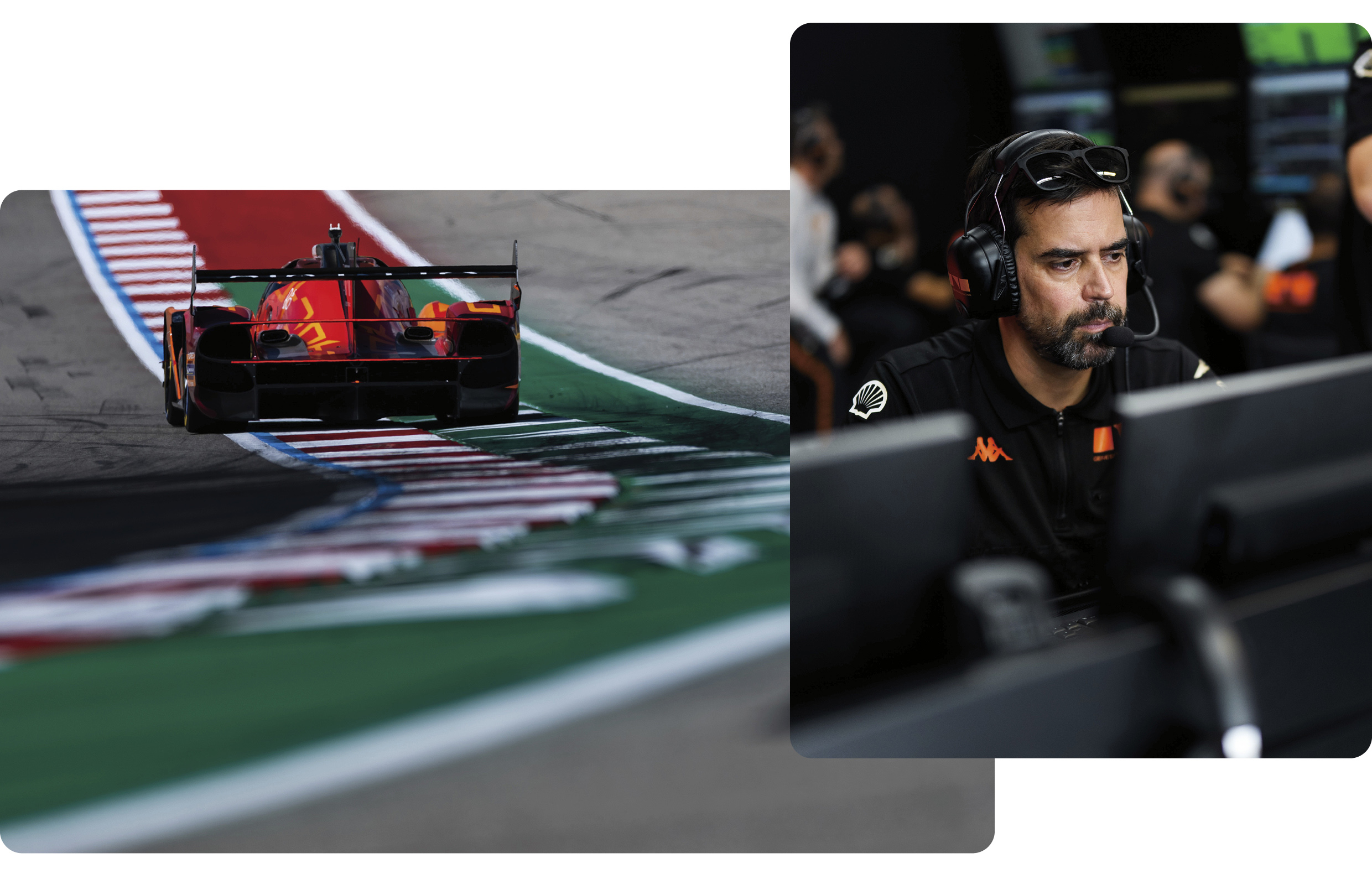
Genesis Magma Racing used COTA for development testing after an earlier test at the Circuit de Barcelona-Catalunya. The interesting part is that the team still has plenty of *Evo Jokers available for the GMR-001—but it is not rushing to spend them. Instead, Genesis is building up data across different tracks and conditions before locking in major changes. For a new Hypercar program, that makes sense. An Evo Joker is valuable, and once you use one, you want to be sure you are fixing the right problem.
*Evo Joker: A limited allowance that permits significant design changes to a Hypercar. Because teams receive only a restricted number, deciding where to use them is a major part of the development strategy.
Texas native Justin Taylor, who joined Genesis Magma Racing as Chief Engineer after stints in IMSA, Formula 1, and WEC, explained what the COTA test revealed.
“We were able to get some good data from the test in very high ambient and track temperatures, which gave us a preview of how the car behaves and responds in the extreme conditions we might face during the race weekend,” Taylor said.
“COTA demands a lot of different things simultaneously, but undoubtedly it is a circuit with high sensitivity to grip. To go fast we need to keep the rubber underneath us, so if it is hot we will need to actively manage the temps to be sure they last a complete stint or even a double. Choosing how to manage qualifying and finding the best way to minimize tire wear in the race will be key. We’ve also used the summer break to work on some weaknesses we’ve identified through the first half of the season, so we can continue to move forward.”
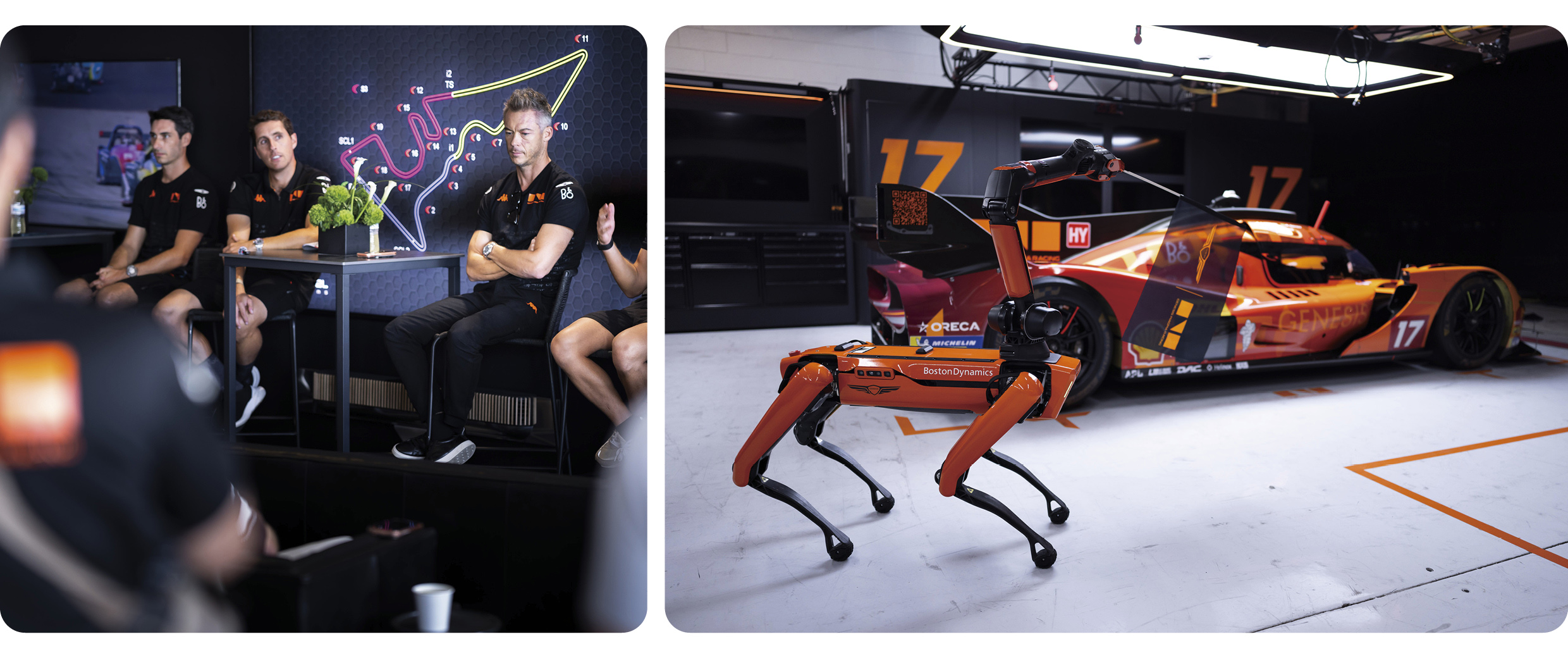
Genesis already had some useful experience inside the driver lineup. André Lotterer had won at COTA during the LMP1 era, while Paul-Loup Chatin and Mathieu Jaminet had previous Hypercar experience here. Jaminet also had good memories of North America in general. A two-time IMSA champion, he marked the return to Texas with a special helmet design.
For Pipo Derani, Daniel Juncadella, and Mathys Jaubert, though, the weekend meant learning COTA from a different perspective. Derani had not raced here since his LMP2 days in 2016. Juncadella had competed at COTA over the previous two years, but only in GT3 machinery. Rookie Jaubert was starting from scratch. For him, this was not just his first time at COTA in a Hypercar. It was his first time at COTA, period.
The weekend got underway Friday, September 4, with a 90-minute Free Practice 1 session starting at 11:30 a.m. Skies were overcast, the air was humid, and Genesis Magma Racing split the opening running between André Lotterer in the #17 and Mathieu Jaminet in the #19. The factory Ferraris were quick immediately. Ferrari AF Corse’s #51 became the first car into the 1:53s and ended the session on top. Genesis finished FP1 with the #19 in ninth and the #17 in 14th. Track limits were already causing trouble. Six LMGT3 drivers, including Miguel Molina in the #50 Ferrari, were handed five-minute stop-and-hold penalties.
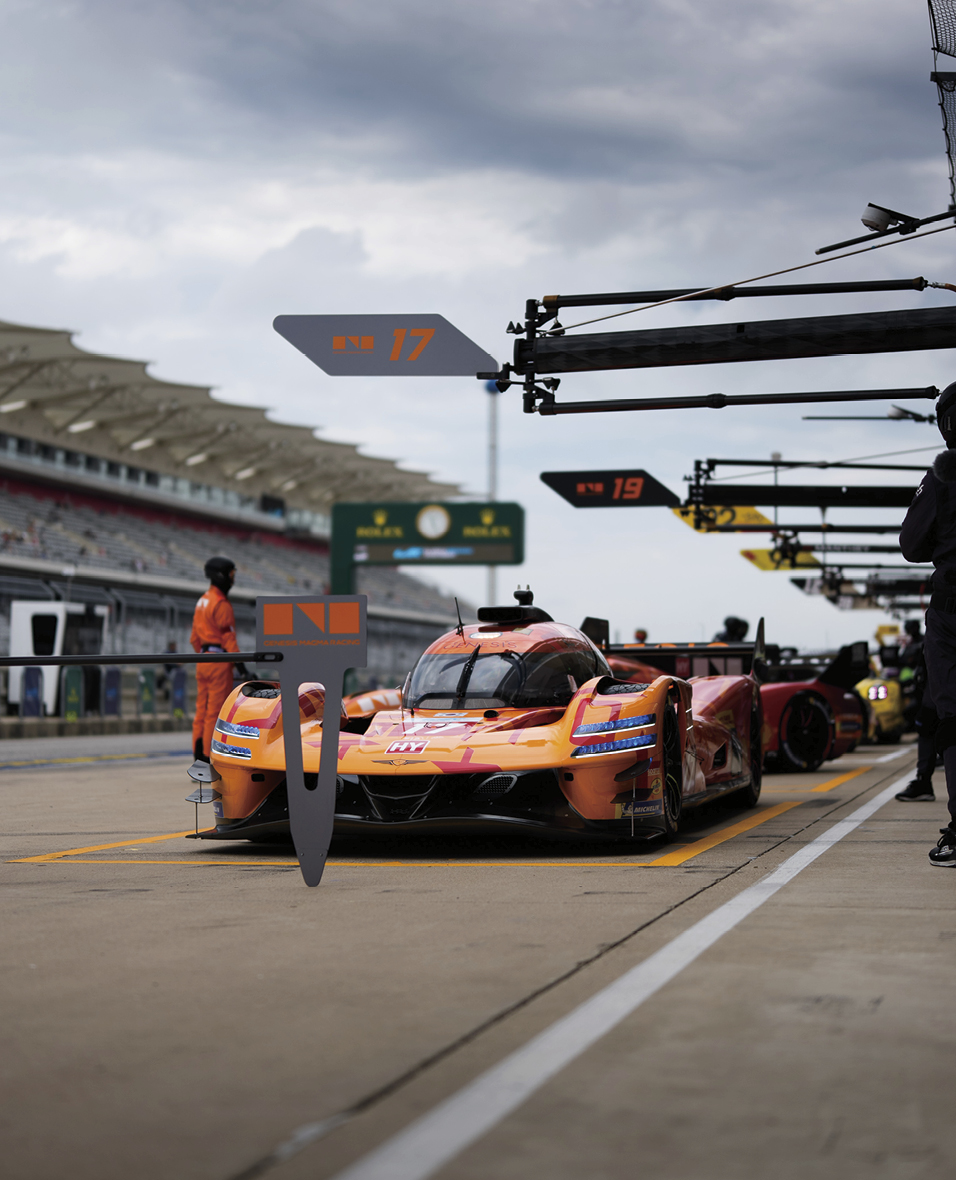
By the time FP2 began at 4 p.m., the conditions had changed. Ambient temperature had climbed to 34 degrees C, while humidity had dropped. This time Mathys Jaubert and Jaminet were first out for Genesis. The #007 Aston Martin was first into the 1:52s, knocking Ferrari off the top of the timing screen. Jaminet stayed in the mix even while testing hard tires against rivals running mediums. Jaubert had a rough moment early when an off-track excursion brought out a red flag, but he bounced back quickly and posted a 1:52.811, good enough for third overall. The other Genesis, also on hards, was only about 1.1 seconds off the pace and ended the session 13th. By FP3 on Saturday morning, Genesis was starting to look like a real threat. Harry Tincknell put the #007 Aston Martin on top, but right behind him was the #19 Genesis. Jaminet was quick from the start and finished just 0.04 second off the fastest lap. That was the clearest sign yet that the GMR-001 had pace.
Official qualifying started at 3:40 p.m. Saturday in brutal Texas heat. Air temperature was above 37 degrees C, humidity had dropped to 34 percent, and the track was fully baked. Both Genesis cars came out swinging. Jaubert in the #17 and Jaminet in the #19 immediately ran in the mid-1:52s, trading top times with Victor Martins in the #36 Alpine. For a moment, the two Genesis cars sat first and second. Then Ferrari turned it up. Nicklas Nielsen eventually put the #50 Ferrari on top, but Genesis had already done enough. Jaminet finished fourth, Jaubert 10th, and both GMR-001s advanced to Hyperpole.
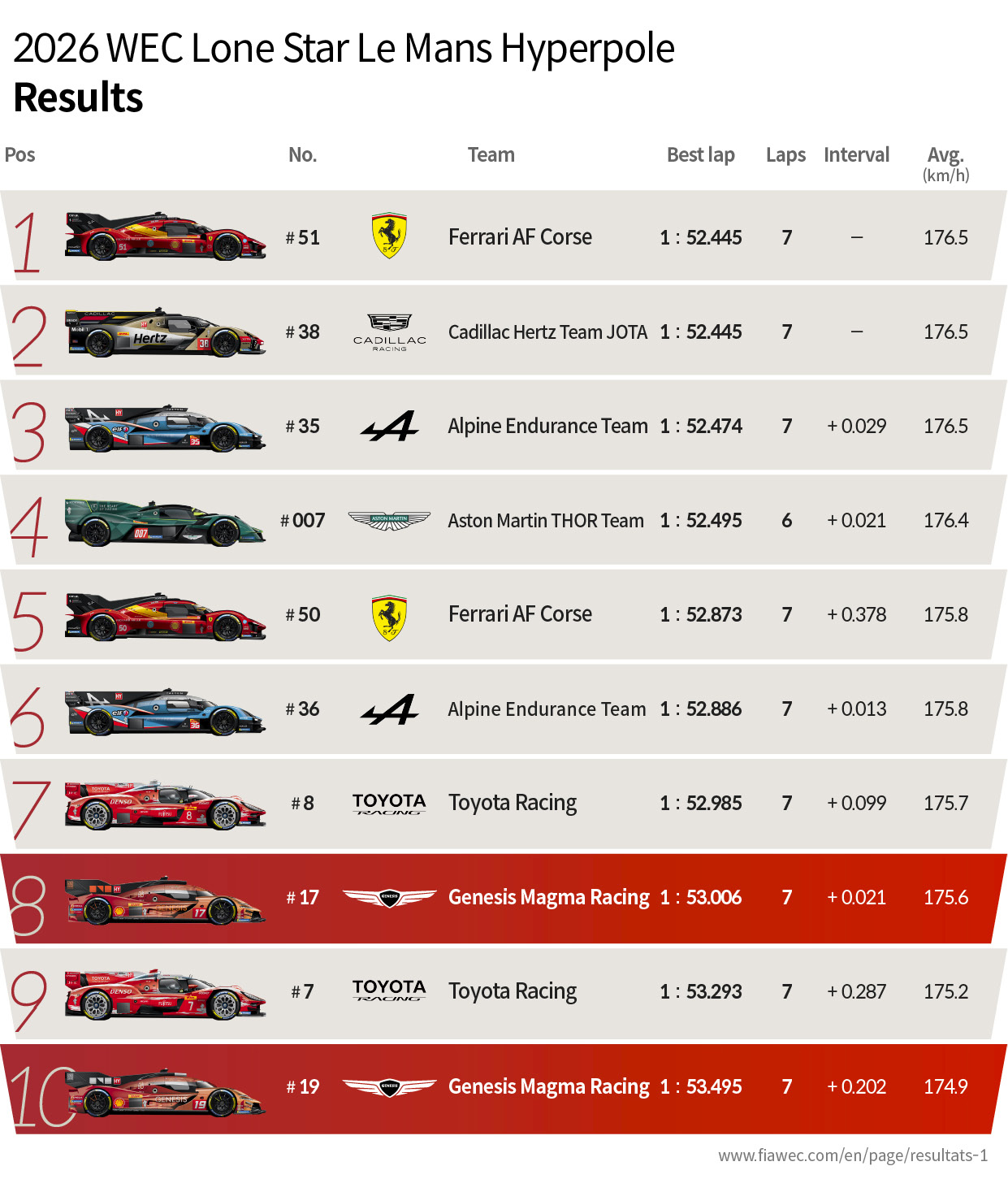
In Hyperpole, the #51 Ferrari of Antonio Giovinazzi set the early benchmark. Cadillac answered with Jack Aitken, who matched the Ferrari’s lap time to the thousandth of a second. Ferrari still got pole because Giovinazzi had set the time first. Behind them, the #35 Alpine and #007 Aston Martin locked out the second row. The top four were separated by just 0.05 second. Genesis qualified the #17 in eighth and the #19 in 10th, putting the cars on rows four and five. For a program still in its first season, that was a strong statement: both cars were not just surviving qualifying—they were mixing it up with the established Hypercar heavyweights.
In LMGT3, the two Heart of Racing Aston Martins swept the front row, followed by the #91 Manthey Racing Porsche and the #77 Proton Competition Ford Mustang.
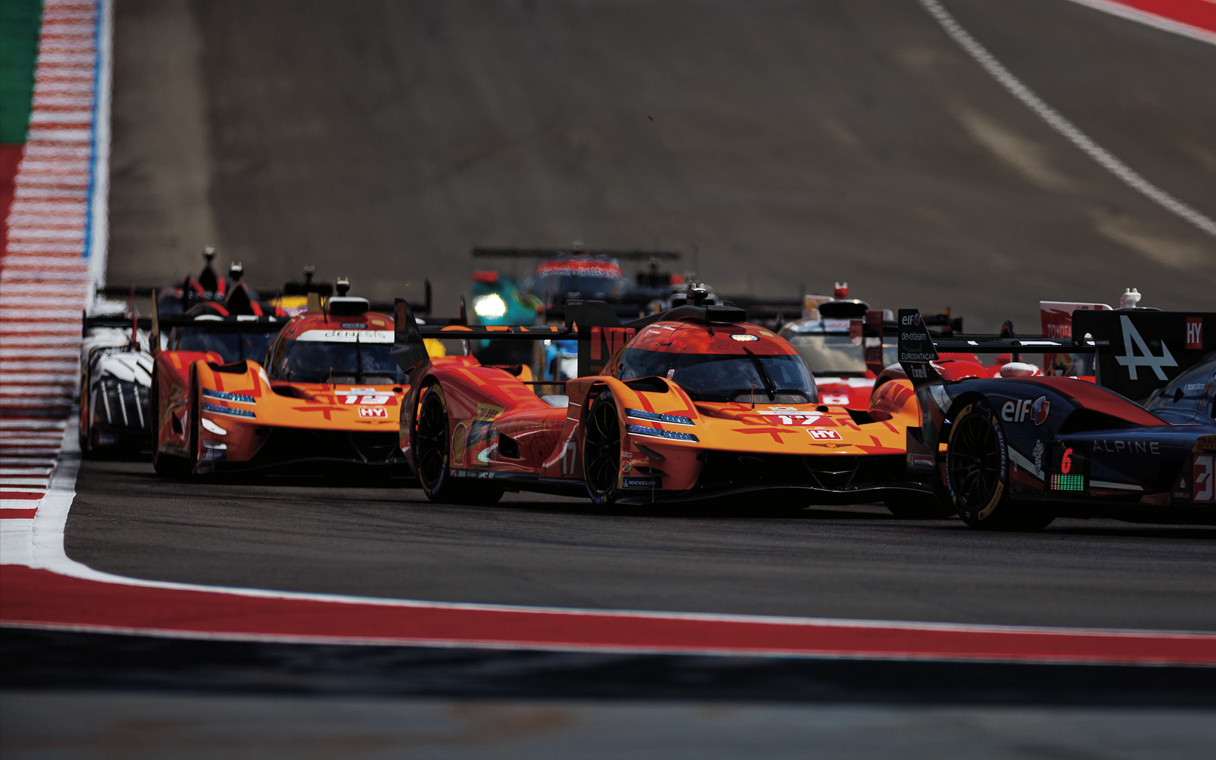
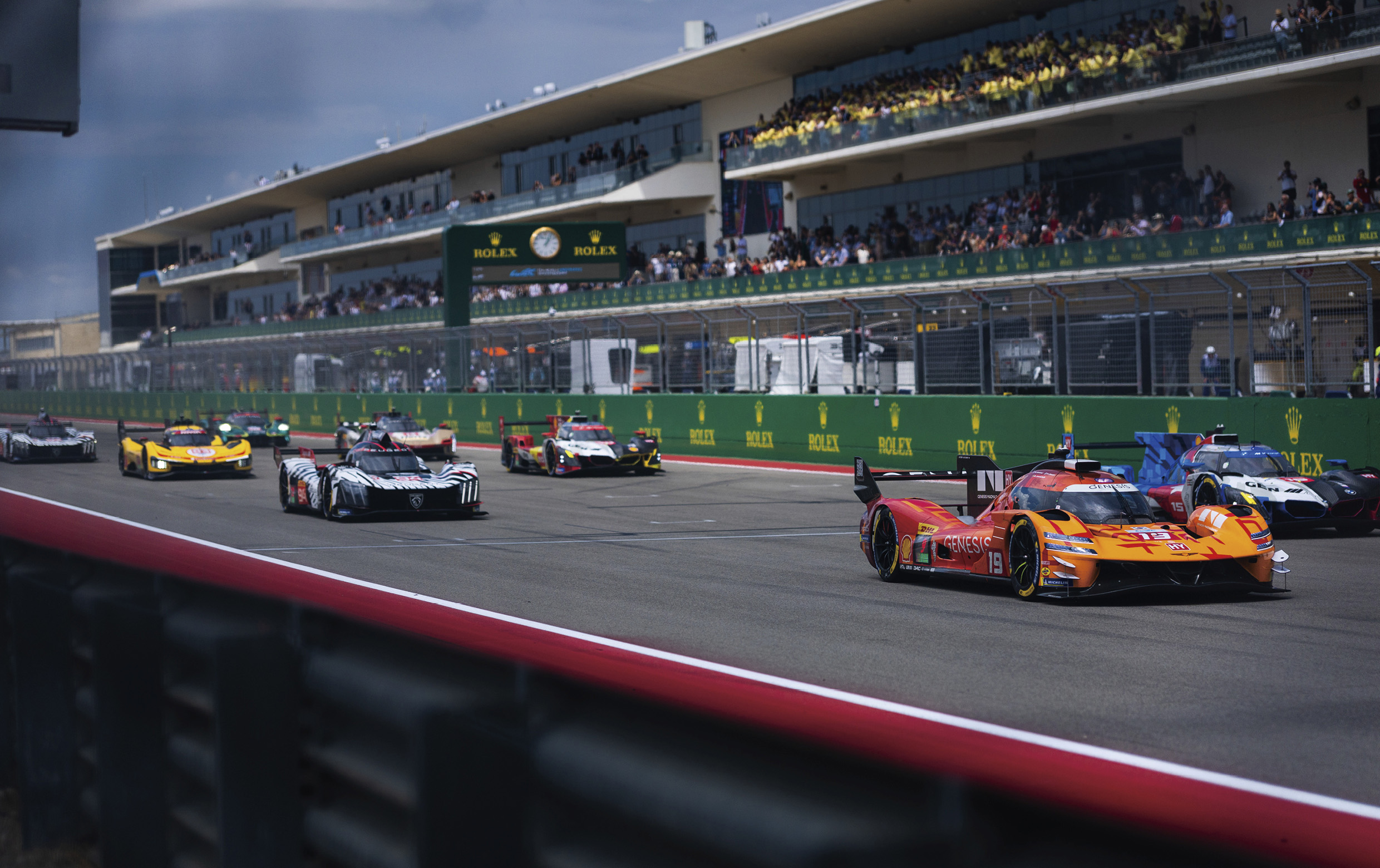
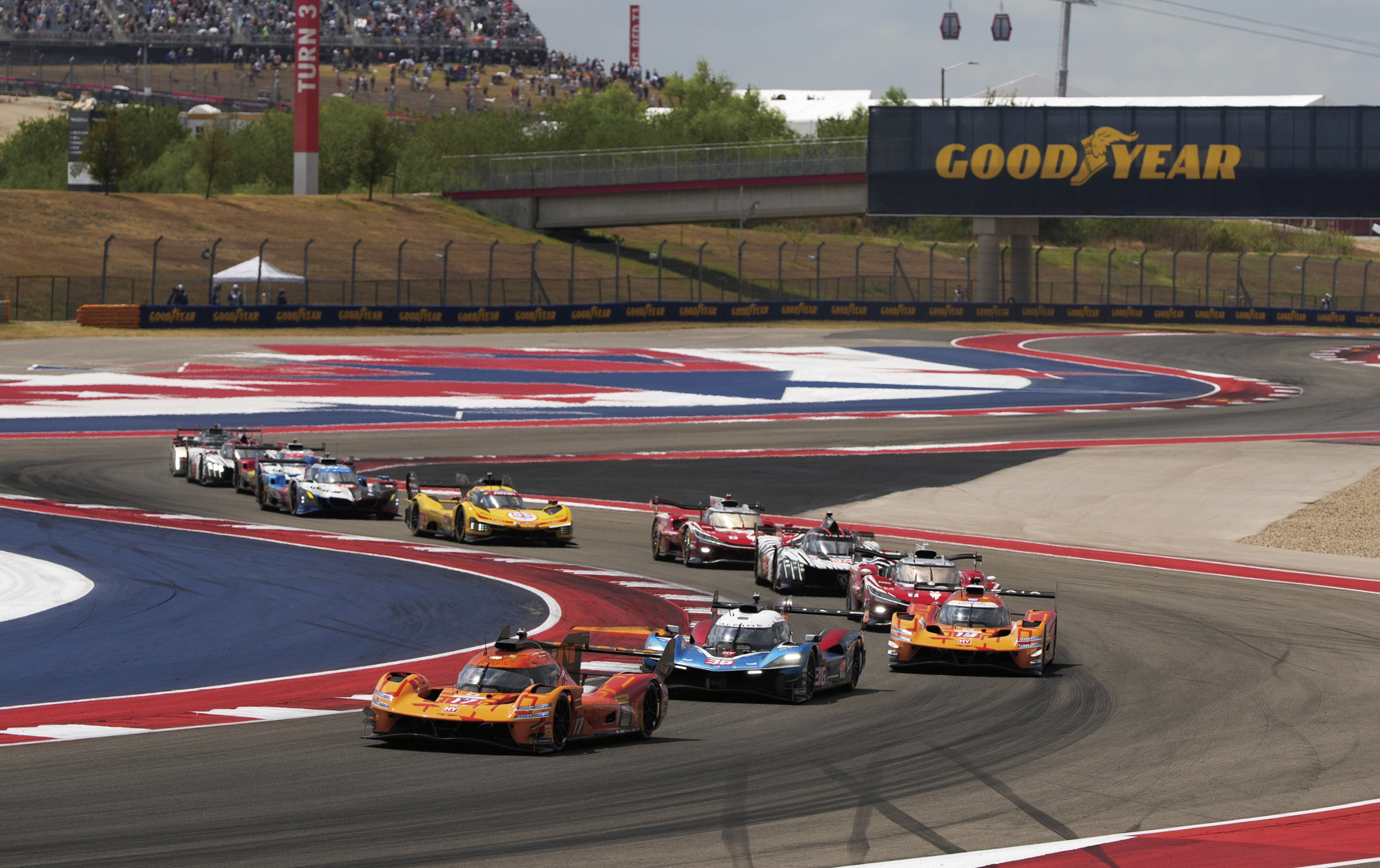
The Lone Star Le Mans started at 1 p.m. Sunday, September 6, with heavy clouds overhead and parts of the circuit still damp. Ambient temperature sat at 30 degrees C, humidity was 71 percent, and grip away from the racing line was still sketchy. Daniel Juncadella started in the #19, while Lotterer took the opening stint in the #17. The Hypercar field made it through Turn 1 cleanly, and Lotterer went on the attack immediately, climbing as high as fifth in the opening laps. Juncadella slipped one spot to ninth. The real early chaos came in LMGT3, where contact and spins were already piling up. Nineteen minutes in, the #69 WRT BMW limped back to the pits trailing smoke, triggering a Full Course Yellow. On the restart, Lotterer moved into fourth.
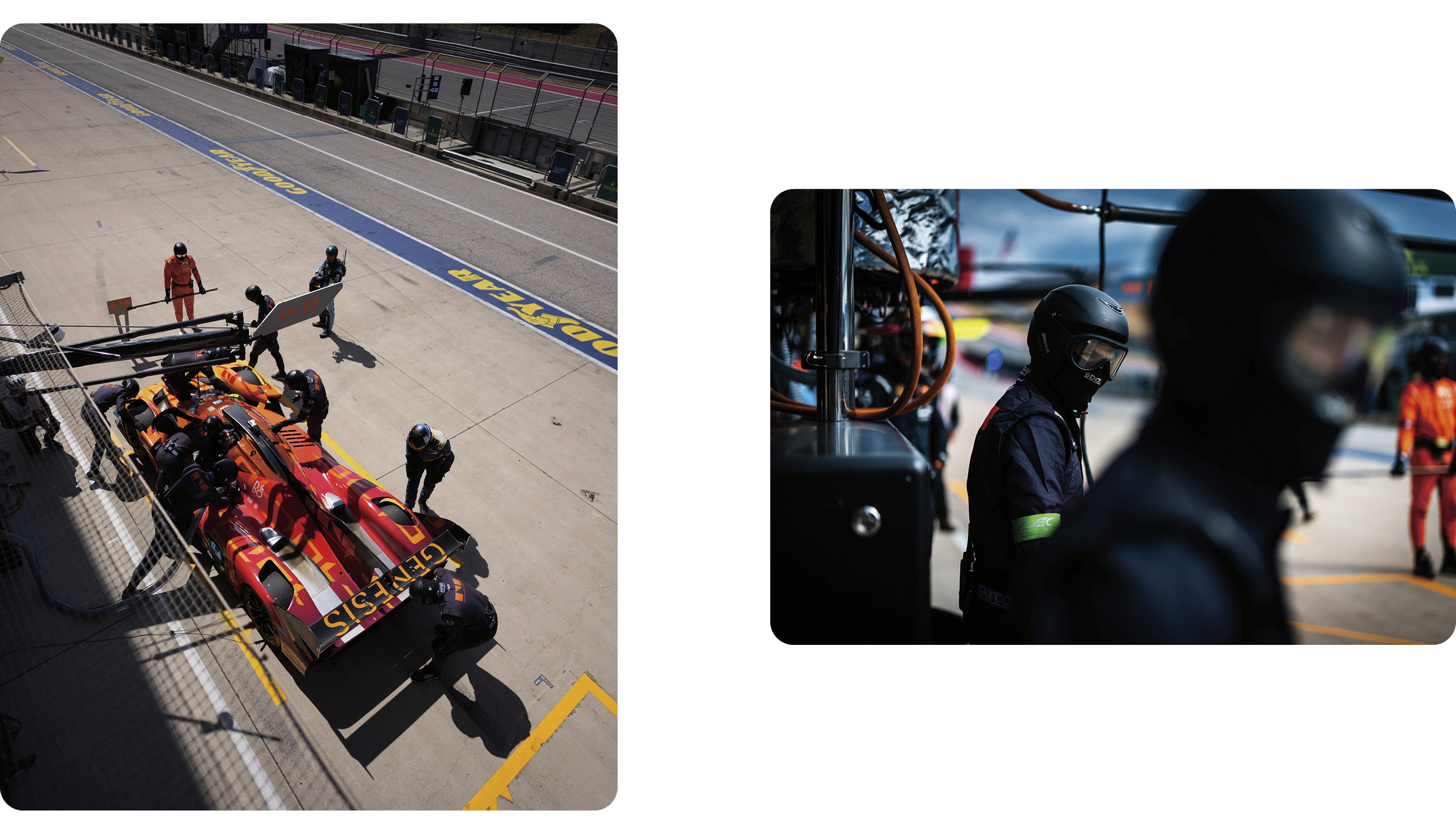
Then it all came undone. At the 26-minute mark, Lotterer tried to get inside Miguel Molina’s #50 Ferrari. The two made contact, the Genesis spun, and the #17 dropped all the way to 17th. The bigger problem was that anything off the dry line was still slick. By 50 minutes, Juncadella was 10th and Lotterer 16th. AF Corse Ferrari and Toyota were among the first teams to pit early.
Fifty-Seven minutes later, Lotterer worked his way past Marco Sørensen’s #009 Aston Martin and climbed to 13th. At 1 hour 8 minutes, both Genesis cars stopped. Lotterer handed the #17 over to Jaubert, while Juncadella stayed in the #19.
With most of the Hypercar field through the opening *stint, the #50 Ferrari led. The #8 Toyota, running a shorter first stint, moved into second, while the two Cadillacs closed in around the #51 Ferrari. Juncadella sat 11th. Jaubert was 17th.
* Stint: A segment of the race completed on one set of tires.
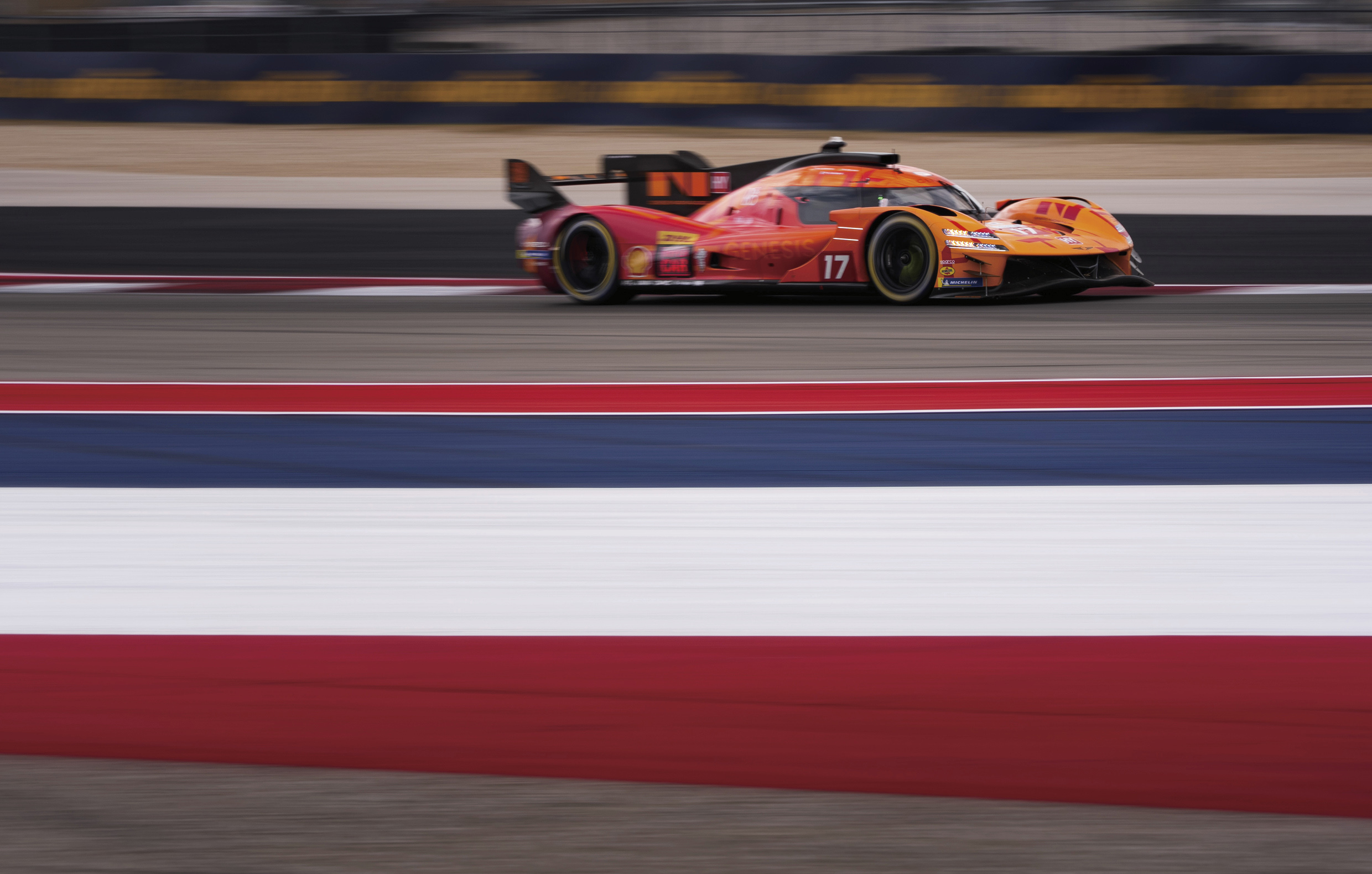
When the #50 Ferrari and #8 Toyota pitted, Giovinazzi inherited the lead in the #51 Ferrari. A little after the two-hour mark, Juncadella had climbed to fifth and Jaubert to eighth. Pit cycles were out of sync across the field, so the order was moving constantly, but Genesis was still very much in the fight. The #17 then changed drivers again, with Pipo Derani taking over, while Paul-Loup Chatin got into the #19. Heavy clouds hung over COTA, and it looked like rain could arrive at any moment. Once every Hypercar had completed its second round of stops, the #50 Ferrari was back in front with the #8 Toyota close behind.
At the 2-hour, 30-minute mark, the #19 Genesis sat 14th and the #17 was 17th. A spin for the #93 Peugeot moved Chatin up to 13th. Then Derani made one of the cleaner moves of the race. At 2 hours 42 minutes, he dived inside the #12 Cadillac at Turn 1 and made the pass stick, moving up to 14th. Genesis looked to be playing the long game. The priority was getting both cars to the finish, and the team appeared unwilling to trade reliability for a desperate early push.
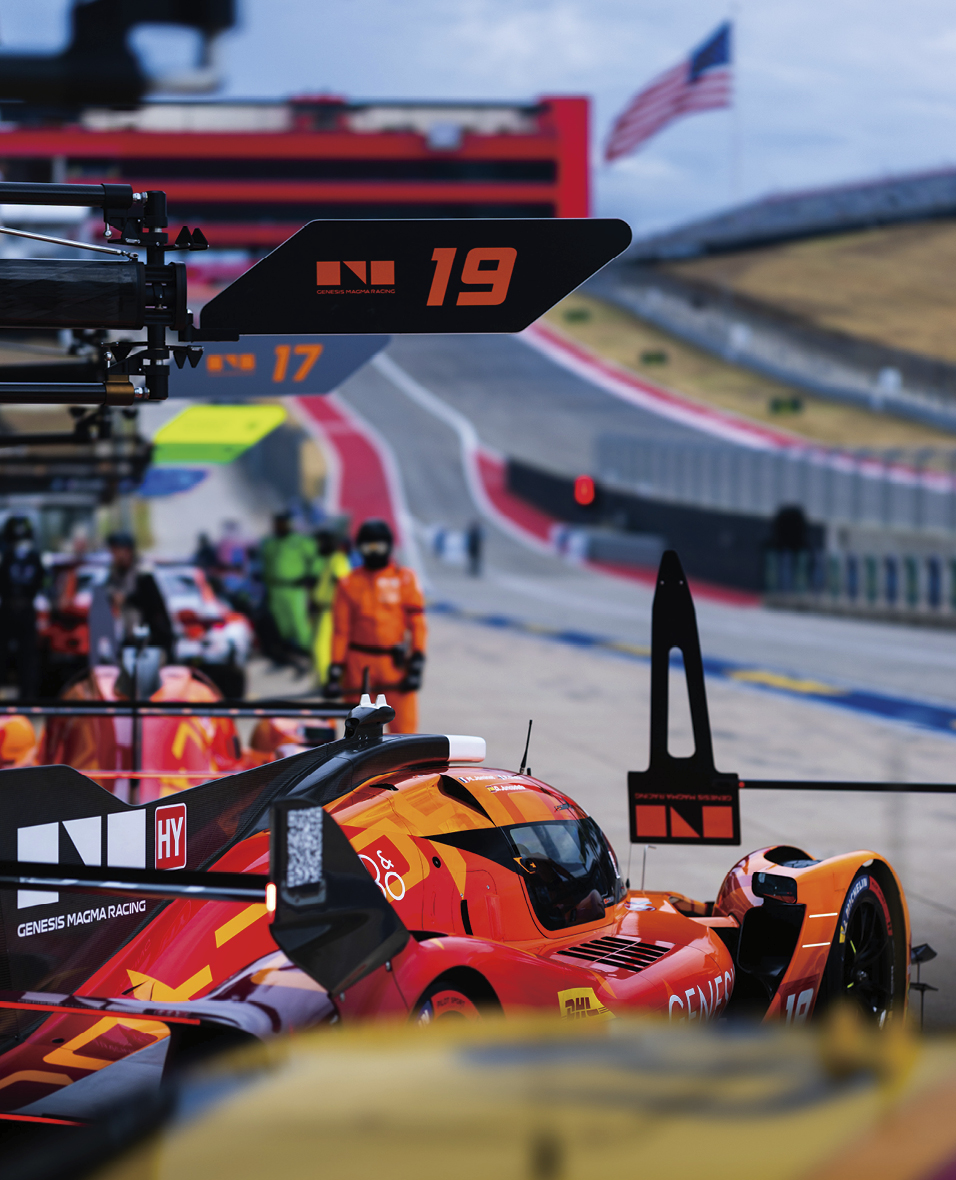
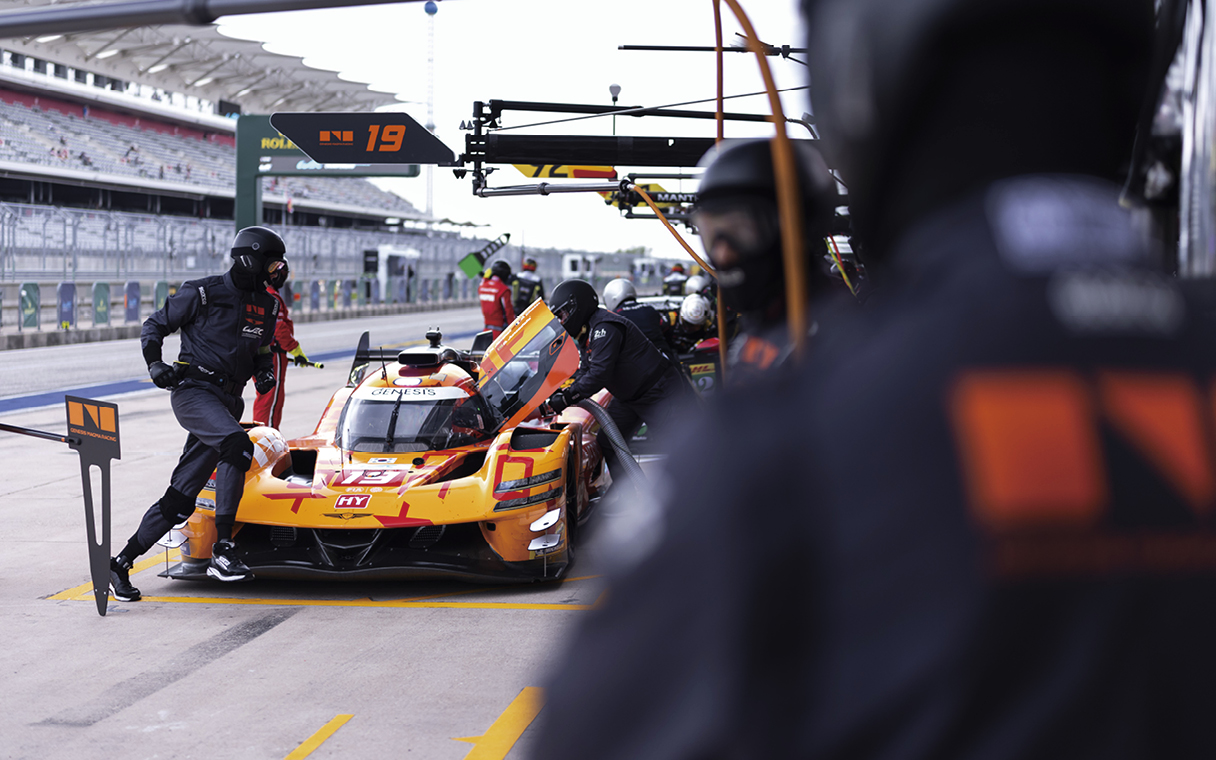
Then the race changed again. At 2 hours 45 minutes, the first Virtual Safety Car of the day was called, followed by a full Safety Car. At almost the same time, light rain started falling around parts of the circuit. Suddenly, strategy was wide open. The Hypercar field flooded pit lane, and both Genesis cars came in for fuel. Chatin stayed in the #19, Derani in the #17. Under Safety Car, the #38 Cadillac led, followed by the #35 Alpine and #007 Aston Martin. Genesis sat 13th and 14th. At around 3 hours 10 minutes, just after halfway, the Safety Car peeled in and racing resumed.
At the front, Earl Bamber in the #38 Cadillac was fighting António Félix da Costa in the #35 Alpine, while Nyck de Vries in the #7 Toyota hovered just behind after getting past Aston Martin. The Genesis pair also moved past an Aston Martin, climbing to 12th and 13th. At the four-hour mark, another round of pit stops began. Lotterer got back into the #17, while Jaminet took over the #19.
With 1 hour 40 minutes remaining, the #7 Toyota led, followed by the #36 Alpine and #8 Toyota. Then Toyota handed away a big piece of the race. The #8 was hit with a stop-and-go penalty for speeding at pit exit, effectively knocking it out of the lead battle. That promoted the #51 Ferrari to third and the #35 Alpine to fourth. Not long after, the hood from the #78 Lexus GT car came off and landed on track, bringing out another Full Course Yellow. With 1 hour 20 minutes to go, the Genesis cars sat 12th and 13th. Then the charge started. Jaminet passed the #20 BMW for 11th, while Lotterer stayed close behind looking for his own opening. Soon after, the two Genesis cars were up to 10th and 11th. A double-points finish was suddenly on the table.
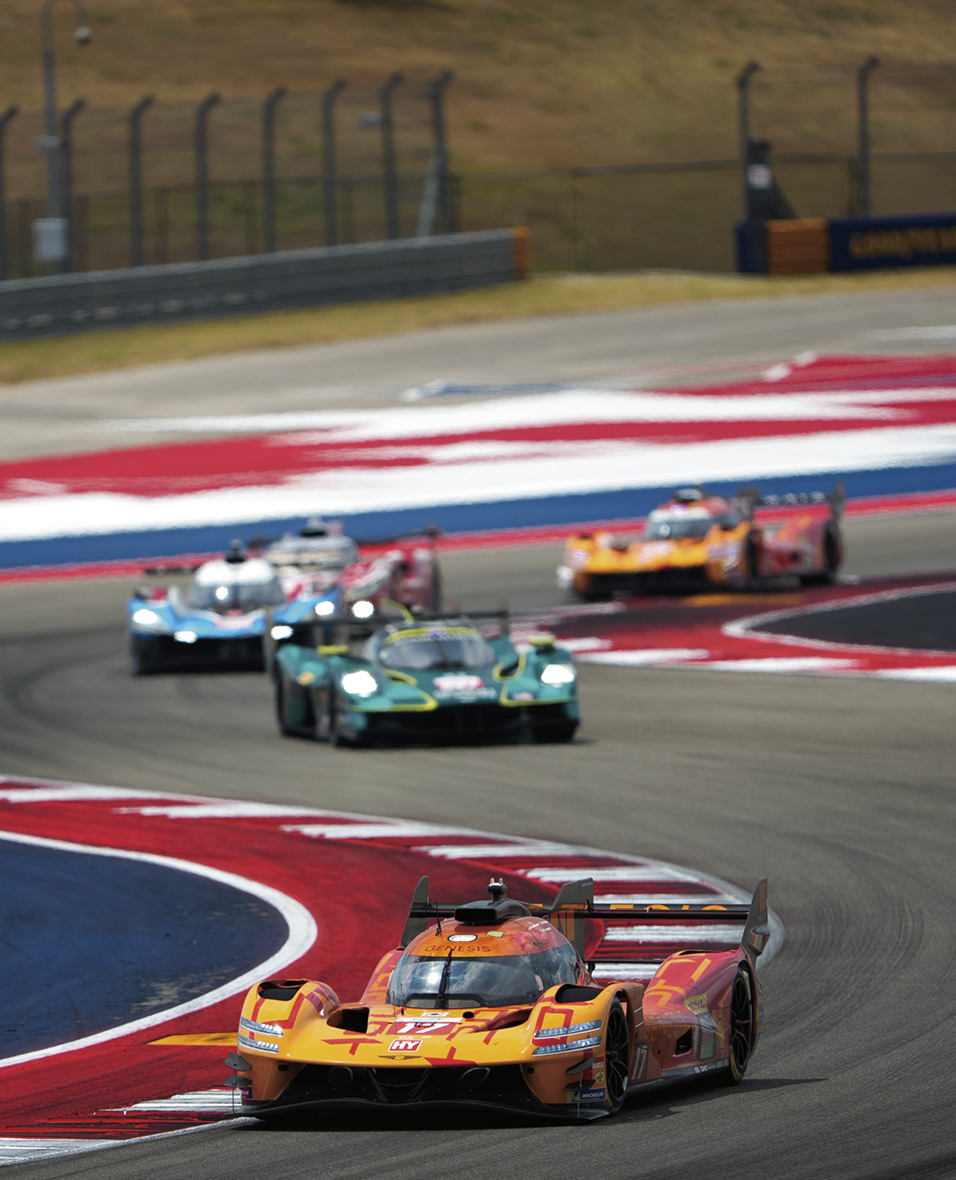
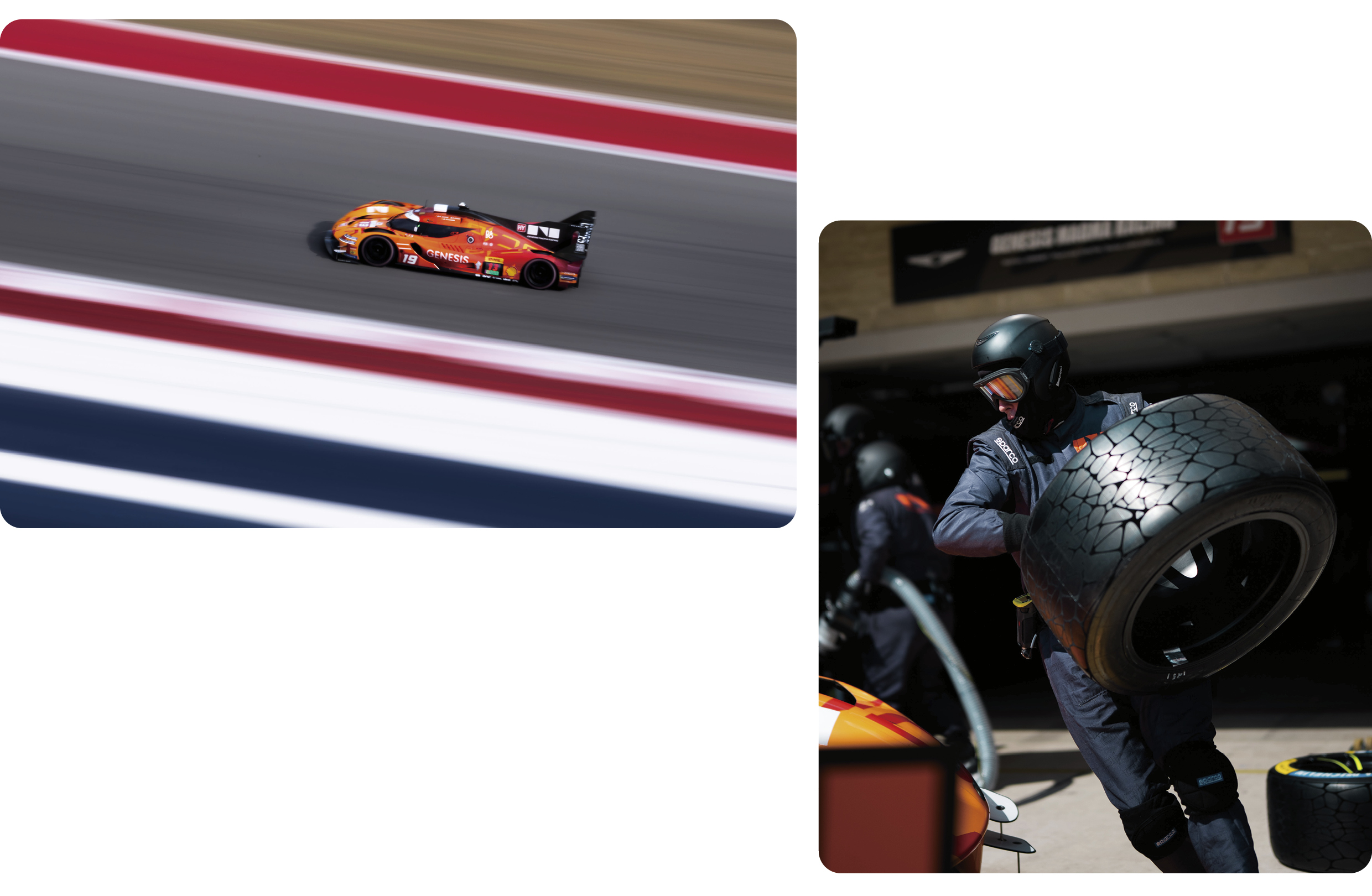
Then the #78 Lexus stopped again with 1 hour 9 minutes remaining, triggering another VSC. Most of the field came in for fuel. Genesis split its strategy. The #17 brought Lotterer in and put Jaubert back in the car, betting on his outright sprint speed for the run to the finish. The #19 stayed out with Jaminet. That vaulted the car all the way to fourth. It was a gamble on track position. The remaining race time sat right on the edge of the fuel window, so Genesis hoped the caution would end quickly enough to make the strategy work. It didn’t. The Safety Car period lasted longer than expected, and that flipped the math. The cars that had stopped for fuel could now make it to the finish without another stop.
Genesis had rolled the dice, but the caution had taken the upside away. Racing resumed with 46 minutes remaining. What followed was a proper sprint to the finish, with Genesis, Cadillac, Alpine, and BMW fighting hard for position. With 40 minutes left, Jaubert could not hold off Victor Martins in the #36 Alpine on fresh tires and dropped to 11th. Jaminet then had to pit for fuel, which temporarily moved Jaubert back into the points. But Sébastien Buemi got by soon after, knocking the #17 back to 11th. Thirty minutes to go. Genesis had taken hits, recovered, tried the strategy play, and was still right on the edge of the points. The race was far from over.
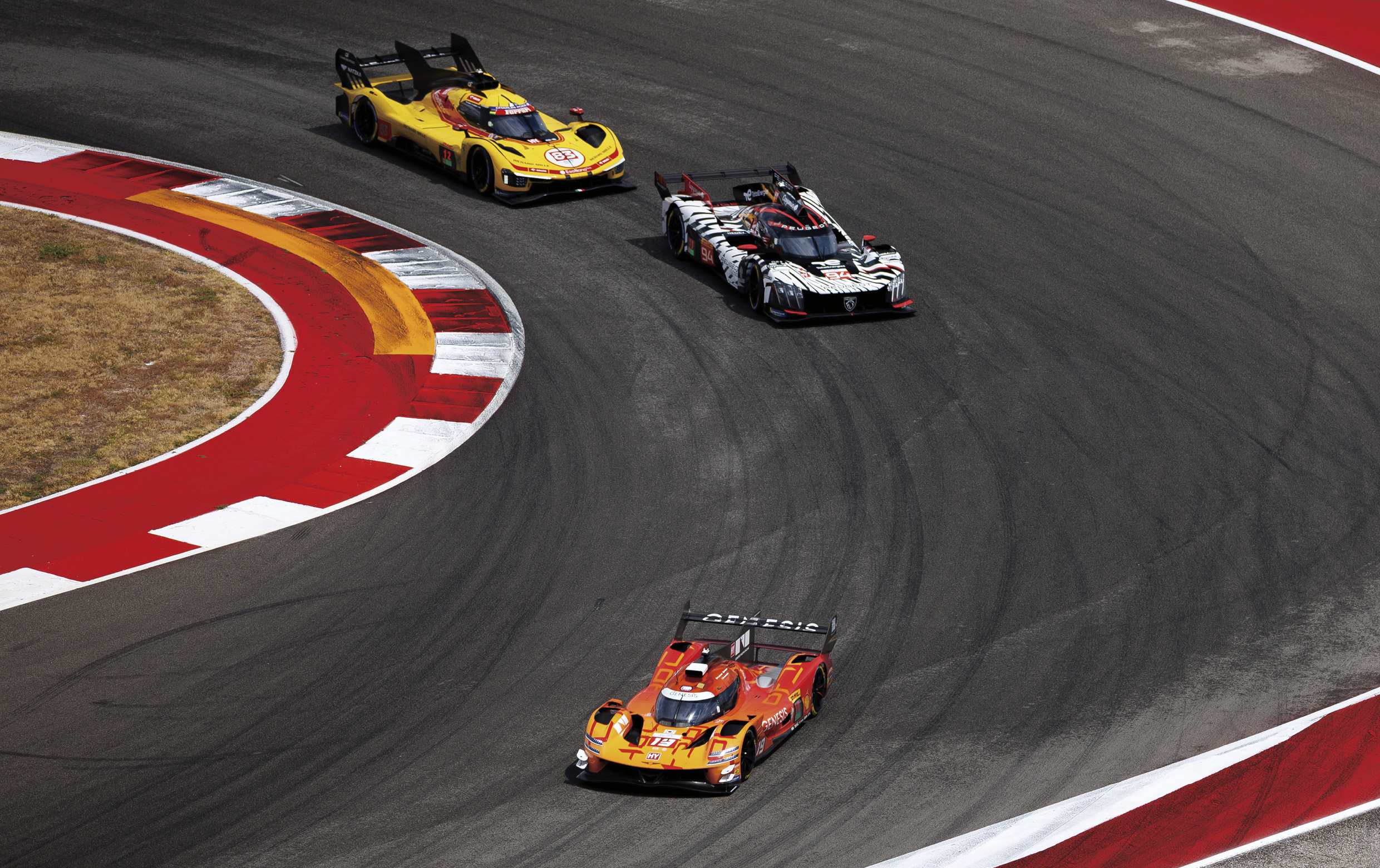
With a little more than 20 minutes left, the #7 Toyota still led, with the #50 Ferrari only about five seconds back. Farther down the order, Mathys Jaubert was hunting Kevin Magnussen’s #15 BMW, which was trying to hang on with older tires. At the same time, Sheldon van der Linde’s #20 BMW was closing from behind. Jaubert was getting squeezed from both ends—and still kept coming. He cut the gap to Magnussen to just 0.2 second, pressuring the BMW for a points-paying position while keeping one eye on the car filling his mirrors.
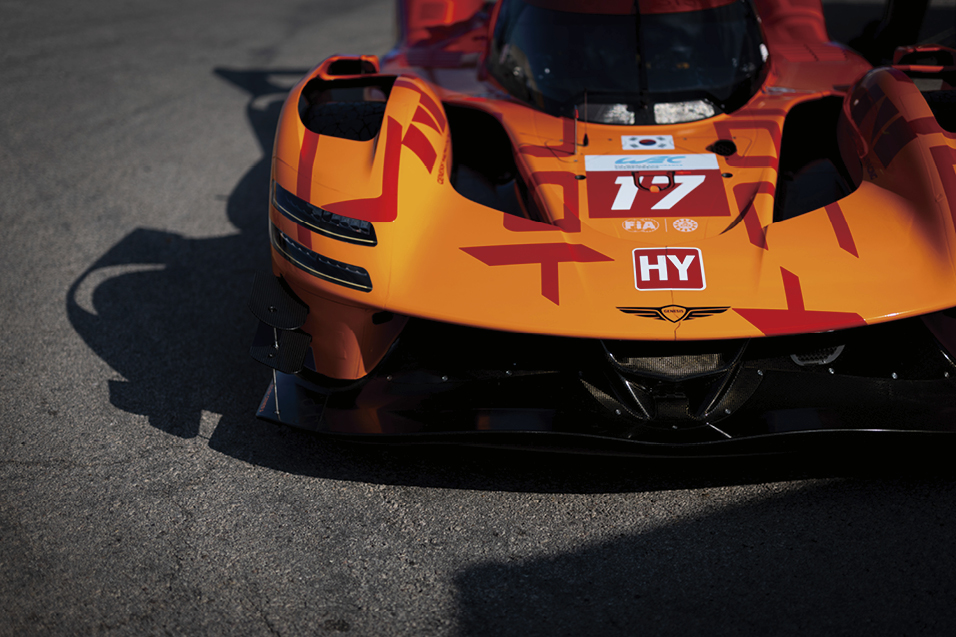
Then, with 12 minutes to go, the whole race flipped. The leading #7 Toyota of Nyck de Vries suddenly hit trouble, and the Toyota garage could only watch as a potential Lone Star Le Mans victory disappeared. Toyota was still chasing its first win at this event, and this one had been right there. The #50 Ferrari inherited the lead. Alpine moved into second. Cadillac moved into podium position. And Jaubert was suddenly back in 10th. He did not waste the opportunity. With seven minutes remaining, he had already charged up to eighth, picking off cars as the race sprinted toward the checkered flag.
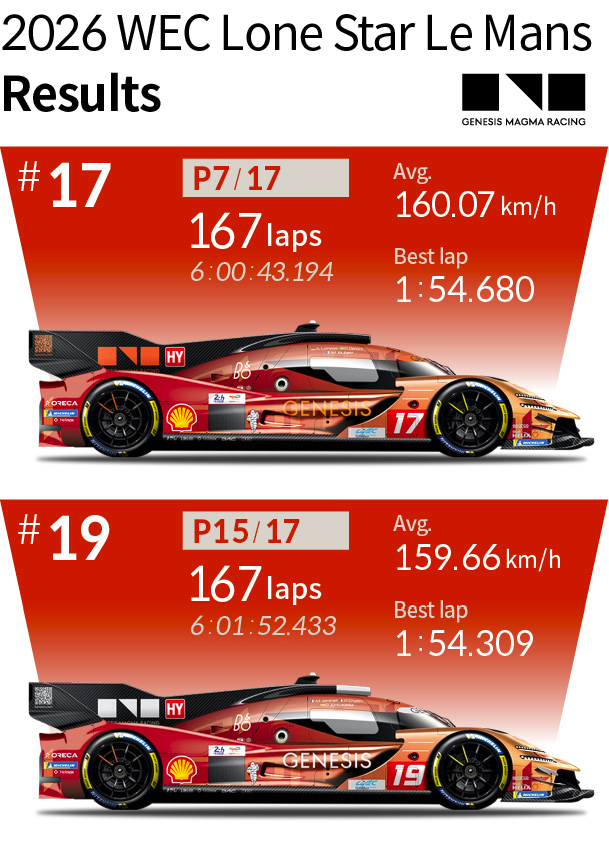
The #50 Ferrari ultimately took its first win of the season. The #38 Cadillac finished second, while the #35 Alpine was hit with a five-second penalty and dropped to the final podium spot. For Genesis, though, the final minutes belonged to Jaubert. He had already dragged the #17 back into 10th. Then he went after the cars ahead one by one. First came the BMW. Then the Peugeot. Jaubert crossed the line in eighth, giving Genesis Magma Racing its second points finish of the season, following Spa-Francorchamps. And there was one more move still to come. The #12 Cadillac ahead received a five-second penalty, which promoted the #17 Genesis to seventh overall.
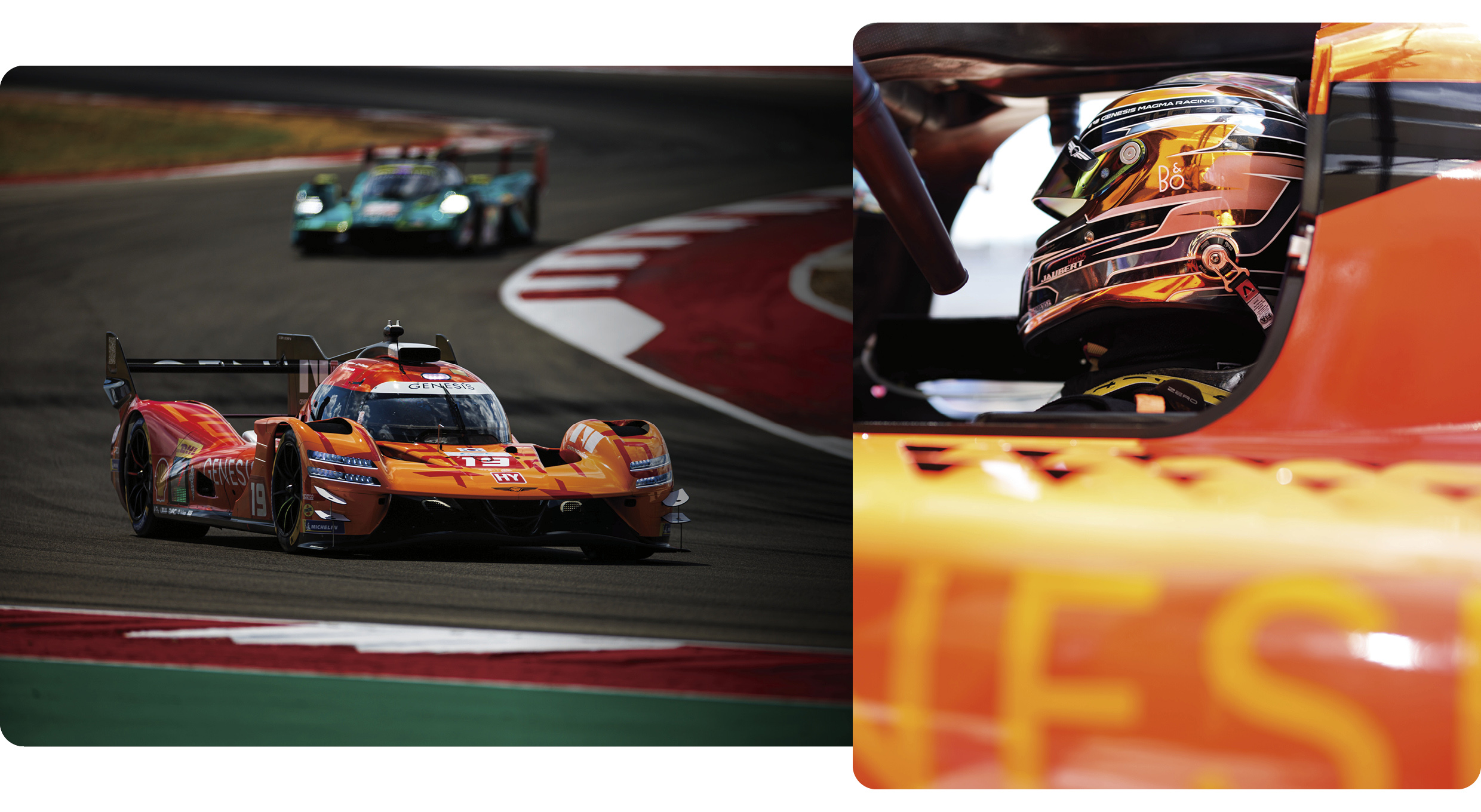
Jaminet also brought the #19 home in 15th, giving Genesis Magma Racing another clean two-car finish after São Paulo. That mattered just as much as the result itself. The team had now shown that it could get both GMR-001s to the finish without major trouble—and that it did not need a desperate strategy gamble to score points. The raw pace was there, too. One number stood out: the #19 GMR-001 set the fastest Sector 1 time of the race, from the start/finish line through Turn 6.
With the North American round complete, the championship now heads across the Pacific for Round 6 at Fuji Speedway on September 27. Set against the backdrop of Mount Fuji, Japan’s signature endurance race traces its roots back to the 1960s. Since 2012, it has run to a six-hour format instead of the traditional 1,000-km distance.
The WEC has also finalized a heavily revised second-half schedule. After the outbreak of the U.S.-Iran war pushed the season-opening Qatar 1812 km into the second half of the year, conditions in the Middle East failed to improve. In July, both the Qatar round and the Bahrain season finale were ultimately canceled. The FIA reshuffled the calendar in response. After Fuji, Genesis Magma Racing will continue its debut season with the 6 Hours of Barcelona on October 18, followed by the 6 Hours of Monza on November 8.
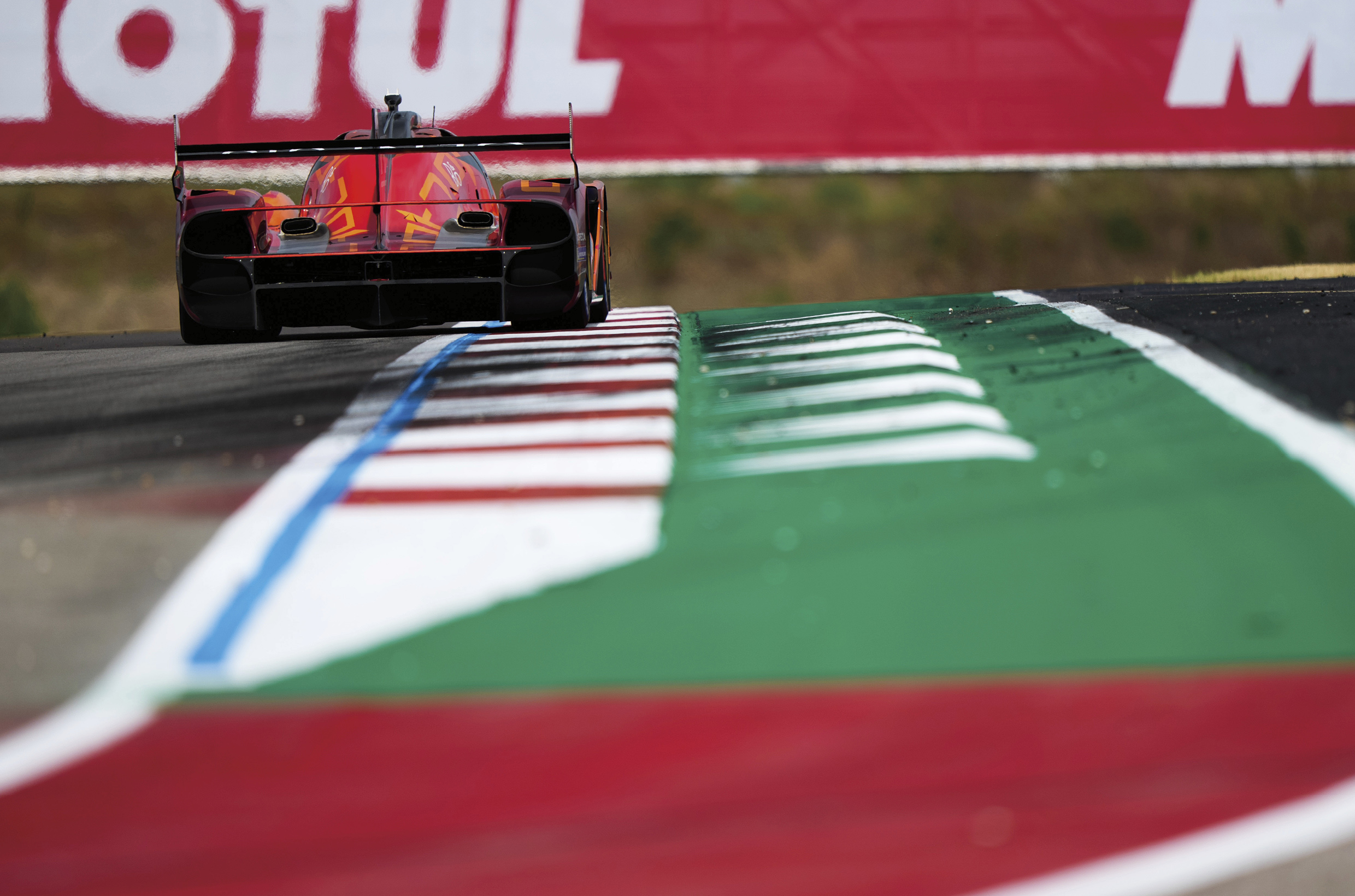
For Genesis, the job from here is simple. Take the reliability it showed in Texas, combine it with the pace that pushed the GMR-001 into the points, and turn that into an even bigger result before the season is over. And there is still a lot left in reserve. Genesis has yet to spend a single Evo Joker. That means the car is still running with meaningful development potential in hand. The team is learning fast. The cars are finishing. The pace is showing up. Now it is about converting all of that into results.
Written by: Soo-jin Lee
In 1991, Lee’s passion for cars led him to enthusiastically write letters to the newly launched Korean car magazine Car Vision. This unexpected connection led him to start his career as an automotive journalist. He has served as editor and editorial board member for Car Vision and Car Life, and now works as an automotive critic. While eagerly covering the latest trends like electric vehicles, connected cars, and autonomous driving technology, he is also a car enthusiast who secretly hopes that the smell of gasoline engines will never disappear.