AI summarized the main points
AI-generated summary. Please refer to the full article for precise details.
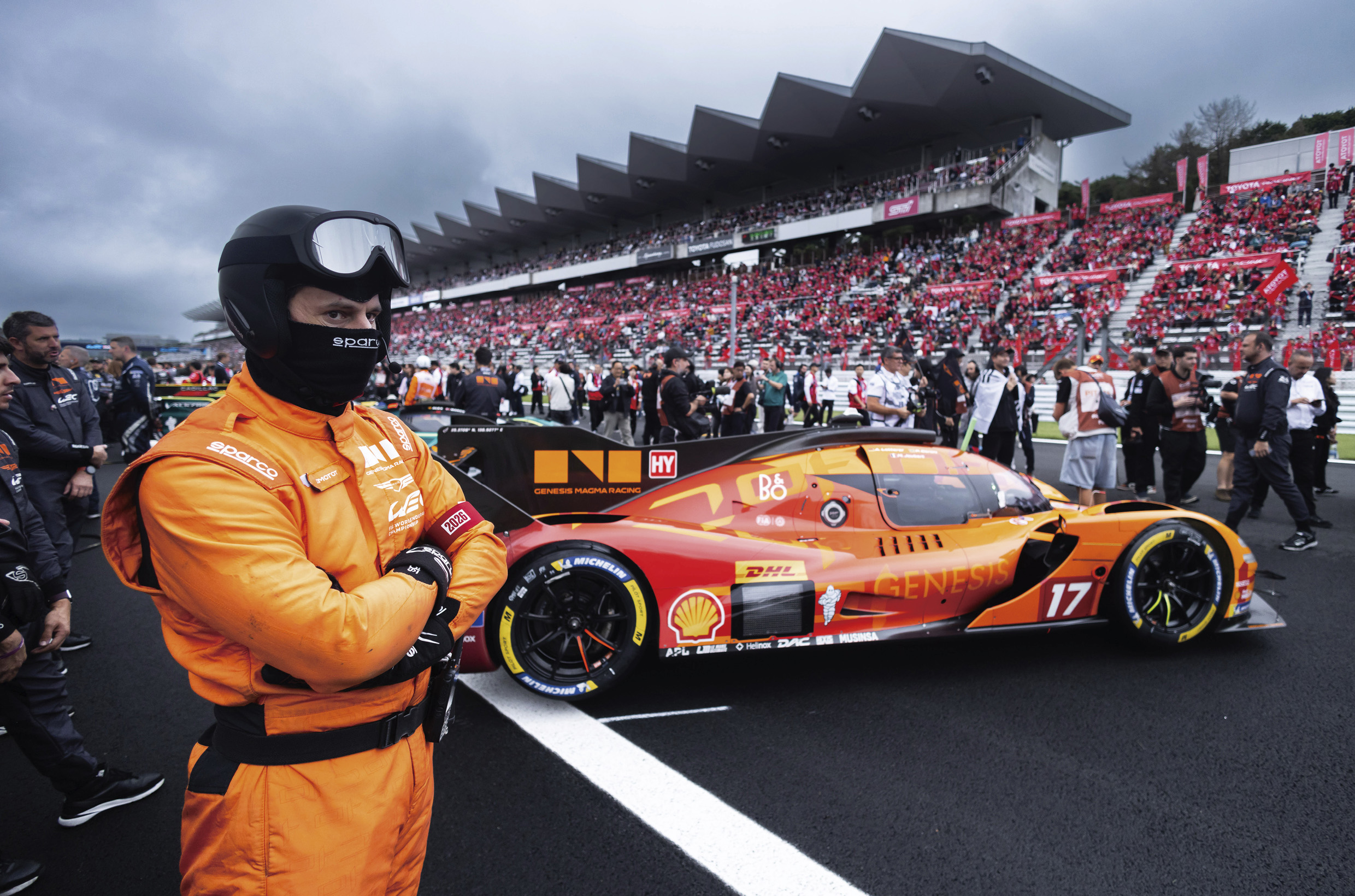
After reaching the midpoint of the season in São Paulo and then racing at Lone Star Le Mans in Texas, the World Endurance Championship headed to Japan for Round 6, the only Asian stop on this year’s calendar. The venue was Fuji Speedway, one of Japan’s most important circuits alongside Suzuka. Opened in 1966 and operated by Toyota since 2000, Fuji carries the kind of history that gives a race weekend instant weight. And it almost became something completely different.
Back in the 1960s, Fuji was originally planned with NASCAR in mind as an oval. But the steep terrain at the foot of Mount Fuji made that idea impractical, forcing the project to evolve into a European-style road course. The “Speedway” name is one of the few clues left from that original plan.
Fuji Speedway: Flat-Out Speed Beneath Mount Fuji
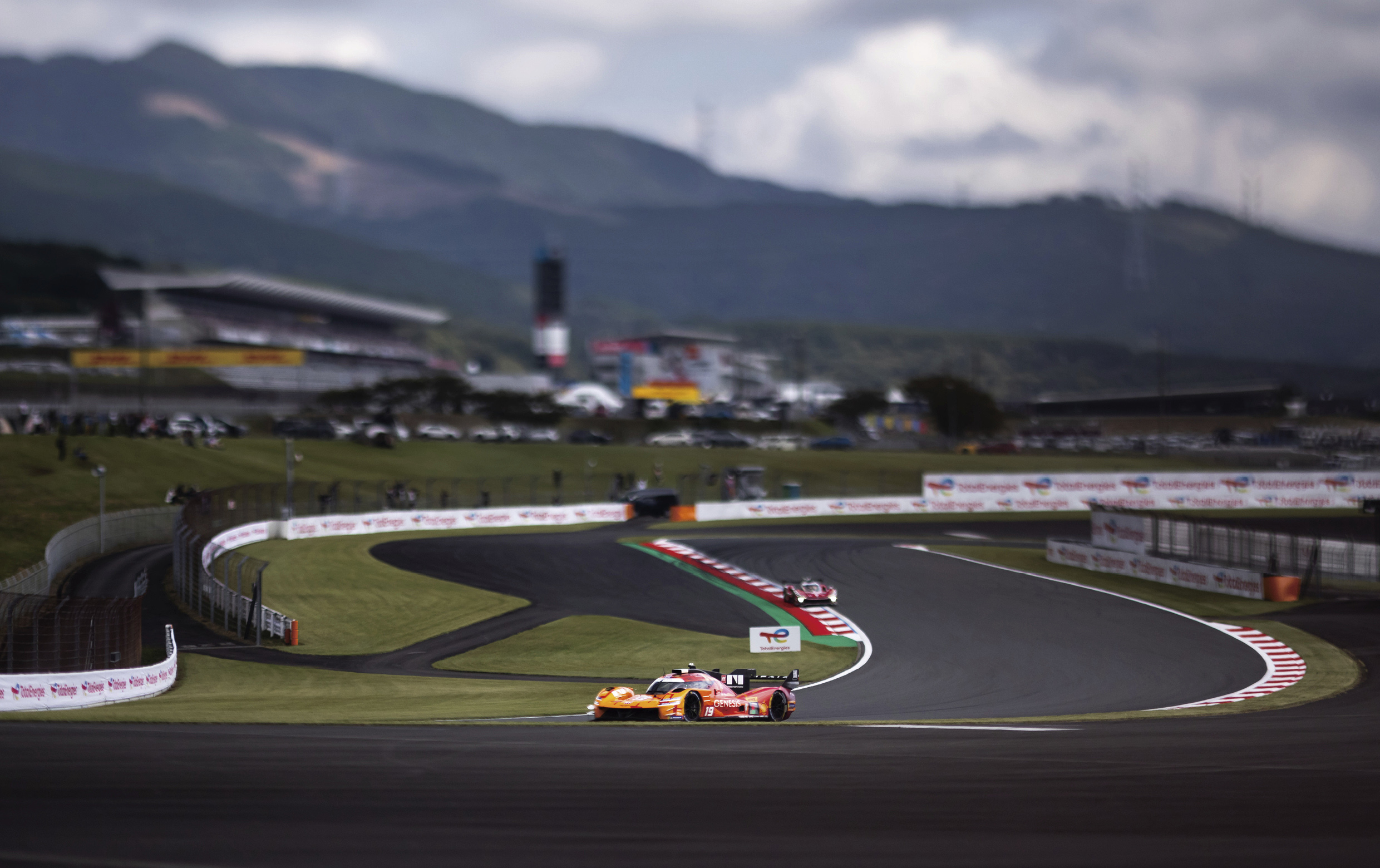
Fuji made history in 1976 when it hosted Japan’s first Formula 1 Grand Prix. For years, the circuit belonged to Mitsubishi Estate, but Toyota bought it in the fall of 2000. At the time, Toyota was preparing its own F1 program, so it brought in Hermann Tilke to rework the circuit. The redesign eventually helped Fuji take the Japanese Grand Prix back from Suzuka for the 2007 and 2008 seasons.
Fuji’s endurance-racing roots go back even further. The first Fuji 1000 km was held in 1967, two years after the circuit was completed, under the Toyota Motor Sports Club. In 1985, the race became an international round of the All-Japan Sports Prototype Championship. It even survived the oil-crisis era. What finally killed it was the collapse of top-level global endurance racing, and the Fuji 1000 km disappeared after 1992.
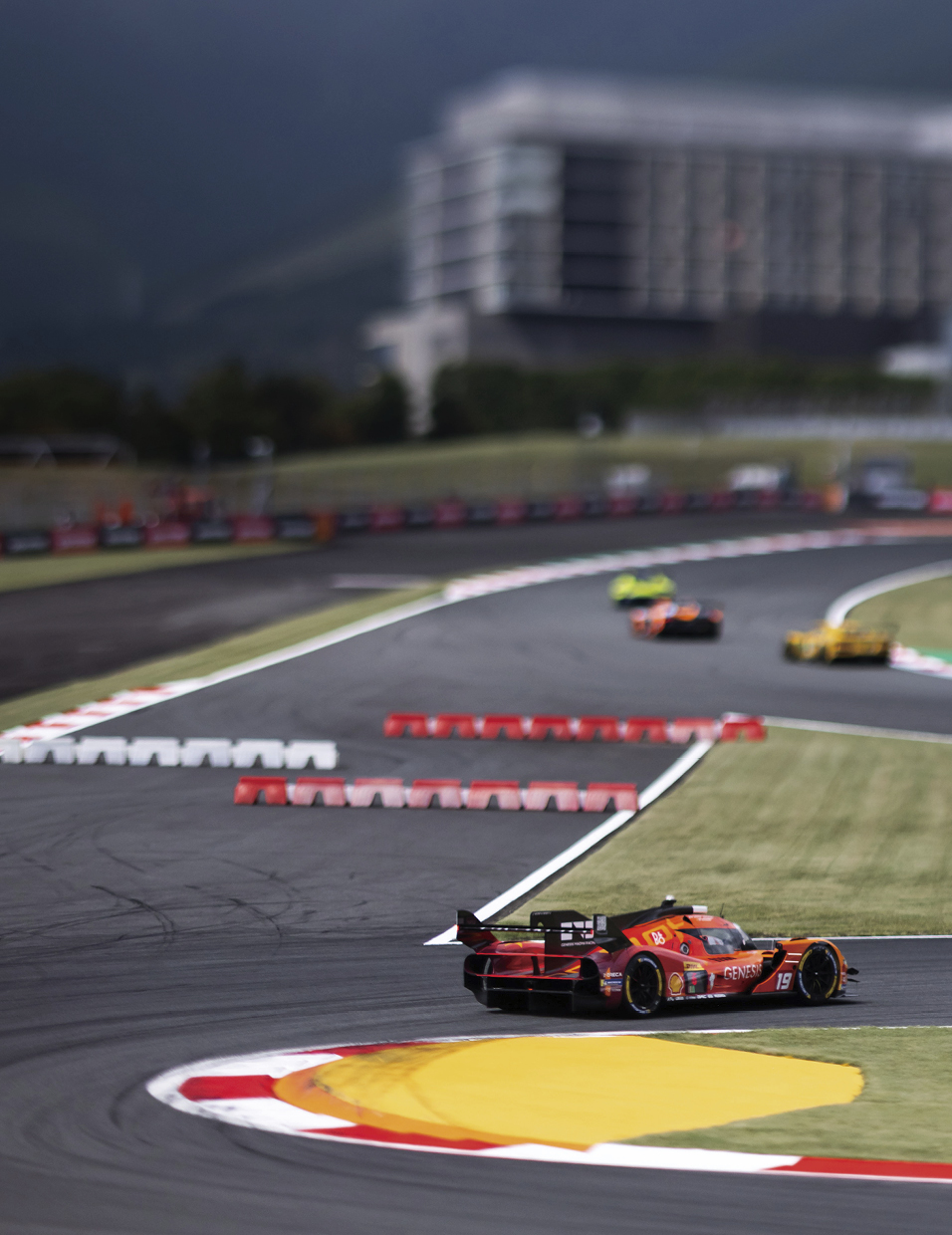
Then came the comeback. When the modern WEC launched in 2012, Fuji returned with it. The old distance-based format gave way to a six-hour race, and the circuit quickly re-established itself as one of the championship’s regular stops. Fuji matters even more in the Hypercar era, especially with Toyota racing on home turf. In 2025, the track hosted the 100th race in WEC history, another big milestone for the circuit. With 12 WEC races held there, Fuji ranks as the fourth-most frequently visited circuit in series history.
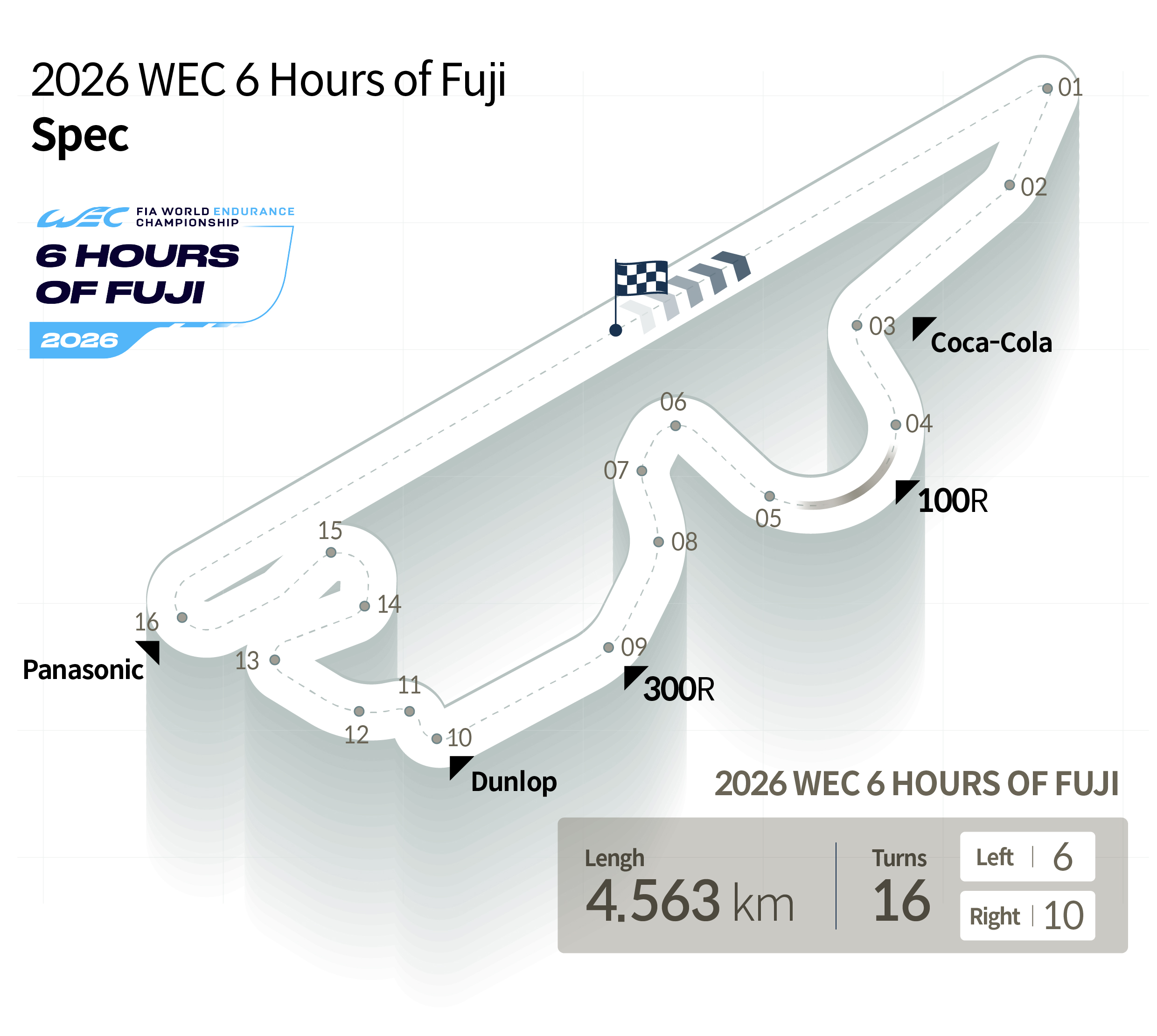
At 4.563 km, Fuji is not especially long, but the lap changes character dramatically from one sector to the next. The first thing that gets your attention is the straight. It stretches more than 1.4 km, and Hypercars can top 330 km/h before hammering the brakes for Turn 1. That is one of the biggest passing zones on the circuit. It is also one of the easiest places to get it wrong. Wheel lockups, missed braking points, and first-corner contact are all part of the risk.
After Turn 3, Coca-Cola Corner, the track drops downhill into the fast 100R sequence through Turns 4 and 5. This is where the car really starts leaning on the tires—and the driver’s neck. The downhill 300R section through Turns 8 and 9 looks mild on paper, but the lateral load is anything but. At the end of that run sits Turn 10, Dunlop Corner, which opens Sector 3 and demands especially precise braking.
Then Fuji changes personality again. Sector 3 climbs steeply and strings together a series of tight left-right corners. This is where brute force stops working. The car needs balance, precision, and clean placement. The final corner, Turn 16 Panasonic, may be the most important of all. It is a blind turn-in, and whatever happens there carries all the way down the main straight. Get it right and you launch onto the longest full-throttle section of the lap with maximum speed. Get it wrong and you pay for it all the way to Turn 1.
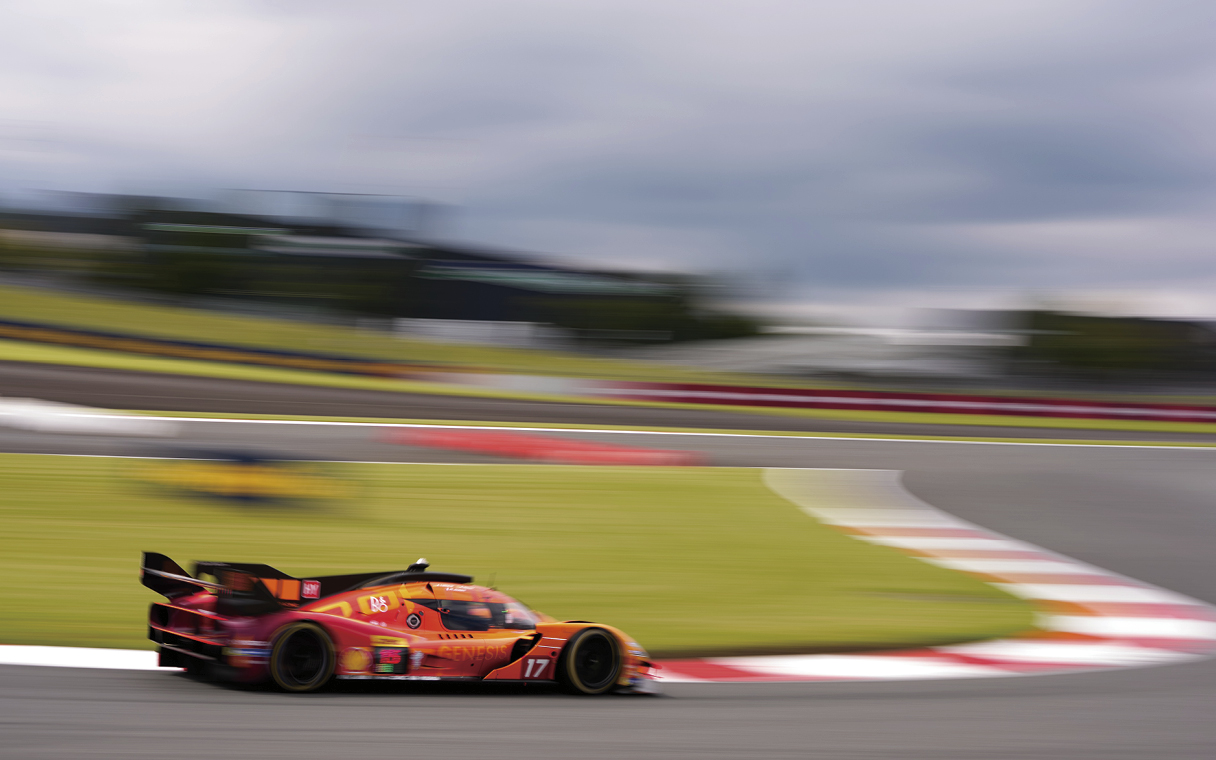
That contrast is what makes setup at Fuji such a headache. The long main straight pushes teams toward low drag. But strip away too much downforce and Sector 3 starts punishing you immediately. Finding the compromise between straight-line speed and low-speed grip is the whole game. And then there is the weather. Fuji sits at the foot of Mount Fuji, where conditions can change fast. Clear skies can turn into cloud cover and heavy rain with very little warning. Half-wet conditions are where things get especially messy. If only parts of the circuit are damp, the decision to stay on slicks or switch to wets can completely reshuffle the order. That is one reason Fuji is so difficult to predict. Recent results back that up. Over the past two years, none of the drivers who started from pole went on to finish on the podium.
Genesis Leans on Experience at Fuji
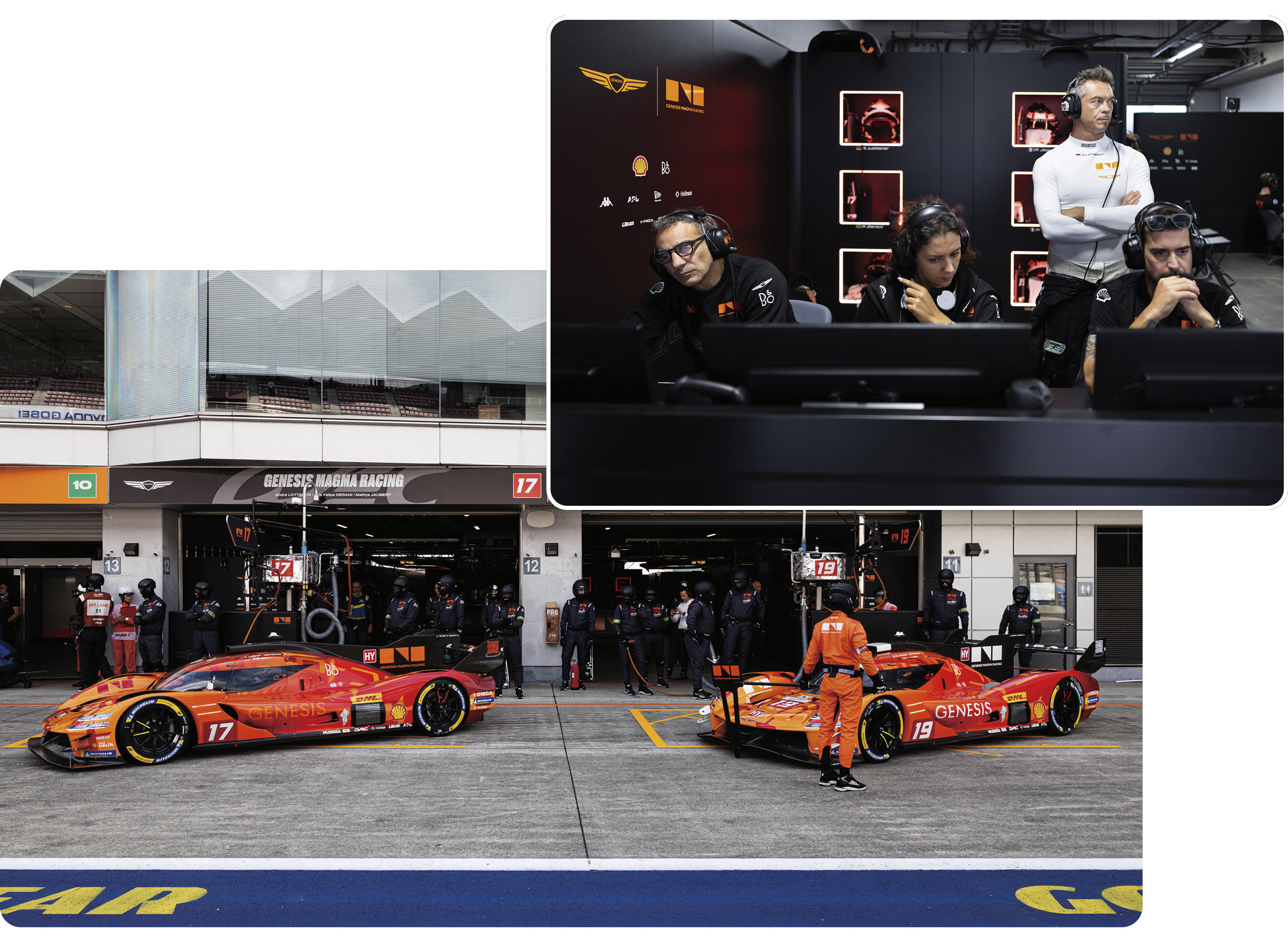
Last year’s winner at Fuji was Alpine, which started ninth on the grid. One of the drivers in that car was Paul-Loup Chatin, now racing for Genesis Magma Racing. André Lotterer knows Fuji just as well. He spent 15 years racing in Japan early in his career, making the country something of a second home. Along with his 2024 win, Lotterer has five WEC podium finishes at Fuji. For a team arriving with zero GMR-001 running data at the circuit, that experience mattered.
Justin Taylor, Genesis Magma Racing Chief Engineer said: “Austin gave us our best result of the season, and that genuinely means something for us — it shows what this team is capable of when everything aligns. At the same time, the #19’s race unraveled due to a strategic error and we finished last. That's painful and it's something we've addressed openly and honestly as a team. Both outcomes matter, and understanding the gap between them is as important as anything. In Fuji, we're going in without the benefit of a pre-race test, which adds a layer of complexity. We'll lean heavily on simulation and the setup knowledge we've accumulated across the season. To perform well, the cars must be fast on the long straight, stable in the high-speed 100R corner and able to manage rear tire temps in the twisty and cresting Sector 3. Add to that the almost constant threat of rain and we can be sure that Fuji will offer another big challenge.”
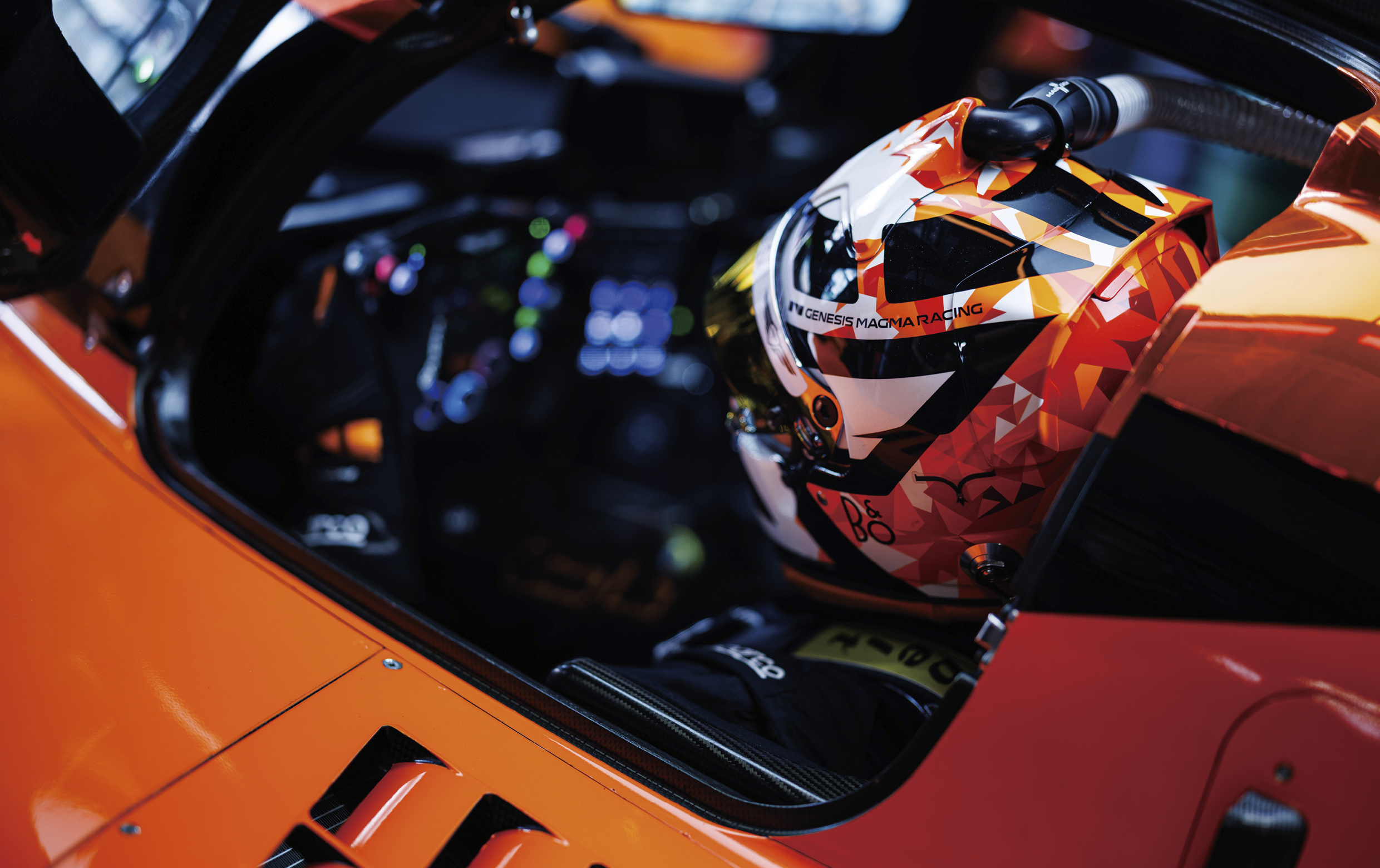
Paul-Loup Chatin was just as eager to see what the GMR-001 could do.
“Fuji is a track I have very good memories of, especially after winning there last year, so I’m really looking forward to coming back to Japan and to see the potential of our GMR-001 Hypercar at the track,” Chatin said.
“Fuji is challenging because you need a good compromise between straight-line speed and performance in the corners. Managing the tires will also be important, particularly over a long stint. My favorite part of the lap is probably the final sector, especially the last corner and the long run onto the main straight. It’s a great feeling when you get that section right. Our target is clear: we want to score our first points with car #19. We know the potential is there, and we have made good progress since the beginning of the season. The key will be to put everything together over the whole weekend and have a clean, consistent race.”
Texas blew the championship fight wide open. Ferrari’s win at Lone Star Le Mans tightened everything up after Toyota retired from the lead. Toyota still held the points advantage, but BMW was only nine points back. Ferrari’s big haul for the win pulled it to within 26 points of the lead, turning the title fight into a three-way scrap.
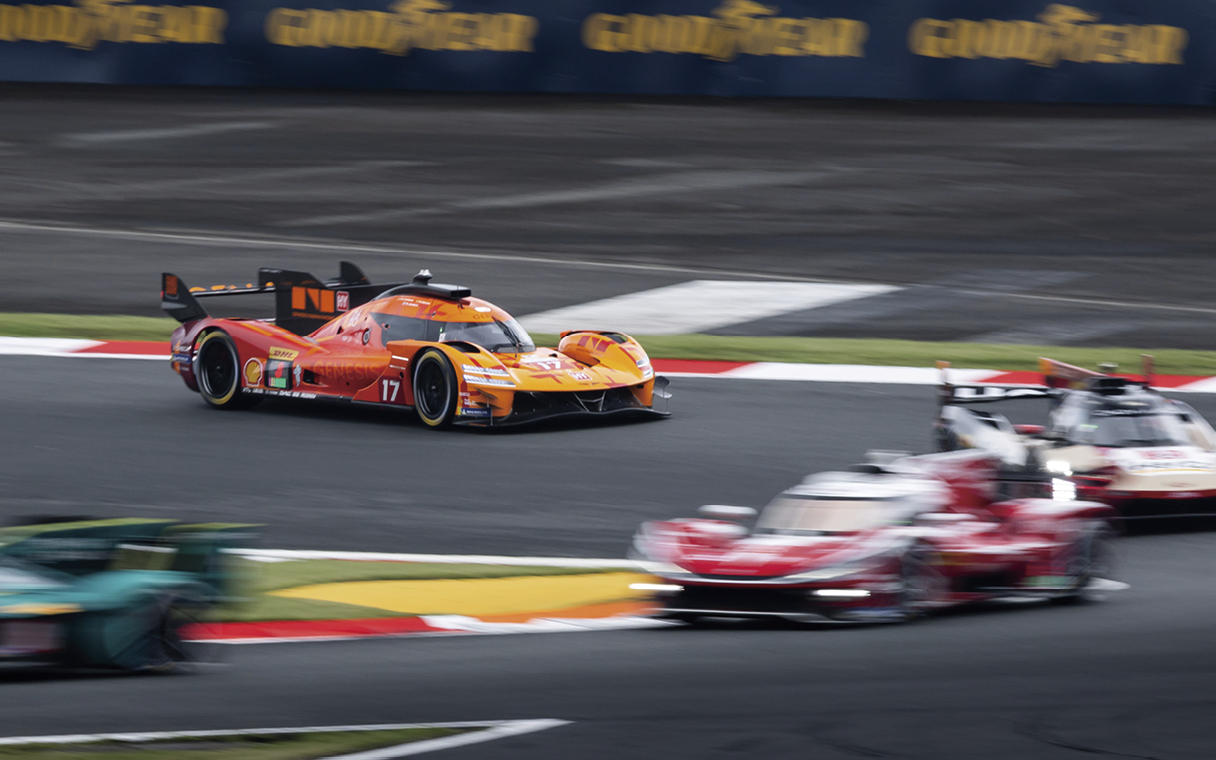
If anyone owned Fuji, it was Toyota. This was as close to home turf as it gets, and Toyota had already won here nine times. The team also held the circuit’s key records: the most Fuji wins by a driver—four, by Sébastien Buemi—and the Hypercar qualifying lap record, set by Kamui Kobayashi. Toyota’s most recent Fuji win came in 2023.
BMW, meanwhile, left Texas frustrated after failing to cash in when Toyota retired from the lead. Still, the M Hybrid V8 looked like a decent fit for Fuji, giving BMW a real shot at carrying its strong season into Japan. Ferrari had the opposite problem. The 499P had been quick almost everywhere, but Fuji remained the strange exception. The 6 Hours of Fuji was the only WEC race where Ferrari’s Hypercar had yet to score a podium. This weekend was another chance to finally break that streak.
Alpine, last year’s Fuji winner, was also entering its final WEC season. Running both Formula 1 and WEC had become too expensive, and the company decided it could no longer justify doing both. Starting at Fuji, Alpine even trimmed its driver lineup, dropping Frédéric Makowiecki and António Félix da Costa and running just two drivers per car. Peugeot, meanwhile, was still searching for a way out of its long slump and was already developing an all-new car. At Fuji, Loïc Duval was closing in on a milestone of his own: he was set to become just the ninth driver in WEC history to reach 80 career starts.
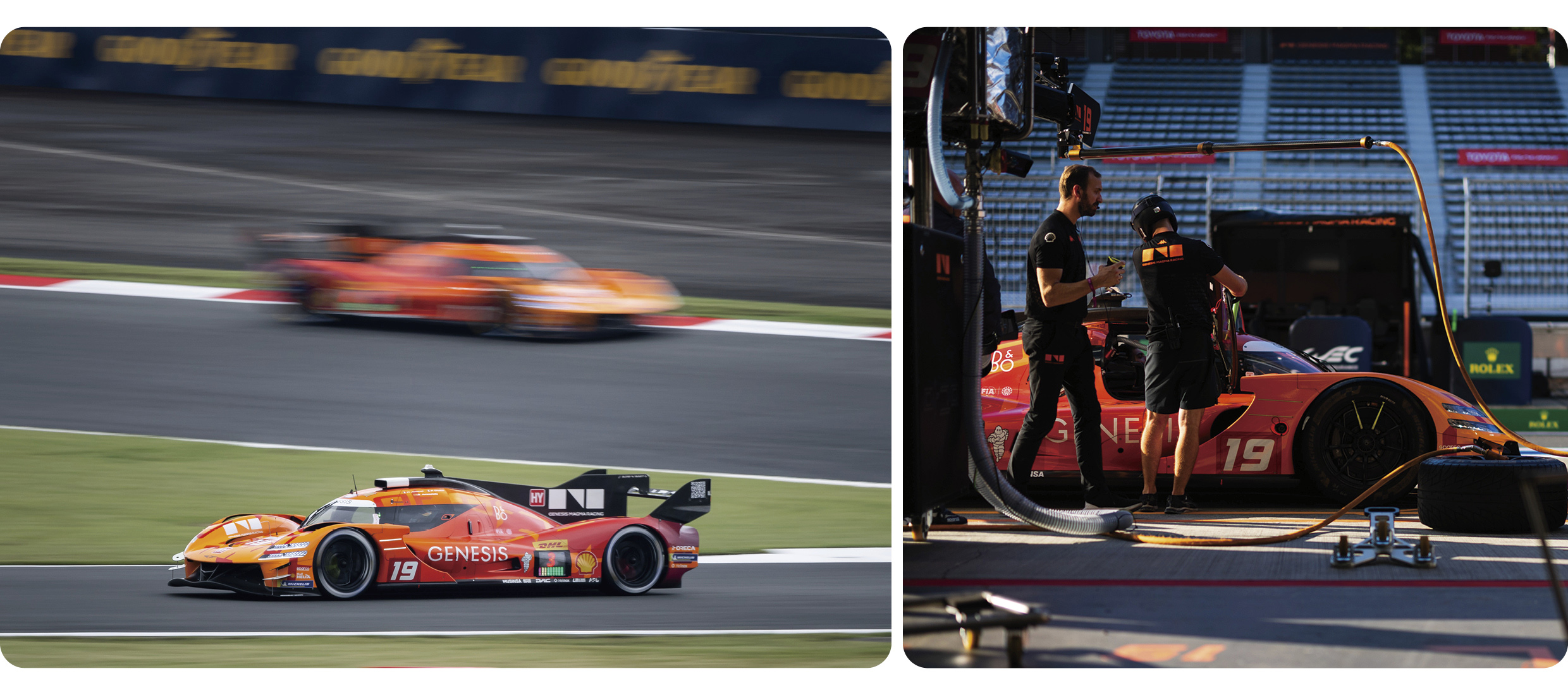
Free Practice 1 began on the morning of September 25 under cloudy but warm and dry conditions, with ambient temperature at 24°C and track temperature at 35°C. The #8 Toyota was the only car to dip into the 1:29s, setting the fastest time of the session. Cadillac and Ferrari followed. Genesis Magma Racing ended FP1 with the #19 GMR-001 sixth and the #17 16th.
Conditions shifted for FP2, which started at 2:30 p.m. The clouds cleared, a breeze picked up, and ambient temperature fell slightly to 23°C, while track temperature stayed at 35°C. This time Alpine went fastest, with Aston Martin right behind. Genesis was much closer to the front. The two GMR-001s finished fourth and fifth, and the field was brutally tight. Eleven cars ran in the 1:29s, and less than one second covered positions 1 through 15. That is about as compressed as a Hypercar field gets.
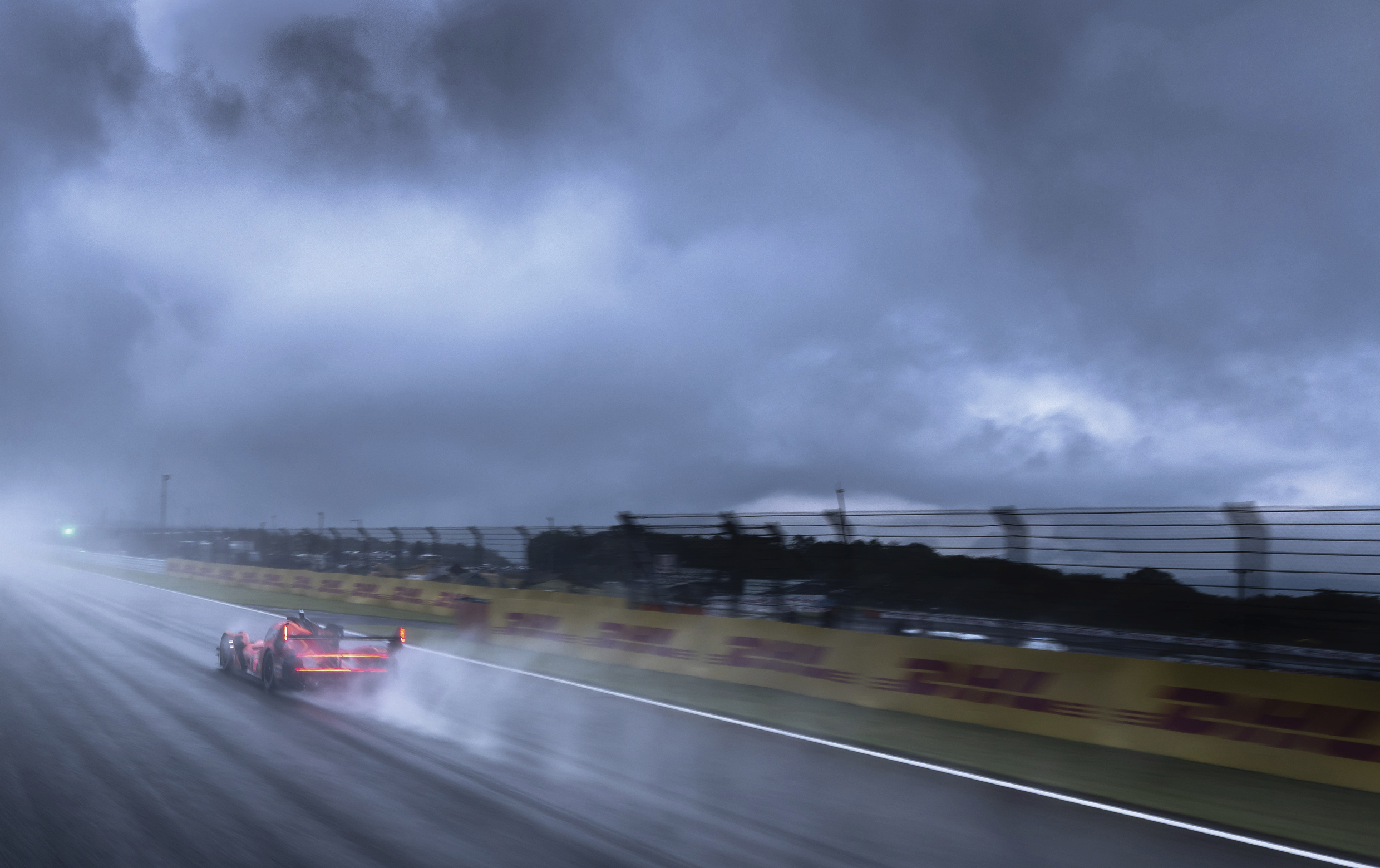
Then Fuji did what Fuji does. Heavy rain arrived for FP3 on Saturday morning, dropping ambient temperature to 18°C and track temperature to 21°C. For Genesis, that was actually useful. If practice and qualifying had stayed dry only for race day to turn wet, adapting would have been much harder. Instead, the team got a valuable look at Fuji’s notoriously tricky wet conditions before the race mattered.
The #36 Alpine was fastest again, followed by the two Aston Martins. Genesis had pace in the rain, too. Chatin put the #19 fifth, while Pipo Derani took the #17 to seventh. In LMGT3, the #34 Chevrolet Corvette from Racing Team Turkey by TF was quickest, followed by Team WRT’s BMW M4 and Proton Competition’s Ford Mustang.
Genesis Starts Higher Than Ever—and Raises Expectations
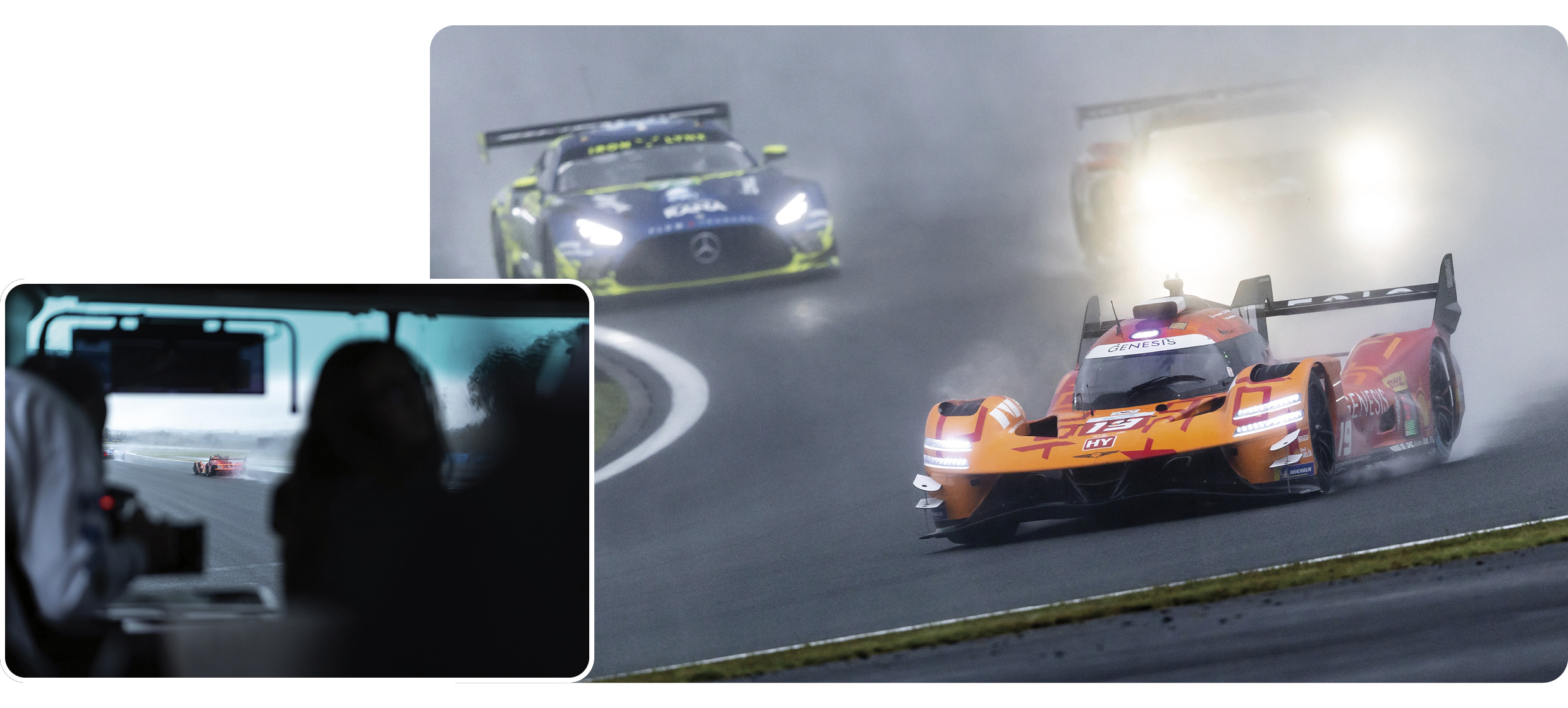
Qualifying got underway at 2 p.m. with the LMGT3 field first out, but the weather went downhill fast. Heavy rain intensified, fog thickened, and almost immediately the #21 Ferrari slammed into the guardrail and suffered major damage. The red flag came out and the session stopped. With more rain forecast, officials canceled the rest of qualifying along with the Hypercar qualifying and Hyperpole sessions. That meant the starting grid would be set using lap times from FP1 through FP3.
The #36 Alpine took pole, with the #007 Aston Martin initially second. But a penalty for its FP3 crash dropped the Aston Martin to fourth, giving Alpine a front-row lockout. Genesis benefited, too. The #19 GMR-001 moved up to third on the grid, while the #17 started fifth, one row behind. It was Genesis Magma Racing’s best starting position yet. Toyota, BMW, and Ferrari—the three manufacturers fighting for the championship—were all buried farther down the Hypercar grid. In LMGT3, Proton Competition’s #77 Ford Mustang took pole for the first time since Lone Star Le Mans the previous year.
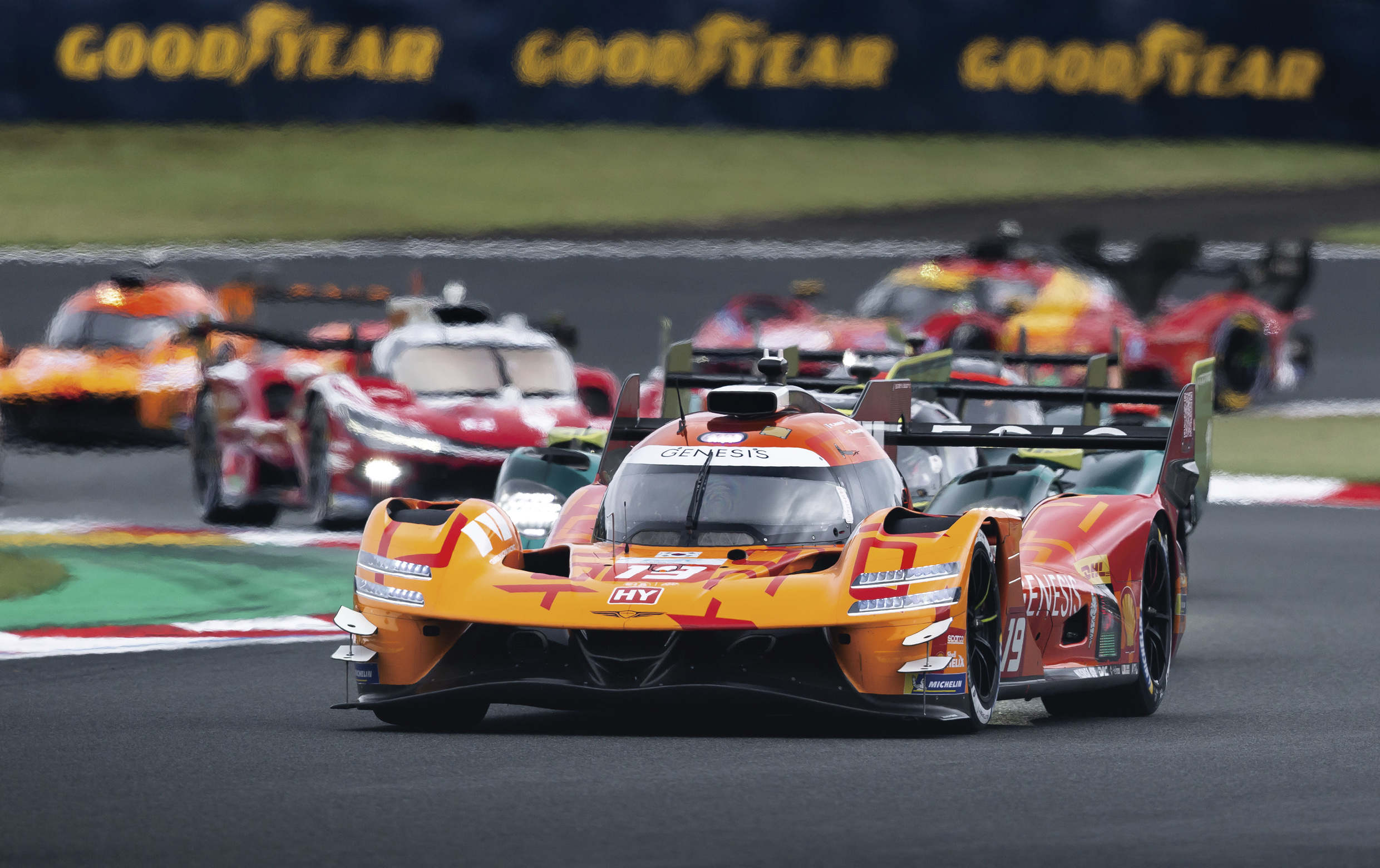
The 6 Hours of Fuji started at 11 a.m. on Sunday, September 27. Ambient temperature was 18.5 degrees C, track temperature sat at 21.5 degrees C, and humidity was a heavy 91 percent. It was not raining at the start, but parts of the circuit were still wet. The chaos started immediately. The GT field tangled in Turn 1, bringing out the safety car almost as soon as the race began.
Alpine controlled the opening phase. The #7 Toyota of Nyck de Vries tried to get past the #35 Alpine, made contact, and spun, losing a chunk of time. Aston Martin had serious pace, too. Daniel Juncadella in the #19 Genesis lost a position to one of the Aston Martins and settled into fourth, while André Lotterer ran eighth in the #17. Behind them, both Toyotas lurked in the midfield, waiting for the race to come back to them.
Three hours in, the #93 Peugeot of Paul di Resta went off with a gearbox problem, triggering a Full Course Yellow. Ferrari, meanwhile, was nowhere near the fight at the front. Things got even worse when James Calado in the #51 Ferrari was forced onto the grass after contact with a Corvette in a moment that could easily have ended much worse.
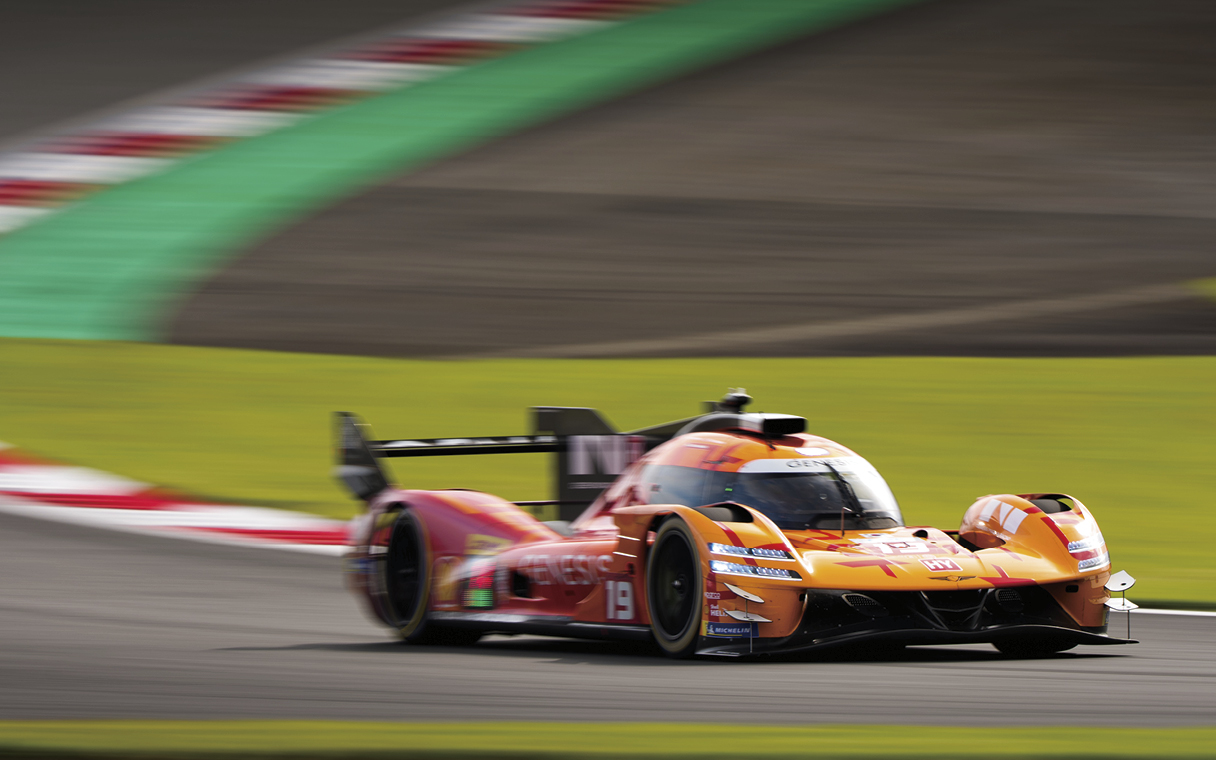
Aston Martin and Alpine were still fighting hard for the lead at the midpoint. Four hours into the race, Alex Gamble had moved the #007 Aston Martin into first, but a pit-lane violation brought a penalty and cost him the lead. While Gamble served it, the two Alpines swept back into first and second. The #007 Aston Martin dropped to seventh but still had pace, while the #009 Aston Martin sat third. Chatin’s #19 Genesis continued running strongly in sixth.
BMW and Ferrari, both still in the championship hunt, were having a rougher afternoon. René Rast in the #20 BMW suffered a puncture after contact with the #51 Ferrari. Then things got worse in the pits. An air-jack problem cost BMW even more time.
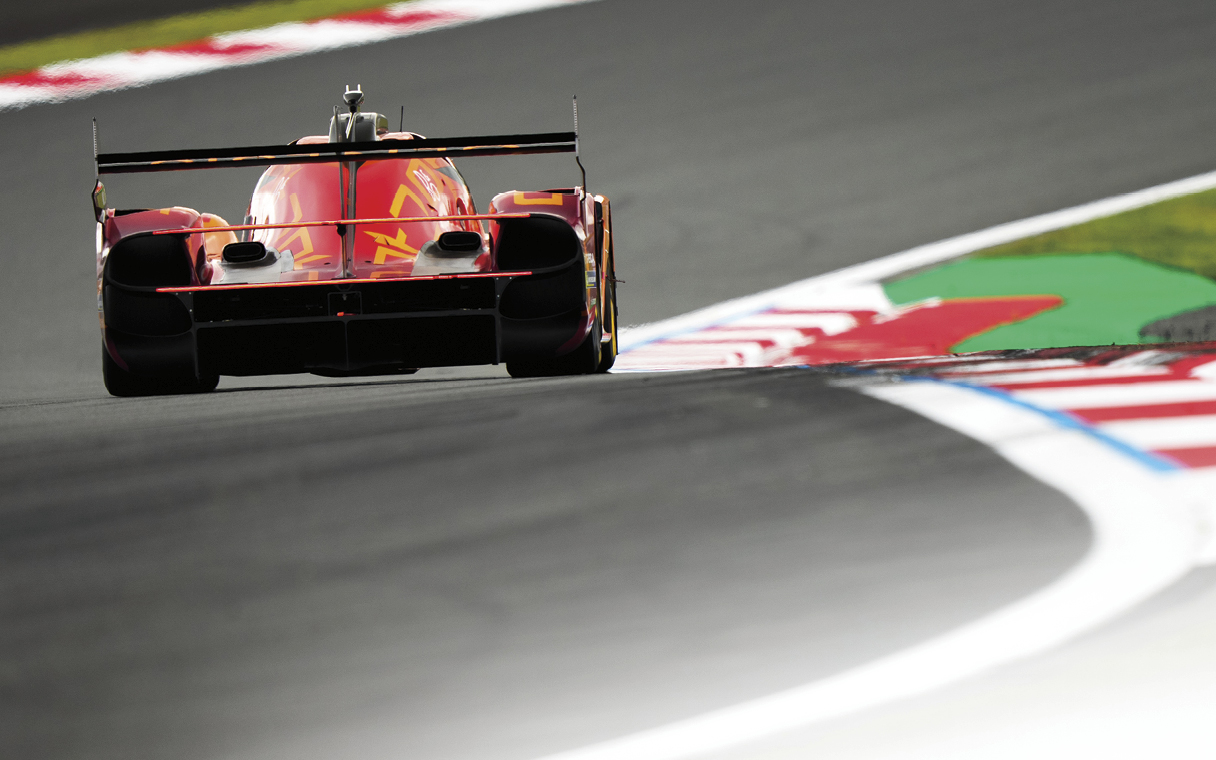
With 1 hour 51 minutes remaining, the #50 Ferrari stopped at the final corner. Moments later, the #8 Toyota made contact with an Aston Martin and spun. The #007 Aston Martin was handed a five-second penalty for the incident. Then came the second Virtual Safety Car, and much of the field headed for pit lane.
With 1 hour 11 minutes to go, Alpine still ran first and second. The #19 Genesis, now driven by Mathieu Jaminet, was fifth and holding off Ryo Hirakawa in the Toyota. Derani had the #17 Genesis in 10th. At that point, both Genesis cars were in the points. The #7 Toyota had dropped to 12th after serving a penalty. And on the main straight, the GMR-001 had no trouble matching the pursuing #8 Toyota for straight-line speed. The two cars had been running less than a second apart, but with one hour remaining, the Genesis had stretched the gap to 1.5 seconds.
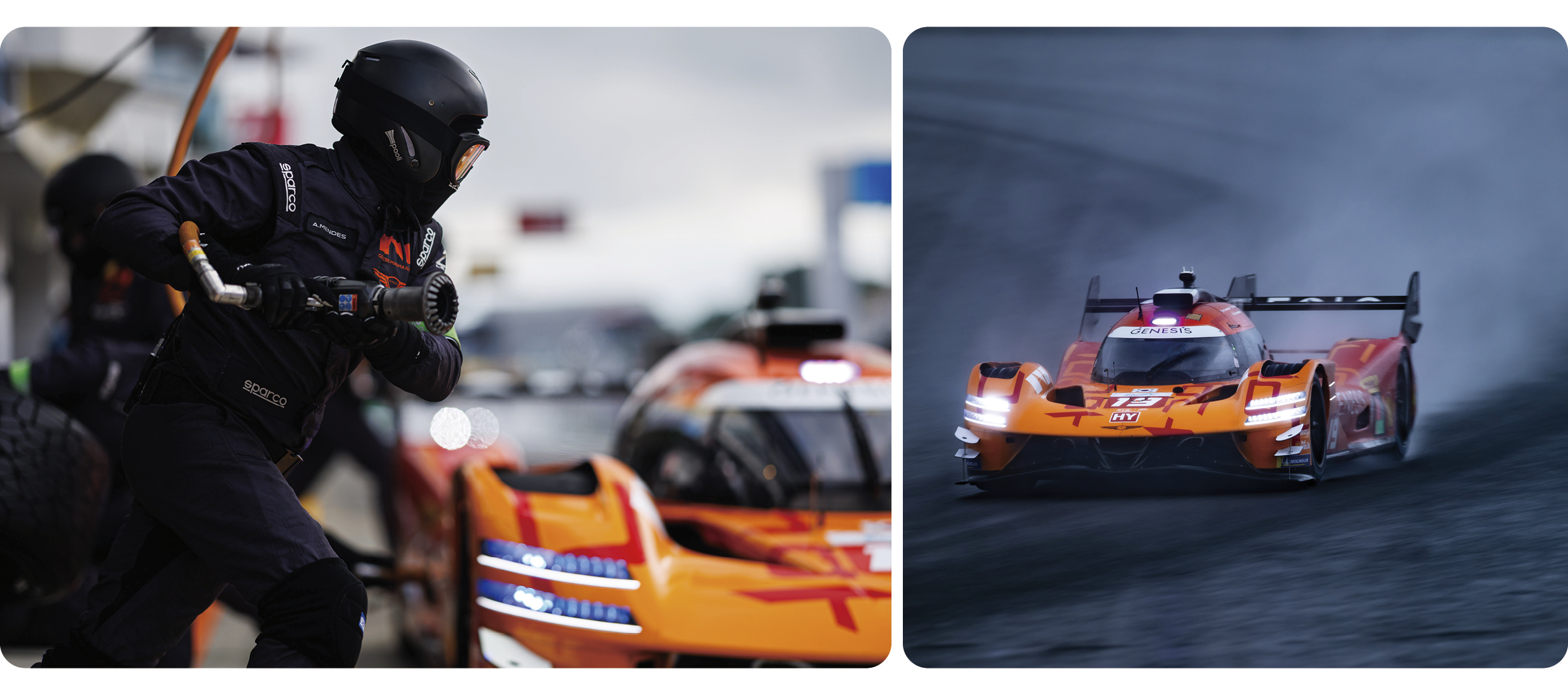
Then came the moment that changed the race. With 58 minutes remaining, the #58 McLaren LMGT3 car was involved in a major crash on the main straight after contact with another car. The safety car came out, and suddenly the whole race reset. Officials needed significant time to clear debris, remove the damaged car, and repair the guardrail. That opened the door for one last round of pit-strategy games. Rain returned, too. Broadcast cameras showed cars running with their wipers on, but teams judged the rainfall was not heavy enough to justify wet tires.
Genesis lost out in the shuffle; The #19 was delayed in the pits and fell to ninth. The #17 stayed out for one more lap before pitting and dropped to 12th. Toyota, meanwhile, rolled the dice. The #8 took on only the minimum fuel needed and kept its tires, jumping straight into the lead. The #15 BMW made a similarly aggressive call, staying on a used set and moving to second. In WEC, tire allocations are limited, so teams cannot simply bolt on fresh rubber at every stop. Sometimes the fastest strategy is making an old set last. This time, the gamble worked. Alpine and Aston Martin dropped to third and fourth.
Both Genesis Cars Make It Home Through the Chaos
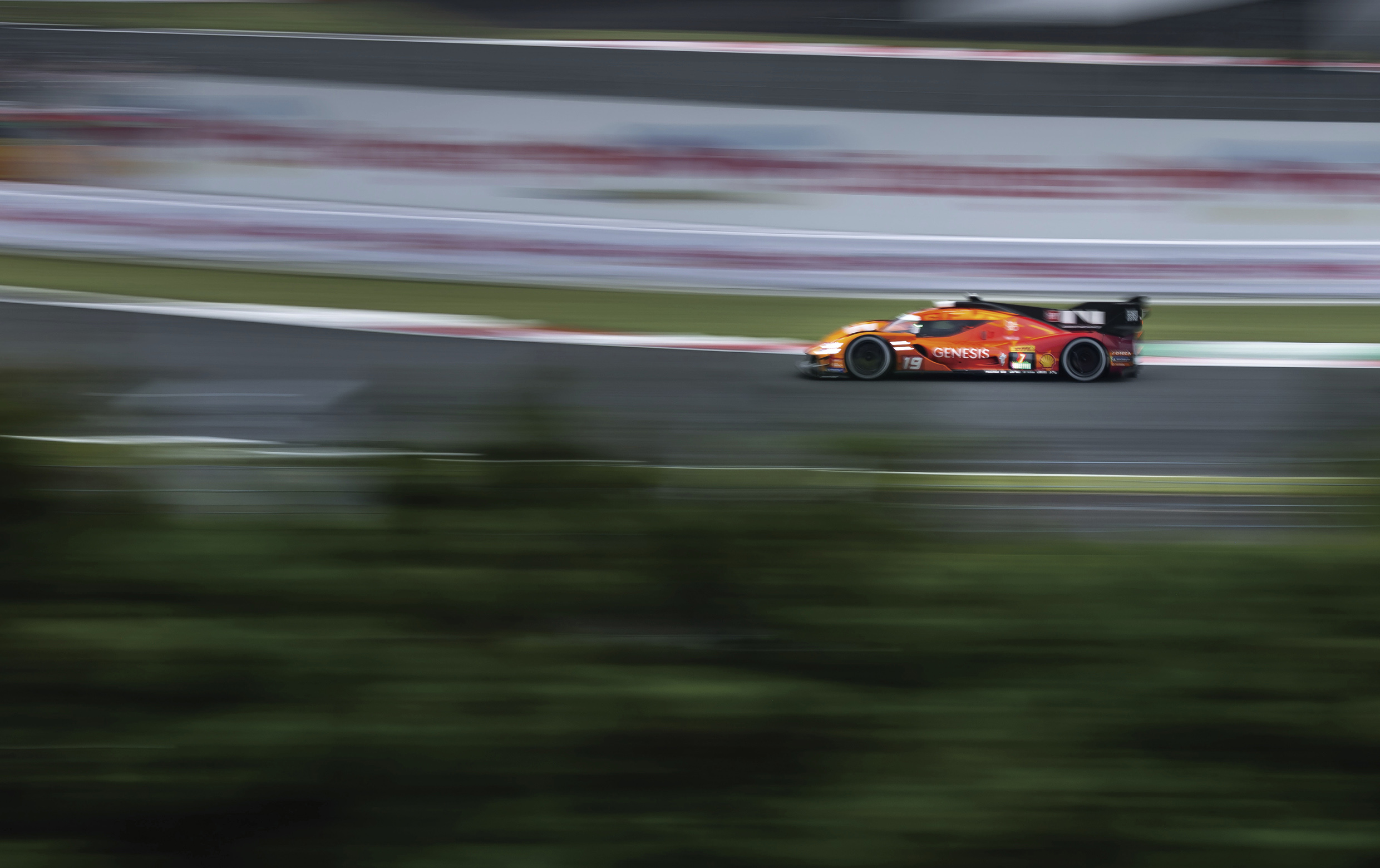
When the safety car finally pulled in, the race became a 21-minute sprint to the flag. And because the GT traffic had not been fully sorted out from the Hypercars, the restart promised chaos. Hirakawa in the #8 Toyota took off at the front, with BMW and Alpine charging after him. Genesis restarted with Jaminet eighth in the #19 and Derani 12th in the #17. Then Derani’s race took another hit. As ambient temperature dropped, his tire pressures fell below the minimum required level, triggering a drive-through penalty and effectively ending any realistic shot at points. The team had not fully accounted for how quickly the pressure would fall with the cooling conditions. Lower tire pressure increases the size of the contact patch and can help with cornering and braking, but it also raises safety concerns. That is why WEC, like most major racing series, enforces minimum tire-pressure limits.
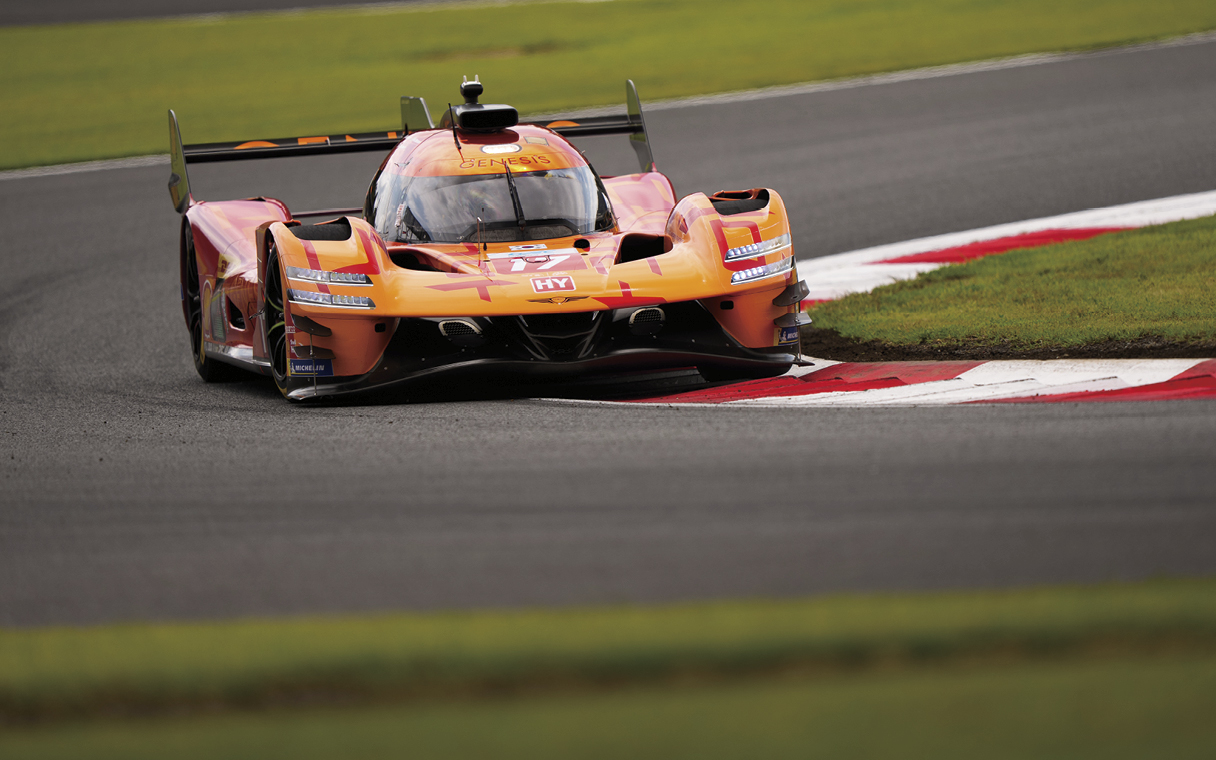
While the #15 BMW and #36 Alpine went at each other hard for second, the #8 Toyota started pulling away. Then traffic changed everything again. With five minutes remaining, the Toyota got boxed in behind GT cars, allowing the Alpine to close to within 0.5 second. Genesis, meanwhile, brought the #19 back into the pits one more time, dropping Jaminet to 11th.
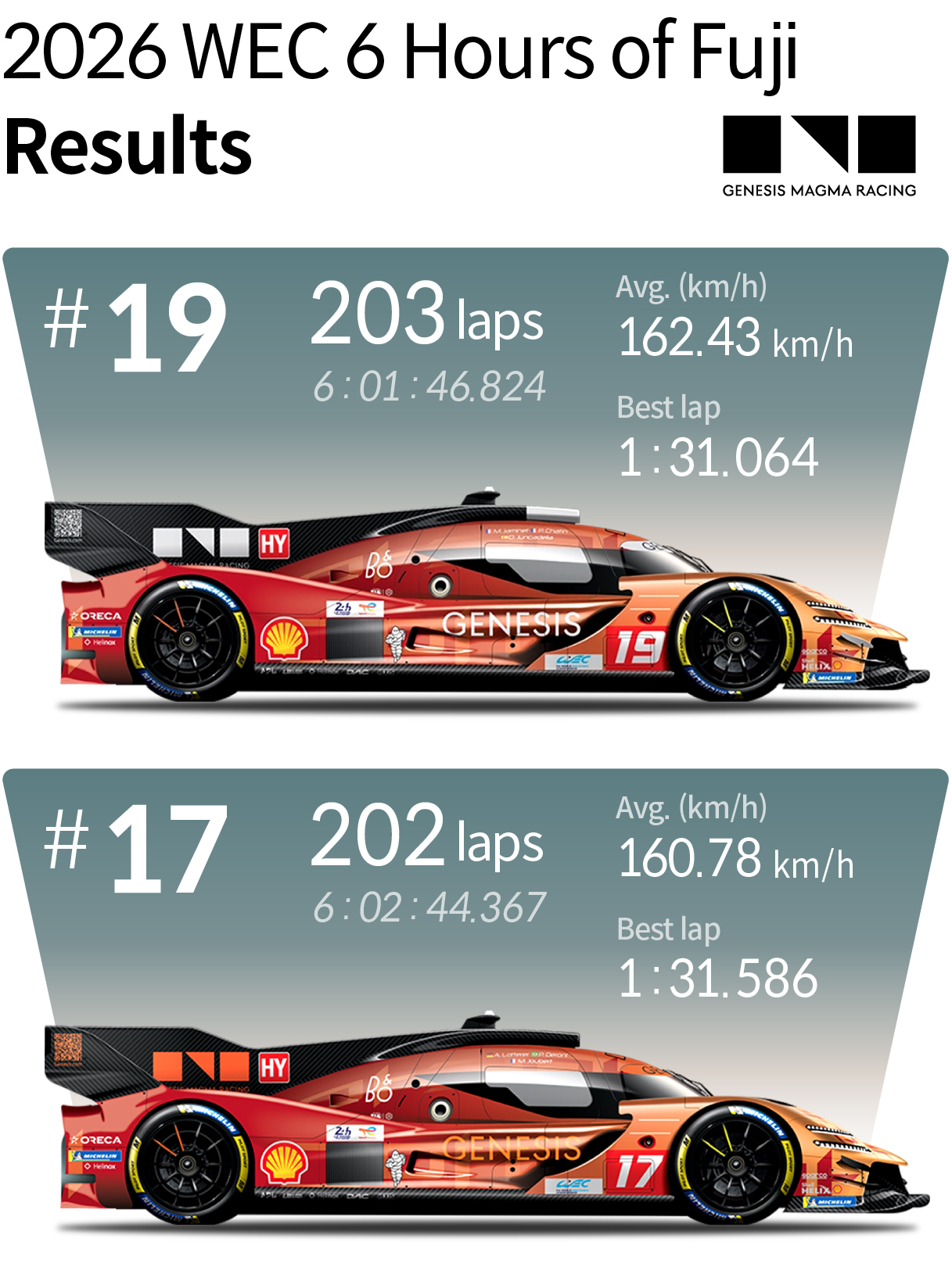
결국 #8 토요타가 후지에서 3년 만에 우승컵을 들어 올렸다. 홈그라운드에서의 10번째 우승이었다. 전략적 도박이 모든 것을 뒤집었다. #36 알핀이 2위, #15 BMW 3위로 포디엄을 차지했고 제네시스 마그마 레이싱은 11위(#19)와 15위(#17)로 아쉽게 포인트 획득에 실패했다. 내구성 문제도 없었고 경기 초반 상위권을 다툴 수 있는 좋은 페이스도 보여주었다. 다만 기상 변화에 대한 대응이나 복잡한 경기 상황에서의 전략적 선택 등 개선해야 할 부분도 확인할 수 있었다.
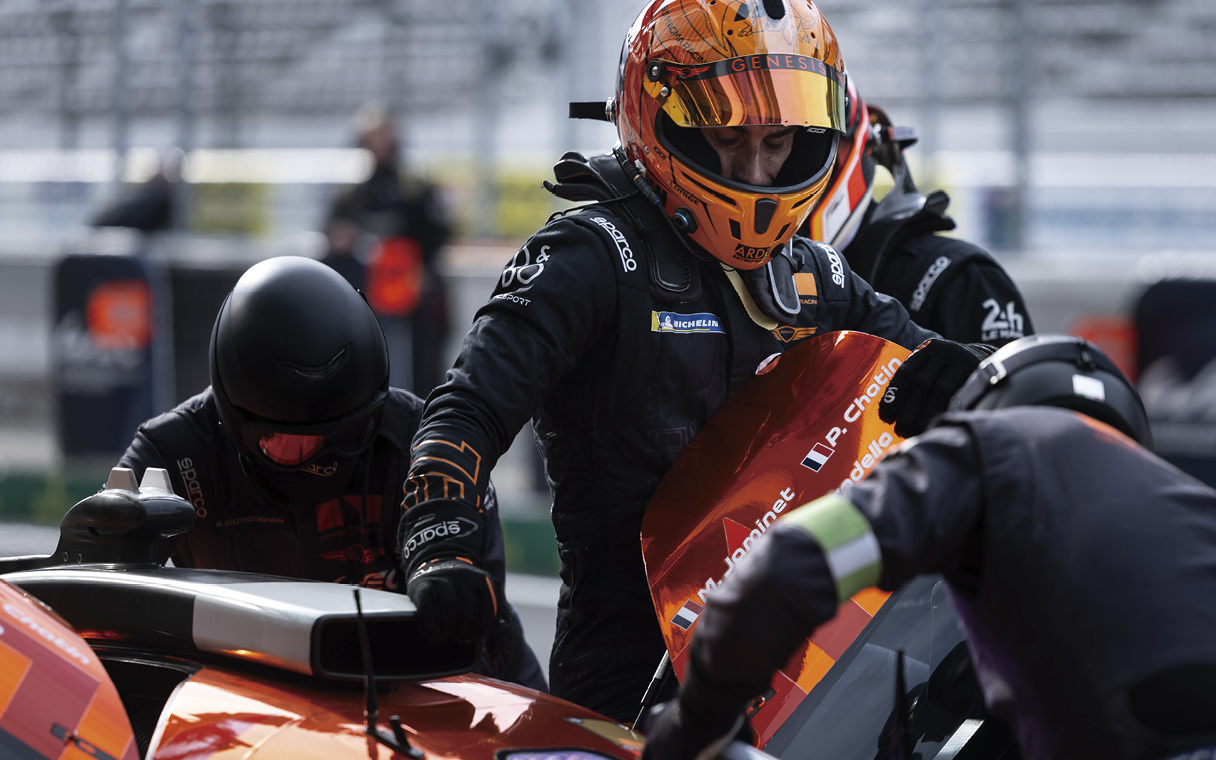
In the end, the #8 Toyota held on. It was Toyota’s first Fuji victory in three years and its 10th win at its home circuit. Strategy had flipped the race. The #36 Alpine finished second, and the #15 BMW completed the podium in third. Genesis Magma Racing came home 11th with the #19 and 15th with the #17, missing out on points. The result was disappointing, but the pace was real. There were no major reliability problems, and early in the race the GMR-001 had enough speed to run with established Hypercar teams near the front. Fuji also showed exactly where Genesis still needed work: reacting faster when the weather changed, managing tire conditions more precisely, and making sharper calls when the race turned chaotic.
Derani summed it up this way: “We just tried something different with the tires on my stint because we knew there was a lot of potential for a lot of rain so decided to keep the worn tires on the car, try to gain a few seconds, anticipating that we would anyway have to come in for rain tires. But the rain never came! Nevertheless, I am so proud of our achievements today, we have come such a long way to be here, we arrived with the intent of finishing the race and here we are with two cars at the checkered flag. We’ve learned so much during the week and I can only be proud of the massive job we have done. This is Day Zero and we should be proud of how we have started. I want to say a big thank you to the whole team, particularly to Cyril for putting so much trust in me so early on and for the whole Genesis group to have taken this leap into the unknown and here we are finishing our first race with a very competitive car and great things to look forward to.”
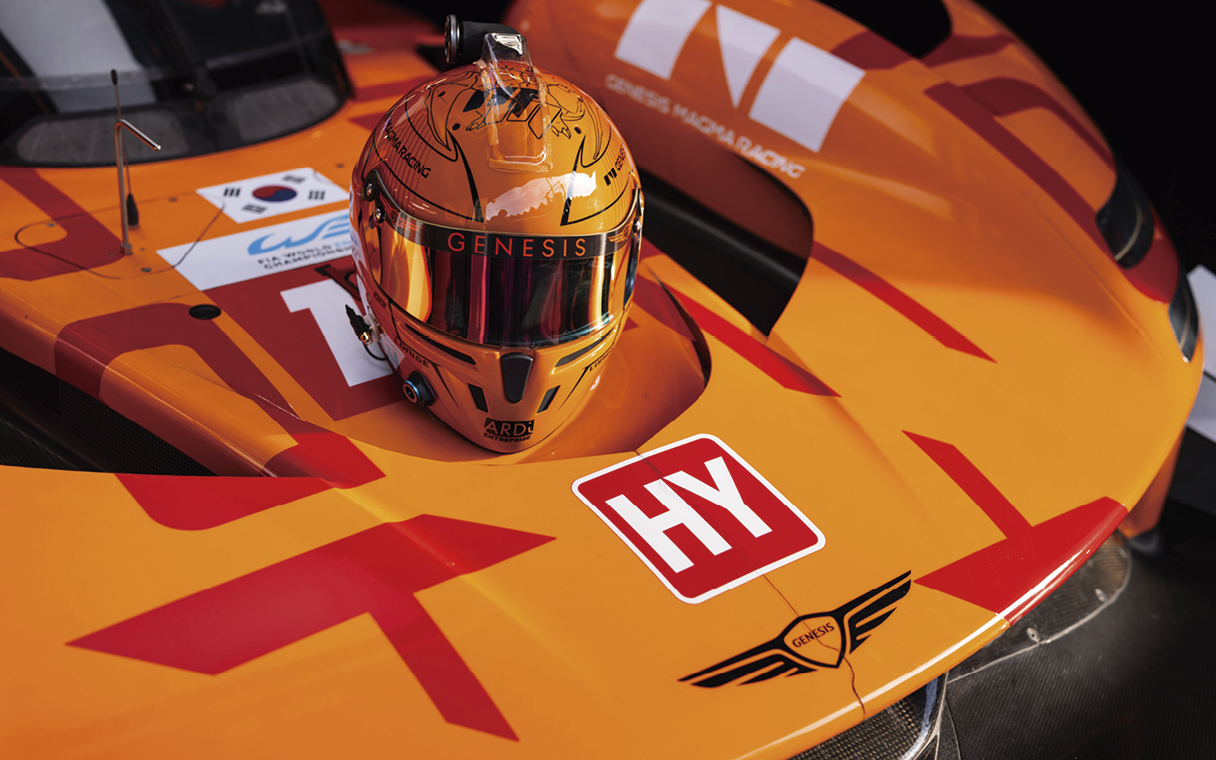
The final two races of the season would both be held in Europe. With racing in Qatar and Bahrain no longer possible because of the tense situation in the Middle East, those events were replaced by Barcelona and Monza. Round 7, the 6 Hours of Barcelona on October 18, would take place at the Circuit de Barcelona-Catalunya, best known as the home of Formula 1’s Spanish Grand Prix. WEC had never raced there before, although the European Le Mans Series had already run four-hour events at the circuit. Barcelona is all about rhythm. Its corners flow into one another almost continuously, and the relatively narrow track makes passing notoriously difficult.
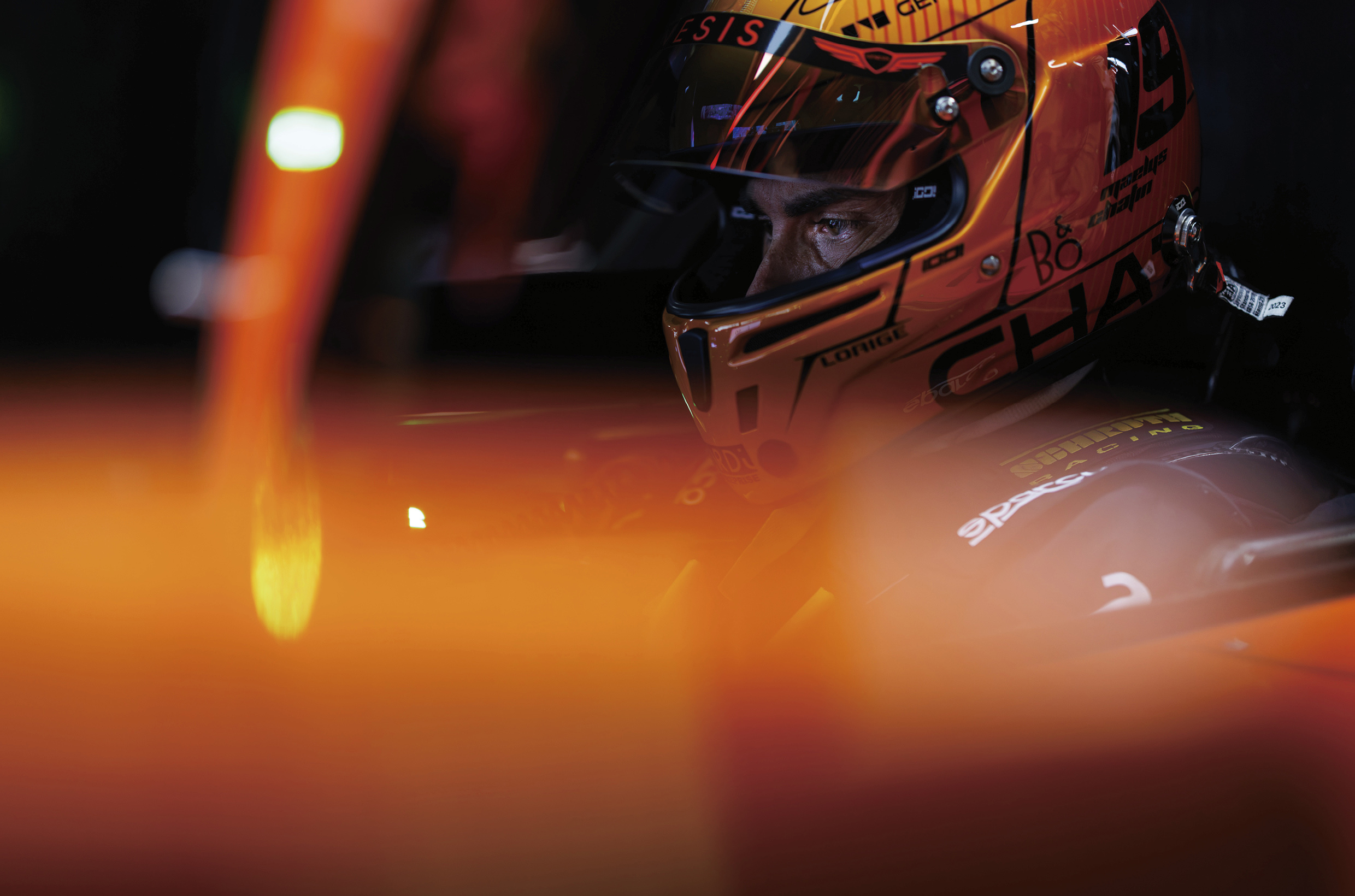
Fuji showed exactly where Genesis stands. The GMR-001 has enough speed to run with established Hypercar teams. What it still needs is sharper execution when the weather, tires, and strategy all start moving at once. Two races remain. Barcelona is the next chance to turn that pace into points.
Written by: Soo-jin Lee
In 1991, Lee’s passion for cars led him to enthusiastically write letters to the newly launched Korean car magazine Car Vision. This unexpected connection led him to start his career as an automotive journalist. He has served as editor and editorial board member for Car Vision and Car Life, and now works as an automotive critic. While eagerly covering the latest trends like electric vehicles, connected cars, and autonomous driving technology, he is also a car enthusiast who secretly hopes that the smell of gasoline engines will never disappear.