[2026 WRC Round 13] Fourmaux Salvages Fourth for Hyundai in Rally Italia Sardegna Finale
- Hyundai Motorsport Team
- 2026.10.16
- 분량20min
- 조회수 364Views
AI summarized the main points
AI-generated summary. Please refer to the full article for precise details.
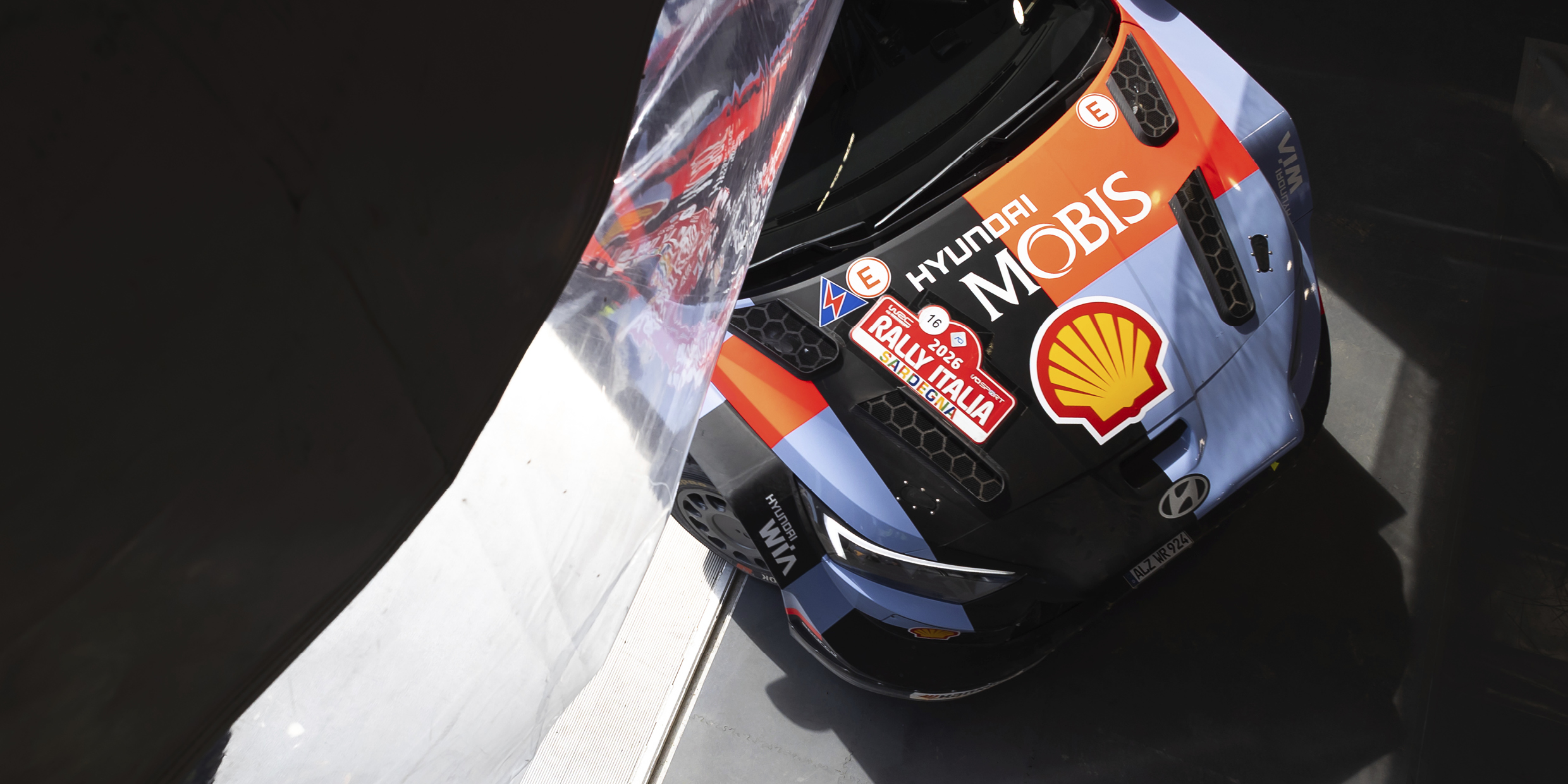
A late calendar change had suddenly turned Rally Italia Sardegna into the final round of the 2026 World Rally Championship. The scheduled Saudi Arabia finale was canceled, leaving Sardegna as Round 13 and the last shot at the title. Nobody hated that calendar change more than Sami Pajari and Oliver Solberg. Both had won one of the previous two rallies and were closing in on championship leader Elfyn Evans. But with one fewer round left to run, there was no longer another weekend to make up the difference. Sardegna became the whole game. Evans arrived with a 17-point lead over Pajari and 21 points over Solberg. If he simply finished well inside the points, the title math would heavily favor him.
WRC Promoter CEO Éric Boullier said:
“This has been a difficult decision, particularly given the significant work and commitment from our partners in Saudi Arabia to prepare for this year’s event. However, the ongoing regional developments and the resulting logistical challenges mean that we need to provide certainty and clarity for the remainder of the 2026 season.”
This year’s Rally Italia Sardegna also returned to Alghero, the historic coastal city, instead of last year’s base in Olbia. The route mixed Mediterranean coastal roads with stages that ran beneath ancient fortifications. Rally Italia Sardegna is usually defined by two things: early-summer heat and brutally rough roads. This year, only one of those remained. The move to October brought cooler temperatures, but also the possibility of more changeable weather and mixed conditions.
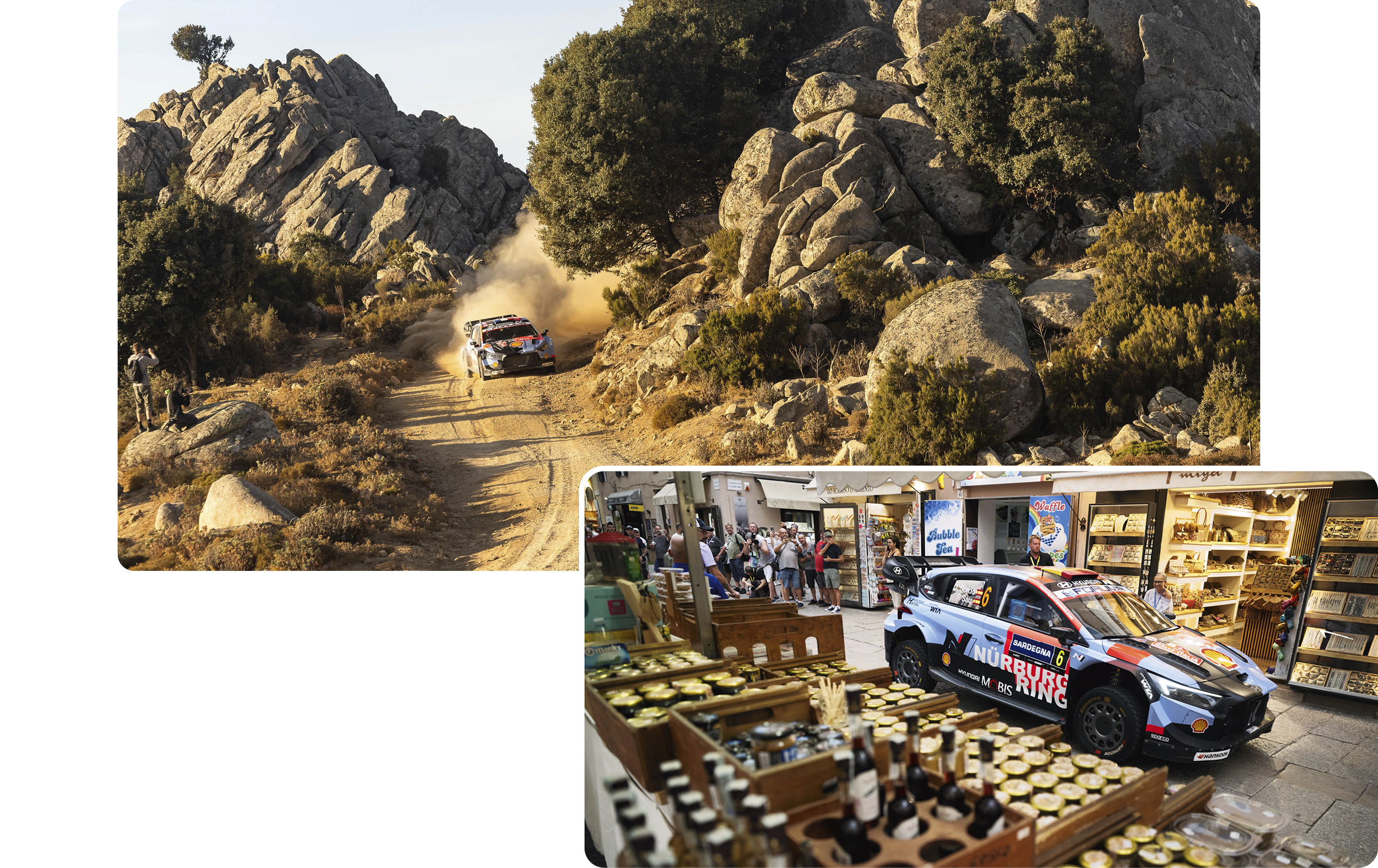
It was not the first autumn edition of the rally. Rally Italia Sardegna had also run in the fall in 2004, 2012, and 2020, making 2026 the fourth. The cooler air did not make the rally any less brutal. Tire wear was still extreme. The roads still punished the cars. And on terrain this rough, one bad hit could wipe out an entire weekend. The event had produced one of the closest finishes in WRC history just two years earlier. In 2024, then-Hyundai driver Ott Tänak beat Sébastien Ogier by just 0.2 second.
That was Sardegna in one number. Fast, vicious, and unpredictable.
The island’s mountain roads are narrow and rugged, with twisting gravel stages that constantly change rhythm and visibility. In hot conditions, the rally drains the drivers physically. When it rains, poor drainage can make the roads even harder to read. That is why Sardegna has a habit of throwing up strange results. When enough Rally1 cars hit trouble, it is not unusual to see a WRC2 car threatening the overall top five. Pure speed helps here. Knowing when not to use all of it matters just as much.
And because Rally Italia Sardegna is one of the hardest rallies of the year on tires, the FIA once again introduced a special tire allocation. After punctures and tread-separation problems caused chaos in Paraguay, the Rally1 tire limit had already been increased from 28 to 36 tires for Chile. For the Sardegna finale, crews could use up to 44 tires total—28 hards and 16 softs. The idea was simple: do not let the championship get decided because somebody ran out of usable rubber.
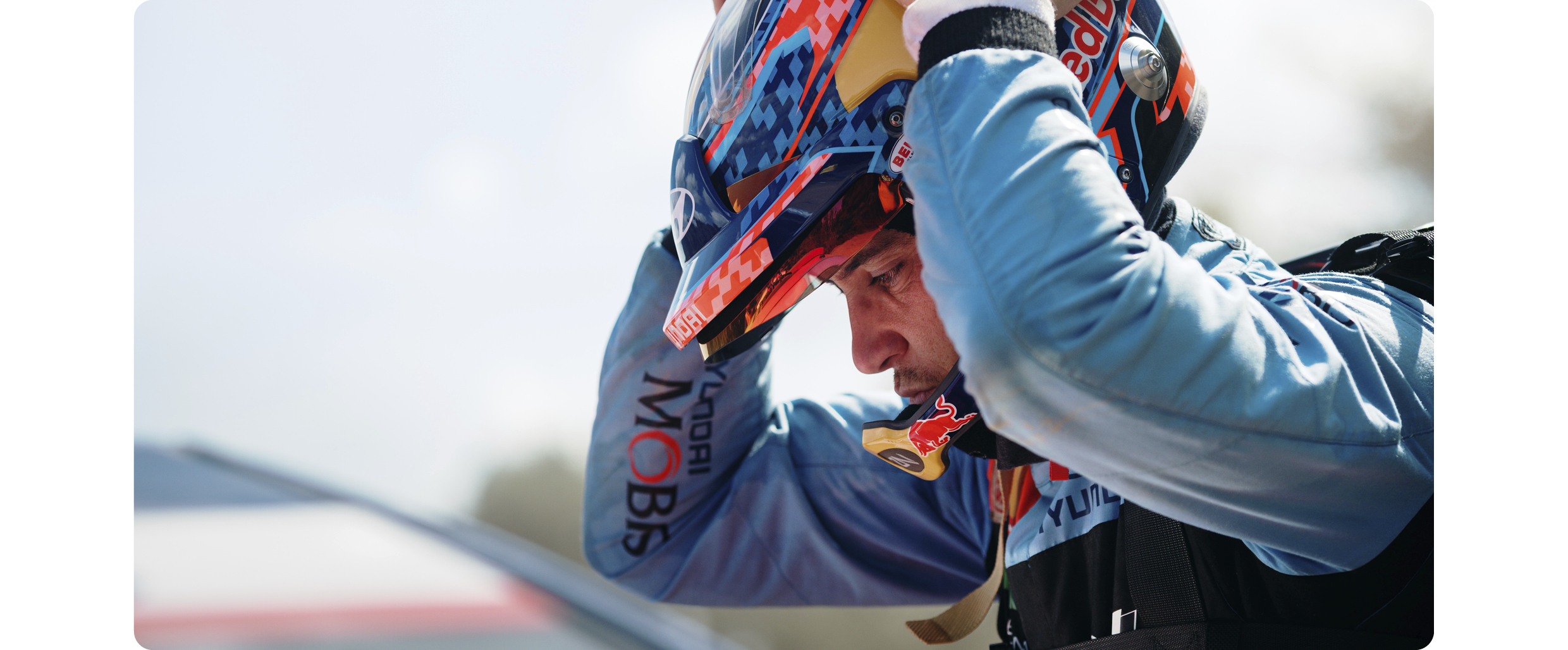
Hyundai entered Thierry Neuville, Adrien Fourmaux, and Dani Sordo. Few rallies have been kinder to Hyundai than Rally Italia Sardegna. Since 2016, Hyundai had won the event every year but three.
Neuville was already a three-time winner here, taking victories in 2016, 2018, and 2023. “Rally Italia Sardegna is the final round of the Rally1 era, and our target is clear – to fight for victory,” Neuville said.
“This is an event we have won in the past, so hopefully we have found what we need to feel confident and be fast during our pre-event test. The biggest challenge here is the nature of the stages, which are technical, demanding, and leave no room for mistakes. Tire management will also be crucial, although the weather will be much cooler than usual. In general, I think the last 10 years have been the most competitive cars ever in WRC; they have been super fast and spectacular, and I’ve enjoyed the different challenges of both the WRC and the Rally1 cars. It would be great to close out this era with a win.”
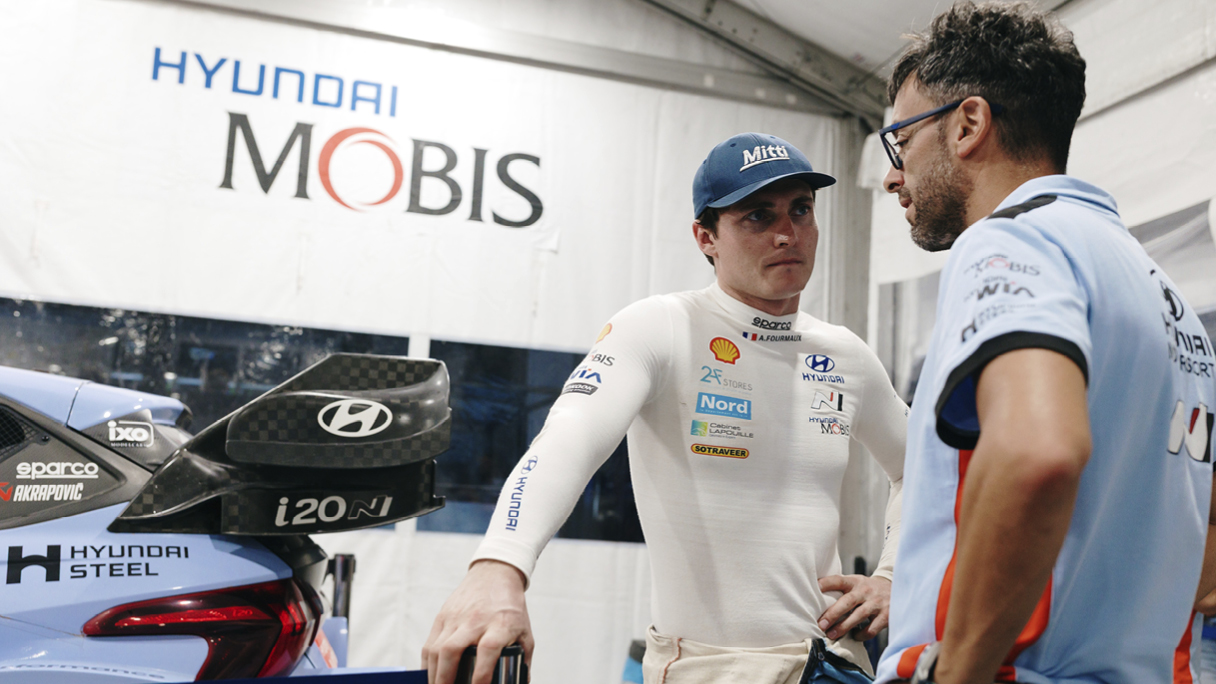
Fourmaux had been Hyundai’s strongest performer in 2026. He had not won, but four podium finishes—including second in Kenya—had put him fifth in the championship standings.
Adrien Fourmaux said: “Sardinia is an event where I have always been fast, but for different reasons I’ve never managed to come away with the result I felt was possible, so the plan is to change that this year. Having the rally in October can be a little different… It’s a very demanding rally for both the cars and the crews, and you need to manage everything well throughout the weekend.”
Sordo, meanwhile, had already won Rally Italia Sardegna twice, in 2019 and 2020. His Rally1 return this season had been tougher. He finished seventh in the Canary Islands, eighth in Portugal, and was forced into a tactical retirement just before the final stage in Greece.
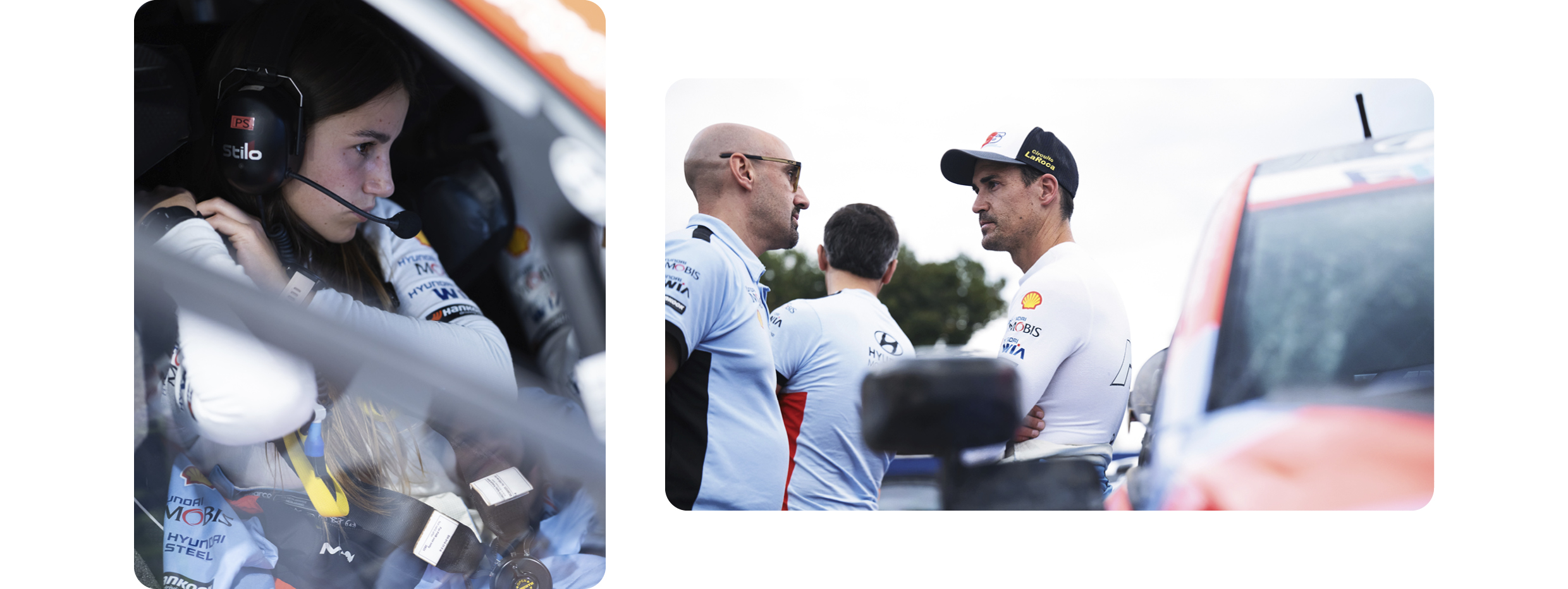
For Rally Italia Sardegna, Sordo also made a change in the right seat. Instead of longtime co-driver Cándido Carrera, he gave Patricia Sáiz the opportunity to compete. The Spaniard had no previous WRC start, but she had already worked with Sordo at several national events, including Ypres in Belgium the previous year.
Dani Sordo said: “I’m really motivated for Rally Italia Sardegna. The biggest challenge is the narrow roads and the stones by the side of the road. In Sardinia, you need to be precise and fast, and if you make a small mistake, there’s always a stone waiting for you. This weekend, I will have Patricia in the co-driver seat. We have already done some rallies together, and I think we can do very well next weekend.”
The event also carried a milestone for Sordo. By starting Rally Italia Sardegna, he would move ahead of Carlos Sainz into sole possession of third place on the all-time WRC starts list with 197 rallies.
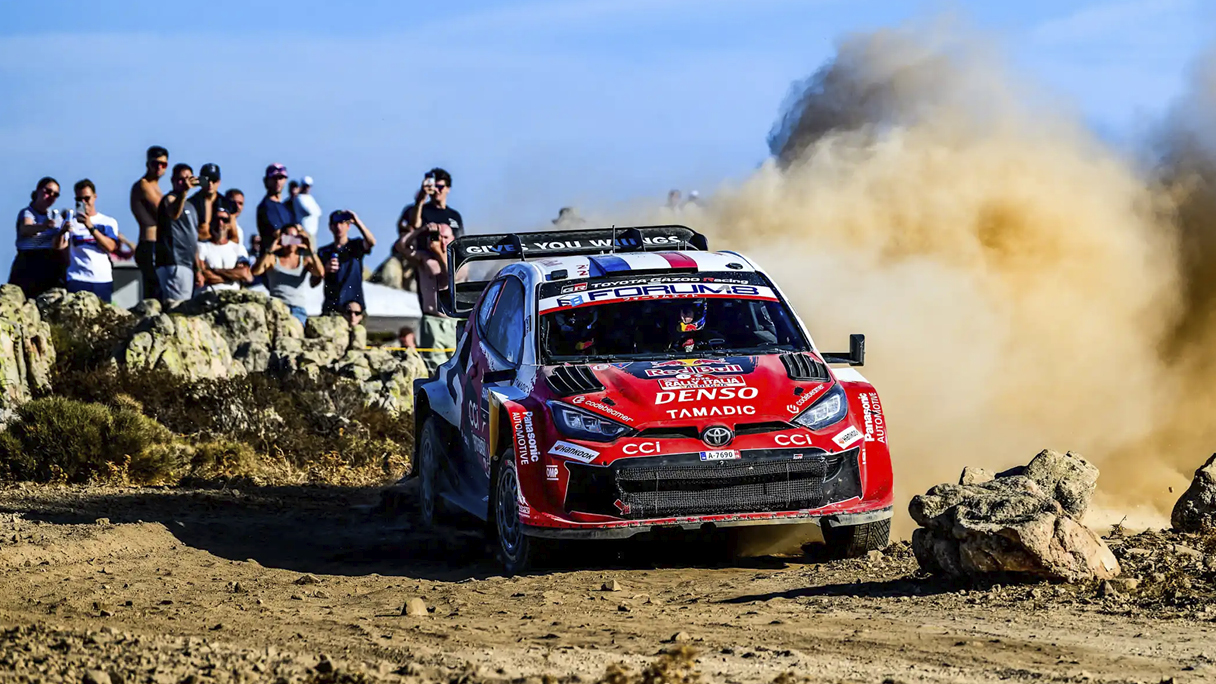
Toyota had already secured the manufacturers’ title. Now the fight was inside the house. Three Toyota drivers still had a mathematical shot at the drivers’ championship: leader Elfyn Evans, Sami Pajari, and Oliver Solberg. Sébastien Ogier had lost momentum late in the year after retiring in Finland and struggling in Paraguay. Toyota also entered Takamoto Katsuta, bringing its lineup to five cars.
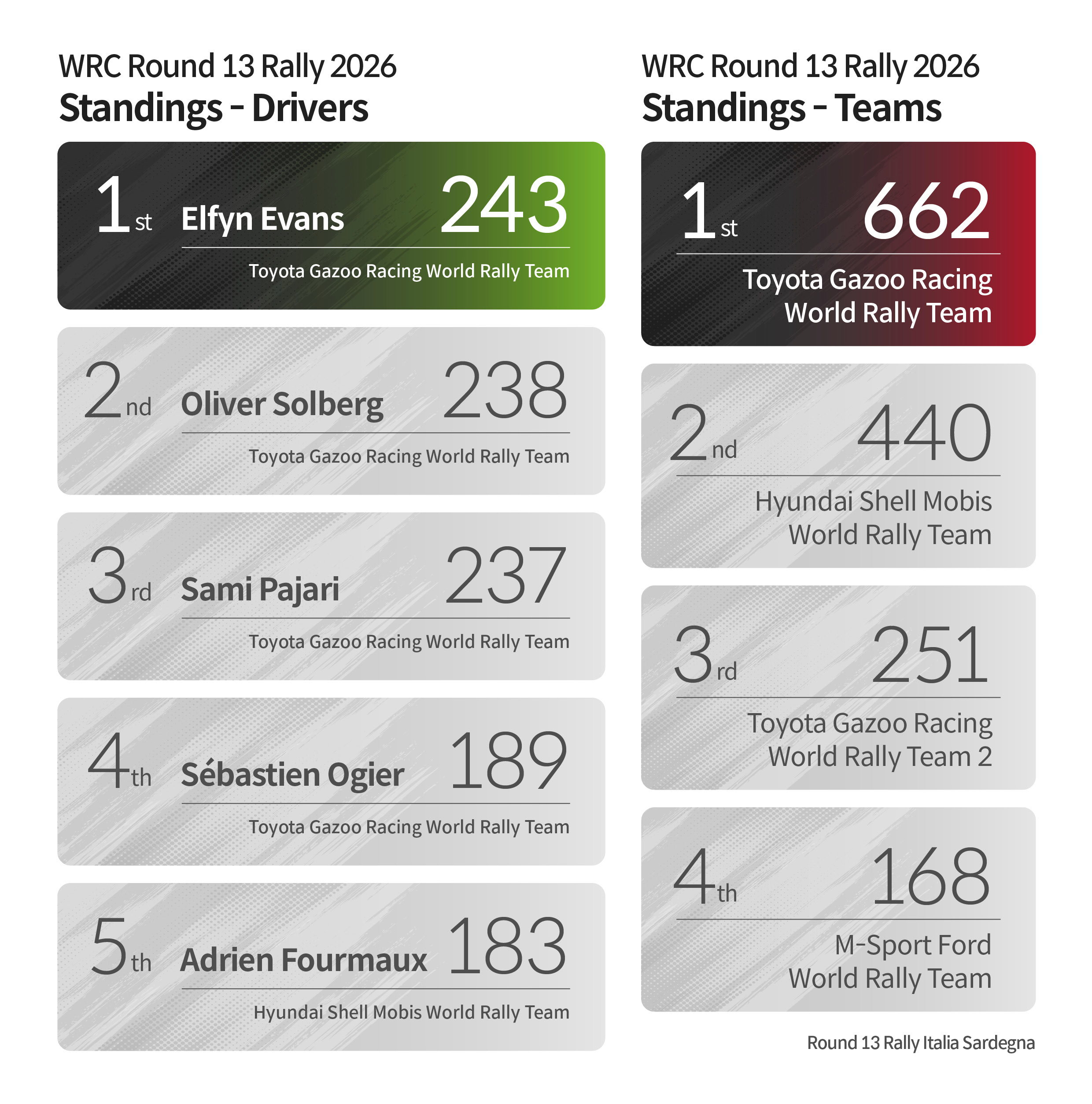
Evans came into the finale with 230 points, followed by Pajari on 213 and Solberg on 209. A maximum of 35 points was available over the weekend: 25 for the rally win, five for Super Sunday, and five for the Power Stage. The math heavily favored Evans. Unless he retired and scored little or nothing, the title was his to lose. If he scored 19 points or more, he would clinch the championship regardless of what anyone else did.
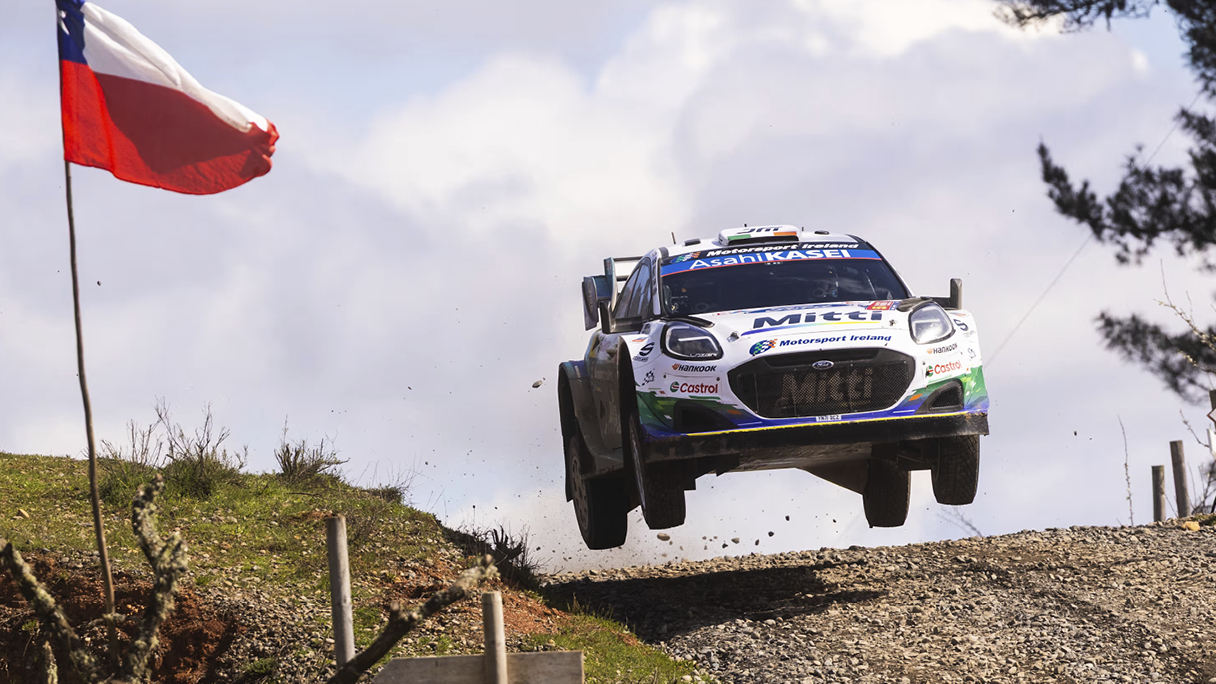
M-Sport Ford brought three Ford Pumas for Joshua McErlean, Jon Armstrong, and Mārtiņš Sesks. But Ford brought bigger news than its three-car entry. The automaker officially announced that it will return to the WRC as a full factory manufacturer in 2028, a move that immediately got longtime rally fans talking. For now, the program remains effectively semi-factory through M-Sport. The 2028 move would mark Ford’s first true factory return in 16 years.
In 2027, Ford will continue with an upgraded Rally2 package before stepping up to full factory status in 2028. Its close relationship with M-Sport will continue, covering everything from new-car development to team operations. A completely new rally car is planned for 2029. That season is expected to bring major technical changes, including far greater freedom in powertrain choice. Internal combustion, hybrid, hydrogen, EV—anything could be on the table. Torque meters will also be introduced to measure output in real time and help balance performance across different powertrain concepts.
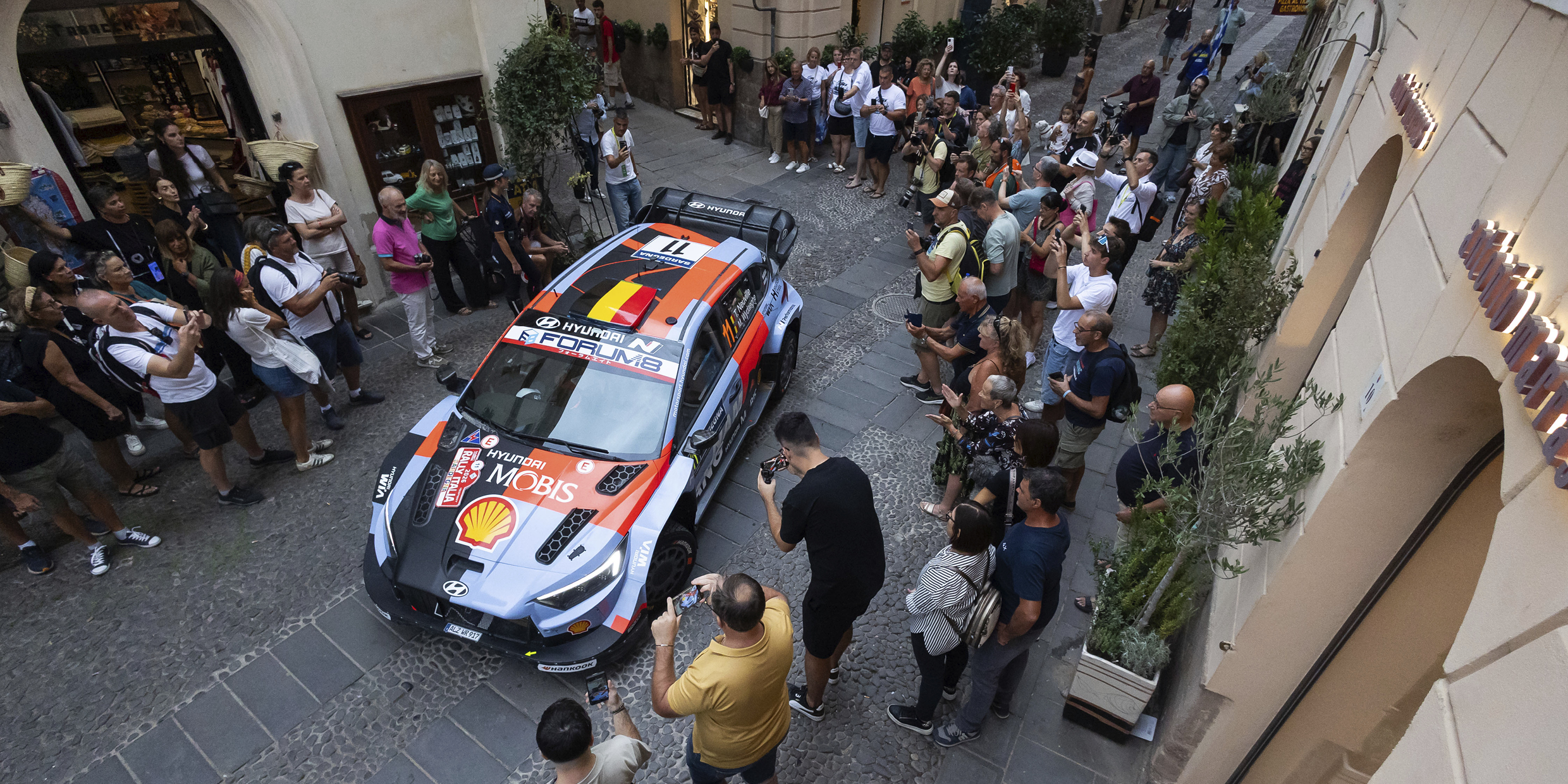
DAY 1&2 – Hyundai Comes Out Swinging
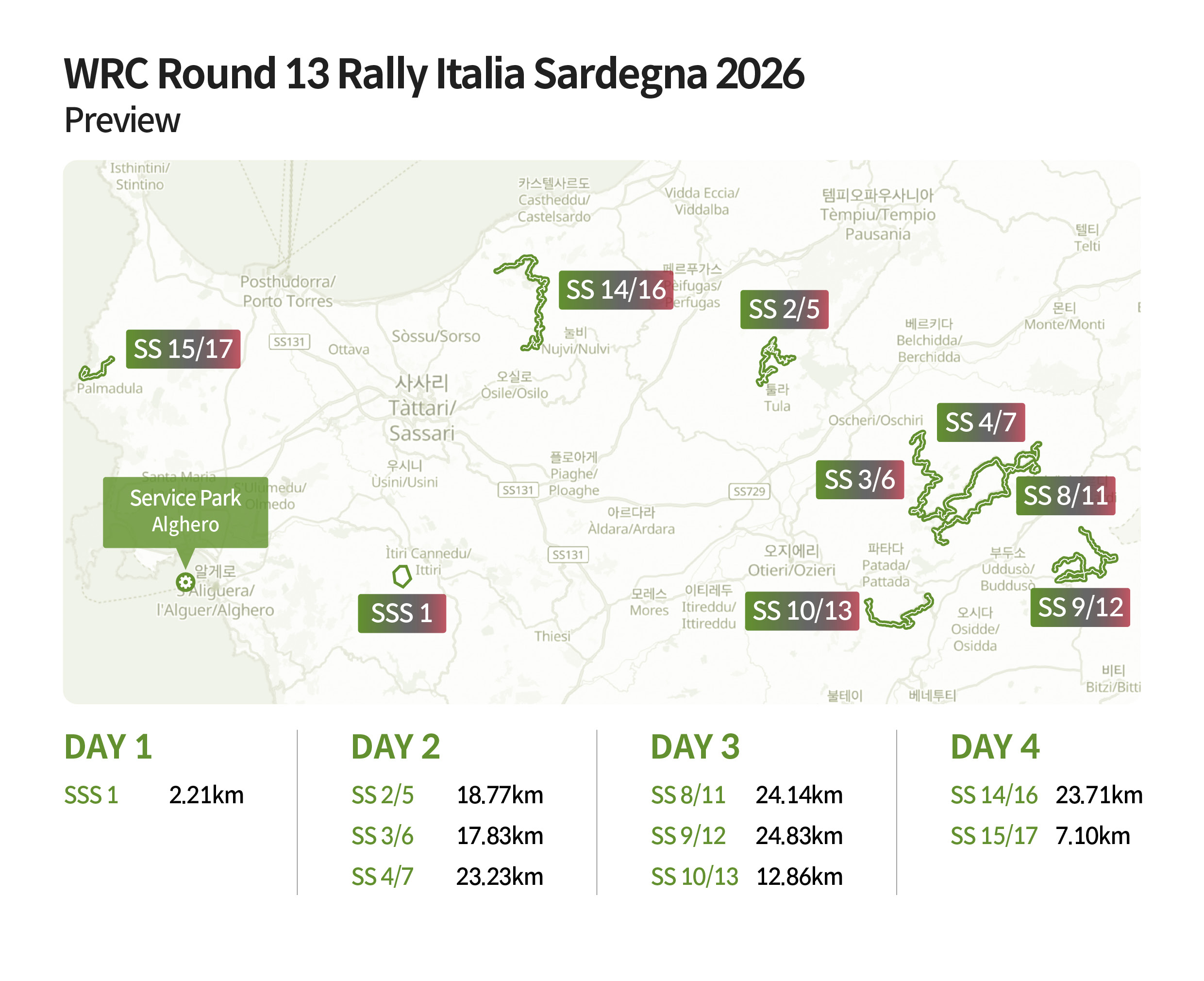
After Thursday morning’s shakedown on a 3.27-km stage west of Alghero, the field headed into the season finale at 4:05 p.m. with SSS1, the Ittiri Arena Show. The 2.21-km course, laid out inside a rallycross venue, sent two cars off side by side and immediately gave the finale some energy. It was the first side-by-side format Rally Italia Sardegna had used since 2019.
Oliver Solberg went fastest and ended the opening day in the lead, followed by Sébastien Ogier, Elfyn Evans, Sami Pajari, Thierry Neuville, and Dani Sordo. Adrien Fourmaux finished the day eighth. Sordo’s weekend was already going sideways. After going off during shakedown, he arrived late at a Time Control (TC) and picked up a 10-second penalty. A delayed start for SSS1 added another 10 seconds.
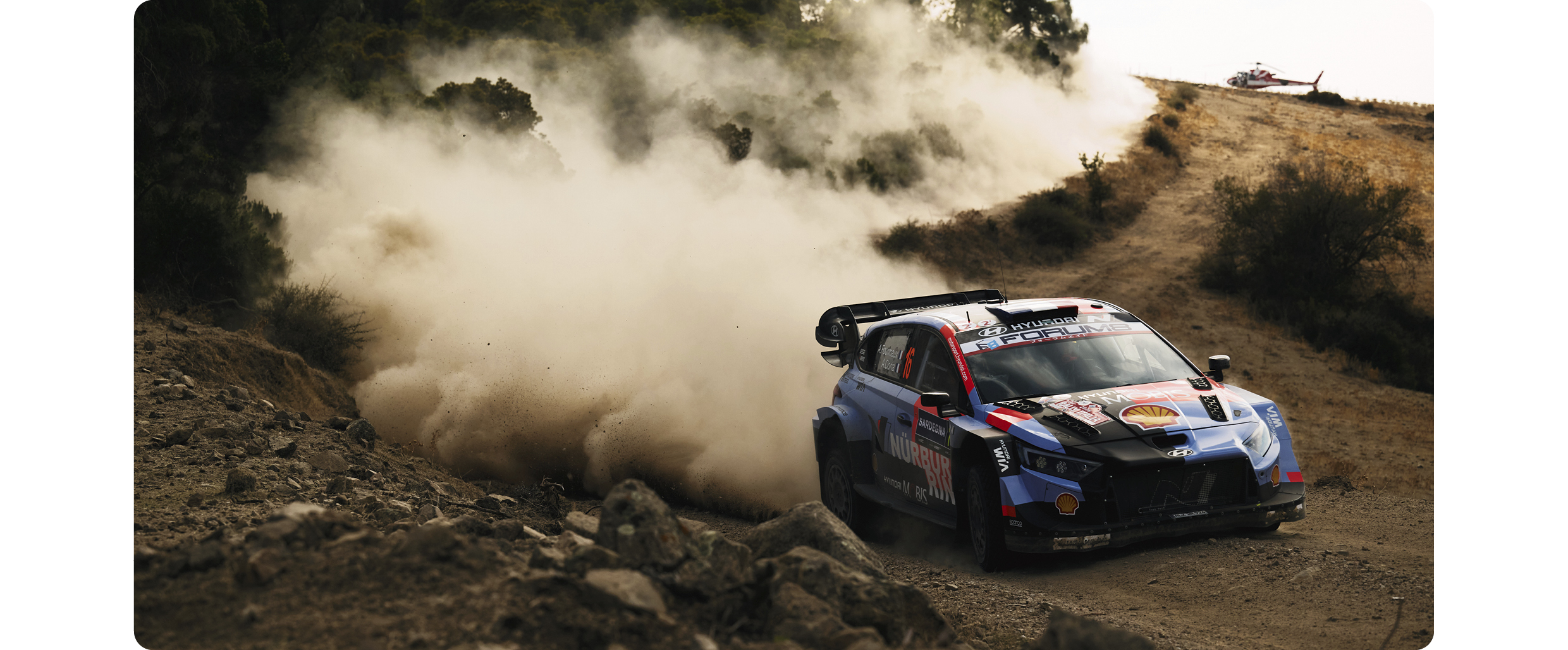
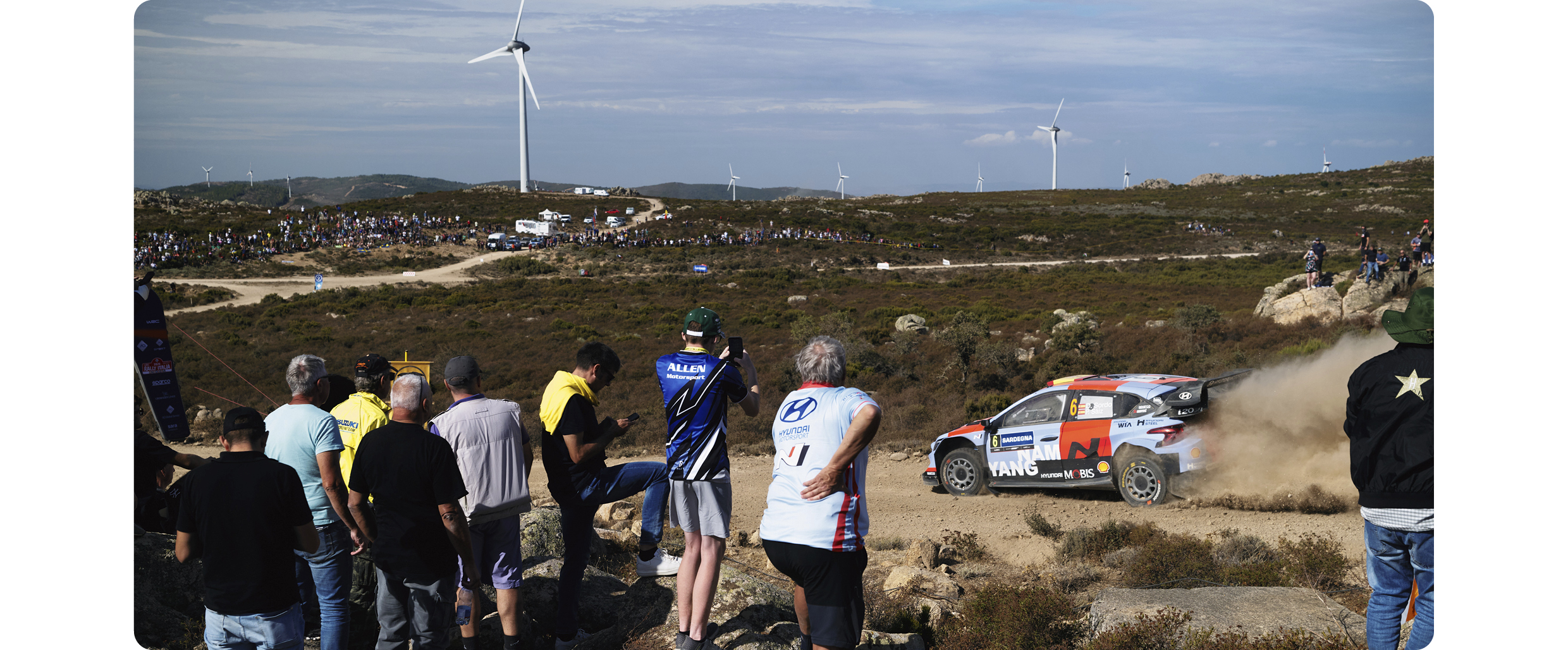
Friday, October 2, sent the field east and into the rough stuff for real. The opening 18.77-km Tula-Erula stage wound past a line of wind turbines, giving the route a look unlike anything else on the weekend. Friday featured three morning stages repeated in the afternoon, with SS2 through SS7 covering 119.66 km. Most drivers carried five soft tires. Solberg played it safer with an extra soft spare. Jon Armstrong and Mārtiņš Sesks went with four hards and two softs, while Joshua McErlean carried two hards and four softs. Five separate tire-fitting zones were also set up, allowing teams to supply fresh tires to their crews during the day.
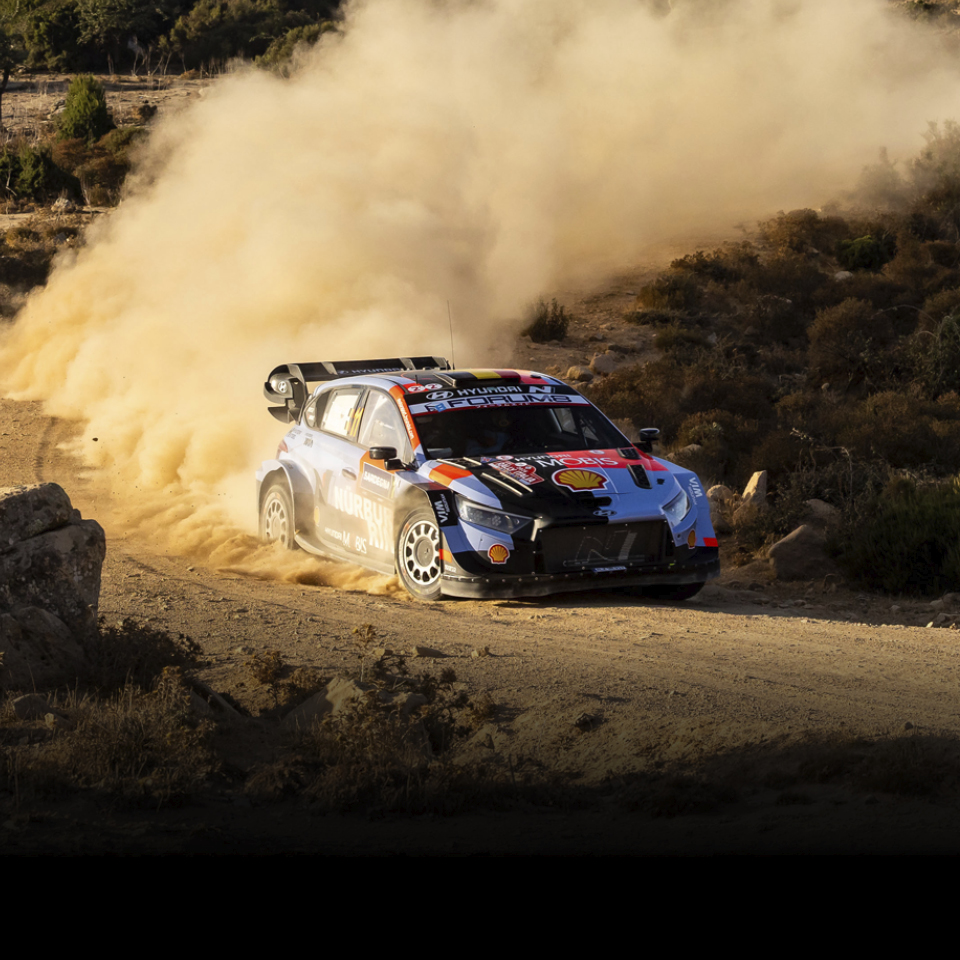
SS2 Tula-Erula started narrow, rough, and twisty. Then it opened up. Once the road reached the wind-farm section, visibility improved and the stage turned much faster, with repeated jumps and crests. The middle section tightened back down into sharp, rocky terrain before the final stretch dropped through the forest. There was nowhere to relax. With dry conditions kicking up huge clouds of dust, organizers increased the interval between cars to four minutes.
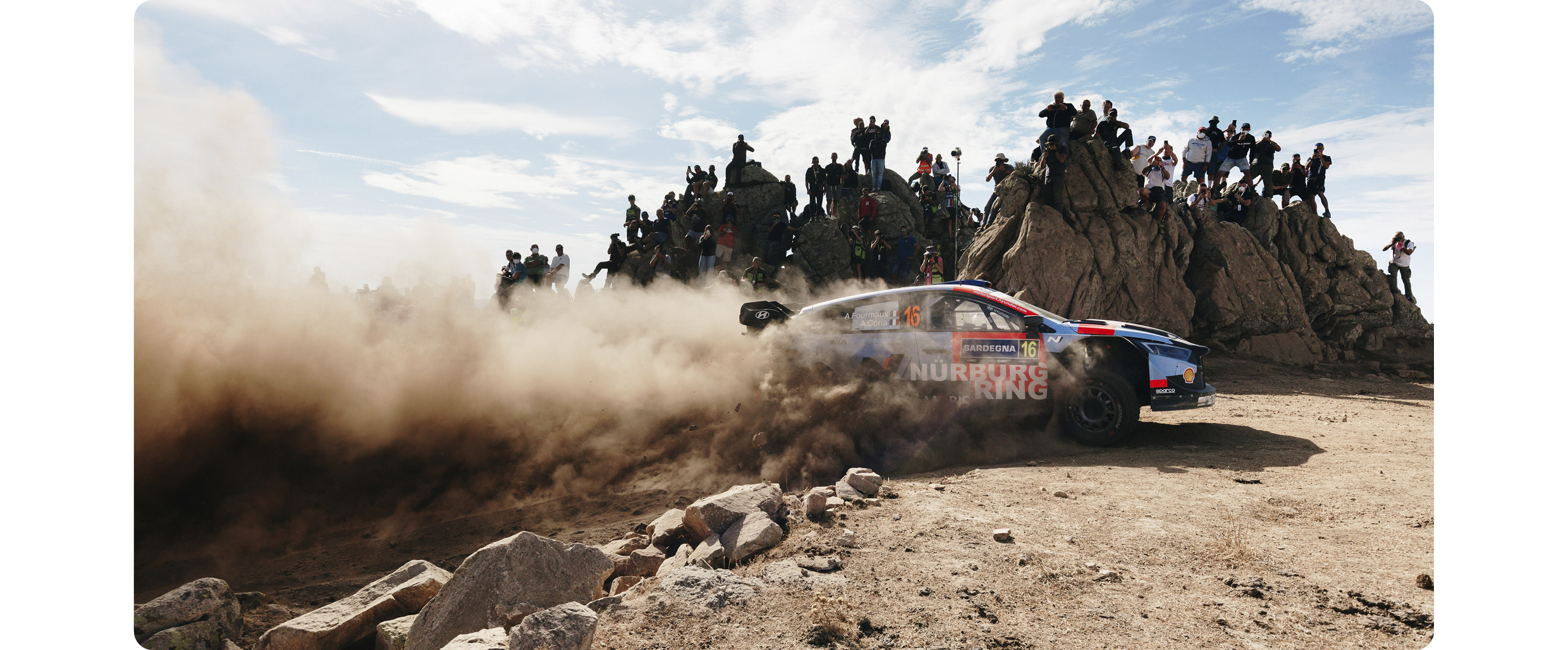
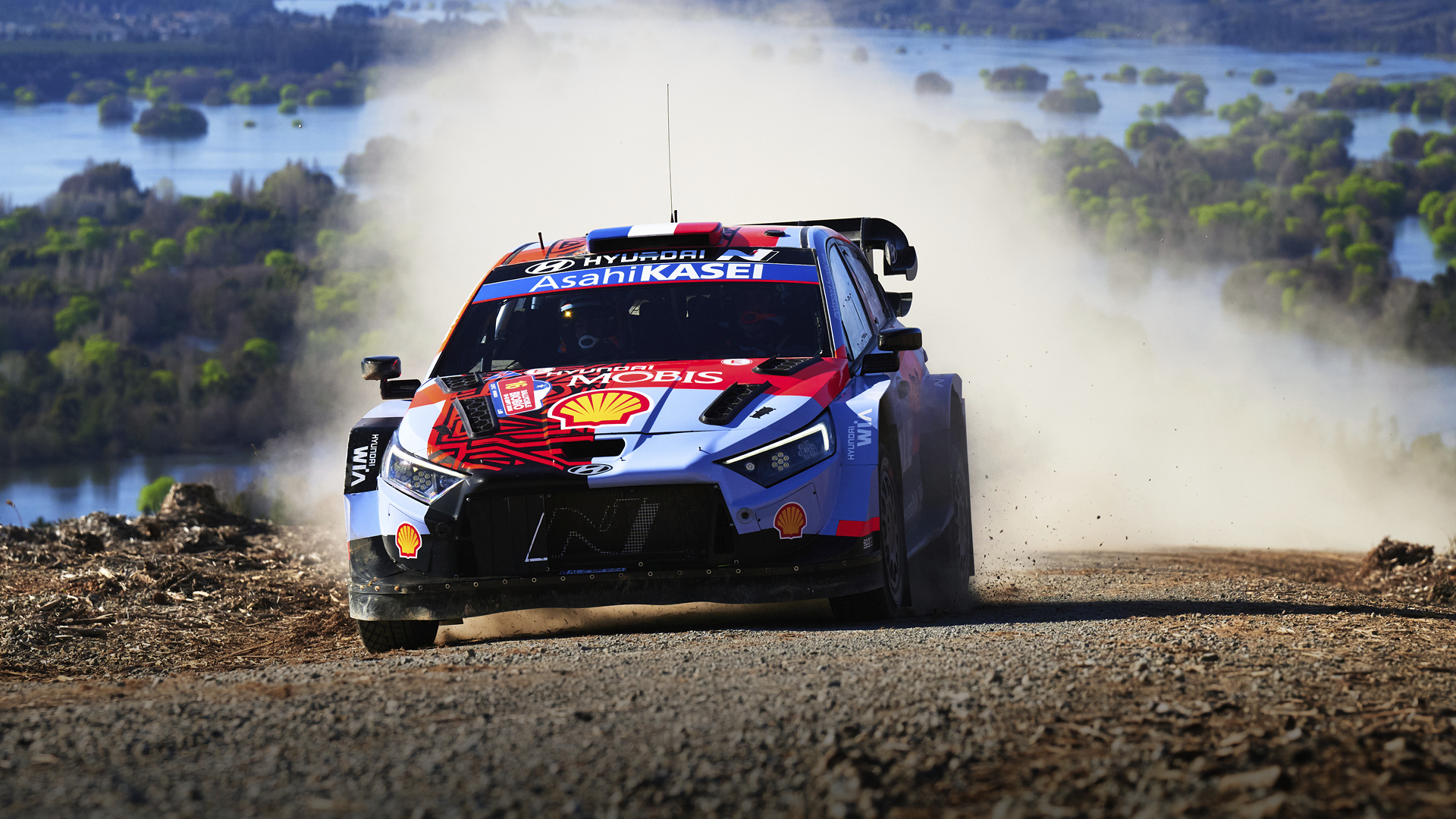
Fourmaux struck first. He set the fastest time on the opening stage, ahead of Ogier, Pajari, and Neuville.
Fourmaux said: “I have a plan today, so I want to stick to it, but first of all I want to enjoy, drive fast, and let's see what we can bring. So actually I had a very good stage. It's not easy, but it's very, very tricky. The dust is also not really giving confidence. So it's very difficult. Some places I have to brake, I don't see. So it's a tough one, but I really wanted to be tidy and optimise the time, so I'm happy. We are there.”
Solberg lost more than 10 seconds with a puncture. In WRC2, Fabio Schwarz took a heavy hit on landing after a jump and was taken to the hospital along with his co-driver. Schwarz is the son of German rally veteran Armin Schwarz, who competed through both the Group A and World Rally Car eras.
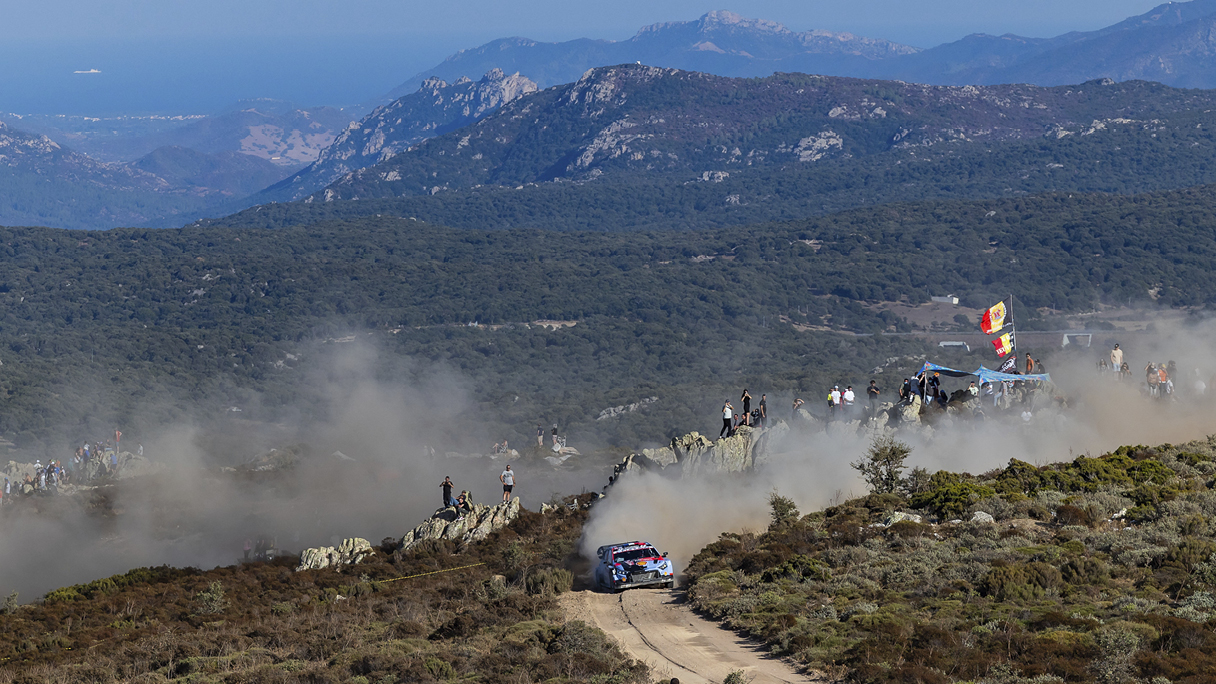
SS3, Su Filigosu-Lerno, combined sections of two historic Sardegna stages. The narrow mountain road had a sandy surface, which meant the early runners had to sweep loose gravel away for everyone behind them. The early cars swept the road; everyone behind got the grip.
This time Neuville went fastest, with Solberg second and Fourmaux third. Ogier, who had taken the overall lead after SS2, dropped back with a puncture. That handed the rally lead to Fourmaux. Neuville moved into second, putting Hyundai first and second overall.
“It was a clean stage,” Neuville said.
“But the first stage we recced and the most difficult one. The pacenotes were a bit too slow and once I realised it's consistent I was able to raise the speed. When it gets more rutted and more consistent ruts, it's more comfortable. Trying to stay as clean as possible in the lines.”
Sordo, meanwhile, lost a huge amount of time changing a damaged tire early in the stage.
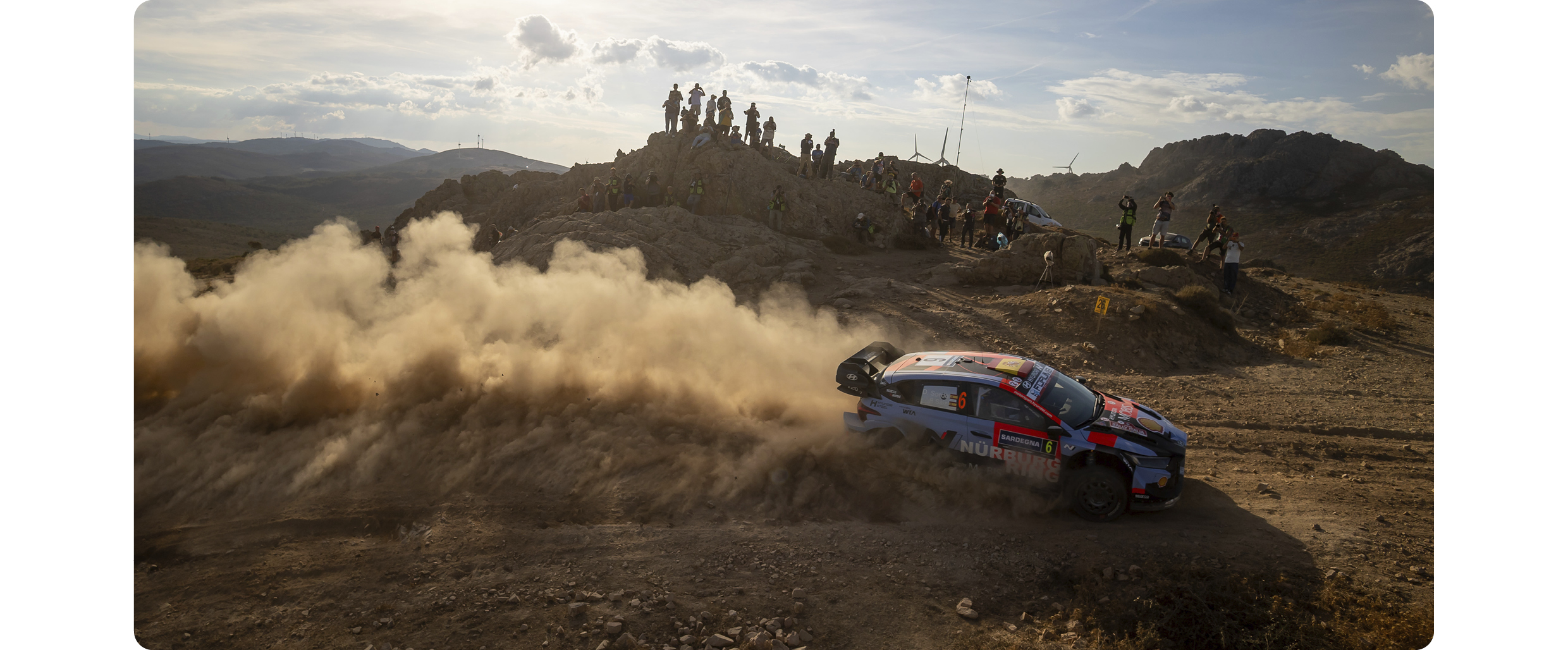
SS4, Monti di Alà - Sa Conchedda - Lerno, was Friday’s longest test at 23.23 km. It mixed fast sections with technical ones and ran through rocky terrain covered in rough gravel. That made pace management and tire preservation critical. By the afternoon pass, the road was expected to be heavily rutted and much harder to attack. Before the stage, every car received two fresh tires. Solberg went fastest. Fourmaux and Neuville were third and fourth, keeping Hyundai first and second overall.
After the midday service, the field returned to Tula-Erula for SS5. This time Hyundai swept the stage. Fourmaux, Neuville, and Sordo went 1-2-3, beating back the Toyotas.
Sordo’s turnaround stood out. “The stage was nice,” he said. “It was really demanding and really hot inside. I'm struggling with my back from yesterday so I didn't take any risks over the jumps. It is ok. It is good to have a 1-2-3 for the team and the deserve much more.”
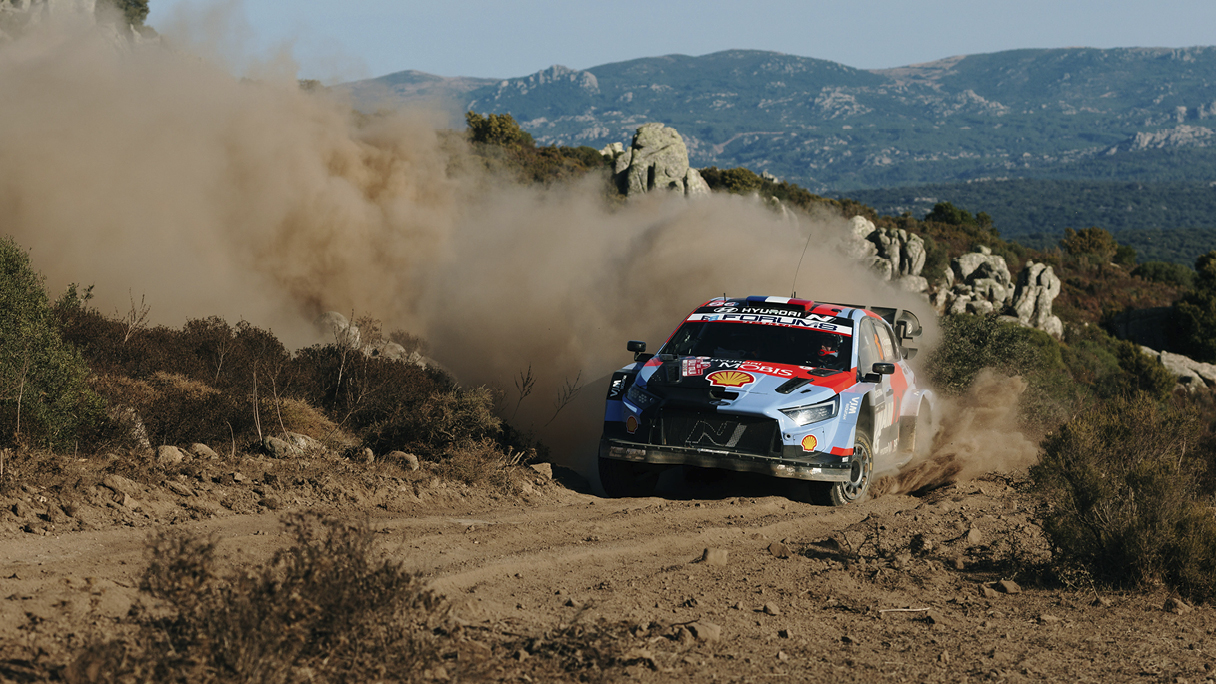
Reports before SS6 Su Filigosu-Lerno said the road was even rougher than it had been in the morning. Neuville responded by going fastest again and cutting Fourmaux’s overall lead to 4.7 seconds.
“I’m focusing on myself at the moment,” Neuville said.
“I was just trying to manage the tyres a bit more in here. It was little bit of surprise to see the tyre wear in here as it was more than we expected. We should be good for the last one.”
Another two fresh tires were available before SS7. Neuville then made it back-to-back stage wins to close Friday and finished the day as the overall leader. Fourmaux was only 0.4 second behind in second. Sordo, though, was back in trouble. At the 10.5-km mark, he went off into the brush, hit a concrete post, and retired.
Behind the Hyundai pair, the Toyota title contenders sat third with Solberg, fifth with Pajari, and sixth with Evans. In WRC2, early leader Teemu Suninen lost ground with a puncture. That promoted Gus Greensmith into first and Roope Korhonen into second, while Emil Lindholm slipped from second to third.
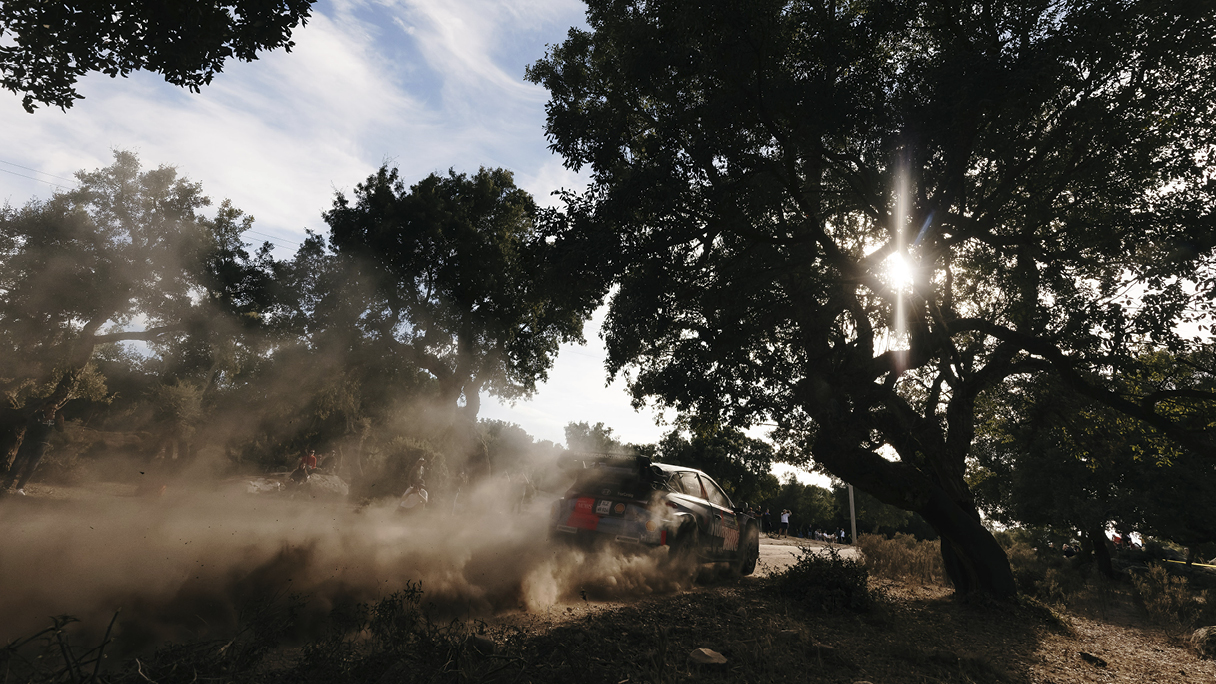
DAY 3 – Sardegna Starts Biting Back
Saturday, October 3, began with SS8 Lerno - Sa Conchedda - Monti di Alà. With two stages stretching beyond 24 km, the six-stage Saturday schedule from SS8 through SS13 totaled 123.66 km.
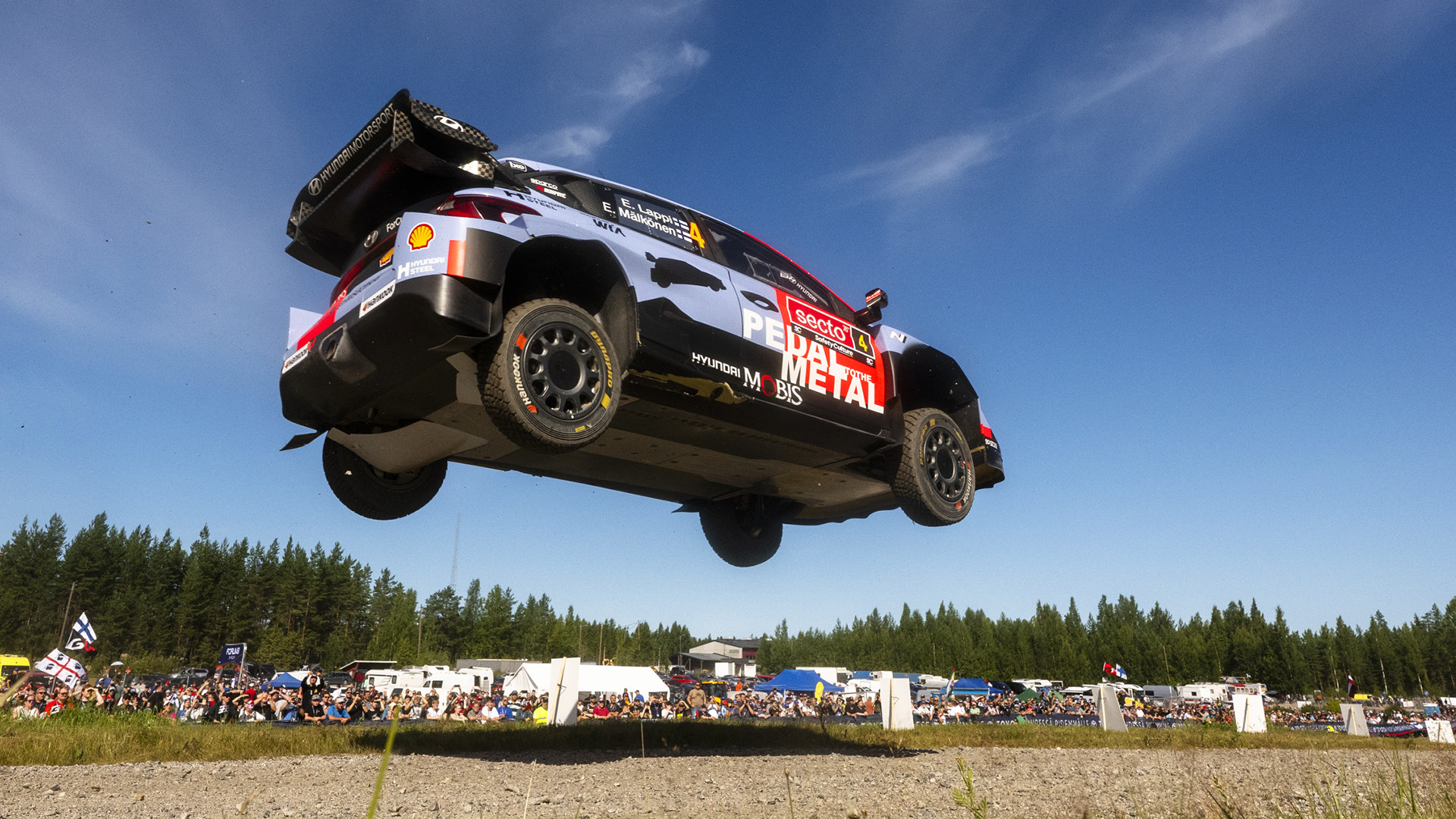
The 24.14-km Lerno - Sa Conchedda - Monti di Alà stage sat close to Friday’s SS4 and carried a similar name, but the overlap was limited and the direction was reversed. Its signature feature was Mickey’s Jump, one of Rally Italia Sardegna’s defining landmarks. Cars launched at huge speed, landed downhill, and immediately had to set up for a tight corner. Get the car wrong in the air, and the corner after the landing punishes you immediately.
Neuville went fastest and held onto the overall lead. Fourmaux’s morning went the other way. Still chasing his first WRC win, the Hyundai driver crossed the finish with a punctured left-front tire. He lost more than a minute. Solberg, Ogier, and Pajari all moved up a position.
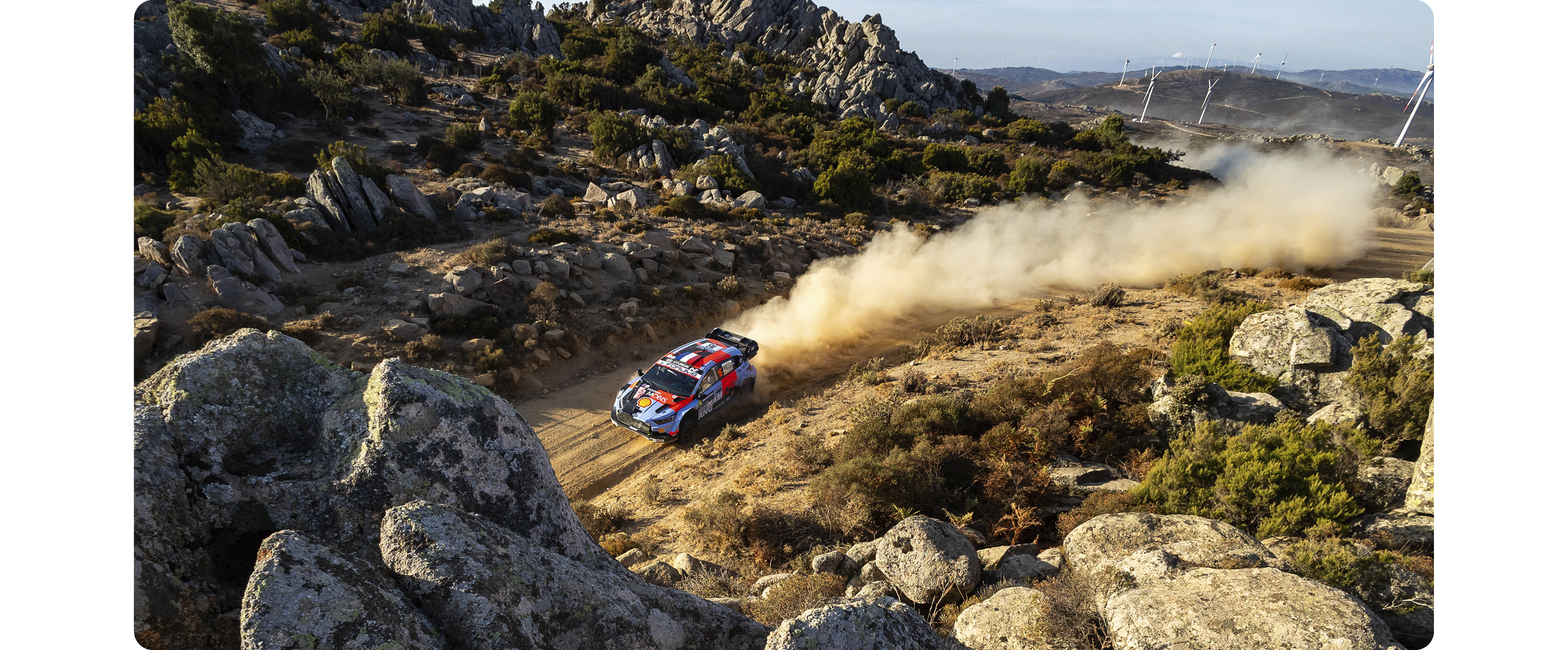
Sordo’s condition had also worsened after his shakedown crash.
“I can’t keep driving like this,” he said.
“It is really painful. On the braking it feels like I have something broken. I couldn't drive. There is a lot of pain in my back and my side.” He eventually abandoned the next stage and headed back to service.
SS9, Coiluna - Loelle, brought another of Sardegna’s signature jumps: Coiluna Jump.
Parts of the 24.83-km stage opened into wider, faster running, but massive rocks lurked just off line. Clip one and the rally could be over on the spot. It was the longest stage of the weekend.
Neuville was fighting another problem entirely—his glasses kept sliding down his face. Solberg took full advantage. The Toyota driver went fastest and cut Neuville’s overall lead to just 3.3 seconds. Fourmaux, who had dropped to fifth after his puncture, got back past Pajari and climbed to fourth overall.
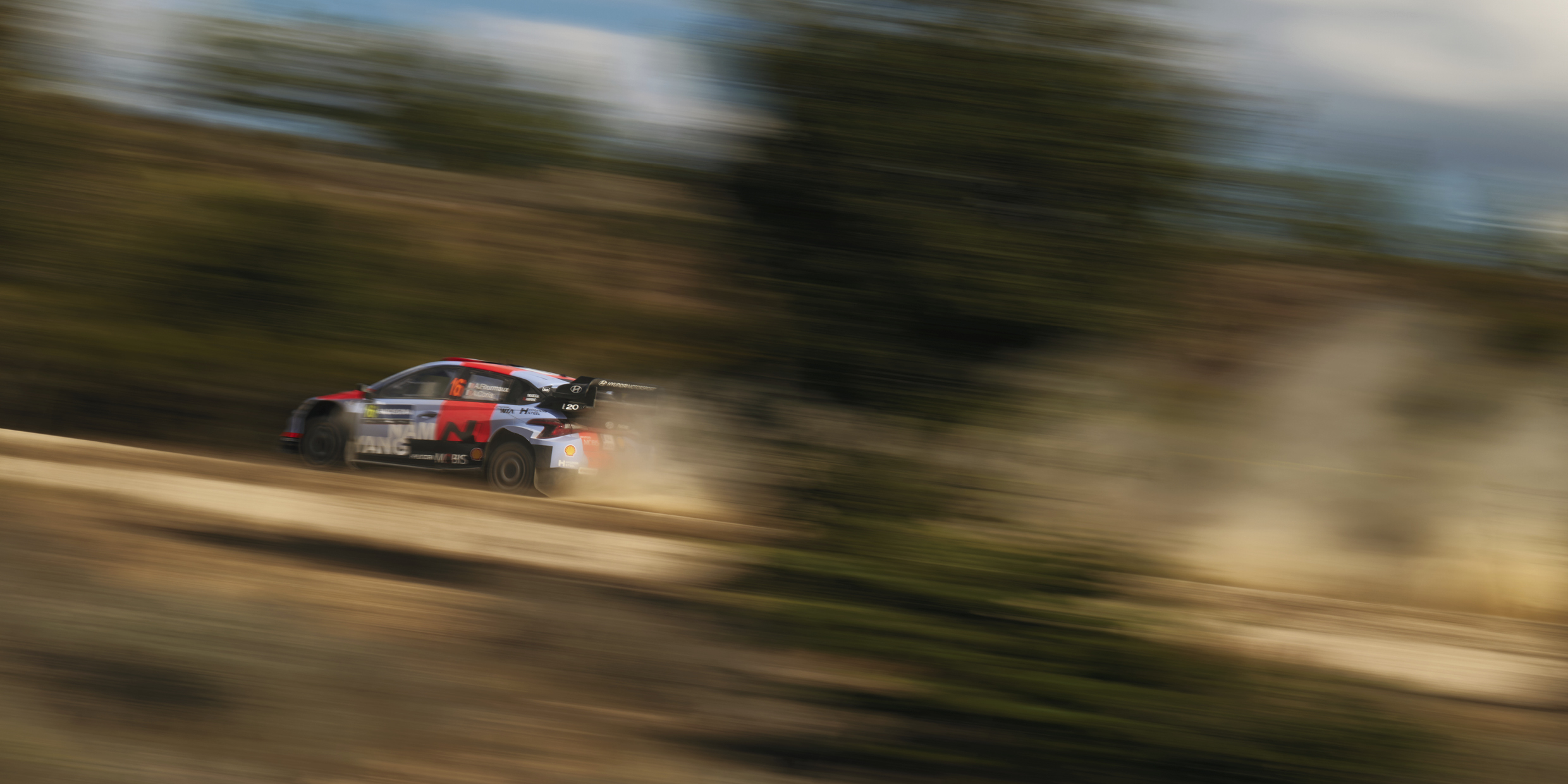
Then came SS10, Solorche, a brand-new stage in the Pattada area. Most of it climbed uphill along the mountainside. There was no previous stage data to fall back on. Everyone was learning it at full speed. Solberg went fastest again. This time, he took the rally lead. Neuville slipped to second, with Ogier third and Fourmaux fourth.
“It's getting more and more loose,” Neuville said.
“More and more sand, just wheelspinning. I had a good stage. Take it back? Hopefully a bit more line in similar conditions, but overall I'm sure we can stay in the fight with Oliver. He will go all-in and we're gonna see how it works.”
Before the afternoon loop, Mārtiņš Sesks was also forced to retire with a steering problem.
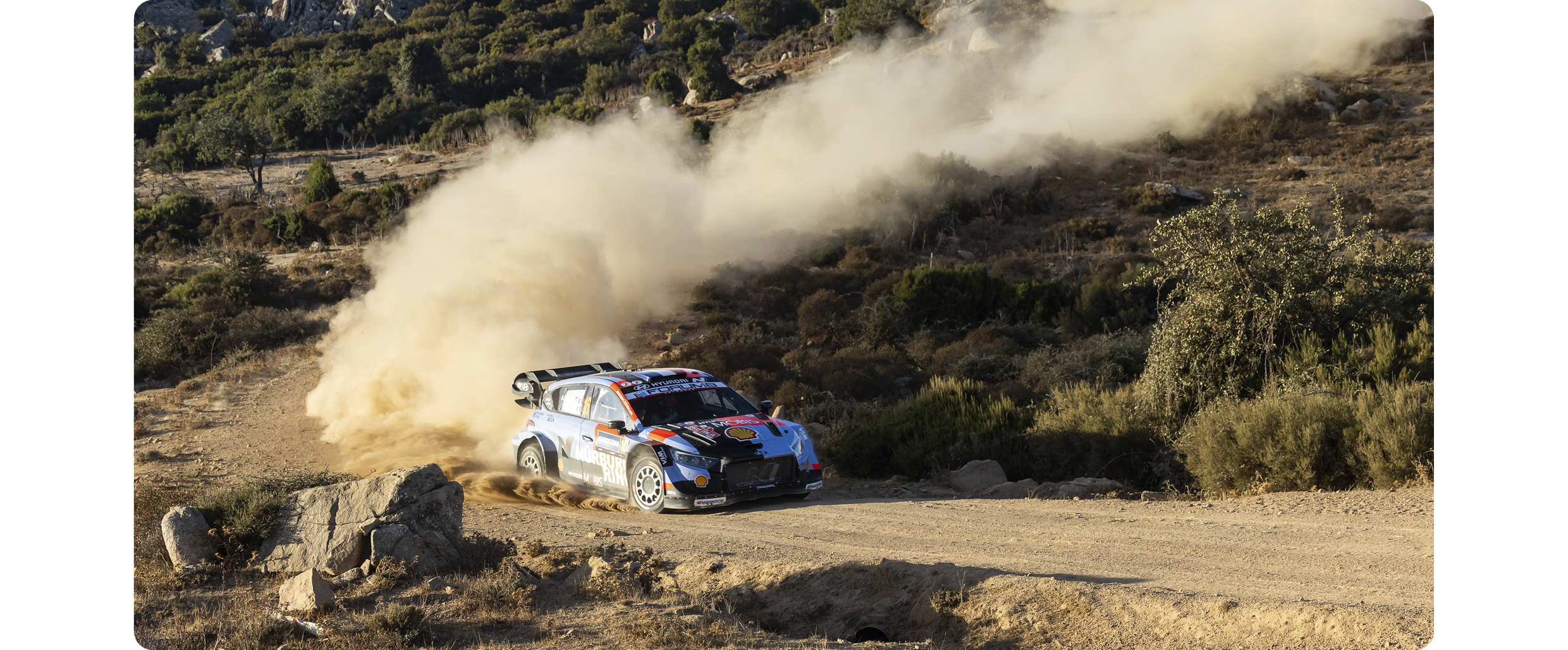
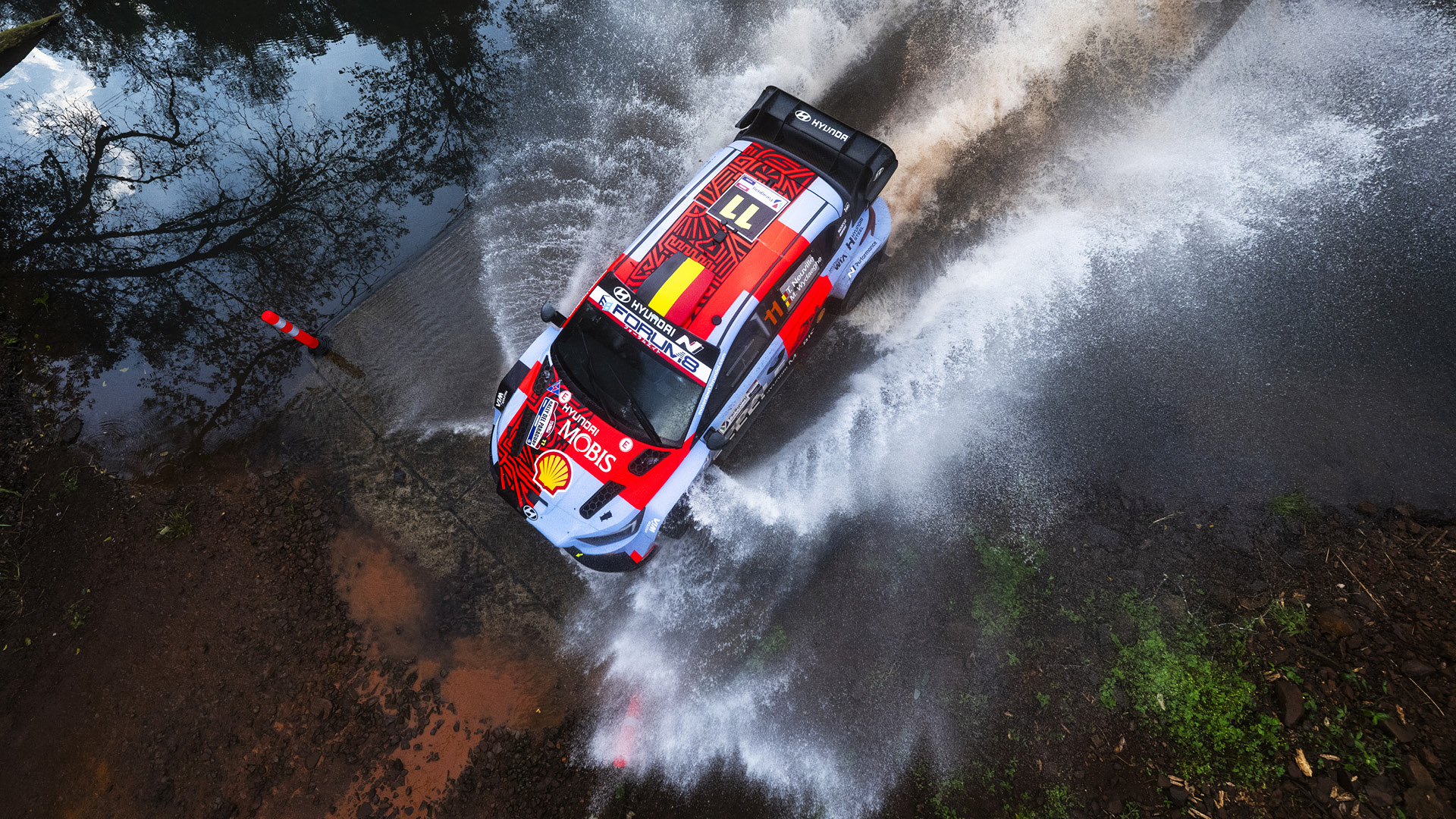
Hyundai’s nightmare returned on SS11, the second run through the opening stage. Just 1.1 km from the start, Neuville went off the road and retired. He had been in a real position to fight for the win. Just like that, it was gone. Ogier went fastest, followed by Fourmaux and Solberg. Fourmaux moved up to third overall and suddenly became Hyundai’s only remaining car in the fight.
“It is a very good fight with Seb for now,” Fourmaux said.
“It is going to be difficult to catch him but there is always things happening in Sardinia. I'm sorry for Thierry and team. I will stay focussed.”
Hyundai’s bad luck was not finished yet. On SS12, Fourmaux had to stop and change a punctured tire, dropping him to fifth overall. It was his second puncture of the day. Solberg remained in the overall lead, with Ogier second. Pajari and Evans moved up to third and fourth. Fourmaux’s drop also made Evans’ path to the championship that much easier. Joshua McErlean, meanwhile, was fighting overheating after damage to the cooling system from a crash on the previous stage.
Fourmaux fired back on SS13 Solorche. He went fastest, passed Evans, and climbed back to fourth overall.
“For me that is the pace when I don't look at anything,” Fourmaux said.
“It is very hard to understand these tyres. I tried to be smart but it is not working. I think we have the pace to be much better than fourth. We can still get a podium the minimum reward I would say.”
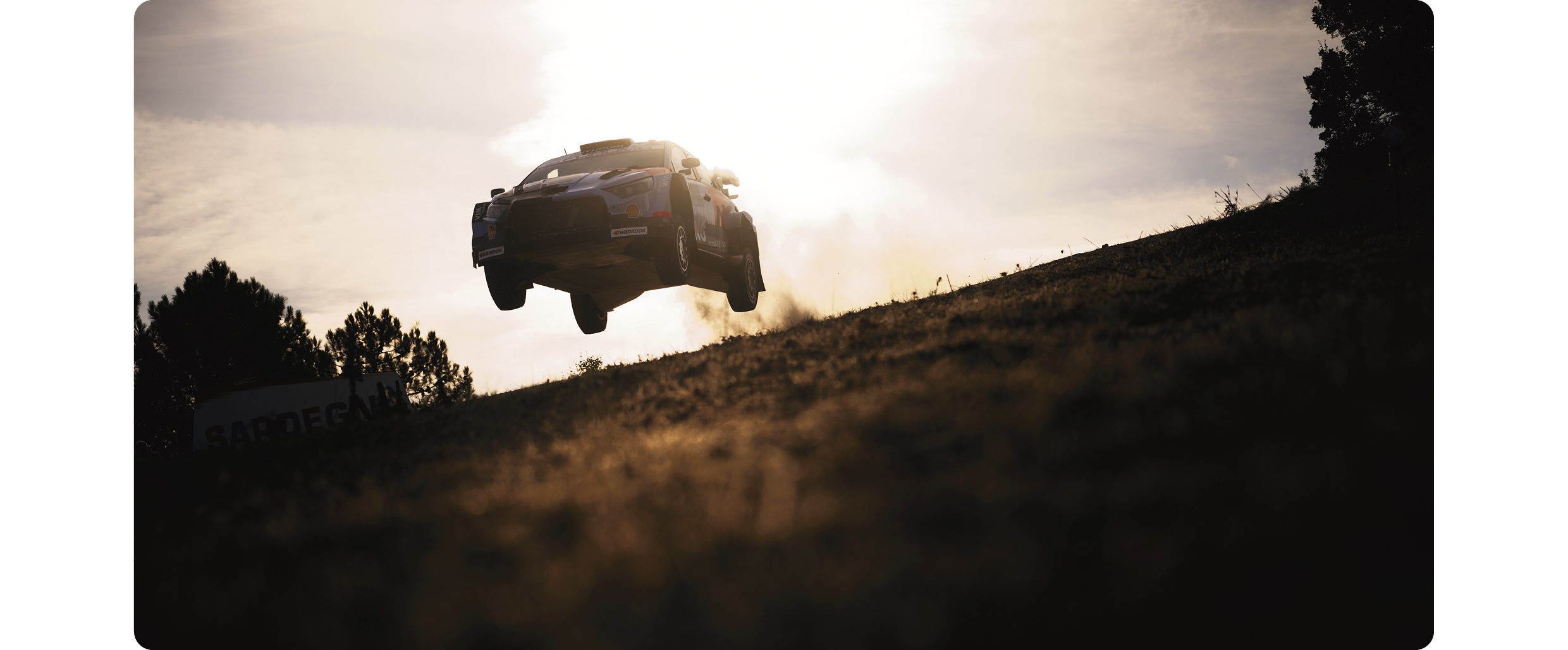
By the end of Saturday, Solberg still led overall. Ogier was second, followed by Pajari, Fourmaux, Evans, and Katsuta. At that point, the championship math still favored Evans. If the rally ended with the standings exactly as they were, Evans would take the title by six points. But Sunday still had bonus points on the table. Nothing was settled. In WRC2, Roope Korhonen moved ahead of Gus Greensmith to take the class lead.
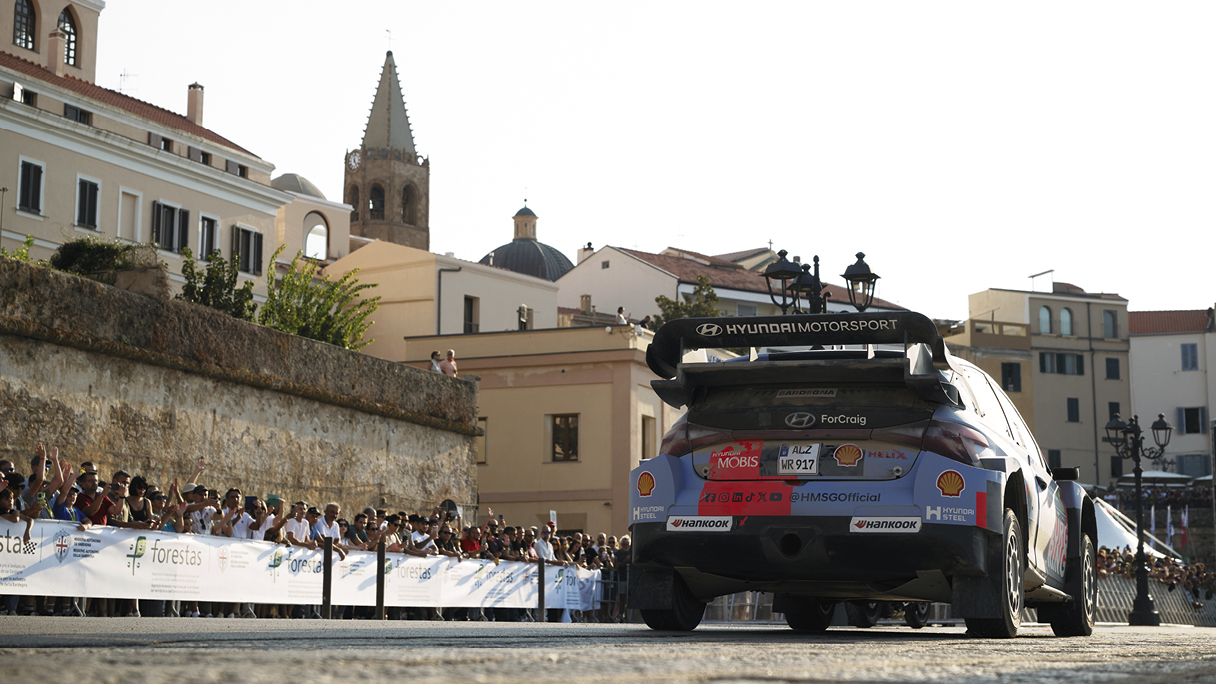
DAY 4 – The Title Comes Down to the Final Stage
Sunday, October 4, opened with Osilo - Tergu, followed by the shorter Sassari - Argentiera stage. Both would be run twice, giving the final day four stages—SS14 through SS17—and 61.62 km of competition. Tire strategies were all over the map. Neuville and Sesks chose six softs. Evans, Ogier, and McErlean went with three softs and two hards. Among the title contenders, Pajari carried five softs, while Solberg took four softs and two hards.
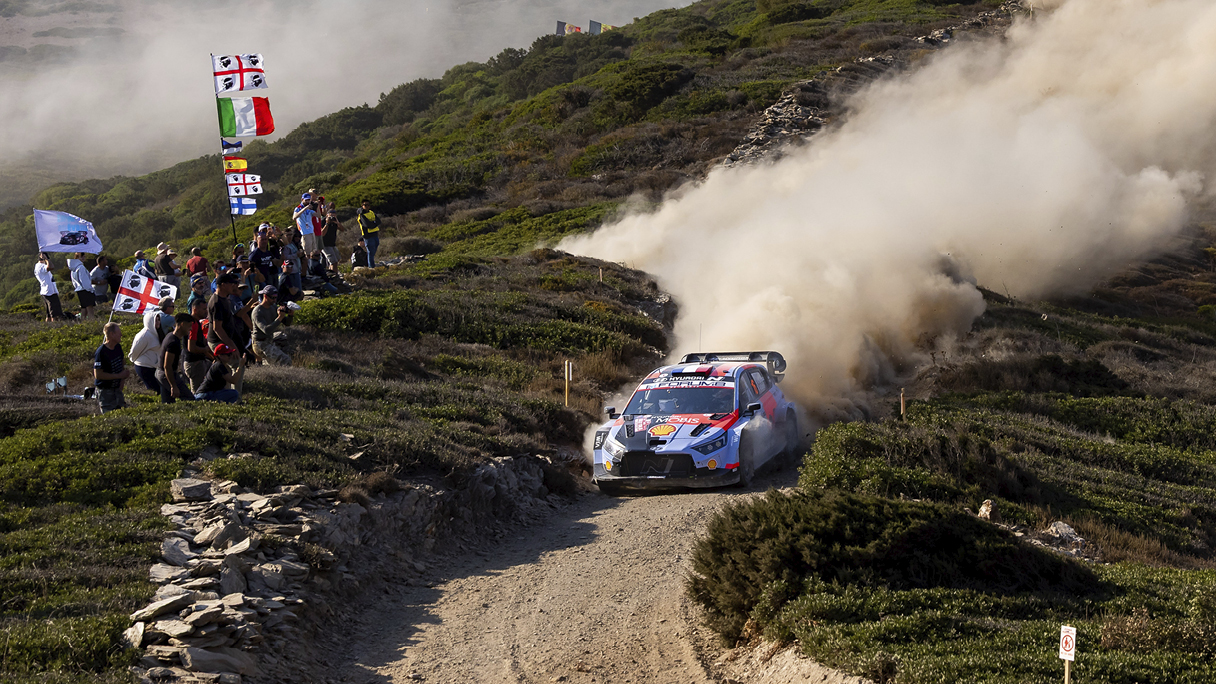
The 23.71-km Osilo - Tergu stage returned to the rally for the first time since 2024. A thin layer of sand covered the hard-packed surface, making the road extremely slippery. The road rose and fell through a chain of tight bends where rhythm mattered more than aggression. McErlean was first onto the least-swept road and stopped at the 2.8-km mark. Solberg went fastest and put himself in the best position for the Super Sunday points. Pajari was second, with Fourmaux third.
“If you don't know what sweeping means - cleaning effect - I think if you come to this stage you understand,” Fourmaux said.
“So much loose on the top, but at the same time so much fun. All the wide parts are very nice and then the lower sections are low grip with many rocks. I had a beautiful jump over one corner on tarmac. Brilliant!”
* Sweeping: Running early on a gravel stage when loose dirt and stones still cover the surface. The first cars effectively clean the road for those behind, usually giving later runners more grip.
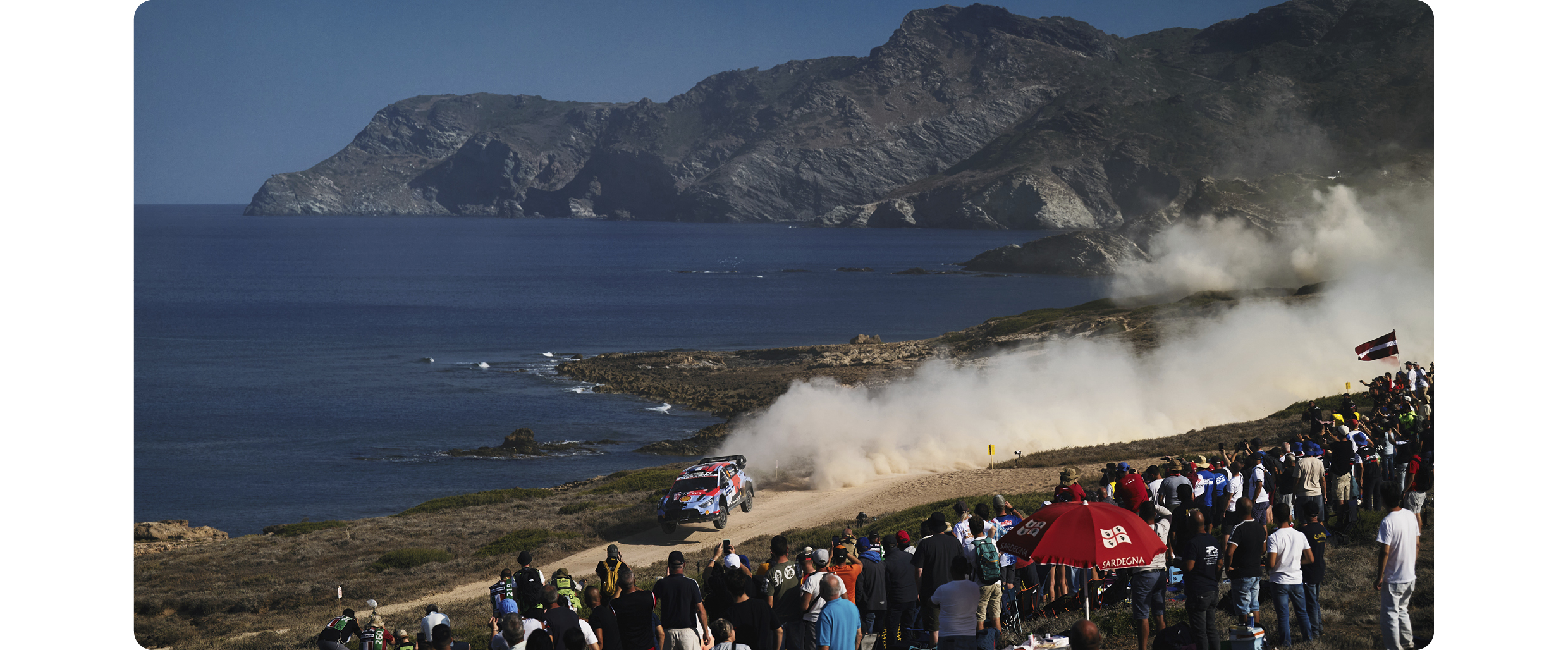
Then came SS15 Sassari - Argentiera, effectively a dress rehearsal for the final Power Stage. The 7.1-km stage dropped toward the Mediterranean over rough sand and gravel. The layout was relatively simple, but the stakes were not. With bonus points waiting in the Power Stage, nobody was leaving anything on the table. After the hairpin at 5.46 km, the road plunged downhill before charging over a series of coastal rises toward the finish.
This time, Neuville went fastest. After Saturday’s disappointment, he was finally able to let the car run.
“Today was about getting to the finish and having some fun in that stage,” Neuville said.
“I have never been that much all over the place. I was enjoying it. Let's see what we can do on the Power Stage and bring a bad season to an end.”
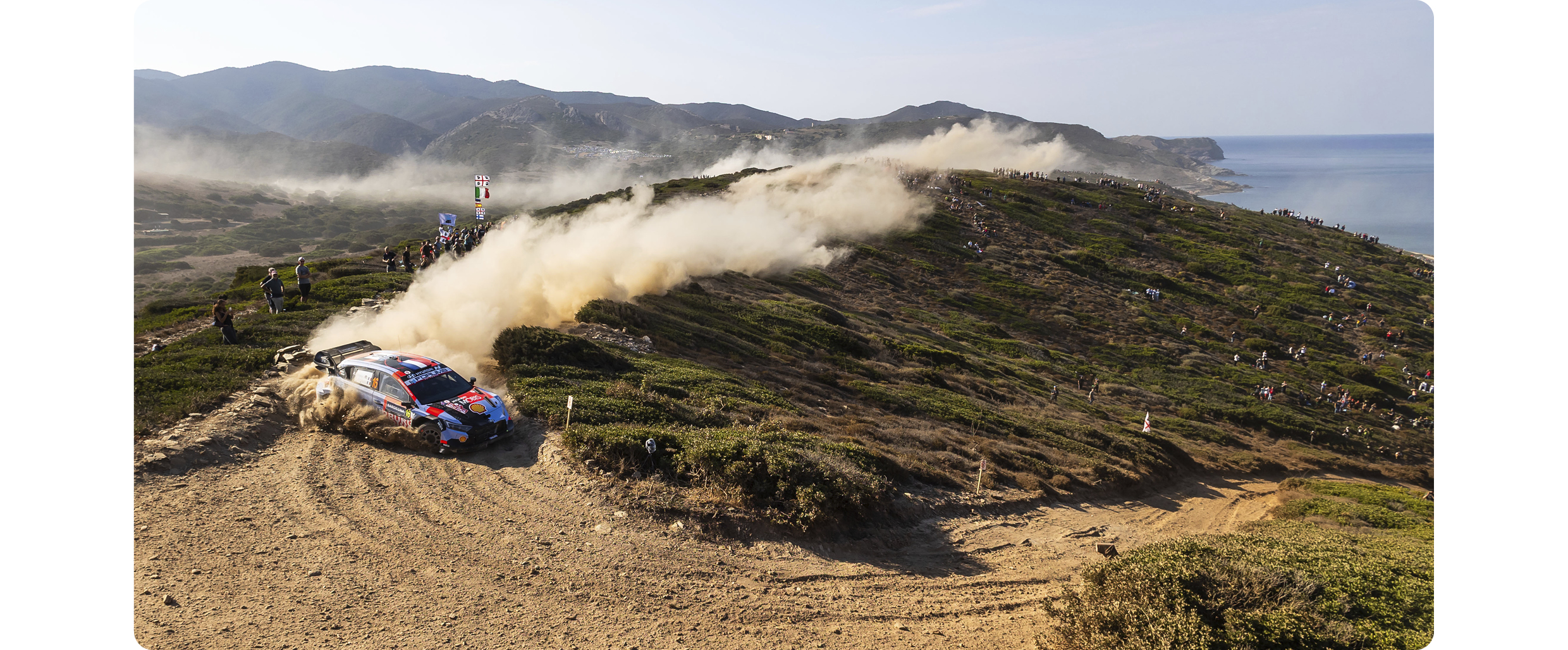
For the second run through the opening stage, SS16, the crews were given additional hard tires. They needed them. The road was brutal, and the risk of punctures was high. Sure enough, Evans had to stop and change his right-front tire. Pajari went fastest, with Ogier second and Solberg third. Once the Super Sunday points were factored in, Evans’ provisional championship lead over Solberg had been slashed to just one point. The title was hanging by a thread.
Then came SS17 Sassari - Argentiera. One final stage. One championship left to decide. Neuville was fastest on the Power Stage. Solberg still won Rally Italia Sardegna, but a crucial mistake before the finish cost him bonus points.
That was enough to decide the championship. Elfyn Evans was the 2026 WRC drivers’ champion. He became the first Welsh driver ever to win the title and the first British champion since Richard Burns in 2001, following Colin McRae’s 1995 crown. The final margin over Solberg was only five points. Ogier and Pajari completed the rally podium. Fourmaux finished fourth, bringing Hyundai’s season to a close.
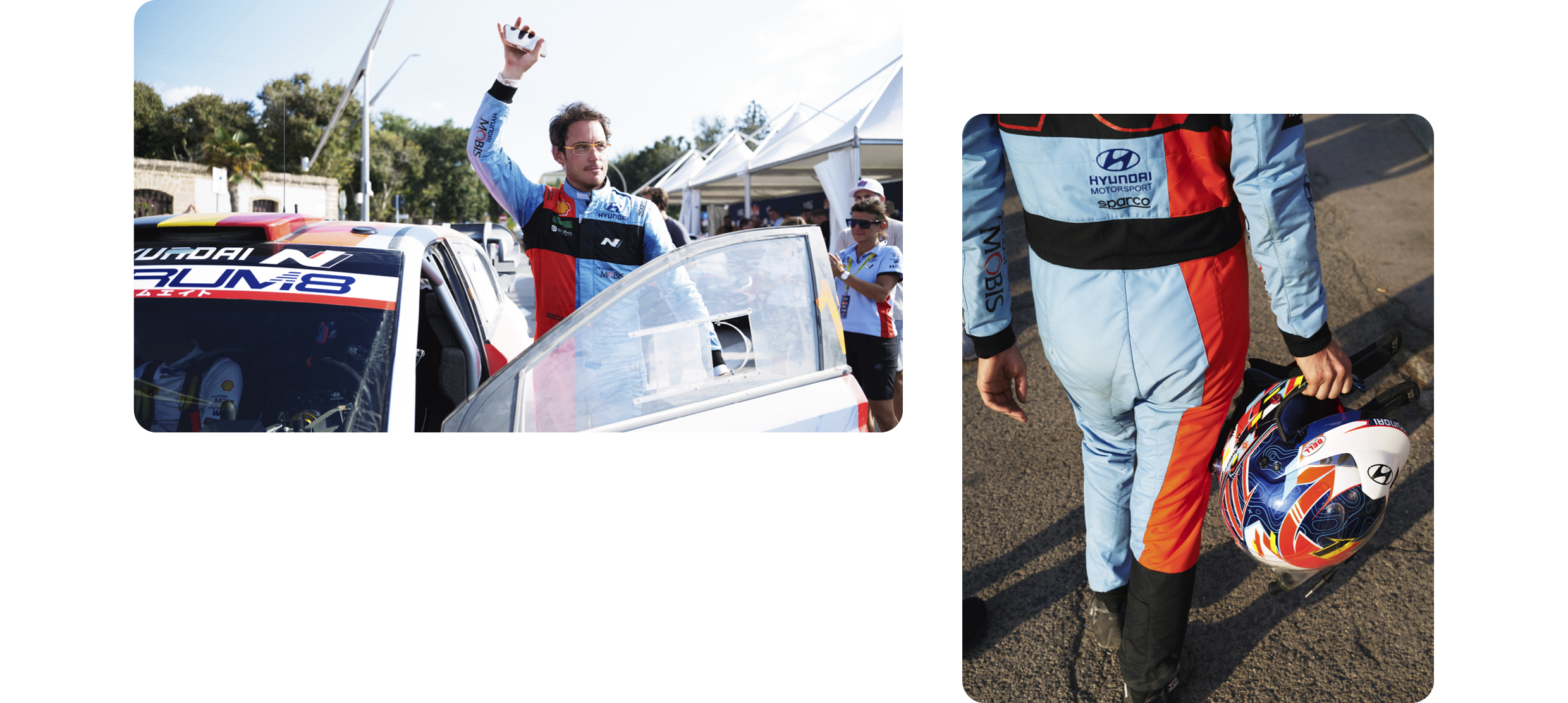
Neuville, who had led before retiring, was understandably frustrated.
“I don’t know what to say,” he said.
“Super disappointed for the weekend. It is over. It has been very tough. I need a little break. Thank you to the team they did amazing. I think we should be there next year but In don't know how and when. I'm sure we will find some opportunities with Hyundai to run some car.”
He closed the season by waving to the fans and thanking them from the stage.
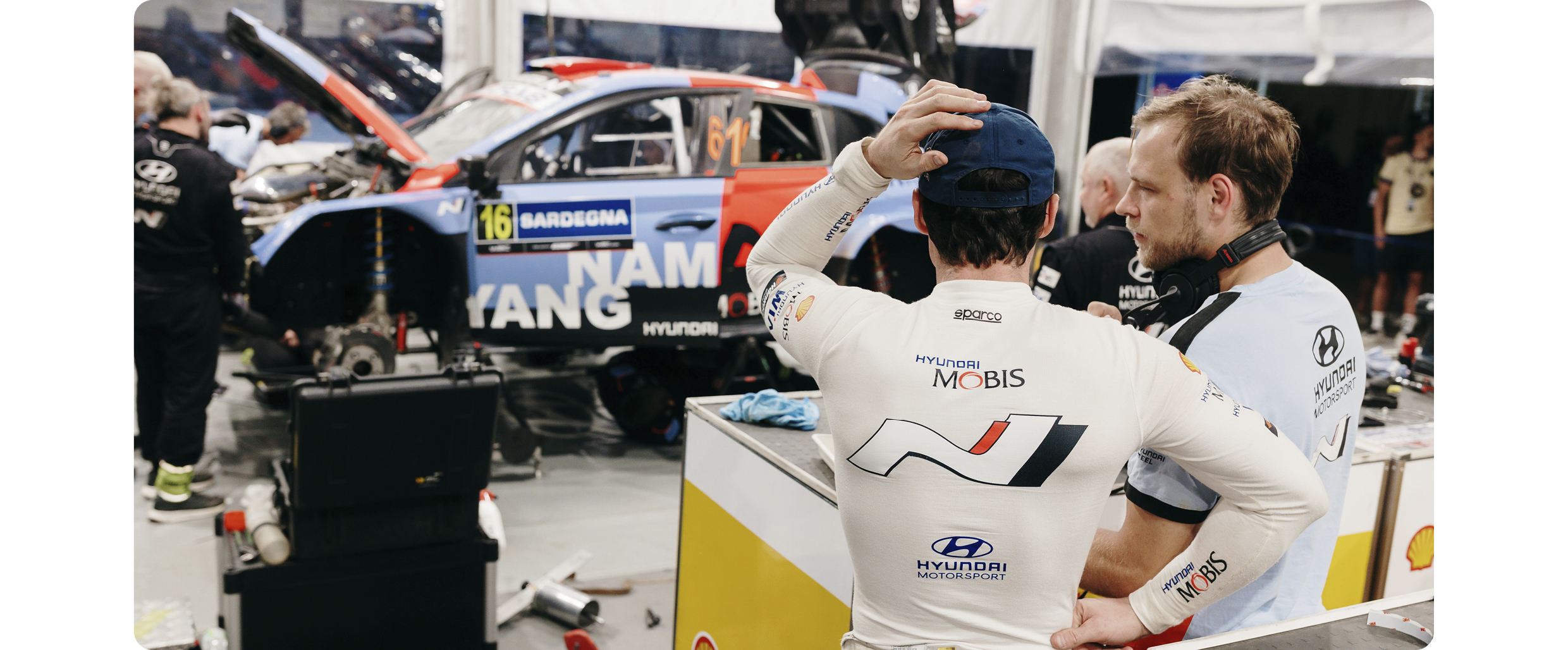
The rally also marked the end of the Rally1 era. Beginning next season, the WRC will move to the all-new WRC27 regulations. Among the current Rally1 manufacturers, only Toyota had developed a completely new car. Smaller independent constructors, including projects such as Project Rally1 and WRT Rally1 Spain, were also developing their own entries. M-Sport Ford, meanwhile, plans to begin with an upgraded package based on its Rally2 car before returning as a full Ford factory effort in 2028, when the rules open the door to a much wider variety of engines.
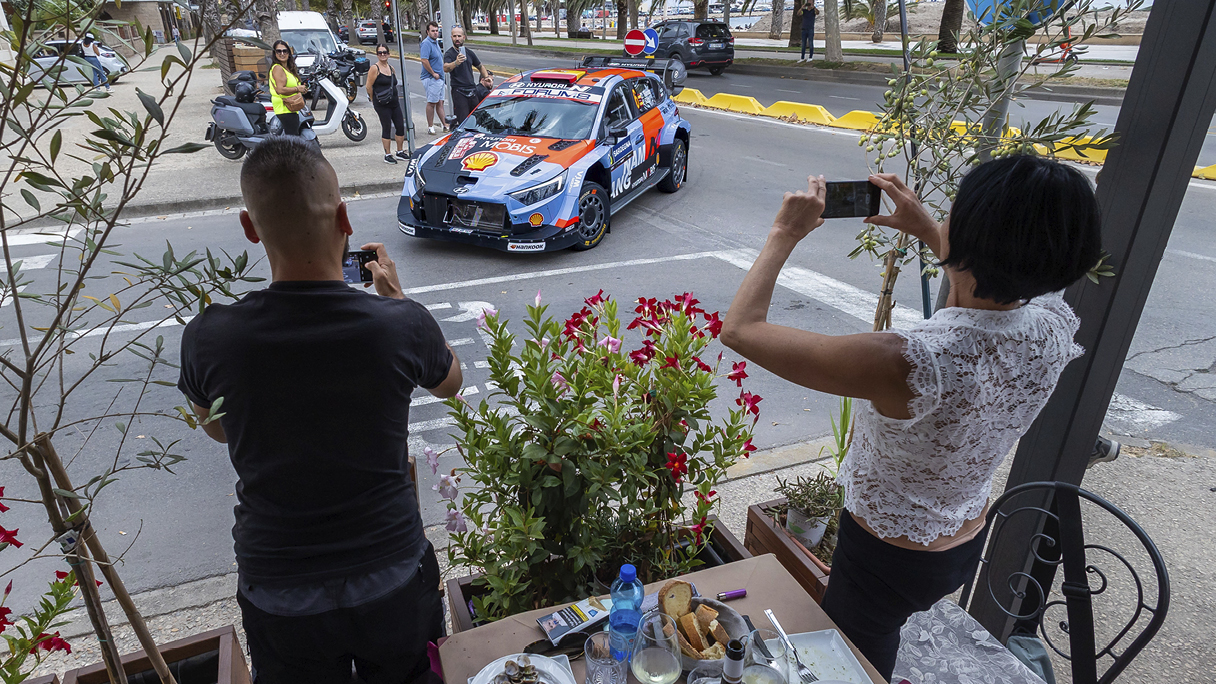
The 2027 WRC calendar will once again begin in Monte Carlo, followed by Sweden, Safari, Croatia, and the Canary Islands, with much of the early-season order unchanged. But there are major changes farther down the schedule. Chile is replaced by a U.S. round. Italy leaves Sardegna for Rome. Portugal disappears from the calendar. And after an eight-year absence, the Rally of Great Britain returns. This time it will not be based in Wales. The event moves to Aberdeen in northeastern Scotland.
The Rally1 era is over. What comes next will look very different.
Written by: Soo-jin Lee
In 1991, Lee’s passion for cars led him to enthusiastically write letters to the newly launched Korean car magazine Car Vision. This unexpected connection led him to start his career as an automotive journalist. He has served as editor and editorial board member for Car Vision and Car Life, and now works as an automotive critic. While eagerly covering the latest trends like electric vehicles, connected cars, and autonomous driving technology, he is also a car enthusiast who secretly hopes that the smell of gasoline engines will never disappear.