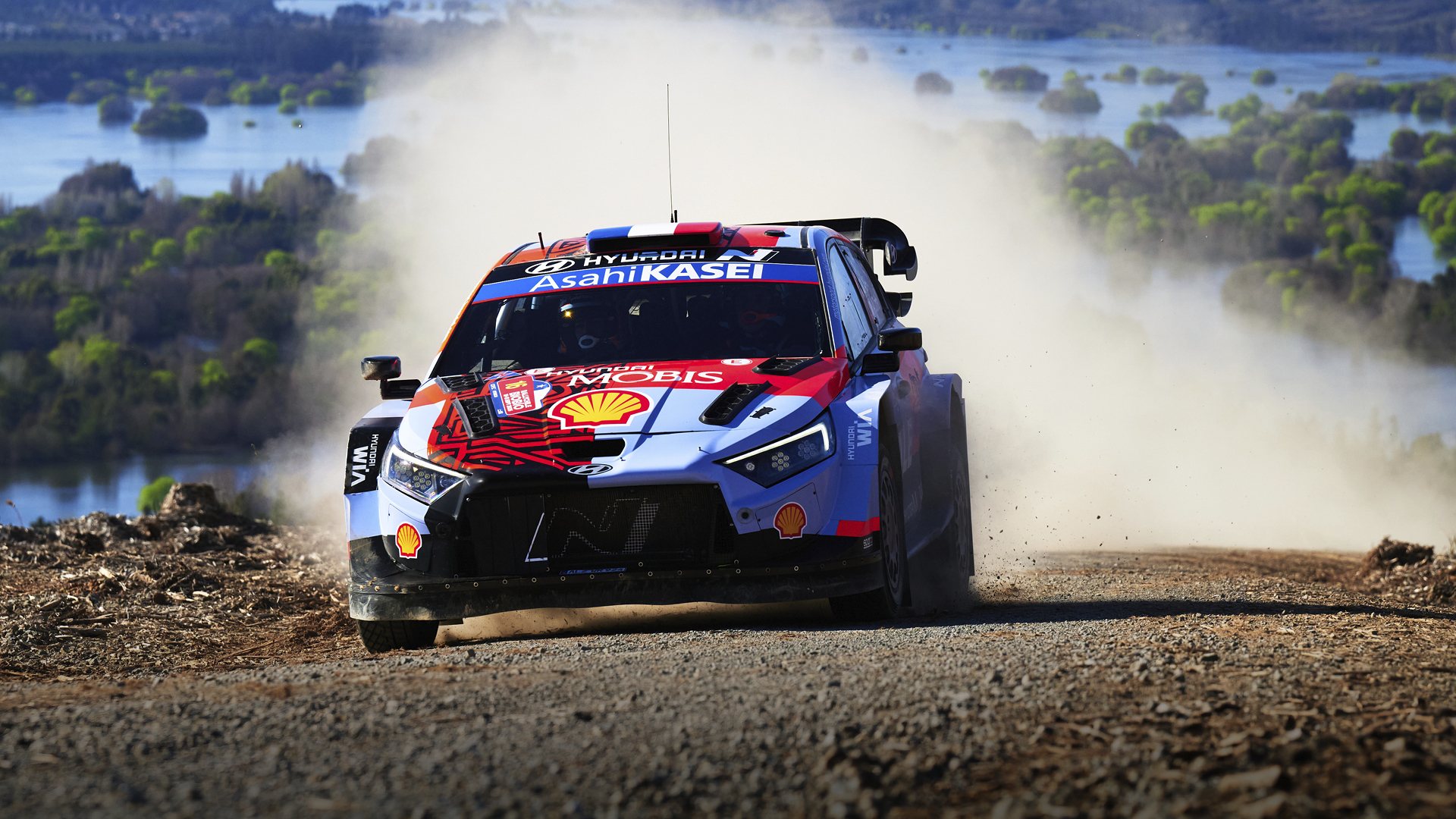
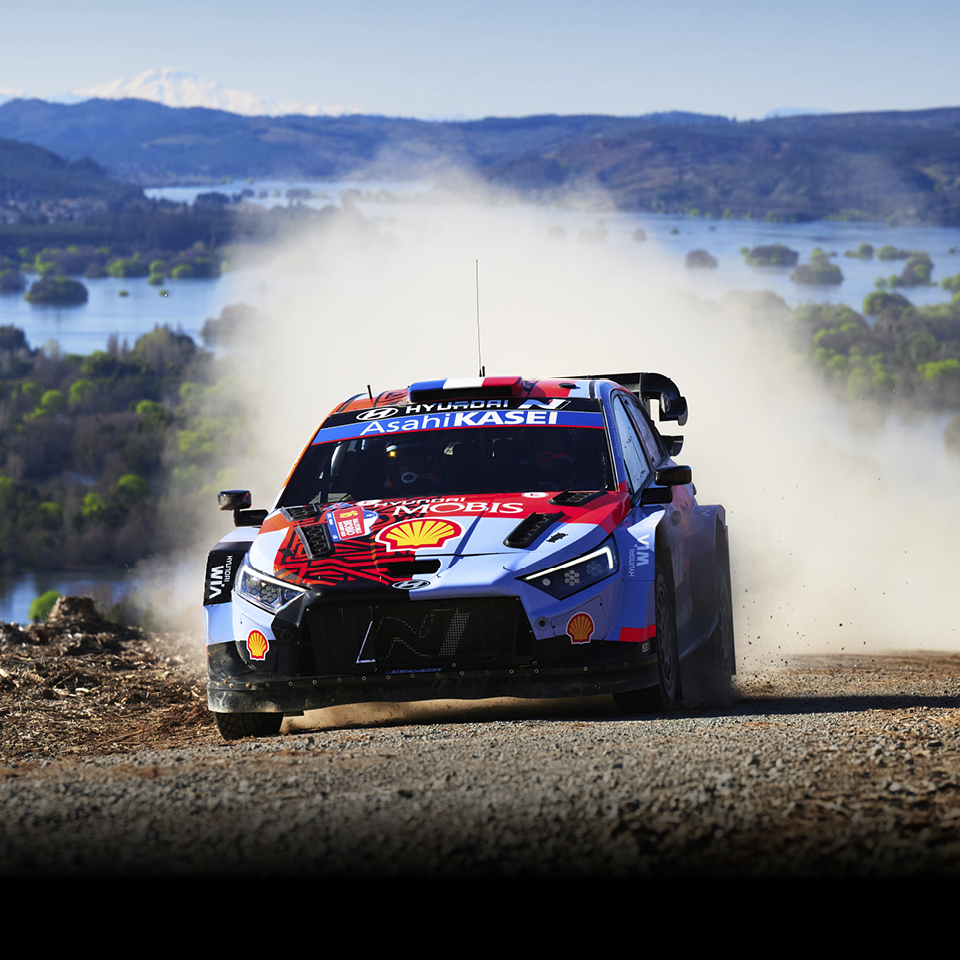
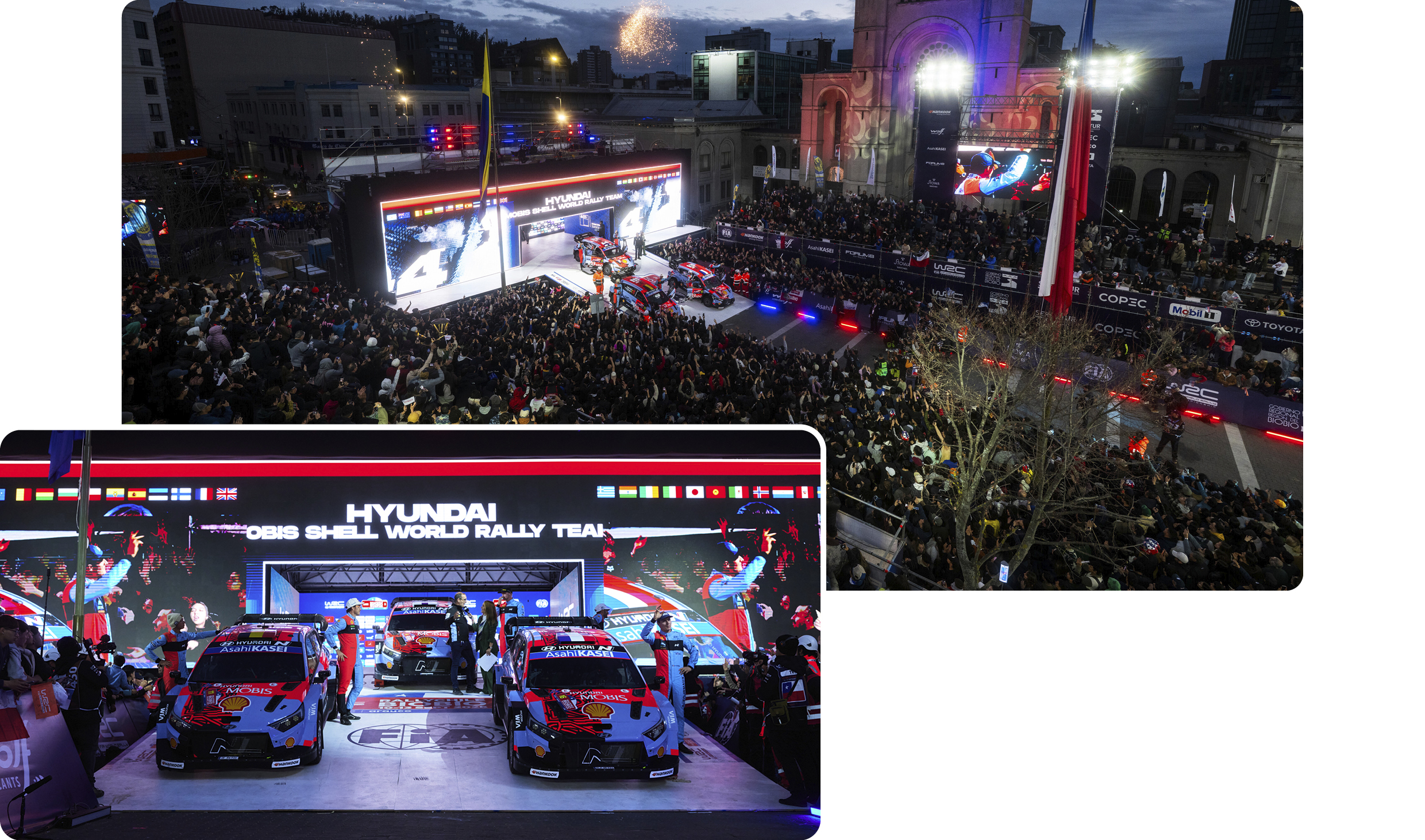
Rally Chile Biobío is the second stop on the WRC’s South American swing and grew out of RallyMobil, Chile’s domestic rally championship launched in 2000. The event is based around Concepción, capital of the Biobío Region in south-central Chile and the country’s second-largest city. The stages run through thick forest between the Pacific coast and the Biobío River.
Chile first joined the WRC in 2019, but the following year’s event was canceled amid widespread protests, political unrest, and a constitutional referendum. Then COVID-19 hit, keeping the rally off the world stage even longer. It finally returned to the WRC calendar in 2023 after a four-year absence.
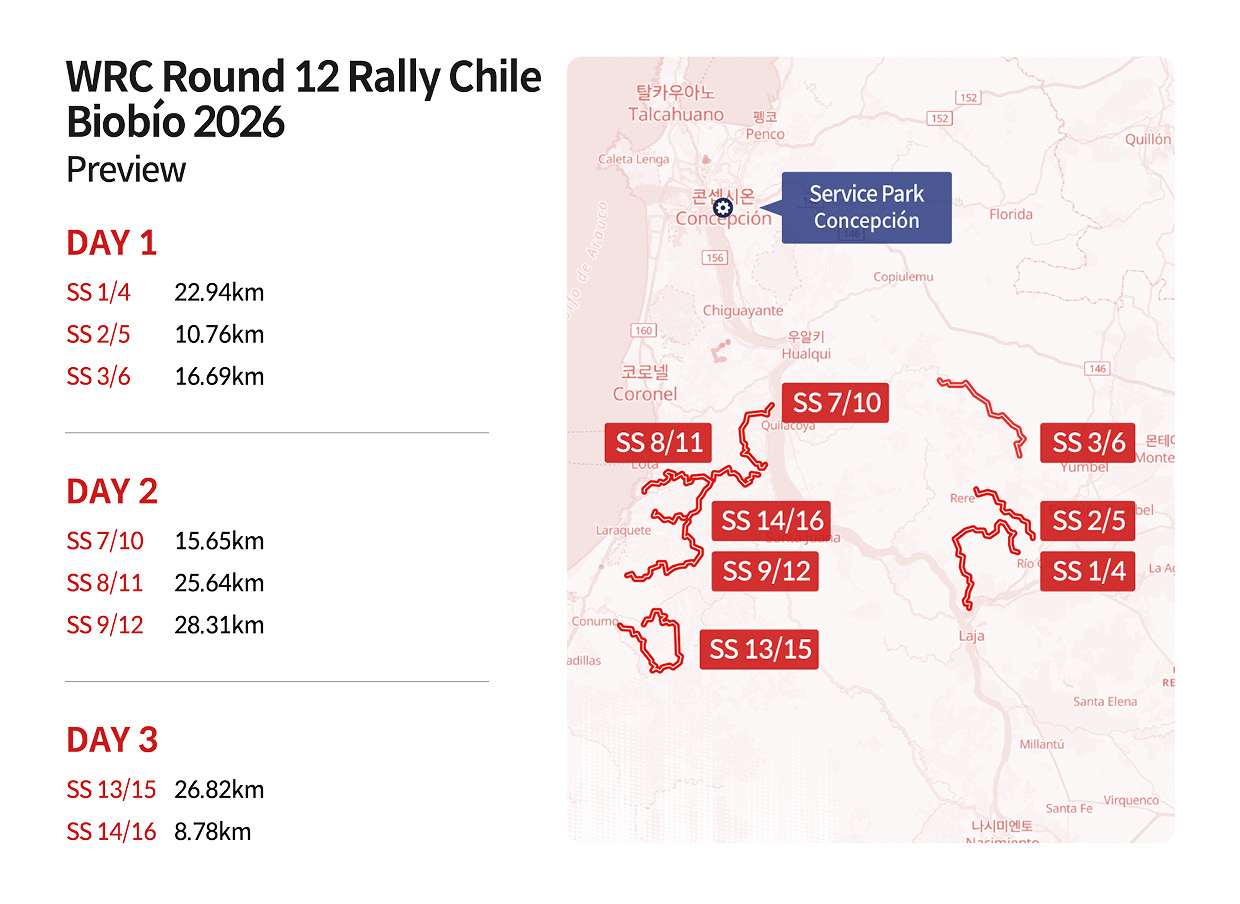
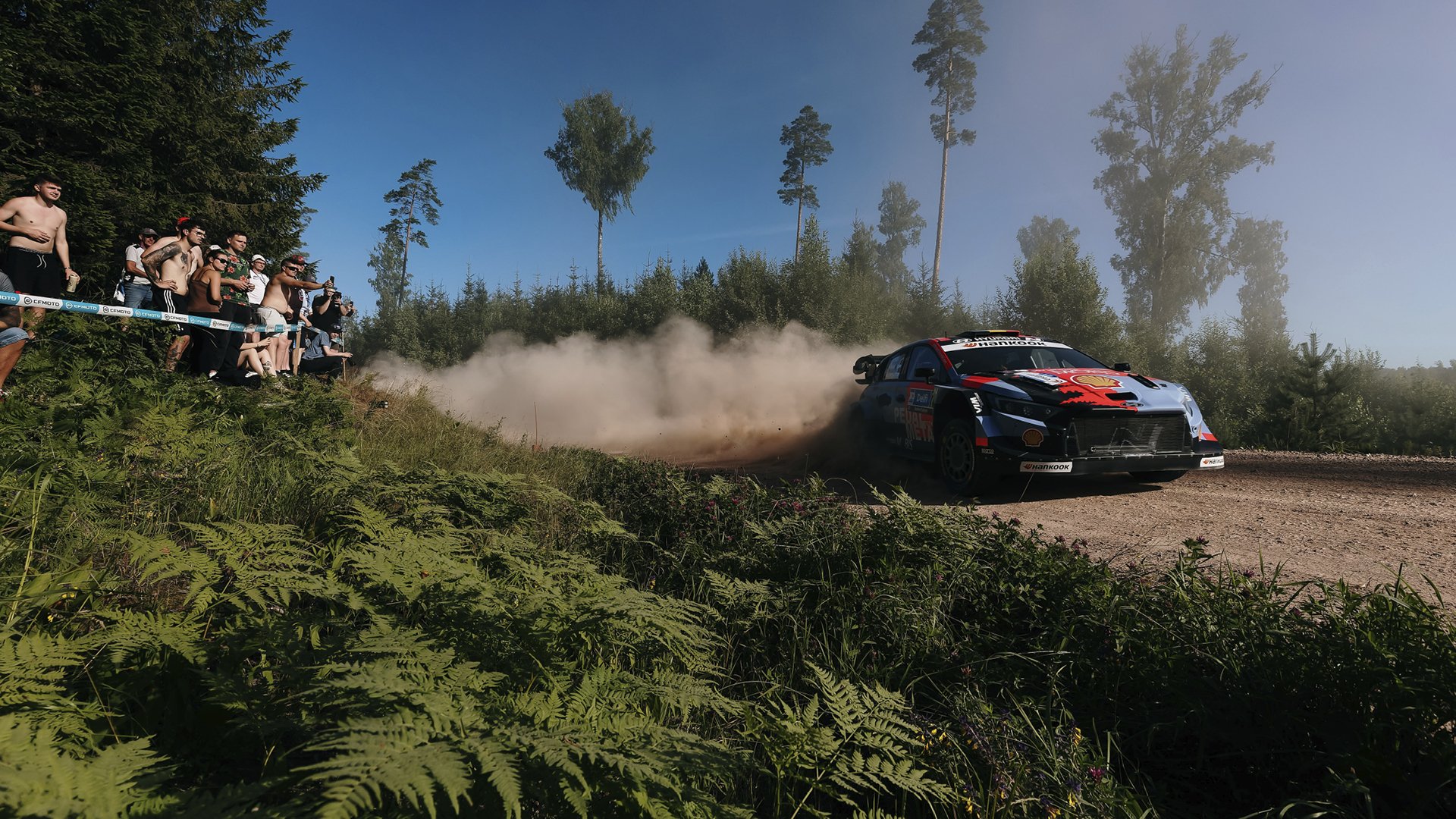
The stages are fast, technical gravel roads carved through dense forest and steep hill country. The surface is generally hard-packed and relatively smooth, but rougher sections keep drivers honest. Precision matters here, and so does concentration. A lot of the route runs through privately owned forest land, which is no surprise in a region built around forestry. The coastal location adds another complication: early-morning fog is common, and the thick tree cover can make visibility even worse. That puts a premium on pace notes and quick decisions. Make one small mistake and the car can be in the brush before the driver has time to fix it. Because of the speed, the flowing rhythm, and the way the roads thread through the trees, Rally Chile is often compared with Finland or the old Rally Wales.
There was another variable this year: tires. After Paraguay was hammered by punctures and tread-separation issues, the FIA temporarily loosened the tire allocation for Chile. Rally1 crews are normally limited to 28 tires on a gravel event. This time, they were allowed up to 36.
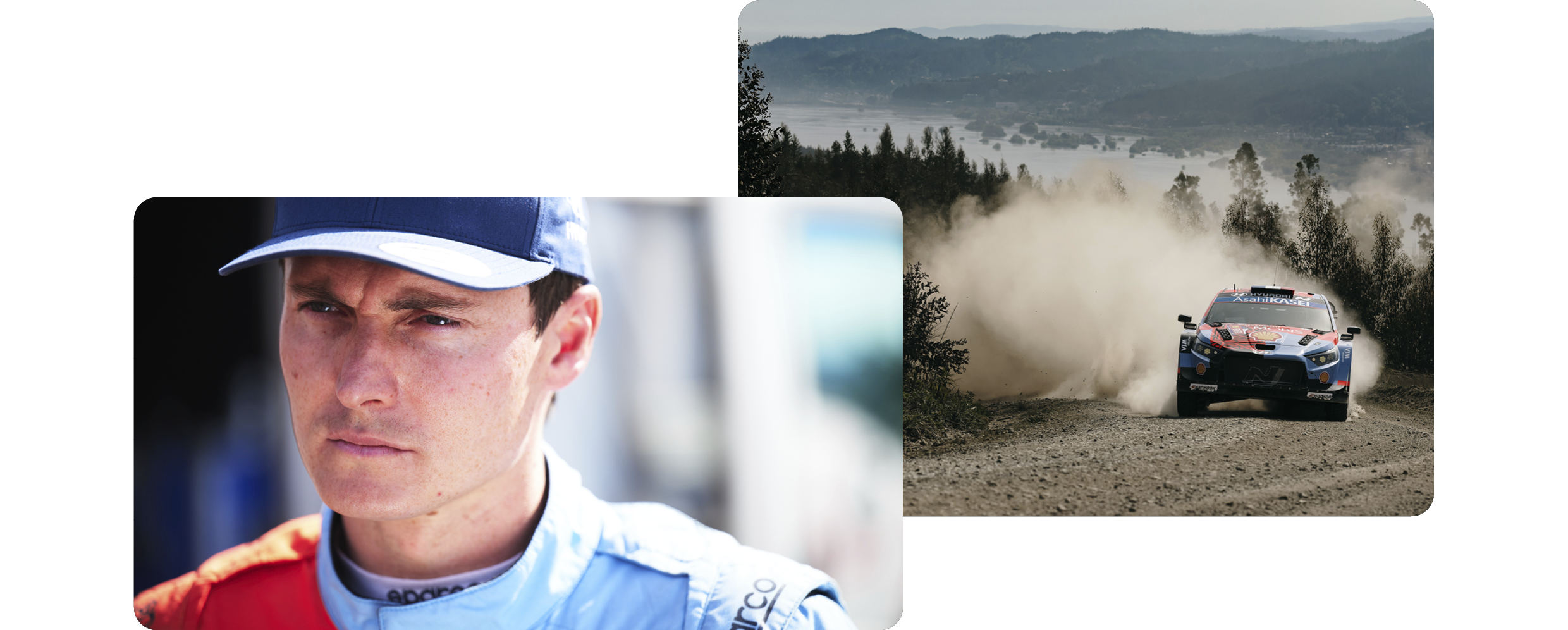
Hyundai World Rally Team entered Adrien Fourmaux, Thierry Neuville, and Esapekka Lappi. Fourmaux came in with momentum. Podiums in Estonia and Paraguay had put him on a strong run, and he wanted to carry that into Chile.
“I’m really looking forward to Rally Chile after showing very strong pace throughout the weekend in Paraguay - it gives us confidence and hopefully we can carry this performance into Chile,” Fourmaux said. “It’s a rally I really enjoy, last year we were fighting at the front and we finished on the podium. The stages are fast and flowing, but also quite technical, so you need a lot of precision and confidence in the car. We know we were competitive there last year, and after the performance we had in Paraguay, the target is to fight at the front again and push for the best possible result.”
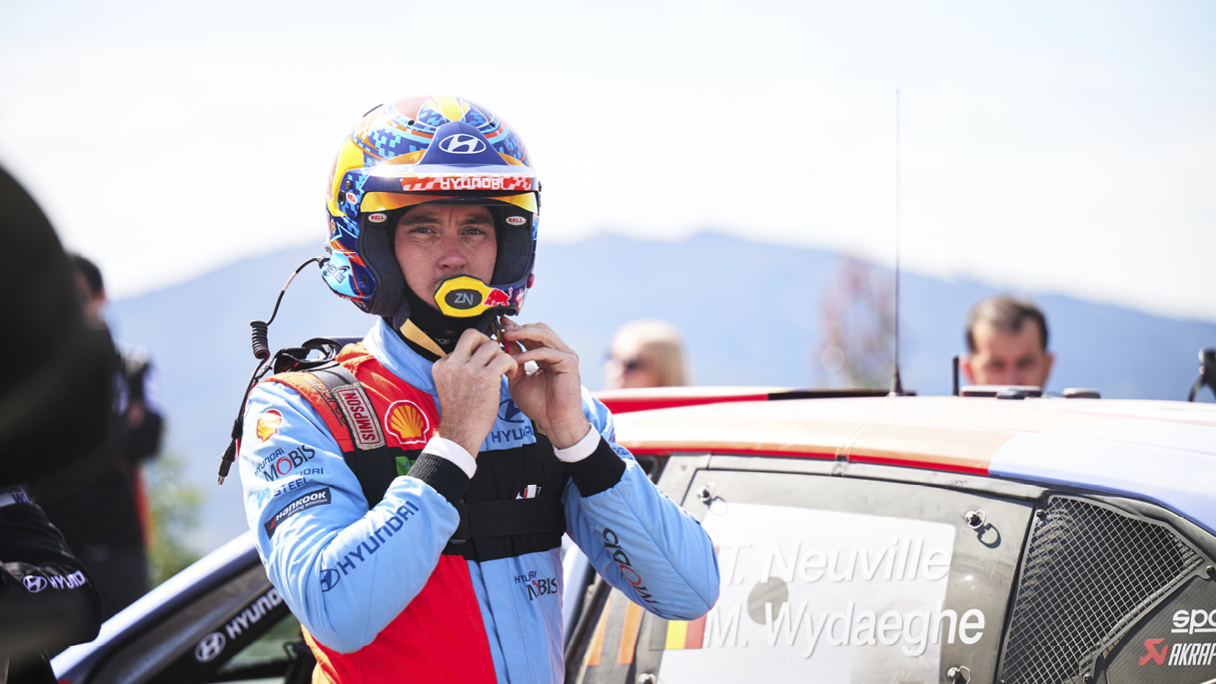
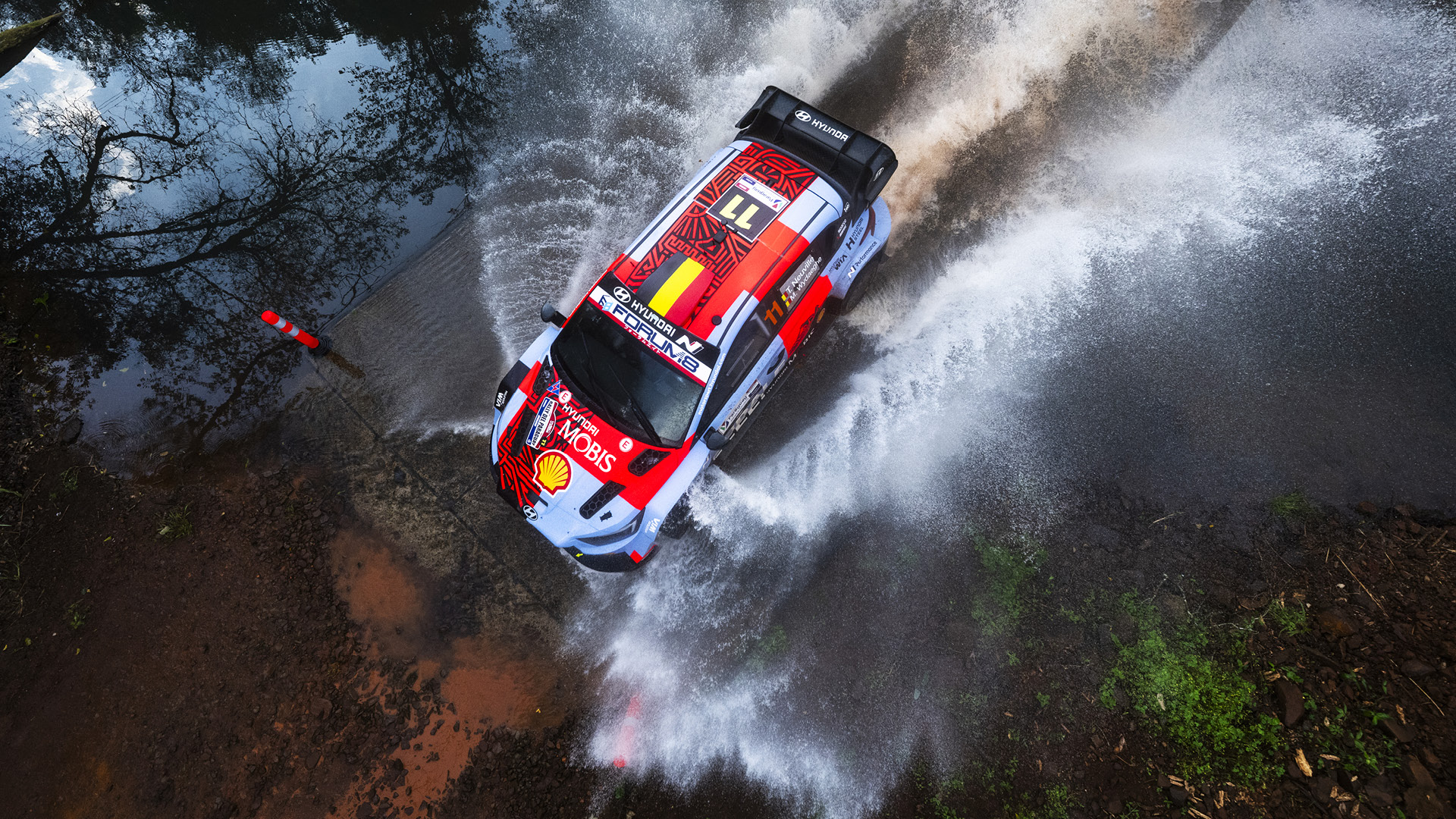
Neuville, meanwhile, was looking for a reset after his early retirement in Paraguay. Chile has already given him both extremes. In 2019, he suffered a huge rollover that badly damaged the car. In 2023, he came back and finished on the podium. He also expected tire management to matter much more here than it did in Paraguay.
“Chile is very different from Paraguay,” Neuville said.
“It starts with the surface, which is much more grippy and abrasive, while Paraguay is hard, very slippery and compact. Chile can also be a little bit rougher and more rutted. Tire wear is always very high and tire choice can be complicated depending on your starting position. It’s not the event I enjoy the most, but when you have a good feeling, it is an enjoyable drive, although still technically demanding. I have mixed experiences after a crash in 2019 and a podium in 2023. Our clear target is to fight for victory. Toyota will be very strong, but Paraguay showed that our car can be fast. The set-up will be slightly different, but the base and the choices we made between the two events are good, so I’m quite convinced the speed will be okay.”
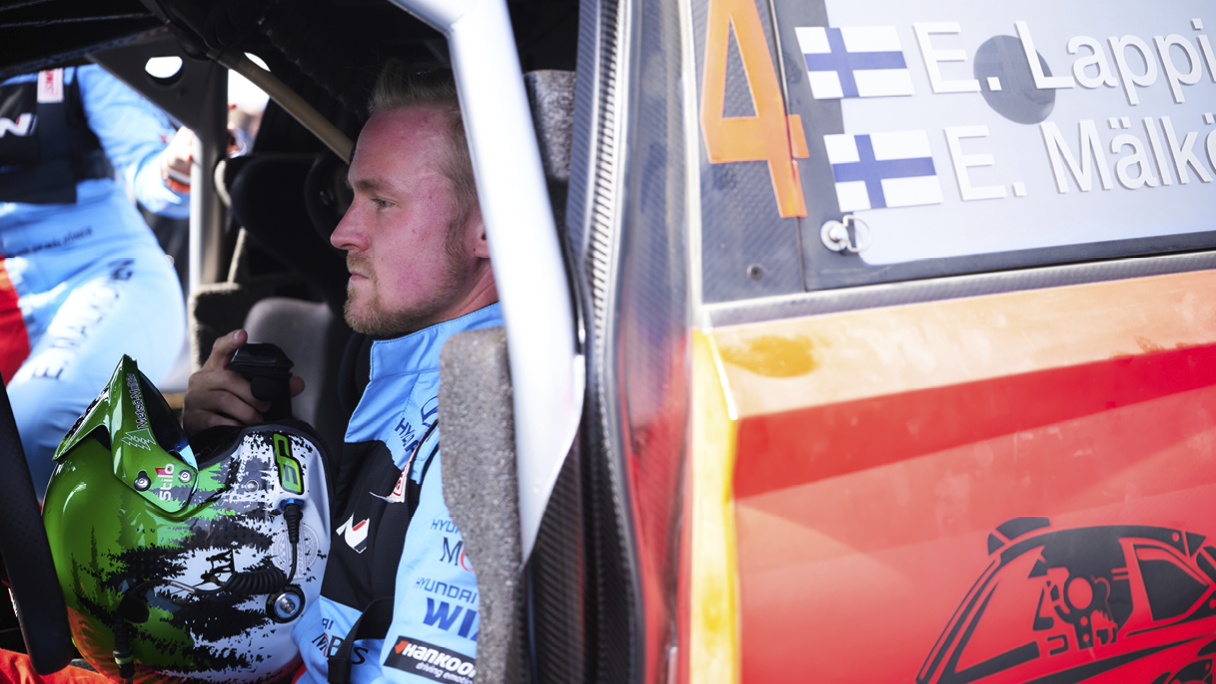
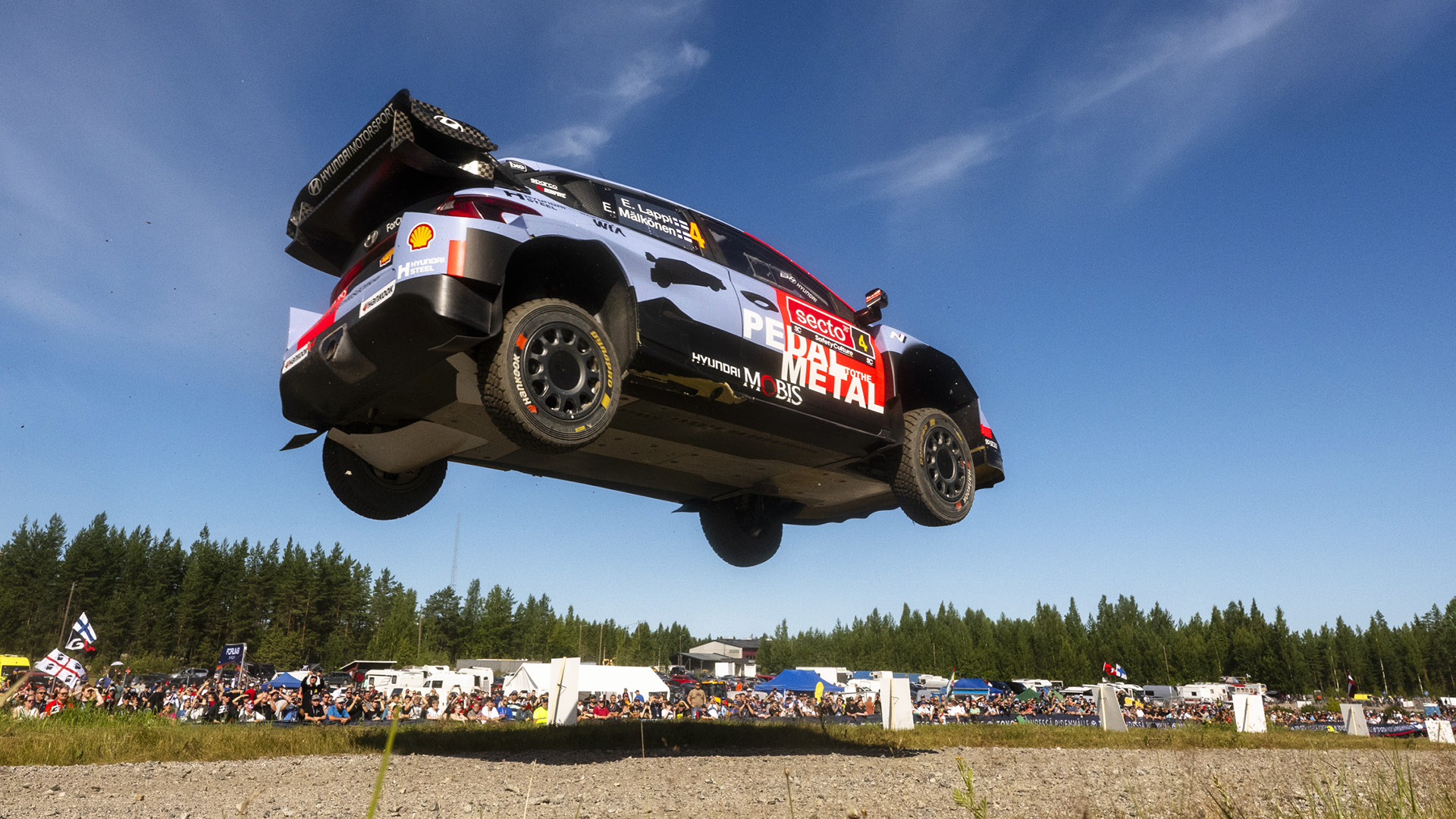
For Esapekka Lappi, Chile was his fifth rally of the season. The results had not really matched expectations, especially in Estonia and at his home rally in Finland, two events with some similarities to Chile. Lappi came in looking for a turnaround, but he was realistic about the pace.
“I’m very excited to drive in Chile again,” Lappi said.
“I really like the roads, and it will be great to get back in a Rally1 car. I have enjoyed the stages there in the past, so I’m looking forward to returning. The weather has been challenging on several occasions, so that could be a factor again this year. The roads are also tricky because, on Friday, you normally drive between gravel banks with no room to run wide. You need to be precise and fully committed because even a small mistake can cost a lot. In terms of pace, the target is to be somewhere between Estonia and Finland, as well as having lots of fun. We want to keep improving throughout the weekend and support the team with a good result. Enjoyment is important because, without it, the results don’t come.”
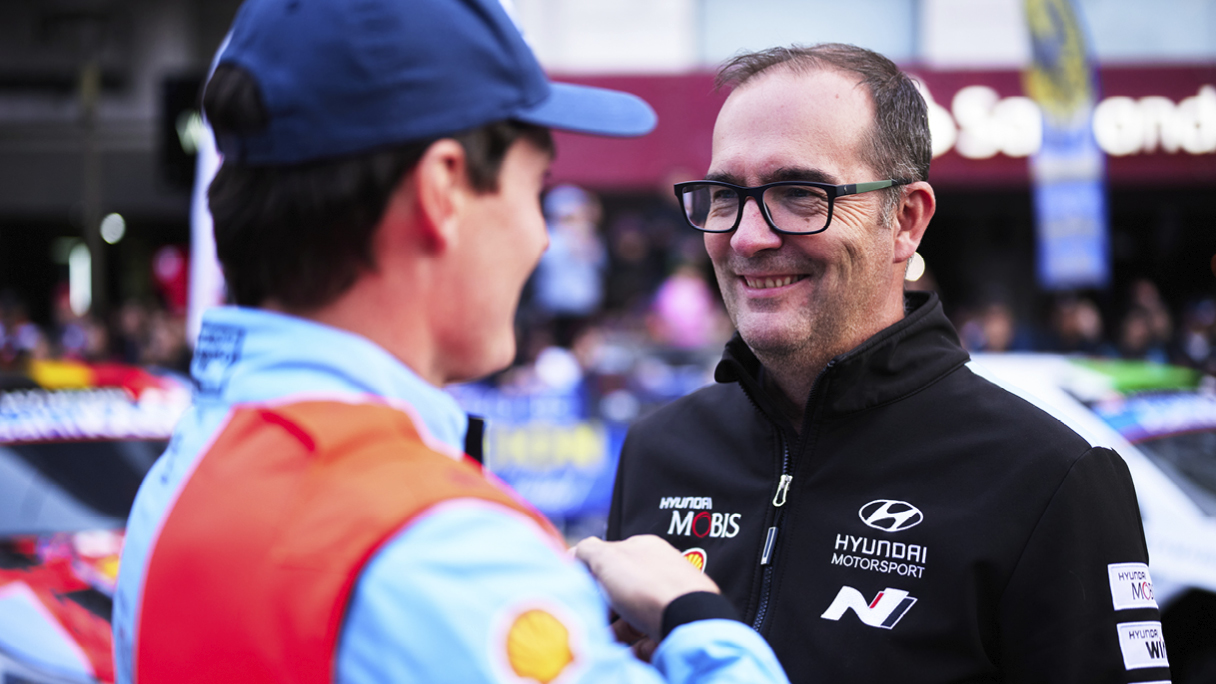
Hyundai Sporting Director Andrew Wheatley came into Chile with confidence after the team’s double podium in Paraguay. His message was simple: this was not a rally to win with one heroic stage. It was about being quick all weekend.
“After a double podium in Paraguay, we have a good level of confidence that we can carry the same speed into Rally Chile,” Wheatley said.
“The profile and construction of the roads are different, however the principle is the same: medium-to-high-speed gravel roads with more camber and elevation change. Chile is another event where the lead can ebb and flow, and where one-tenth of a second is not the most important element. It is a rally where consistent speed is rewarded. The most significant advantage we have for Chile is that the Hyundai i20 N Rally1 has been very reliable in 2026. We know it is a strong car when the conditions get tough, which is the result of a significant effort from the entire team to learn about and adapt the Evo version of the car.”
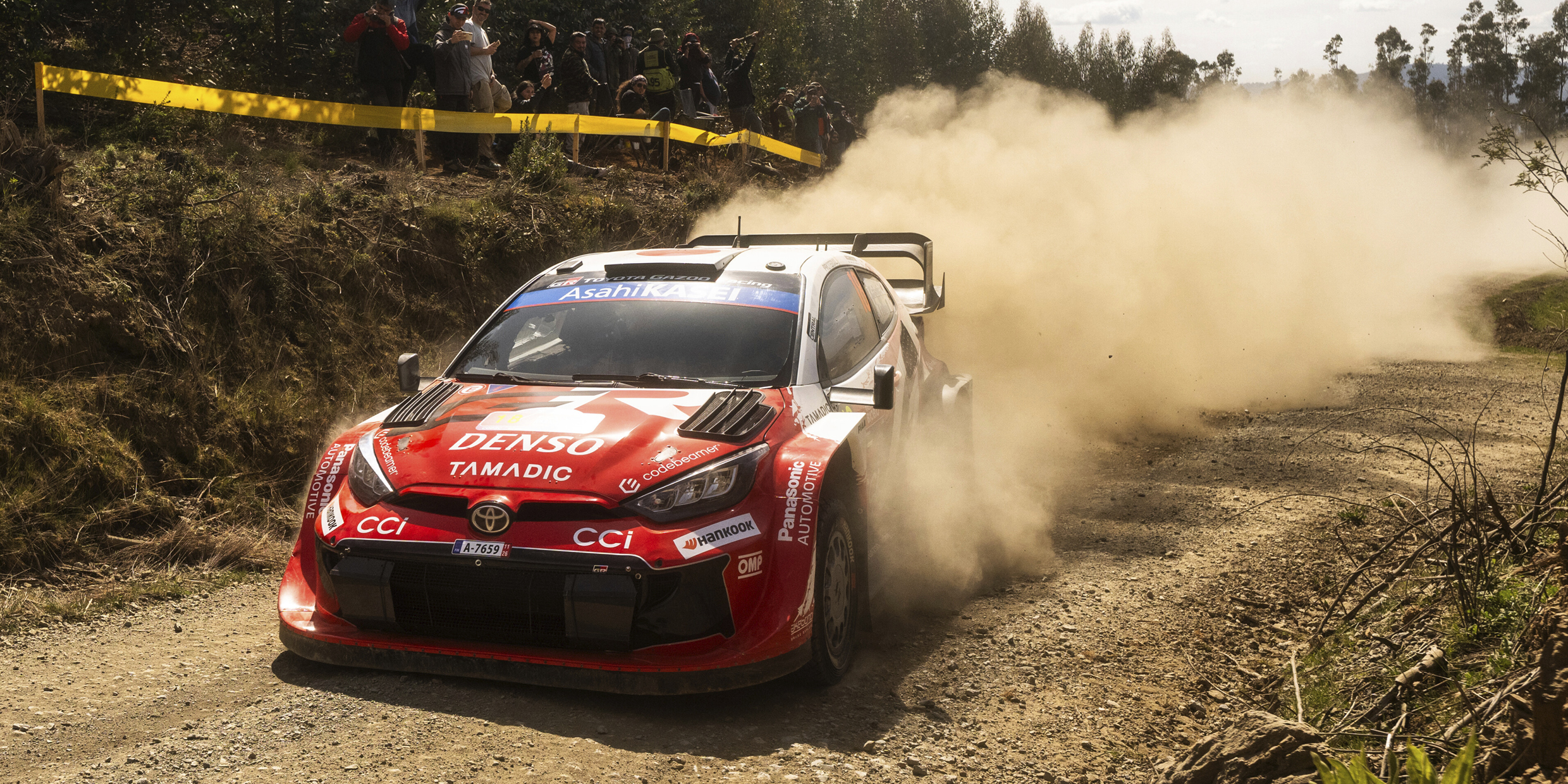
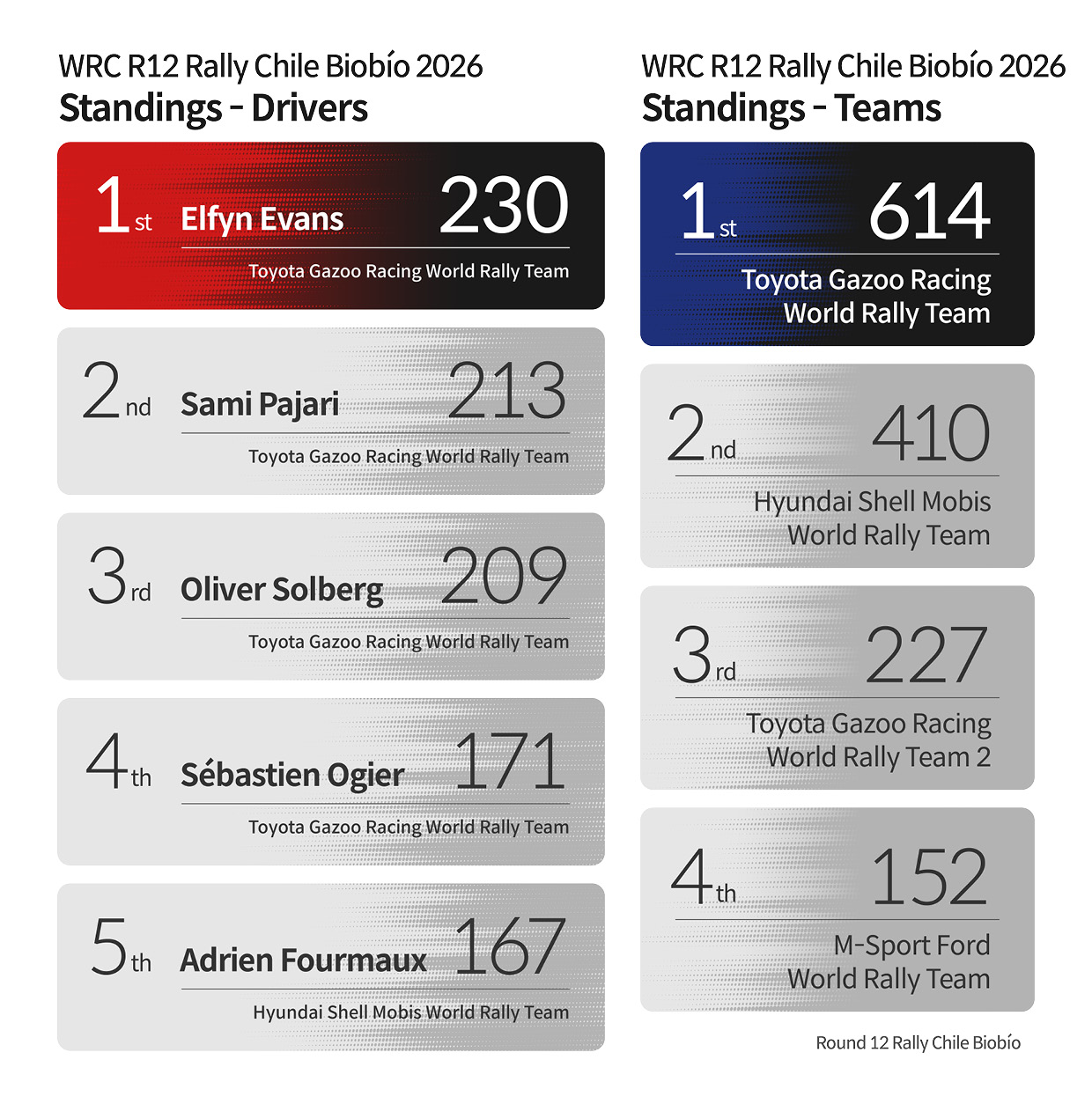
Toyota showed up with Elfyn Evans, Oliver Solberg, Takamoto Katsuta, Sébastien Ogier, and Sami Pajari, and with the team’s 10th manufacturers’ title almost within reach. There were 180 points still available over the final three rounds, and Toyota held a 173-point lead over Hyundai. That meant seven points would be enough to seal the title on its own.
The drivers’ fight was much tighter. Evans still led the standings, but Pajari had suddenly become a serious threat after ripping off three wins in a row. The gap between them was only 20 points. If Evans could not stretch that margin in Chile, the championship could easily stay alive until the final stage of the season.
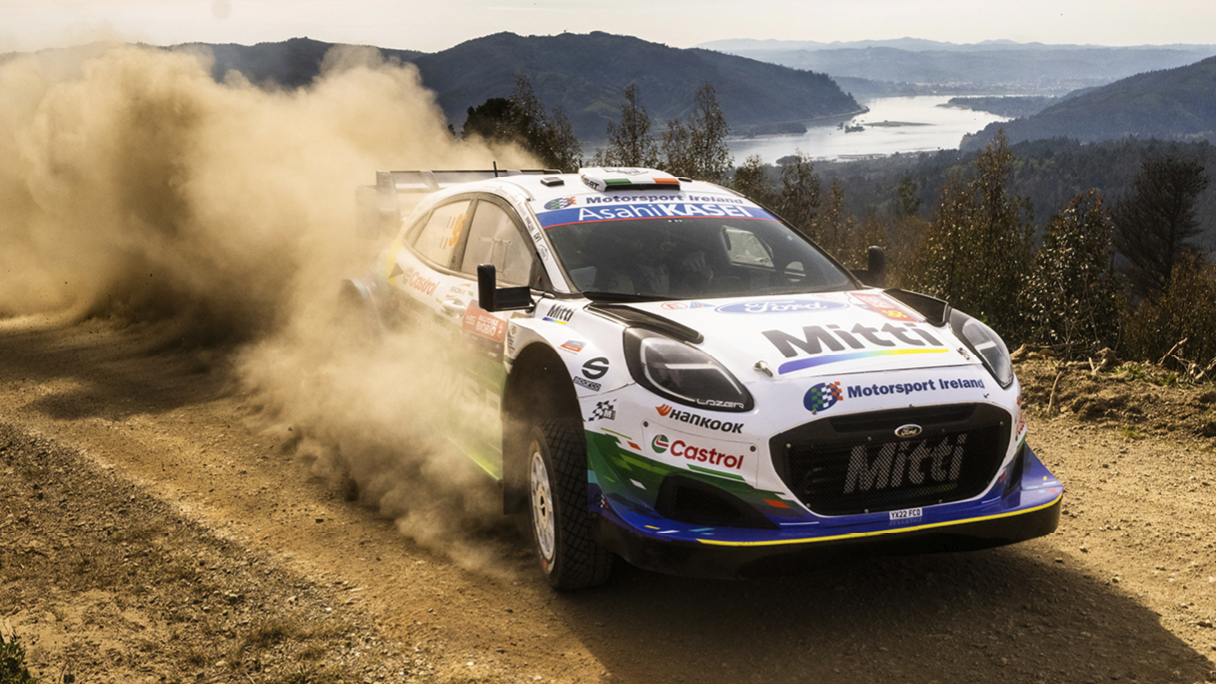
M-Sport Ford entered just two cars, for Josh McErlean and Jon Armstrong. McErlean was making his second Chile start after competing here last year, while Armstrong was making his debut. In WRC2, Toksport’s Robert Virves led Roope Korhonen by 21 points. The main title fight was still open, but Virves had a strong chance to wrap up the Challengers title in Chile.
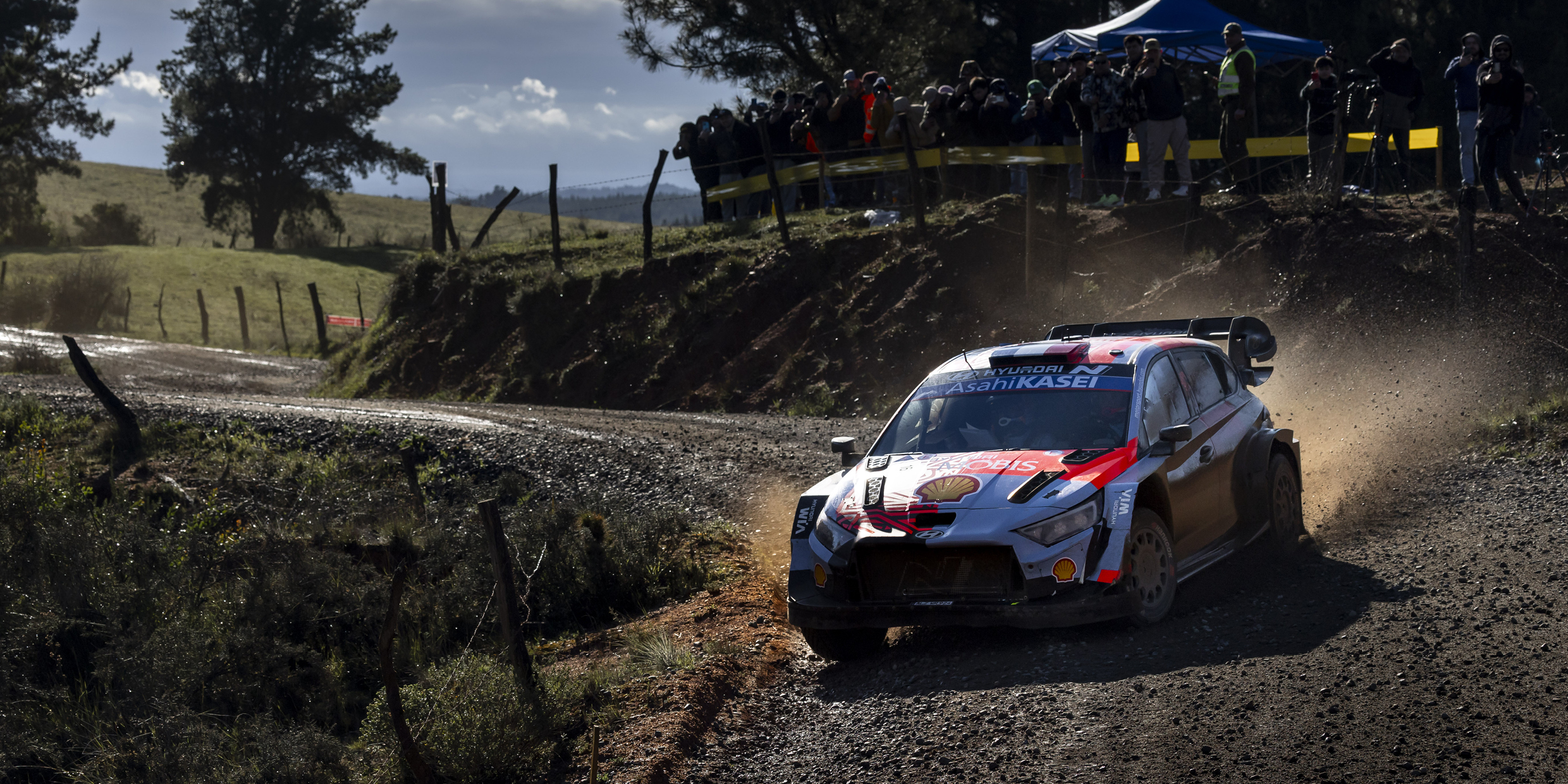
About 40 percent of this year’s Rally Chile route was new, and Friday, September 11, brought the biggest shake-up. The day featured three stages—Turquía, Nuevo Rere, and Hualqui—run once in the morning and again in the afternoon for a total of 100.78 km.
The opening 22.94-km Turquía stage was heavily reworked from last year’s San Rosendo test, with new sections added and the direction reversed. That made much of the old data almost useless. And then the weather changed everything. The road had been dry during testing, but rain just before the rally turned it into a completely different challenge. Oliver Solberg was fastest in the opener, with Elfyn Evans, Adrien Fourmaux, and Thierry Neuville right behind.
Fourmaux came out swinging early Friday and immediately put himself in the fight. Video: WRC (https://www.wrc.com)
Fourmaux described just how ugly the grip was. “In the lines in front it gets very muddy and soft,” he said. “It is tricky to get the pace. There is a lot of grip changes. I lost some pace after I saw Taka on the side of the road. It is a tricky one. I have no complaints with the car we just need to drive.”
On SS2 Nuevo Rere, Evans went fastest. Solberg, Ogier, and Pajari were also on the pace, keeping Toyota right in the thick of it. Neuville, though, was having a hard time trusting the car. “I had no trust in here. It was moving around and I had no trust for the grip. Sometimes the grip was higher than I expected but I lost in some many places I didn't expect. We are here. It is a long rally.”
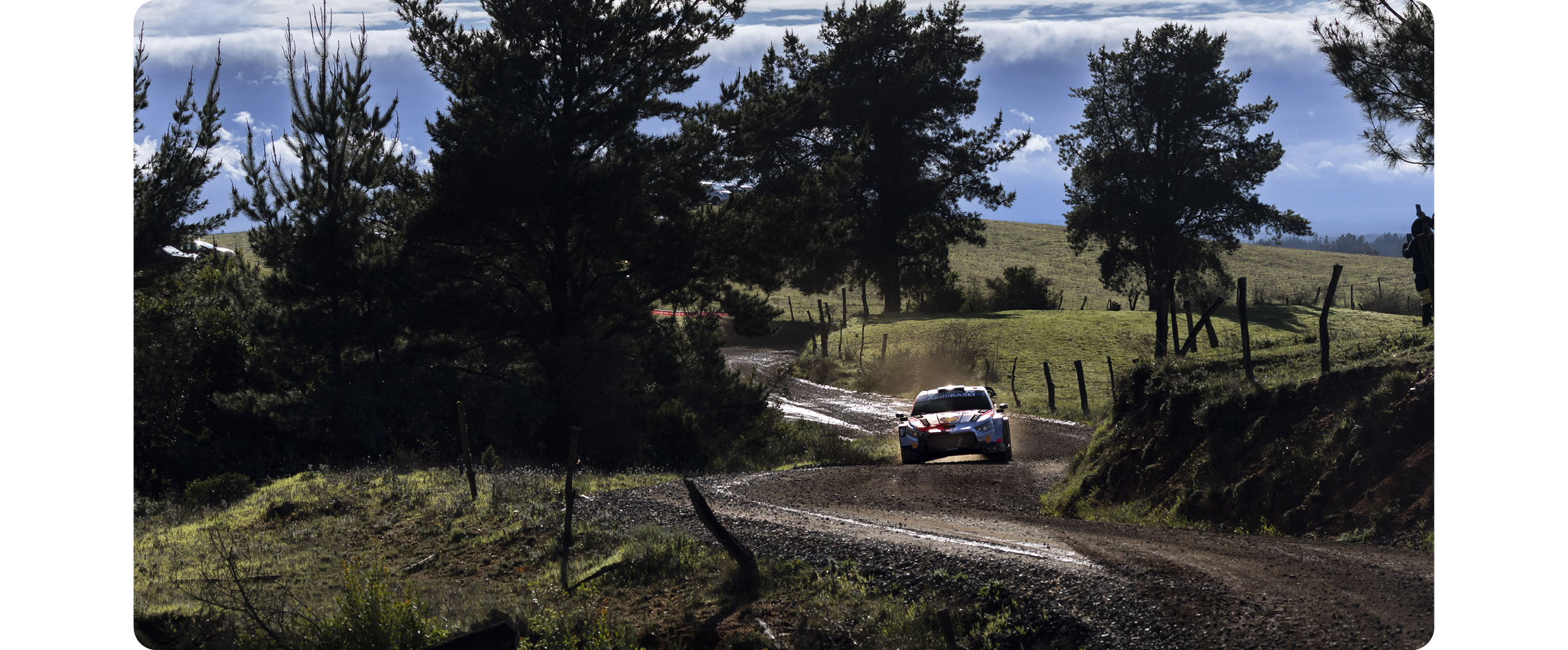
Neuville and Fourmaux kept pushing despite the tricky conditions. Video: WRC (https://www.wrc.com)
The mud carried into SS3 Hualqui, but this time Neuville hit back. He set his first stage win of the rally. “When it is rutted I can trust the car much more. There was a little bit more consistent grip. When there are no ruts I go all over the place.”
After the morning loop, Solberg and Evans were locked in a close fight for the lead. Fourmaux sat third overall. Neuville had moved ahead of Ogier into fourth, while Lappi remained back in ninth.
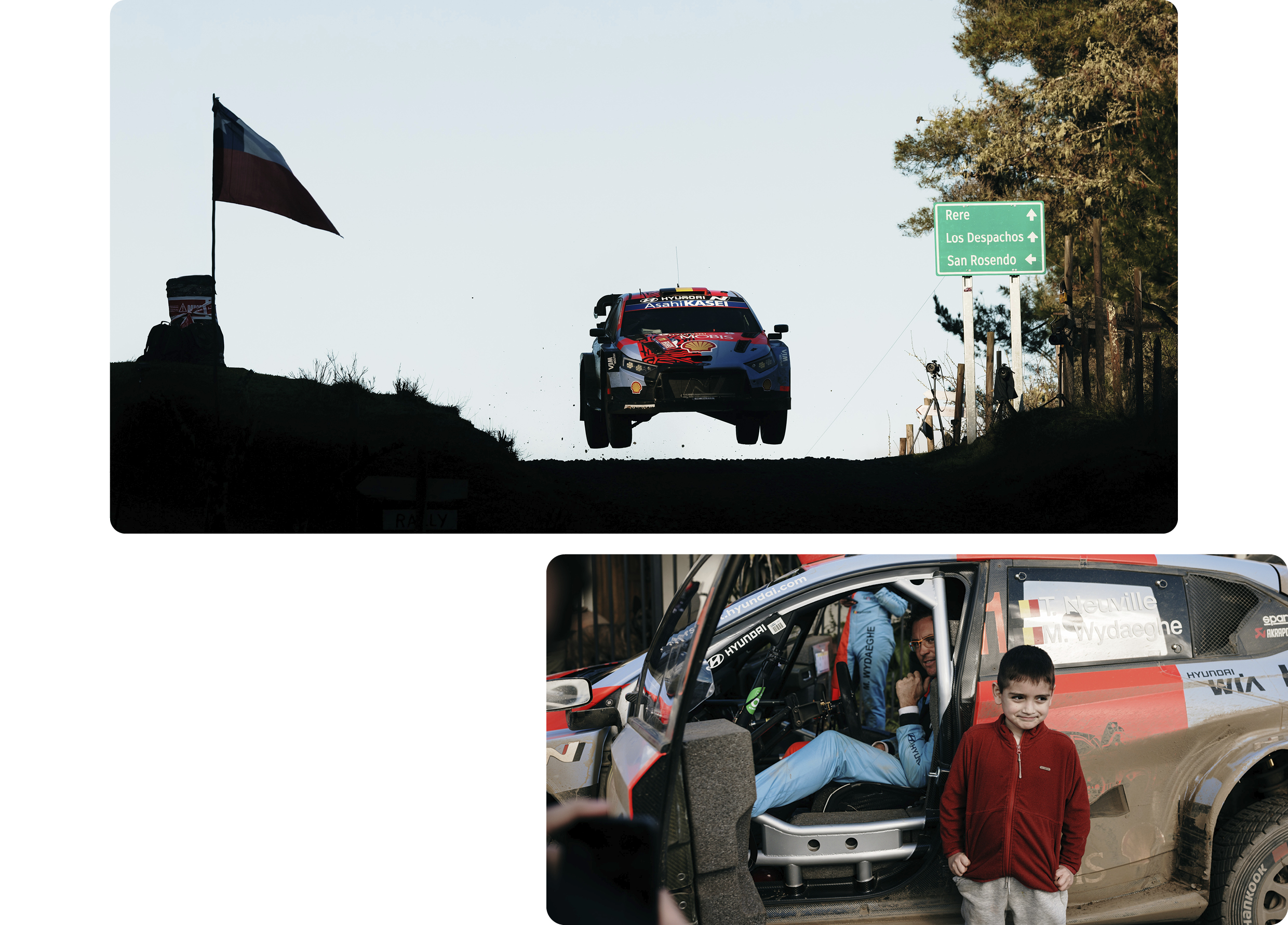
After midday service, the crews went back out for another run through the same three stages. By SS4 Turquía, much of the surface had started to dry, but muddy patches still remained, and grip could change dramatically from one corner to the next. This time Pajari went fastest, followed by Ogier and Fourmaux. Fourmaux had the team inspect an issue from the morning before heading back out. Neuville, meanwhile, continued to struggle with the car’s balance.
By SS5 Nuevo Rere, the road had dried even more and dust was becoming a serious factor. That was bad news for Evans, who was first on the road. Ogier went fastest, with Pajari and Solberg next. Fourmaux still held third overall, but Ogier was closing quickly and the gap was shrinking. Neuville was also dealing with what appeared to be an issue around the right-rear damper, adding another problem to his afternoon.
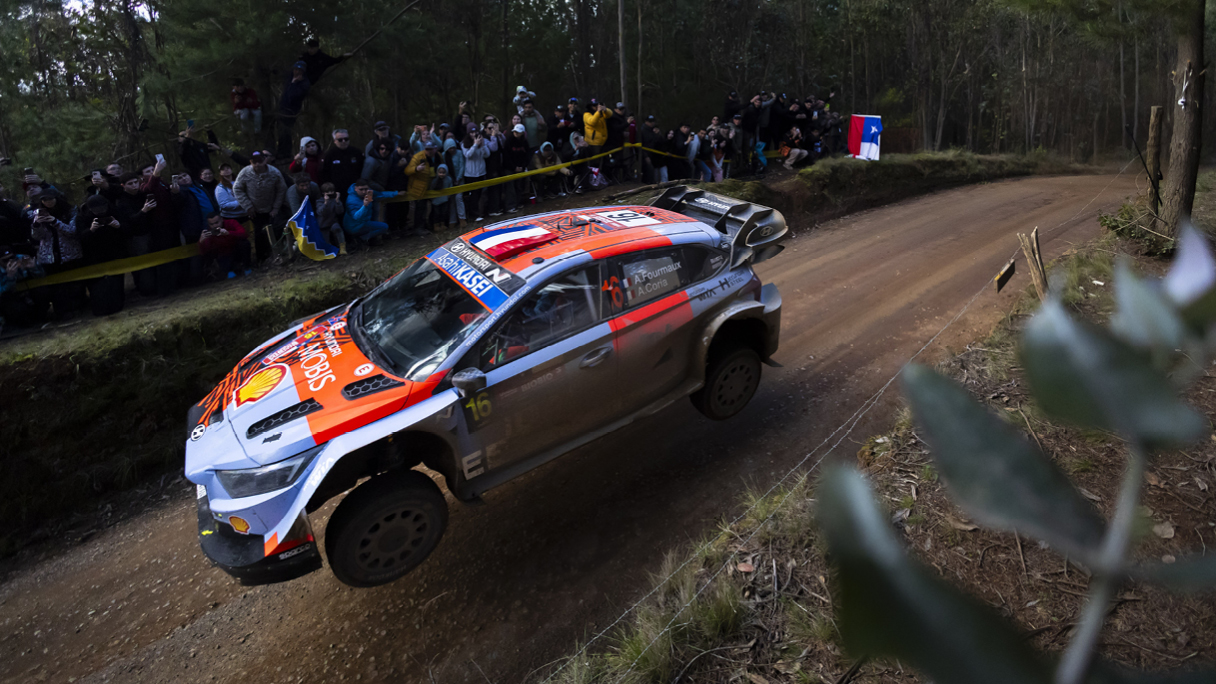
On SS6 Hualqui, Solberg went fastest again, with Fourmaux second. At the end of Friday, Solberg led overall, Evans was second, and Fourmaux had managed to hold off Ogier to keep third. Neuville finished the day sixth overall, while Lappi was ninth.
Fourmaux was clearly enjoying himself. “It is unbelievable. To drive this car in those stages is one of the best things in the world. It is so nice to drive. I had a very good stage considering my tires. I gave everything.”
Friday was rough elsewhere, too. At least five drivers were taken to the hospital for checks after a series of incidents. Some were admitted as a precaution, while at least one driver suffered a fracture that required surgery.
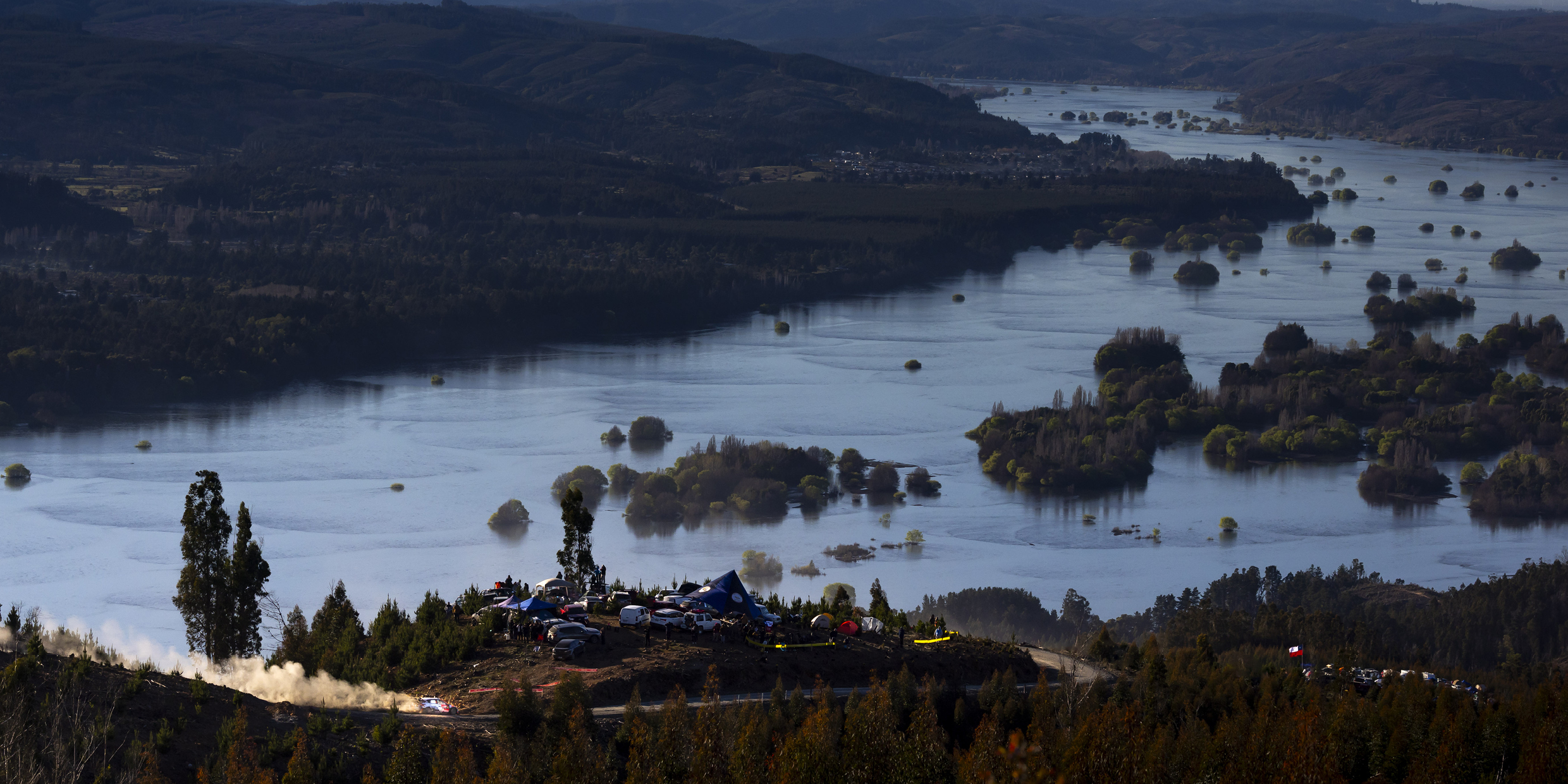
Saturday, September 12, was all about longer stages. The day opened with Pelún, followed by the 25.64-km Lota and the 28.31-km María las Cruces, the longest test of the rally. From SS7 through SS12, the crews covered 139.2 km. Because the route runs close to the coast, dense fog can roll in early in the morning and again late in the day, cutting visibility to almost nothing. When that happens, drivers have to trust the pace notes and commit anyway.
The weather had cleared, and the road was much drier than Friday. That changed the tire game immediately. Hyundai’s three crews went with all-soft setups, while Toyota’s drivers each carried two hards. Armstrong went even further, choosing four hards and two softs.
Neuville rolled out of the rally on Saturday’s opening stage. Video: WRC (https://www.wrc.com)
The opening SS7 Pelún started with a technical uphill section full of low- and medium-speed corners. From there, the stage opened up and flowed faster before leaving the forest at around the 8-km mark. A tricky downhill hairpin arrived at 9.7 km, followed by another winding section and then a high-speed run toward the finish.
Ogier went fastest and moved into third overall. Fourmaux was second on the stage, but he could not keep Ogier behind him. Then Neuville’s rally ended hard. At the 8.3-km mark, he carried too much speed into a bumpy section, ran wide, hit a bank, and rolled several times. The car was heavily damaged.
Neuville explained what happened. “Basically I came into a compression slightly too fast and I got kicked out of the line and we ended up in a roll. Luckily me and Martijn are fine. We had tried to push this morning to claim back the positions, that was our target and there was nothing to lose. We went for it but obviously we were a little bit too fast.”
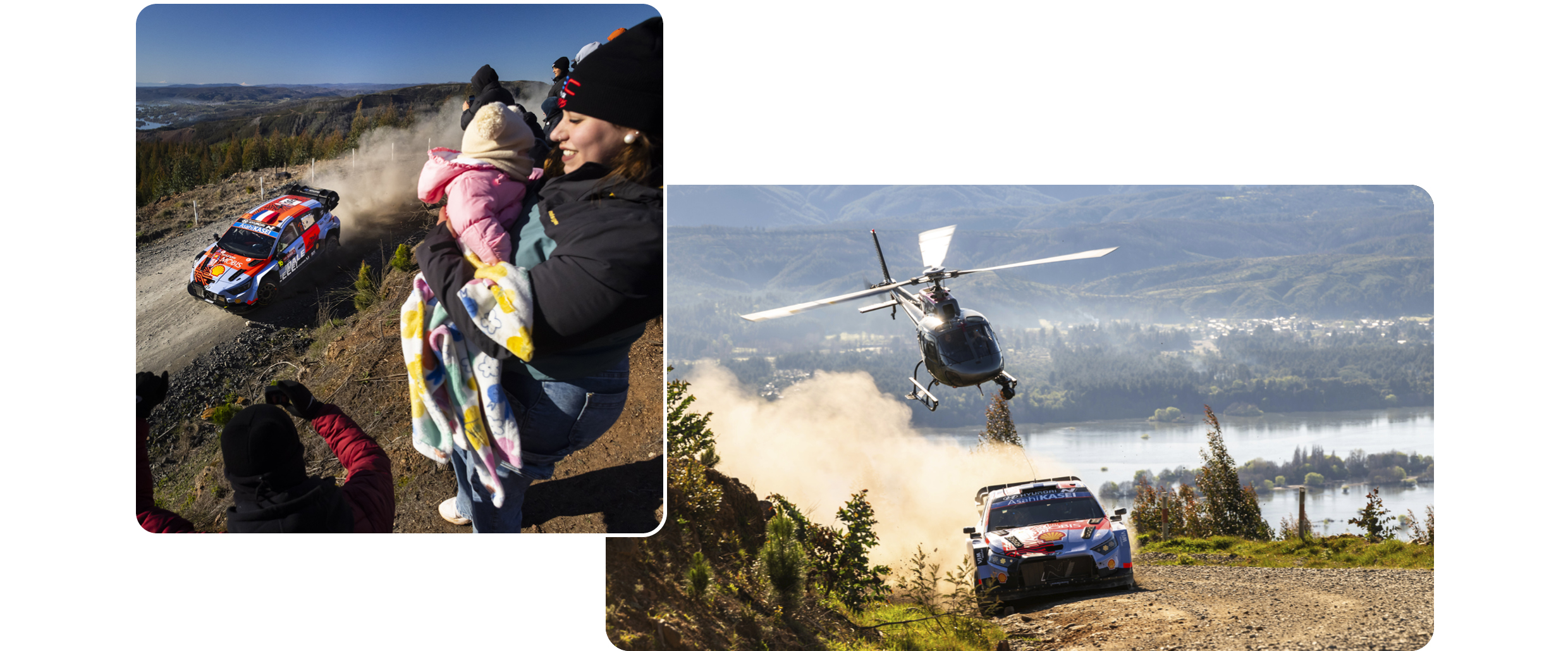
On SS8 Lota, Ogier and Fourmaux again finished one-two, keeping their fight for third very much alive. But the stage claimed another car. Jon Armstrong rolled at the 11.7-km mark. He managed to keep going, but retired after reaching the finish. That made it the third rollover of the day, following Neuville and WRC2 driver Nikolay Gryazin.
Lappi also had a huge moment but escaped without major damage. “We have been having puncture warning since then the big slide and it was distracting me but there is no puncture. It was a big slide.”
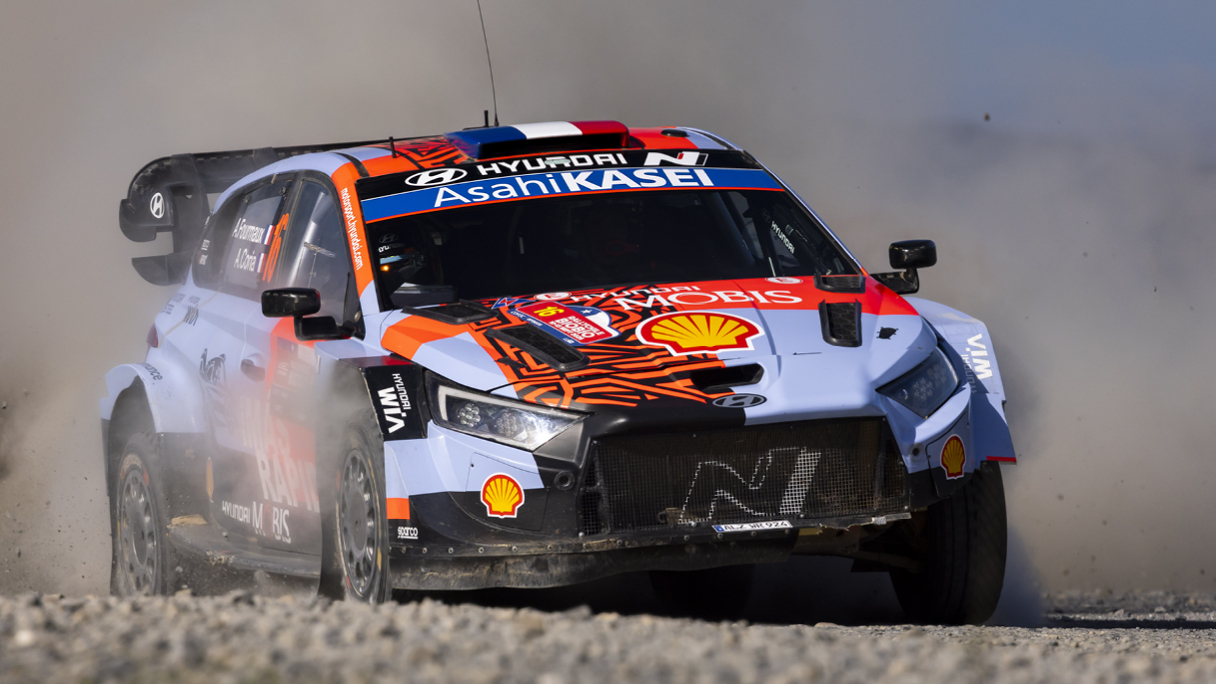
SS9 María las Cruces started at 11:05 a.m. Under the revised tire rules, crews were allowed to fit two additional tires before the stage. At 28.31 km, it was the longest test of the rally. It opened technical, settled into a long rhythm of medium-speed corners, then picked up pace from the 9.65-km mark. From 21 km to the finish, the road tightened again, with more winding sections and medium-speed corners.
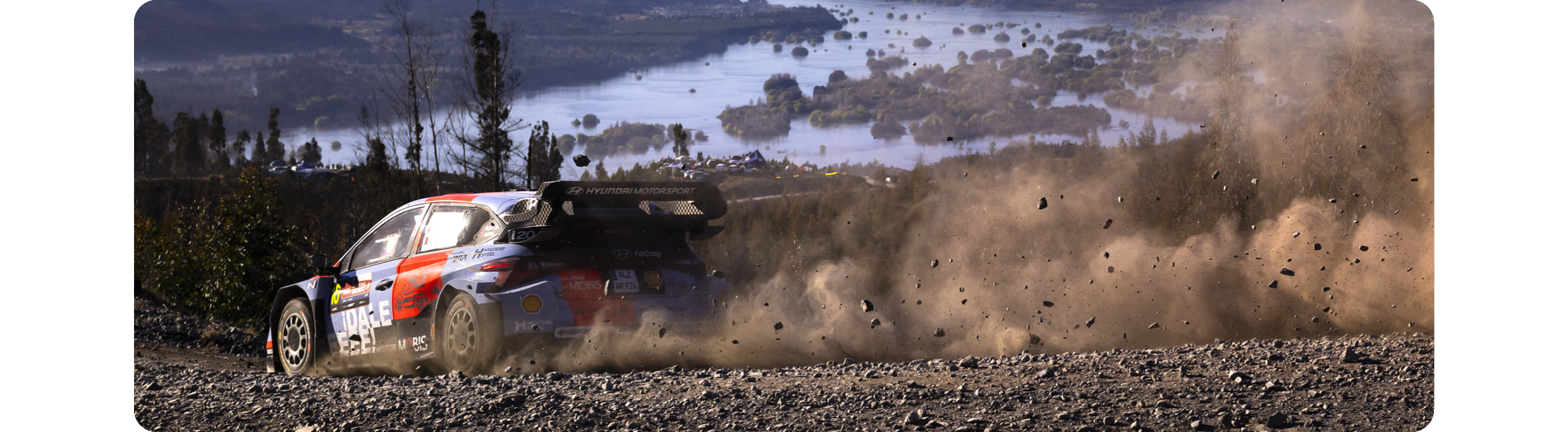
Fourmaux took a big bite out of Ogier and grabbed third place back. Video: WRC (https://www.wrc.com)
This time Solberg was fastest, with Evans second and Fourmaux third. More importantly, Fourmaux beat Ogier and moved back into third overall. He looked pretty pleased afterward. “I feel really good,” Fourmaux said. “It was quite a nice stage to drive, it was very flowing with a lot of corners. I was really enjoying the car. I feel confident in the car so that is good.”
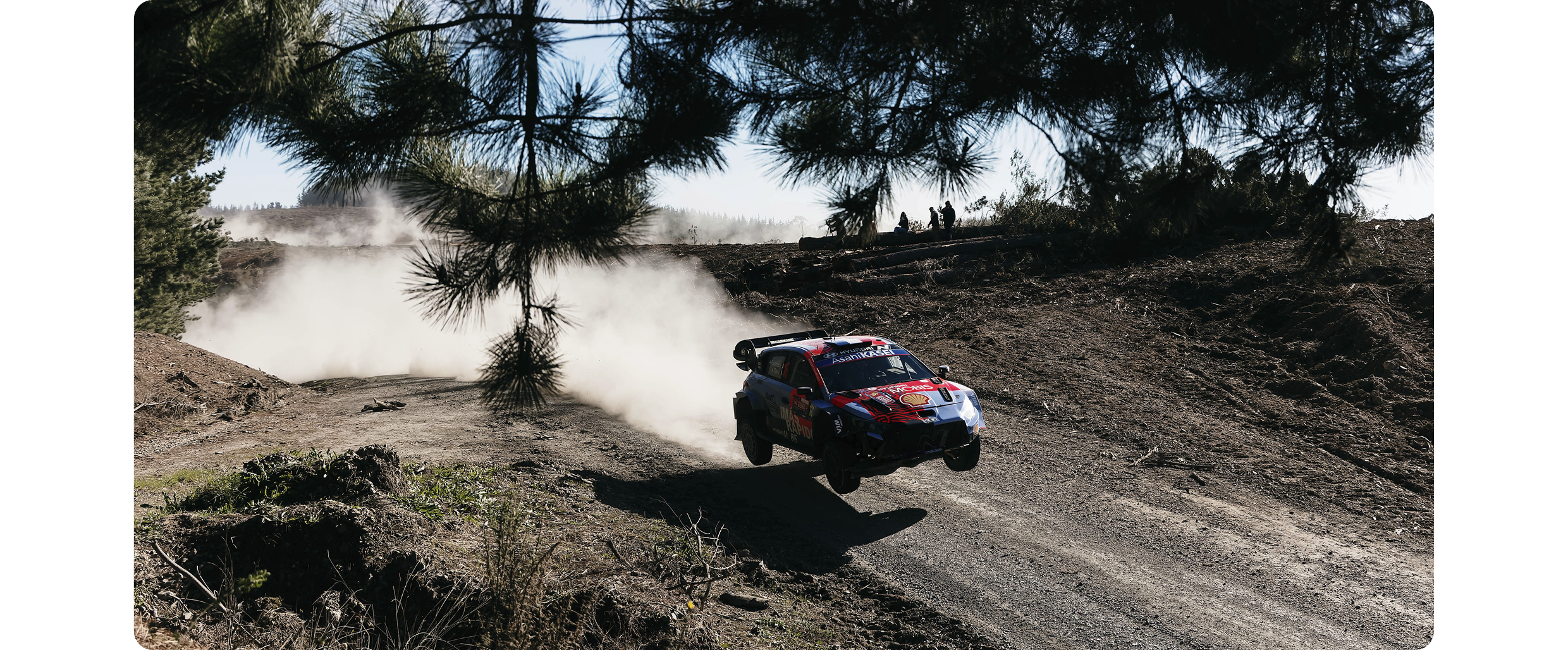
After a 30-minute midday service, the crews headed back out for the afternoon loop. Temperatures were rising, and so was the pressure on the tires. Most drivers leaned heavily toward hard compounds. Only Fourmaux and Katsuta chose a mixed setup of four hards and two softs. On SS10 Pelún, Ogier went fastest and moved back ahead of Fourmaux into third overall.
Lappi, meanwhile, had climbed from ninth at the start of the day to sixth and described just how little grip there still was. “There is sometimes a line,” he said. “It is better than the morning but amazingly slippery. It feels I cannot stop the car on the downhill. It feels like aquaplaning.”
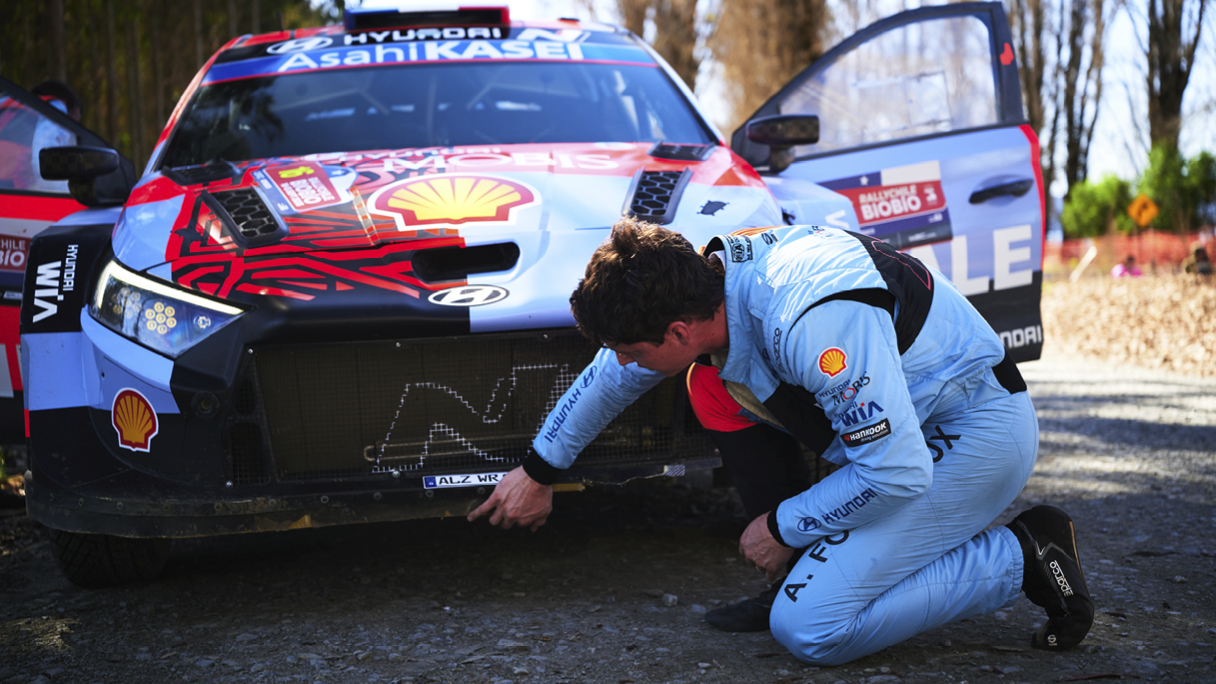
Ogier was fastest again on SS11, stretching the gap to Fourmaux a little further.
Fourmaux still liked what he was getting from the car. “It was good stage for me. I'm quite pleased with my driving and the pace. It is a shame we lose bit of time, but we try to catch Ogier in the next one. It is dream for me to be here driving the car.”
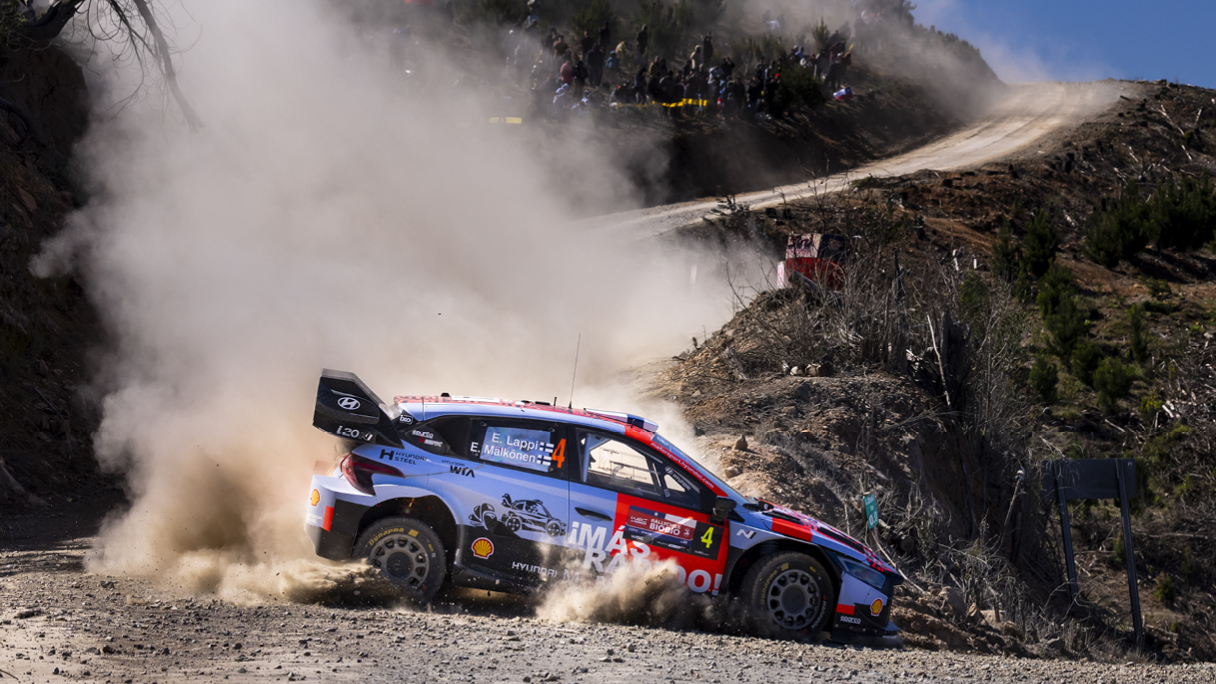
On the final SS12, Solberg went fastest again and ended Saturday still leading the rally. Evans held second, with Ogier right behind and closing. Fourmaux finished the day fourth overall. Lappi climbed to sixth, while McErlean ended Saturday seventh.
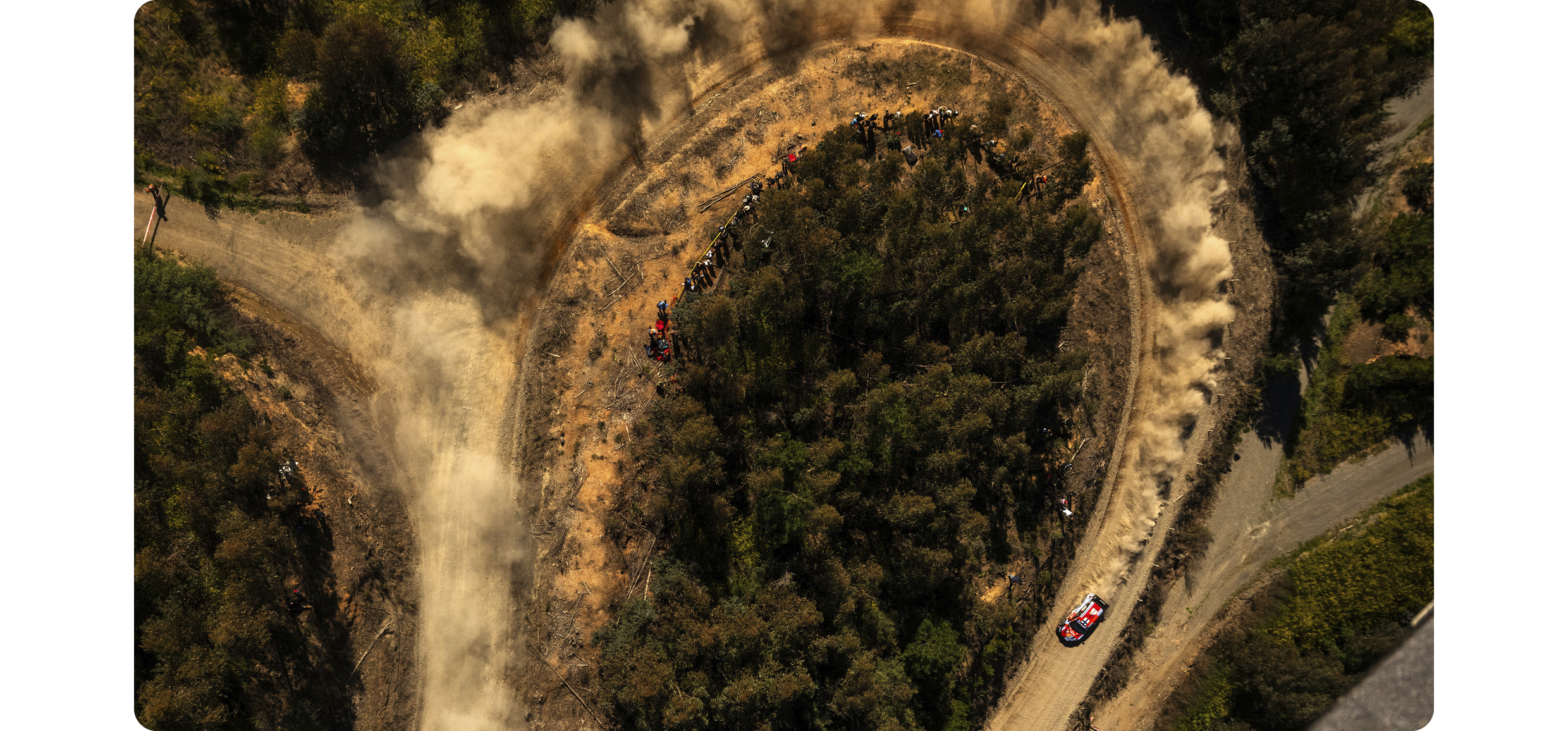
Sunday, September 13, brought one last major shake-up to Rally Chile. The old Laraquete stage was replaced by the 26.82-km Carampangue test, a road used earlier this year in Rally Arauco. The shorter 8.78-km Biobío stage rounded out the loop, and both were run twice. From SS13 through SS16, Sunday covered 71.2 km.
With two runs through nearly 27 km of Carampangue, tires had to survive, and anything already bent, bruised, or overheated after two days of rallying could finally come apart.
Tire choices varied across the field. Fourmaux went with four softs and one hard, while Lappi added a second hard to that setup. Most of Toyota’s drivers stayed all-soft. Evans matched Fourmaux’s mix.
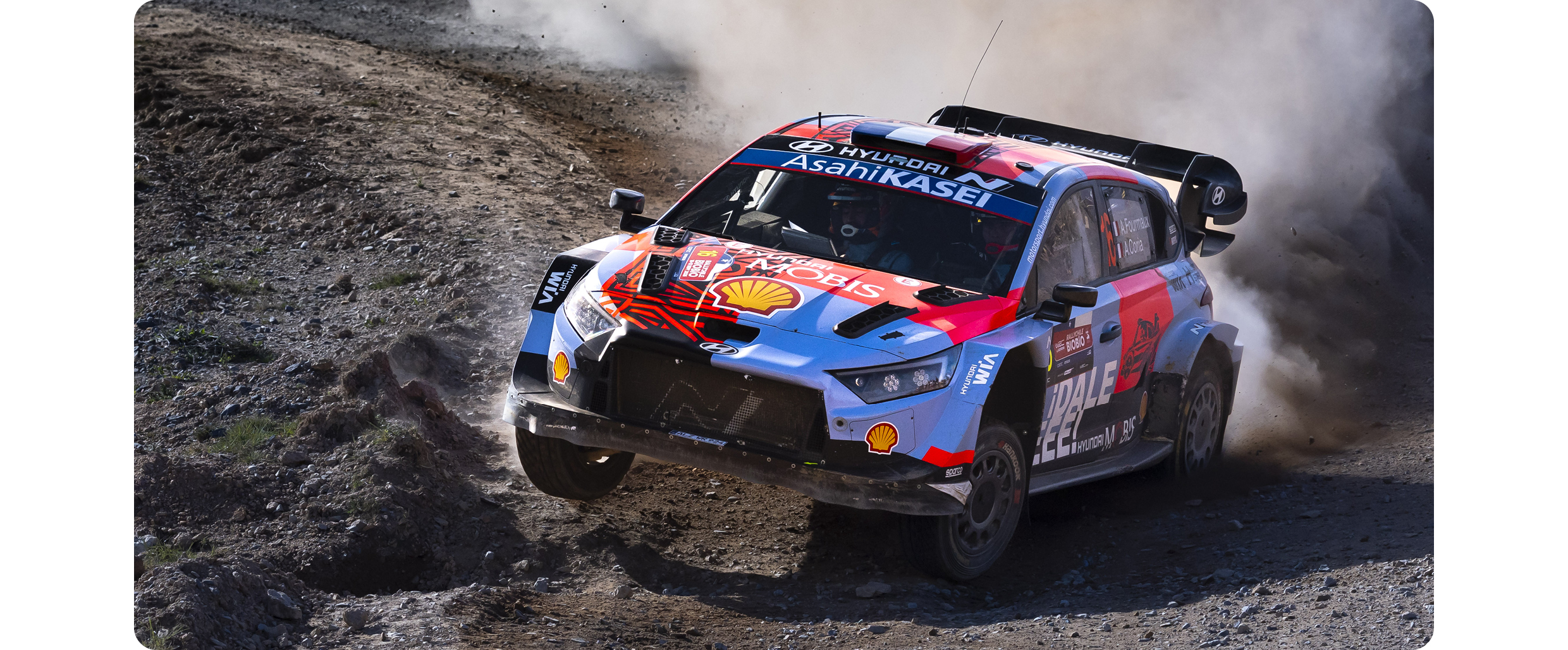
The opening SS13 Carampangue started with a broad, flowing climb before tightening into a string of low- and medium-speed corners. From the 8.4-km mark, the road opened up and stayed relatively fast through 14 km before dropping downhill. At 15.6 km, the stage ducked back into the forest for a slower, more technical section, then opened again for a quicker run to the finish. The stage started at 9 a.m., and with elevations approaching 900 meters, temperatures had dropped to just 5 degrees.
Fourmaux stayed confident even as tire trouble started piling up. Video: WRC (https://www.wrc.com)
Evans was fastest in the opener, with Fourmaux right behind. The fight between Fourmaux and Ogier for the final podium spot picked up exactly where it had left off Saturday. Fourmaux had another problem to manage, though: damage to the right-rear tire.
“I think I will lose five seconds on the last five kilometres,” Fourmaux said. “It is a shame as I had very good pace. I thought I was in the line of the others but I gelt a hit on the right. Then I saw the alarm. I really tried.”
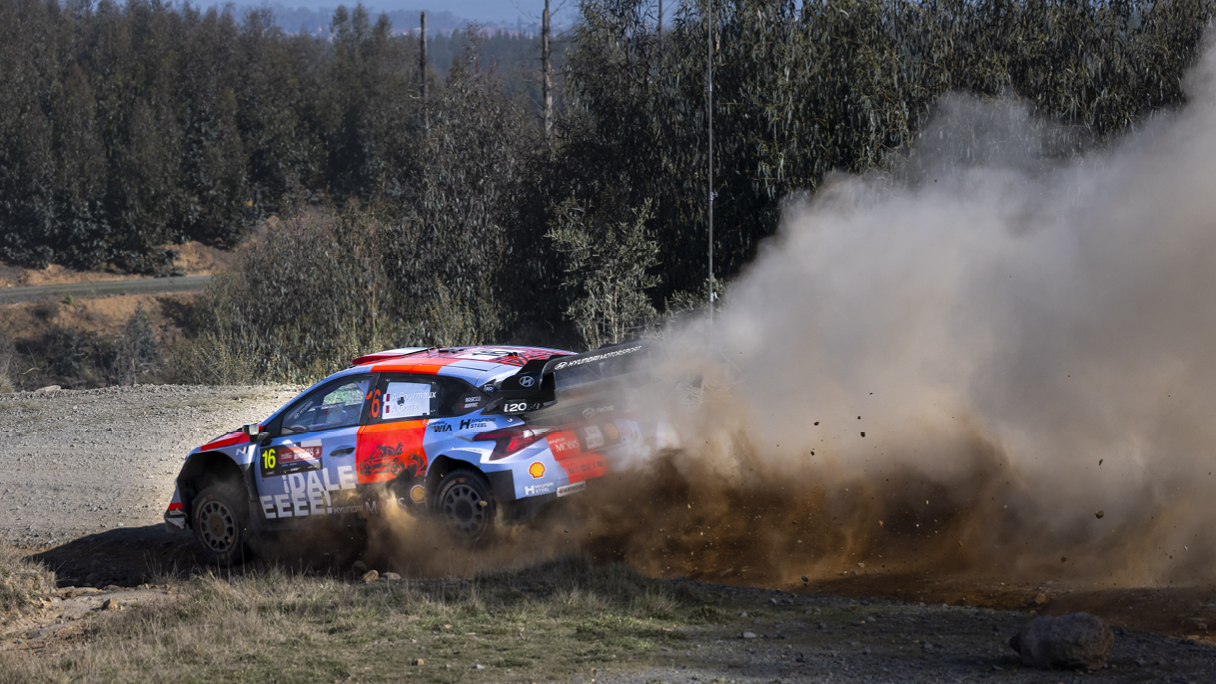
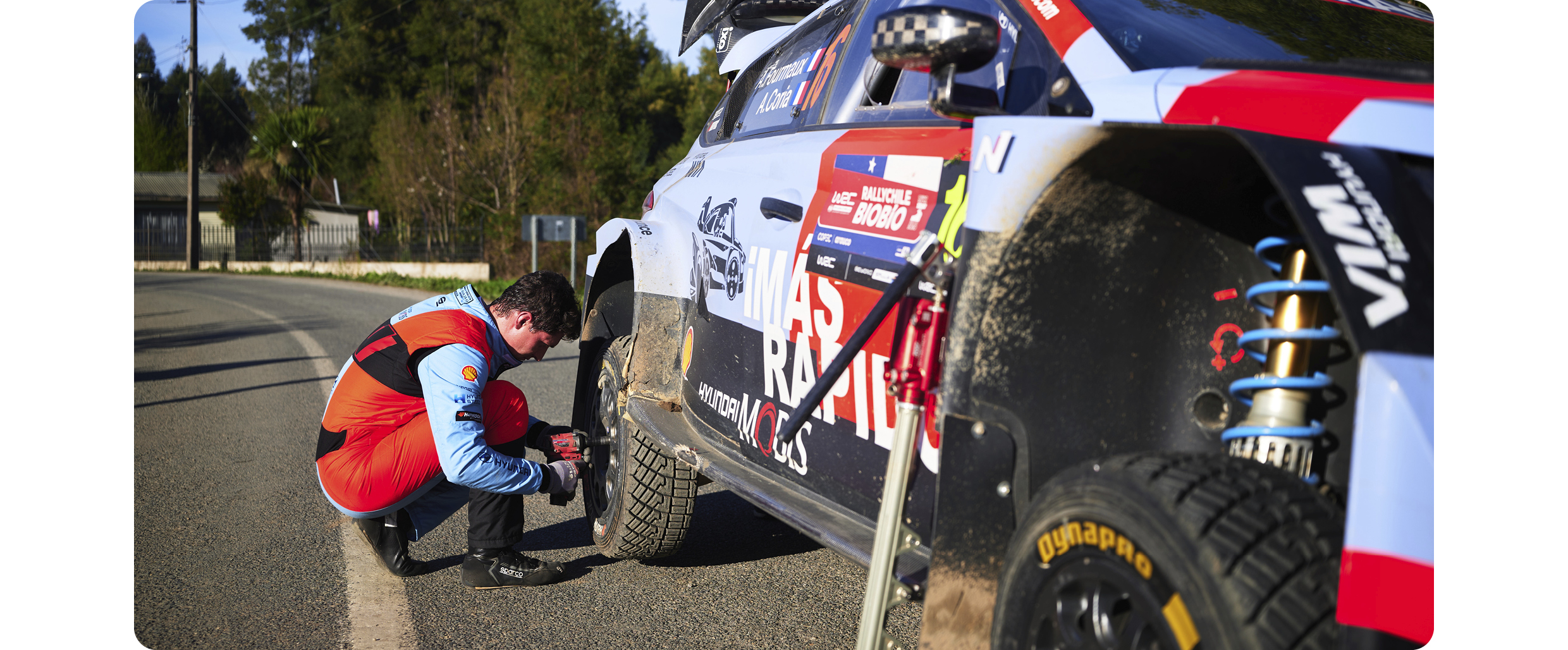
The following SS14 Biobío was basically a dress rehearsal for the Power Stage. Solberg, still leading the rally, suffered a puncture and somehow still set the fastest time. Evans was next, followed by Ogier and Fourmaux. Fourmaux had more tire drama of his own. This time the left-rear tire came off the rim, but he managed to limp the car to the finish.
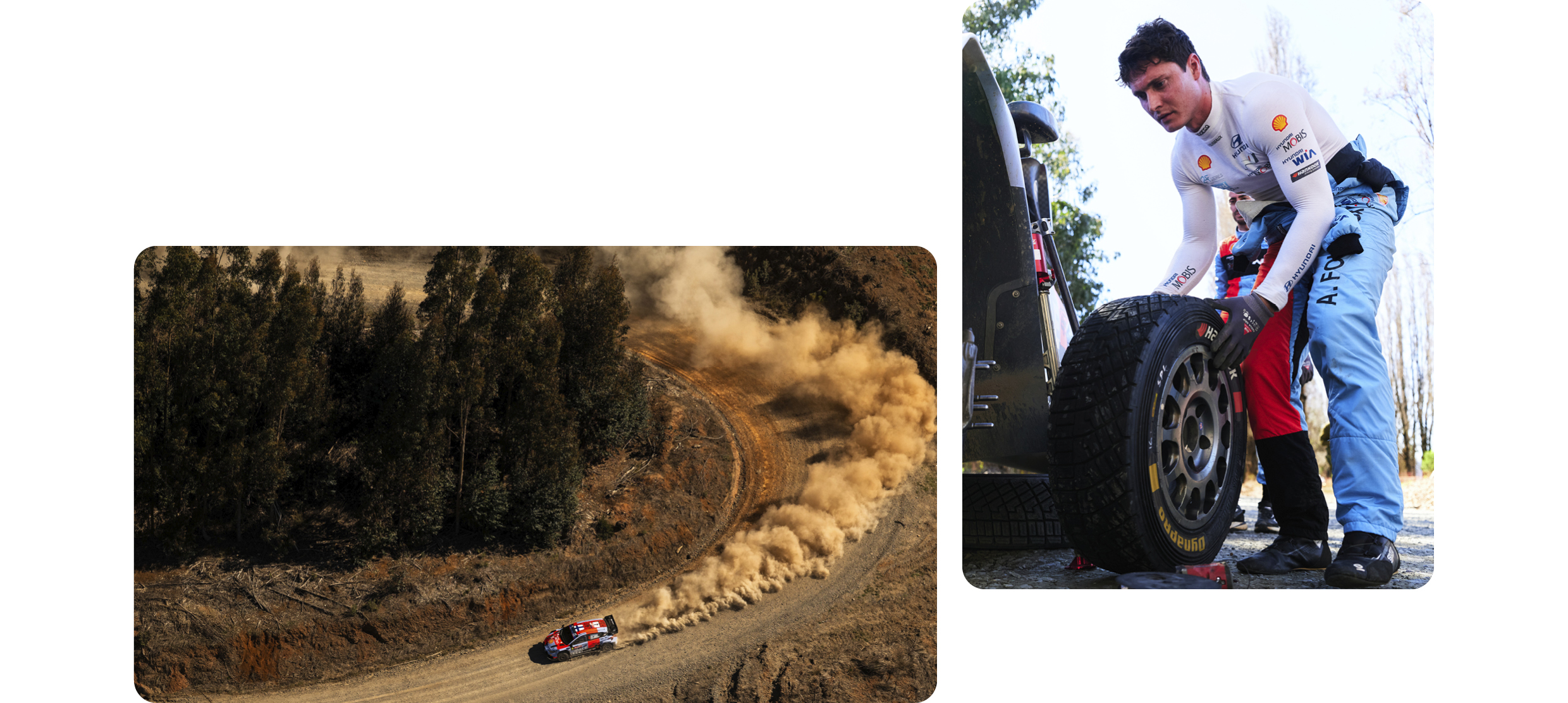
Then SS15 Carampangue blew the podium fight wide open. Ogier went fastest, but the bigger story was Evans. He had to stop and change a tire, dropping from second overall all the way to fifth. One puncture had just rewritten the podium. Ogier moved into second. Fourmaux jumped to third overall.
Fourmaux summed up the chaos afterward. “What a crazy rally to be fair. I'm surprised we had no punctures yesterday and today so many. It was such a beautiful stage and the most beautiful of the rally. There are so many different parts. I was enjoying it so much.”
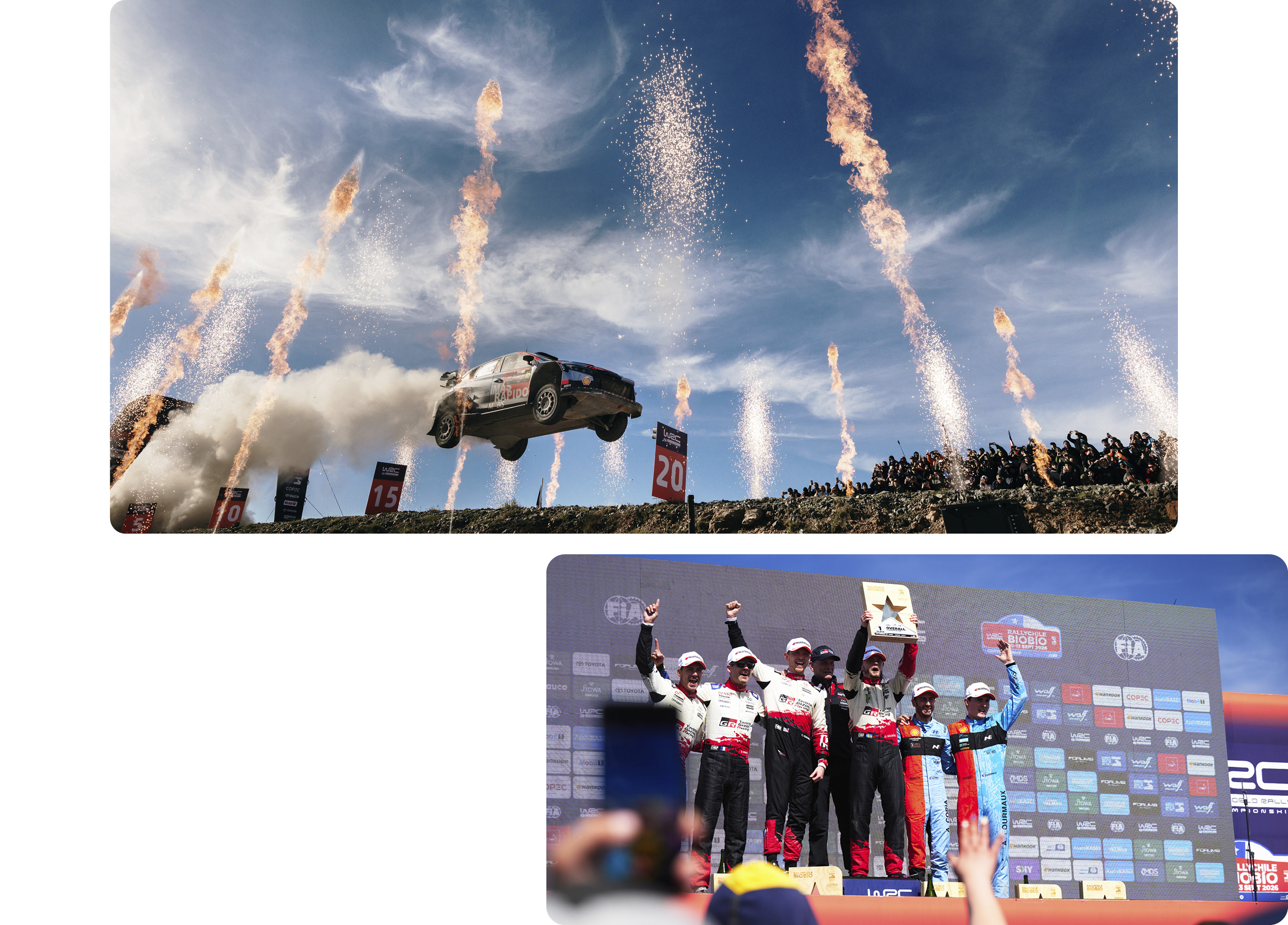
Then came SS16, the Power Stage. Solberg, already leading overall, went fastest one more time and sealed the Rally Chile win. Ogier finished second. Fourmaux brought Hyundai home in third, hanging onto the final podium spot after a weekend full of changing grip, tire trouble, and nonstop pressure from Toyota.
The result also sealed the 2026 manufacturers’ championship for Toyota. That gave Toyota another title and pulled it level with Lancia’s all-time record for manufacturers’ championships. The drivers’ championship, though, stayed wide open. Evans remained the points leader, but his advantage over Pajari had shrunk to 17 points. Solberg sat only 21 points back in third. Chile settled the manufacturers’ title. The drivers’ fight is nowhere near finished.
With the South American swing complete, only two rounds remained on the WRC calendar: Rally Italia Sardegna in early October and the season finale in Saudi Arabia in November. Sardinia brings a very different kind of punishment. The stages mix coastal and inland mountain roads with rough surfaces, abrupt corners, and blind crests that hammer both tire grip and durability. And this year, the timing adds another variable. The rally has moved from its traditional June date to October, which could change the conditions dramatically.
Written by: Soo-jin Lee
In 1991, Lee’s passion for cars led him to enthusiastically write letters to the newly launched Korean car magazine Car Vision. This unexpected connection led him to start his career as an automotive journalist. He has served as editor and editorial board member for Car Vision and Car Life, and now works as an automotive critic. While eagerly covering the latest trends like electric vehicles, connected cars, and autonomous driving technology, he is also a car enthusiast who secretly hopes that the smell of gasoline engines will never disappear.