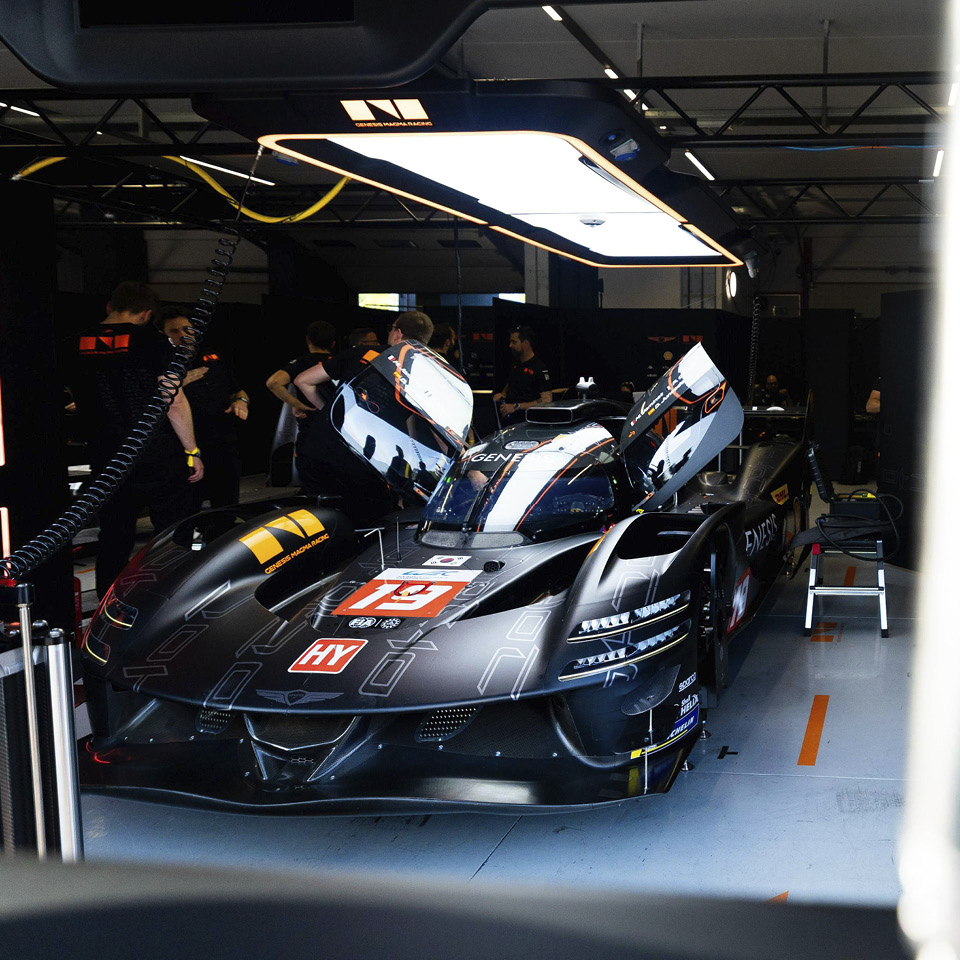

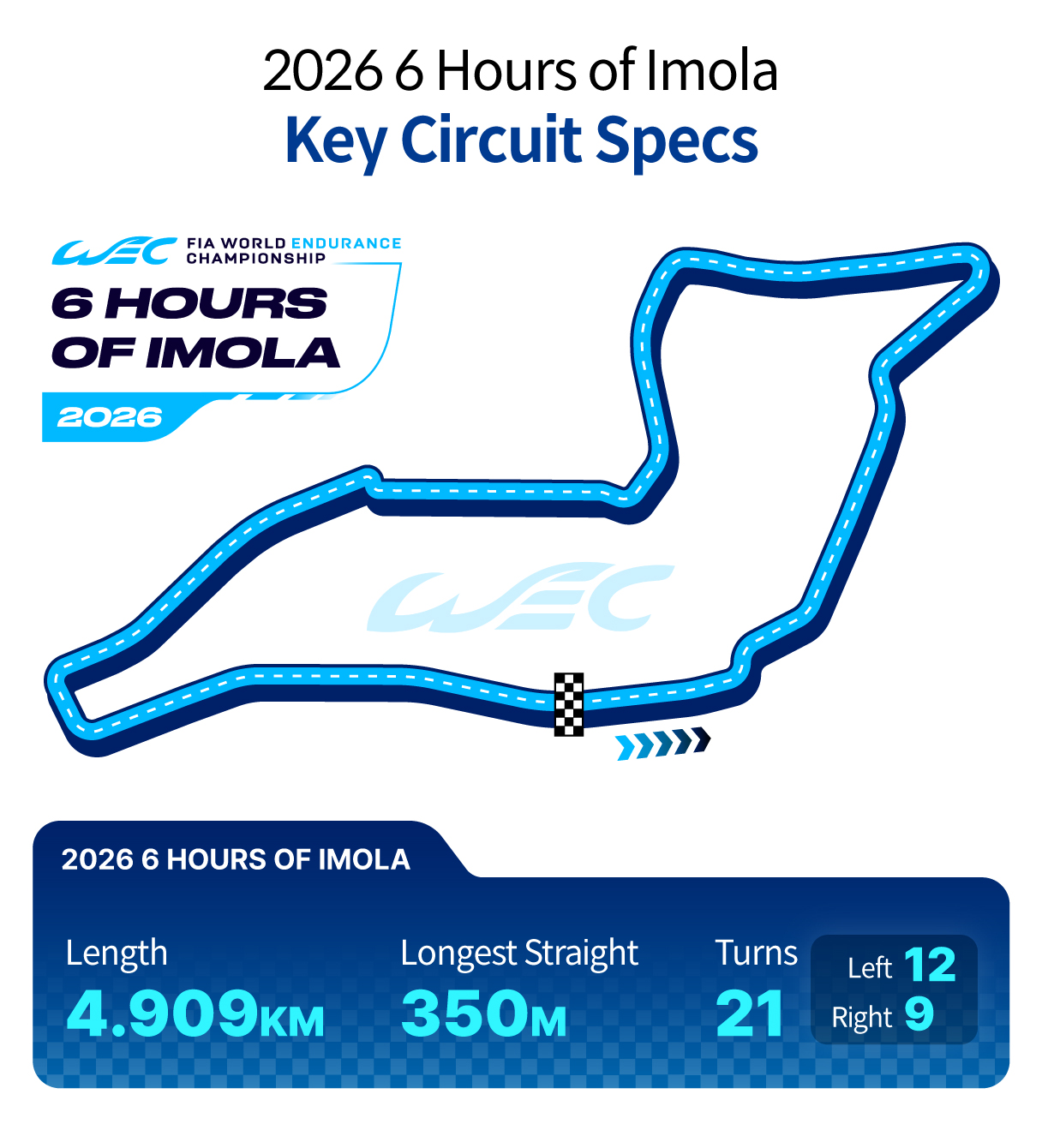
On April 19 at Imola in northern Italy, WEC fired off its opening round with the 6 Hours of Imola. The season was supposed to begin in Qatar in late March, but that race was cancelled due to the conflict in the Middle East, so Imola—originally Round 2—became the opener. From the first official sessions, the vibe was intense. Ferrari had the tifosi in full voice, Toyota and BMW showed up with updated hardware, and the paddock’s curiosity was locked on the new kid in Hypercar: Genesis Magma Racing.
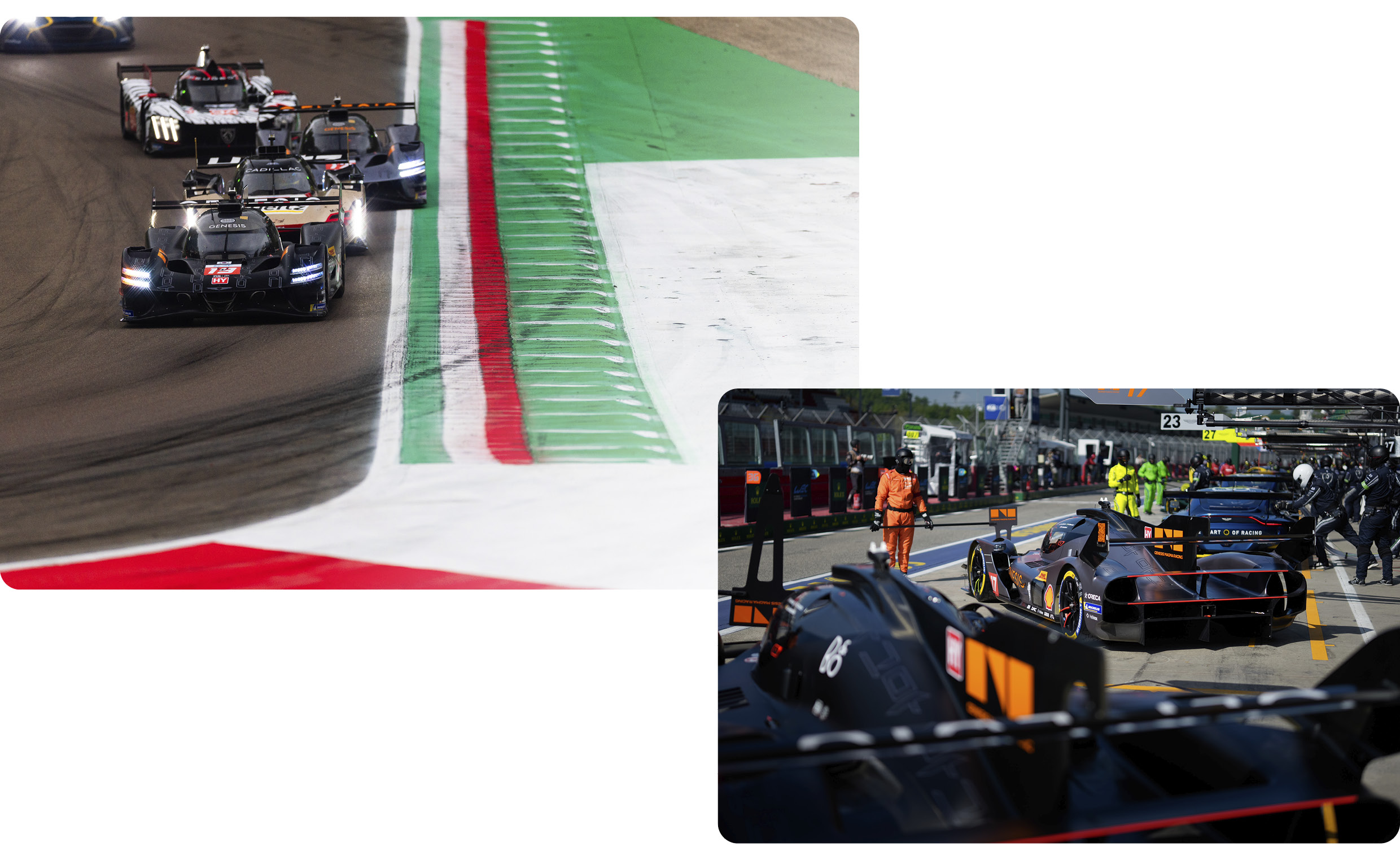
Most racing is about going as fast as possible for as long as you can get away with it. WEC is about going fast and surviving a long list of ways a race can end your day. Six hours is the baseline in WEC—then you scale up to eight or 24 depending on the event.
That duration punishes everything: engines live at high rpm, brakes spend long stretches running hot, and the hybrid system’s motor and battery demand constant thermal discipline. Drivers have their own version of the same problem—staying sharp through traffic, changing grip, weather swings, and tire drop-off that shows up exactly when you don’t want it. And because WEC runs multiple classes on the same track—Hypercars mixing it up with LMGT3 (and LMP2 at Le Mans)—traffic management isn’t a footnote. It’s a skill. A small mistake at the wrong moment can turn into a retirement. That’s why, in endurance racing, finishing still counts as a real accomplishment—especially in Hypercar.
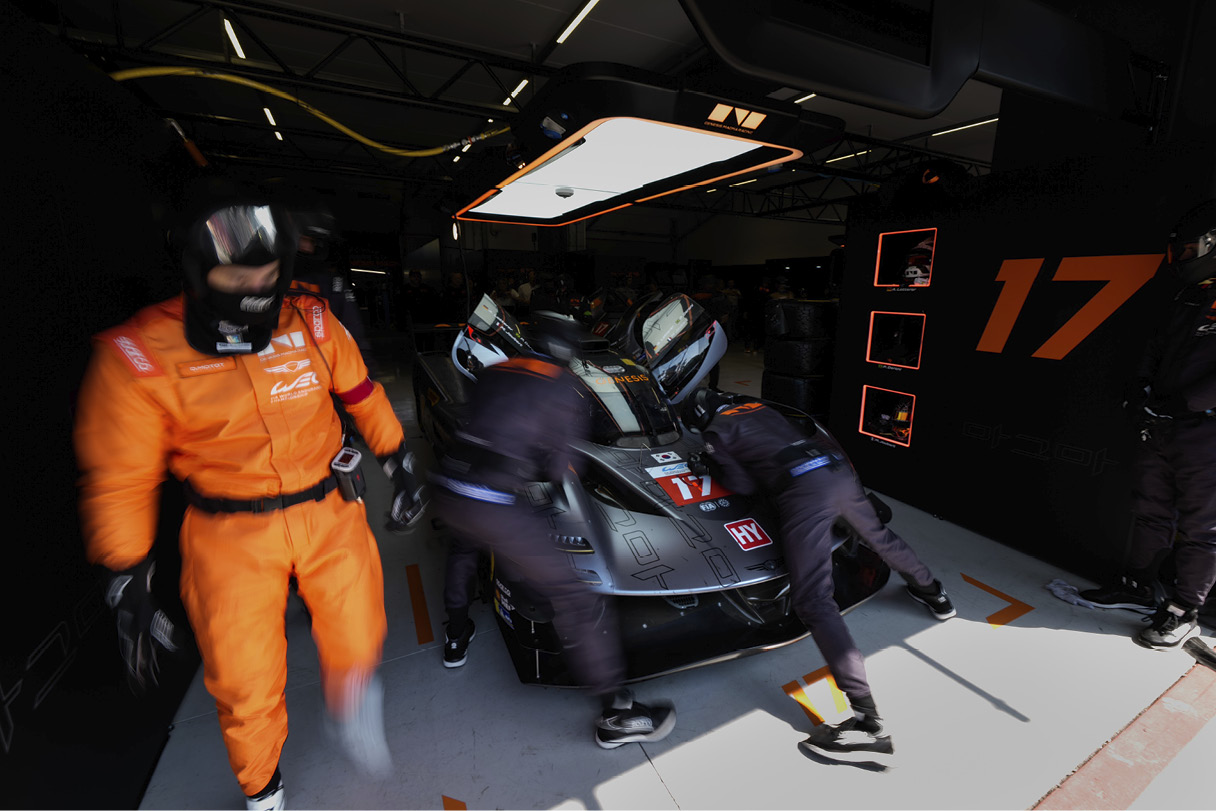
It also changes how you watch the race. Broadcast coverage isn’t just a constant stare at the leaders; it’s a moving map of strategy, pit timing, class battles, and “who’s about to get caught in the wrong traffic.” Endurance racing is as much about the flow as it is the raw lap time.
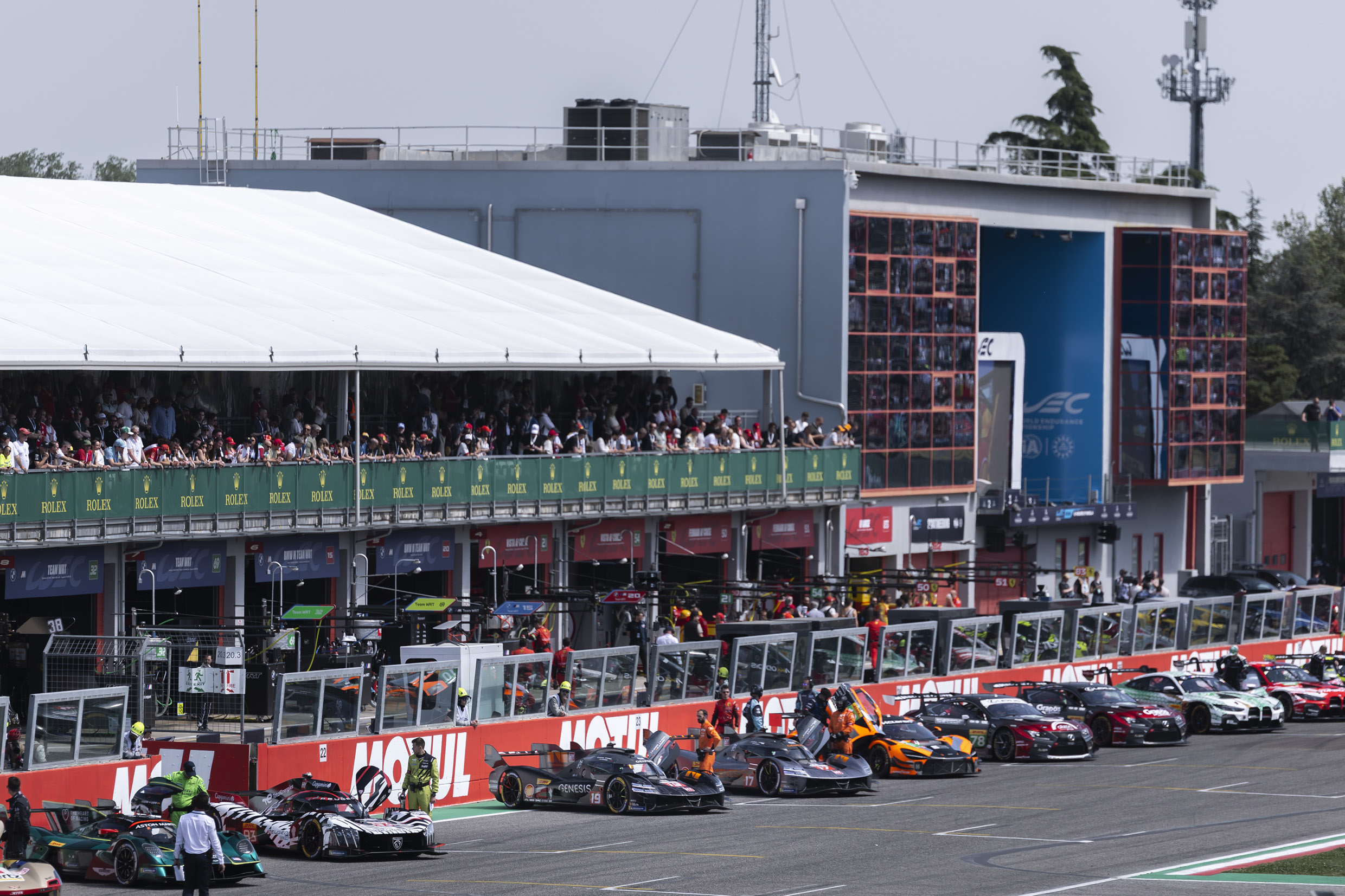
At 1:00 p.m. local time on April 19, Imola rolled out a 35-car field—17 Hypercars plus 18 LMGT3 entries—for a traditional rolling start, backed by the dramatic swell of Richard Strauss’ Also sprach Zarathustra. The green flag was waved by Kimi Antonelli of the Mercedes-AMG F1 team—Bologna-area local, young star, and one of the sport’s most watched rising names.
On the grid, James Calado’s #51 Ferrari 499P sat on pole. Toyota’s heavily upgraded GR010 Hybrid started second. Behind them came Ferrari, Peugeot, and Cadillac. Genesis Magma Racing’s two GMR-001 Hypercars lined up 16th and 17th. André Lotterer took the first stint in the #17, with Daniel Juncadella starting the #19.
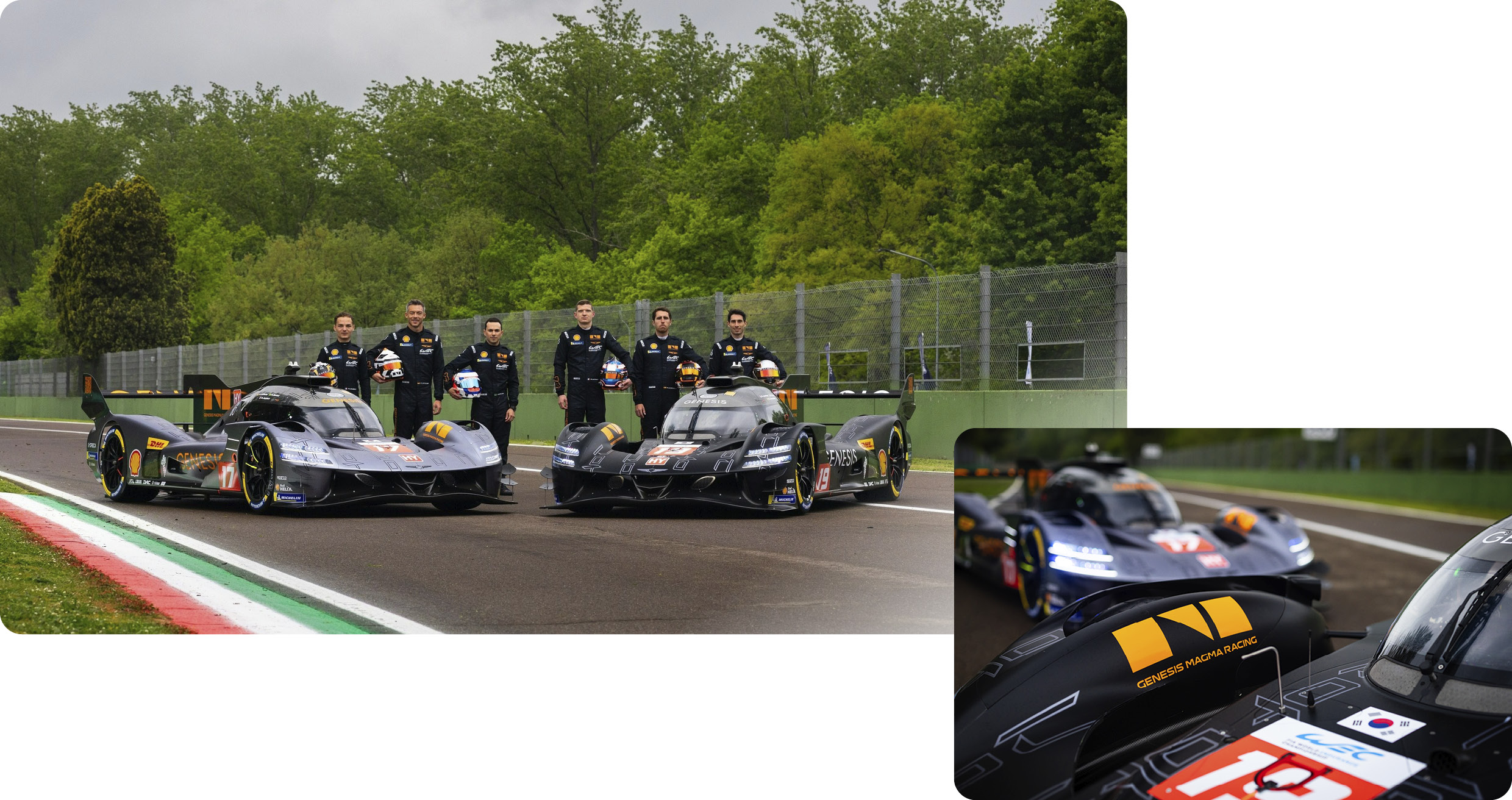
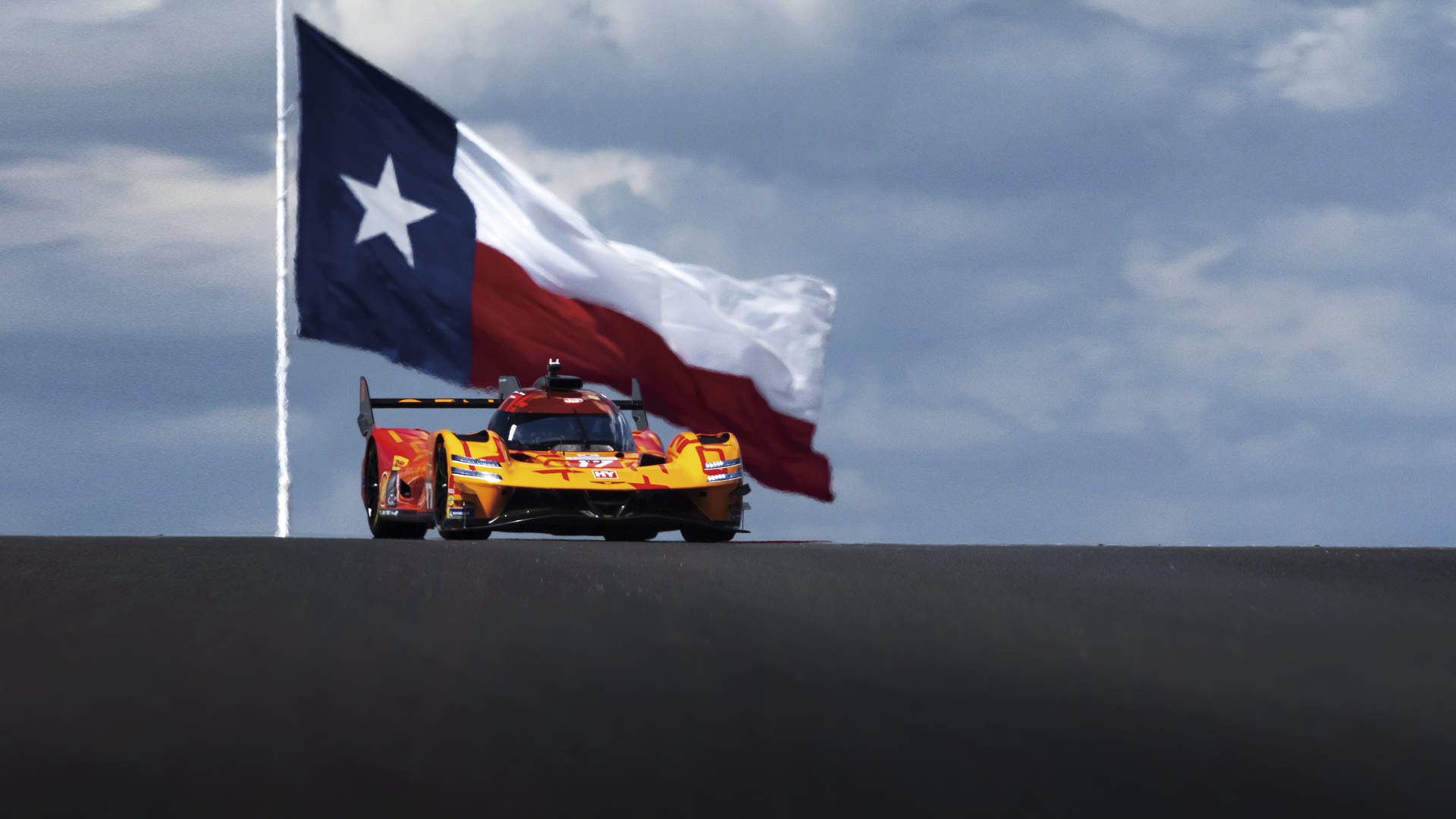
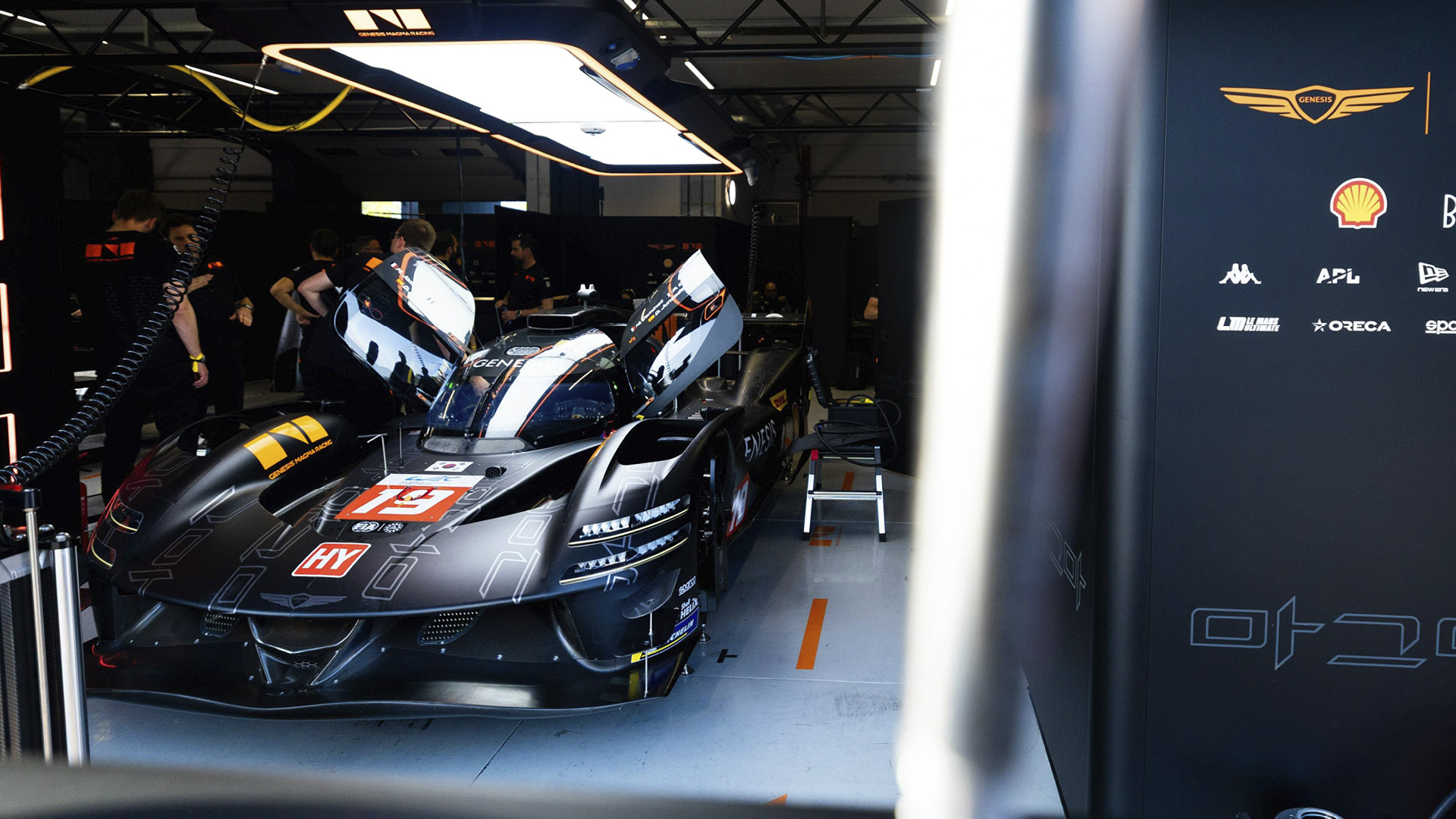
Even at a glance, the two Genesis cars were easy to separate. The #17 wore a Liquid Metal look; the #19 ran Black. Both carried a Magma identity that read clearly at speed: the Korean “마그마” patterning as a base texture, Genesis Magma’s signature orange accents, and the brand’s Two-Line lighting signature translated into a cohesive “family face” on track.
Genesis chose the LMDh route for a reason: it’s the fastest way to build a top-class prototype without reinventing every wheel. The ruleset uses a standardized foundation—chassis plus common hybrid hardware (motor, battery, gearbox)—which lets teams focus their effort where it actually differentiates: integration, engine, aero, setup, and execution. It’s also why so many manufacturers have gone the same direction—Porsche, Alpine, BMW, Cadillac, and others.
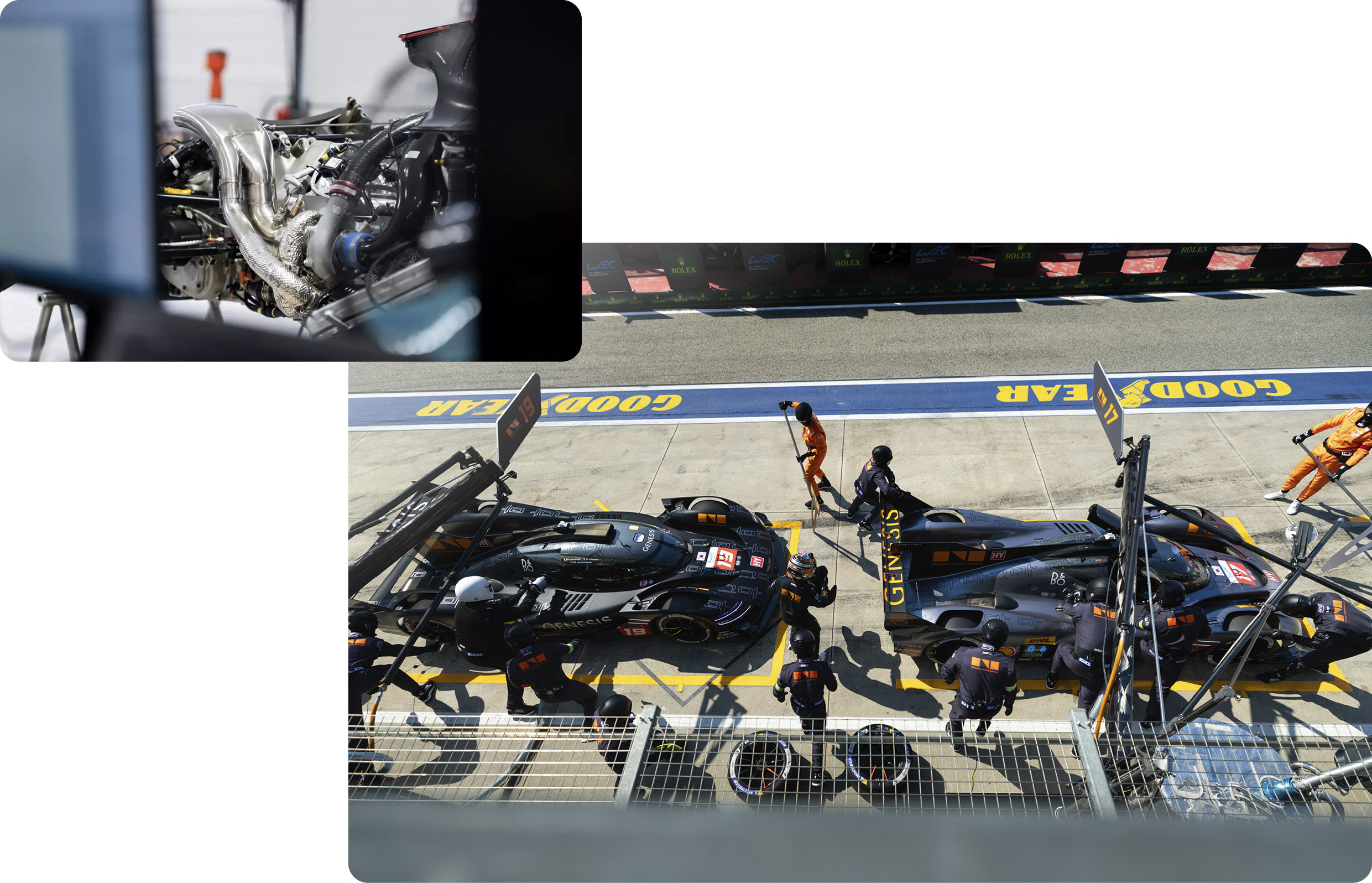
Genesis picked Oreca for the chassis. For the powerplant, Hyundai developed a 3.2-liter twin-turbo V8—built from architecture rooted in the inline-four turbo engine Hyundai currently runs in WRC. Starting from a rally-proven base (already validated for durability and performance under abuse) is a practical shortcut when you’re racing a clock as much as you’re racing rivals. Engine development was handled by Hyundai Motorsport in Germany, and the reported parts commonality between the WRC-derived foundation and the Hypercar V8 is around 60%.
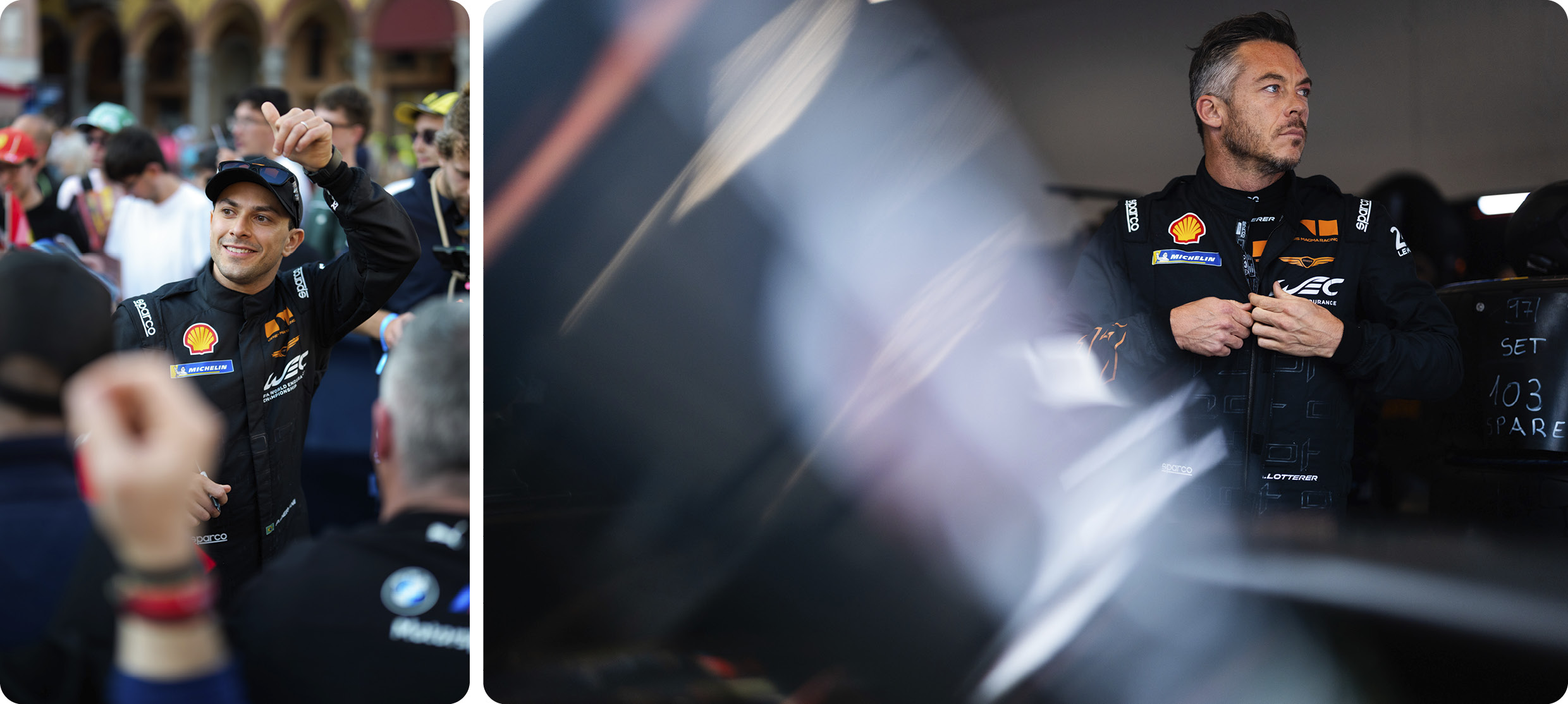
Endurance racing doesn’t let you fake depth. With two cars, you need six drivers—typically three per car—to cover the stints, maintain pace, and manage the mental load across an entire day. Genesis Magma Racing started by signing two heavy-hitters in late 2024: André Lotterer and Pipo Derani. Lotterer is a three-time overall winner at the 24 Hours of Le Mans and a defining piece of the Porsche/Audi endurance golden years. Derani—one of IMSA’s most respected endurance racers—has multiple wins at the 12 Hours of Sebring, the kind of record that earns the “King of Sebring” label without anyone blinking.
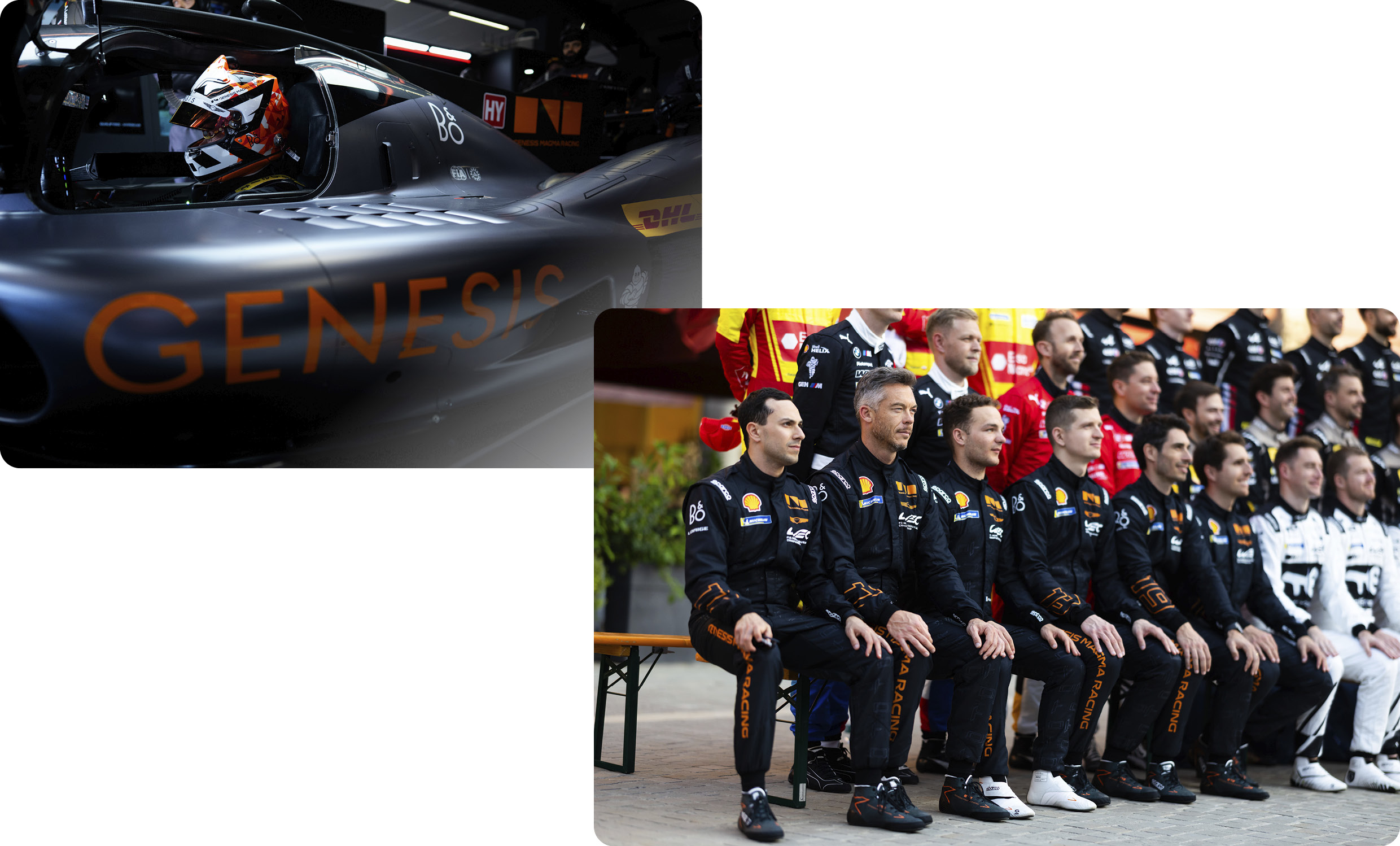
Genesis then ad-ded French prospect Mathys Jaubert through its Trajectory program and brought in Spanish veteran Daniel Juncadella. Most recently, it rounded out the six-driver lineup with former Porsche factory driver Mathieu Jaminet and Paul-Loup Chatin, who moved over from Alpine’s WEC program. It’s a roster with real range—veterans who’ve won the big ones, emerging talent, and drivers with current-generation Hypercar experience. British driver Jamie Chadwick continues in the Trajectory program this year while also serving as Genesis Magma Racing’s reserve driver.
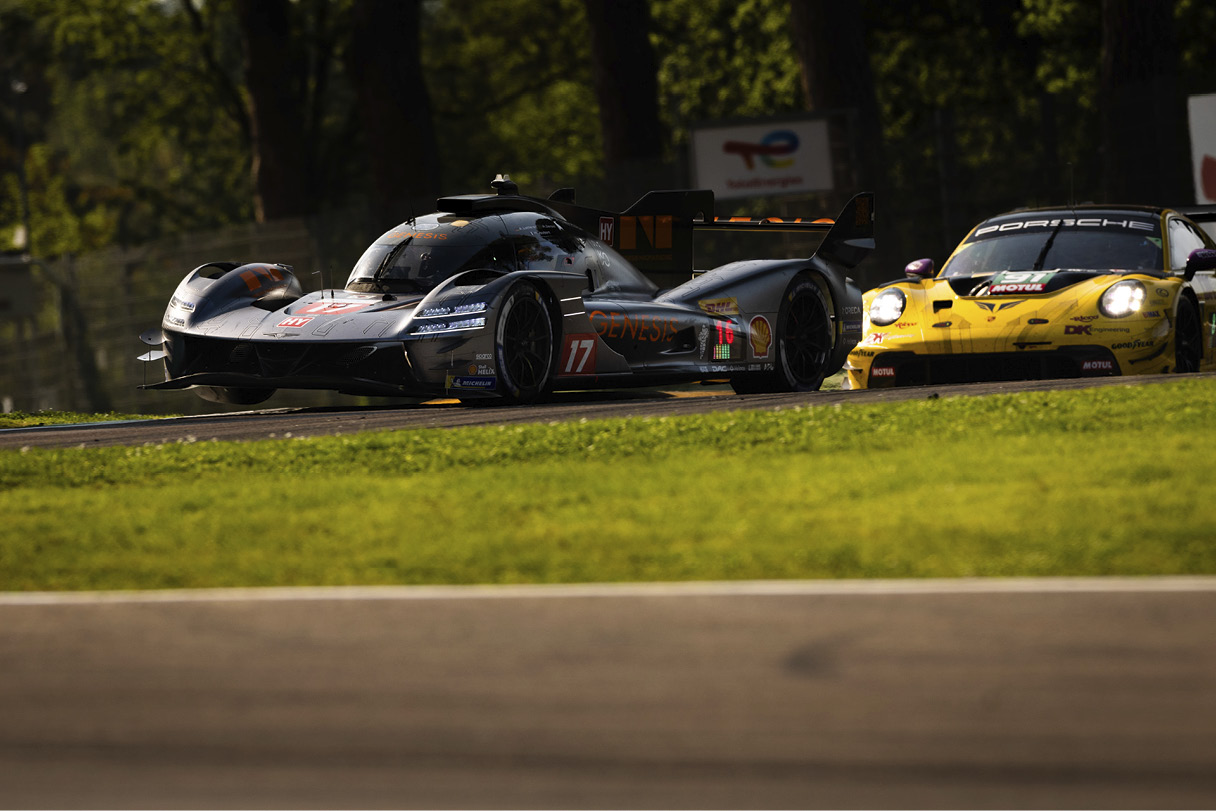
Genesis Magma Racing’s two GMR-001s made it through the kind of opening lap that can end an endurance race before it really starts—cleanly, calmly, and with the long game in mind. For a brand-new team, the priority isn’t a flashy box score on Day 1. It’s gathering real-world data you simply can’t replicate in private testing: setup direction, strategy calls, traffic behavior, and the split-second decision-making that only happens when all cars are sharing the same piece of pavement. Think of it like training a high-performance system—raw capability matters, but it only becomes repeatable after enough real “learning laps.”
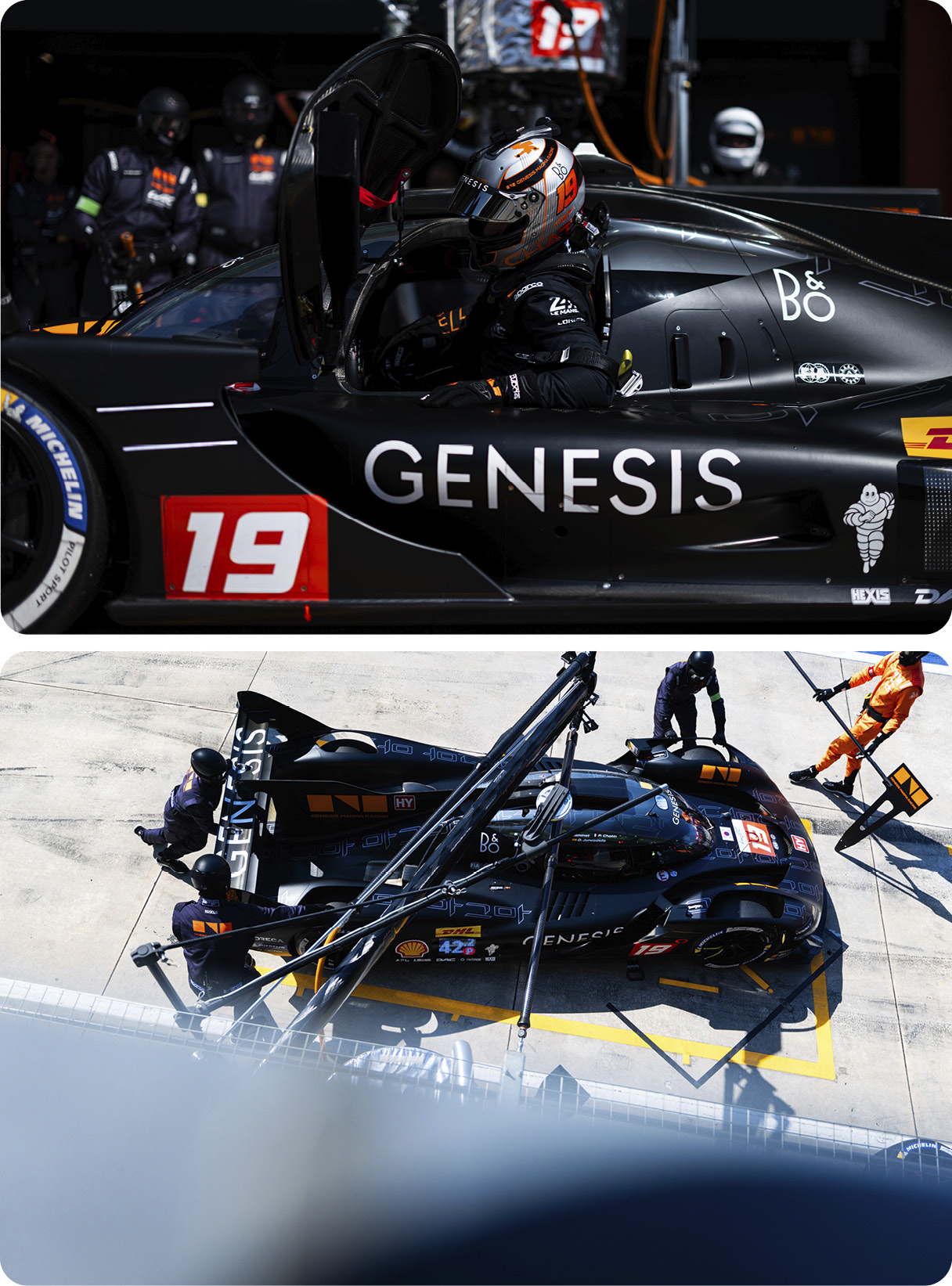
That’s why the first true punch in the mouth arrived early. About 15 minutes in, the #19 (Juncadella) sud-denly peeled into pit lane with a sensor-related issue. The #17 (Lotterer) stayed out and kept the program moving forward. Up front, Ferrari’s #50 had nailed the start and climbed to second, giving the tifosi an early one-two with the pole-sitting #51. Toyota stalked just behind, Cadillac held fourth, and LMGT3 opened with its own fight—McLaren leading while a pair of Lexus entries tried to reel it in.
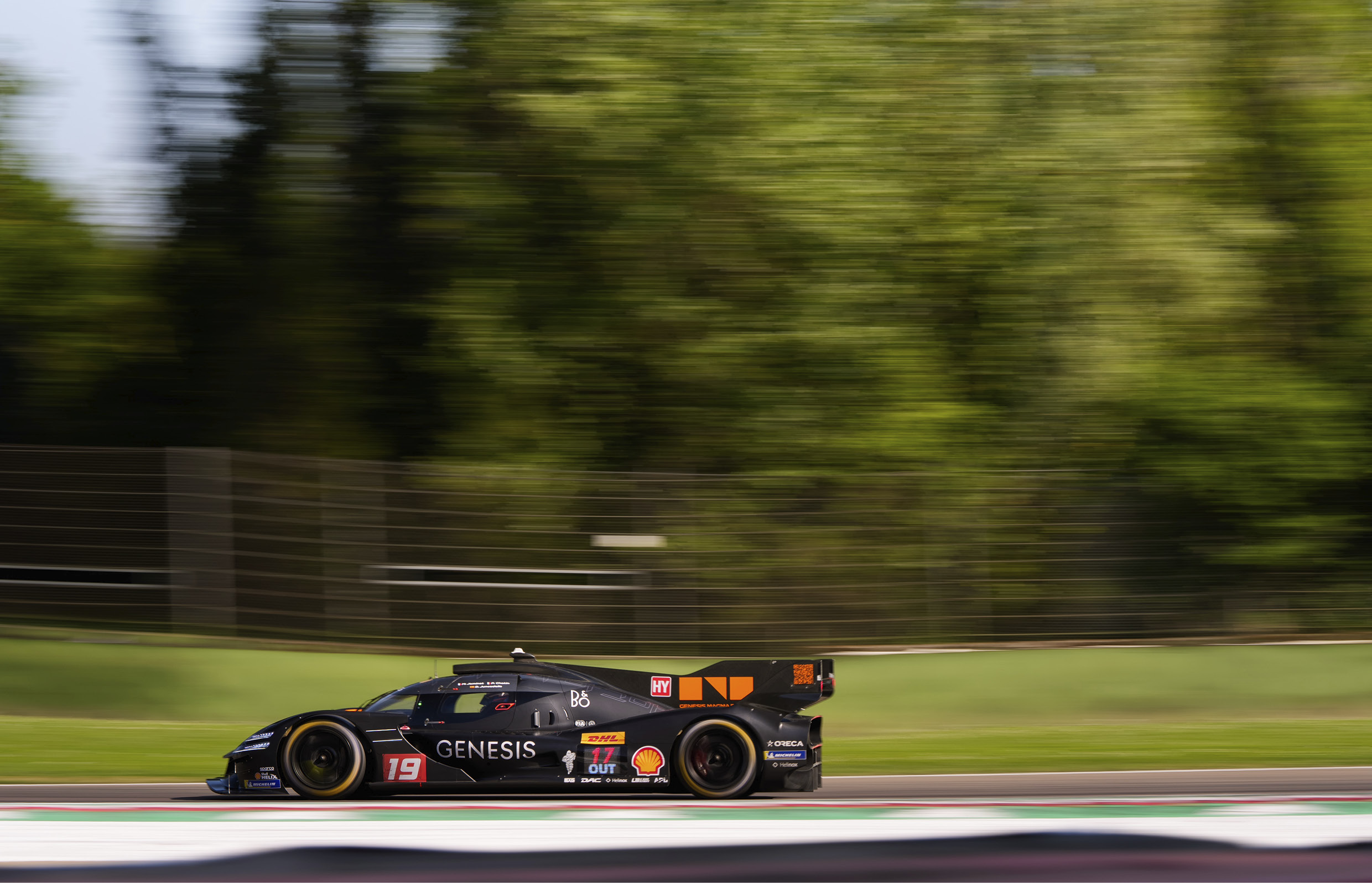
By roughly the 50-minute mark, the race settled into its first real rhythm as pit cycles started to trigger—Toyota’s #7 among the early callers for fuel. In WEC, every team shows up with a baseline stint plan—how many laps per tank, when to fuel, when to swap tires, when to rotate drivers—but the race rarely lets you run it clean. Incidents, punctures, safety cars, and shifting conditions keep forcing decisions in real time. That’s also the key difference versus sprint racing: a trip to the garage isn’t automatically the end of your story. You’ll lose laps, yes—but over six hours (and definitely over 24), you can still claw your way back into relevance.
Le Mans has made the point for decades: teams have rebuilt cars for hours, rolled them back out, and still salvaged something meaningful. Genesis cleaned up the #19’s sensor issue and sent it back out. Even with roughly 25,000 km of pre-race reliability validation, the first real race weekend can still throw a curveball. That’s what a debut is for—find the weak link now, in public, with the clock running.
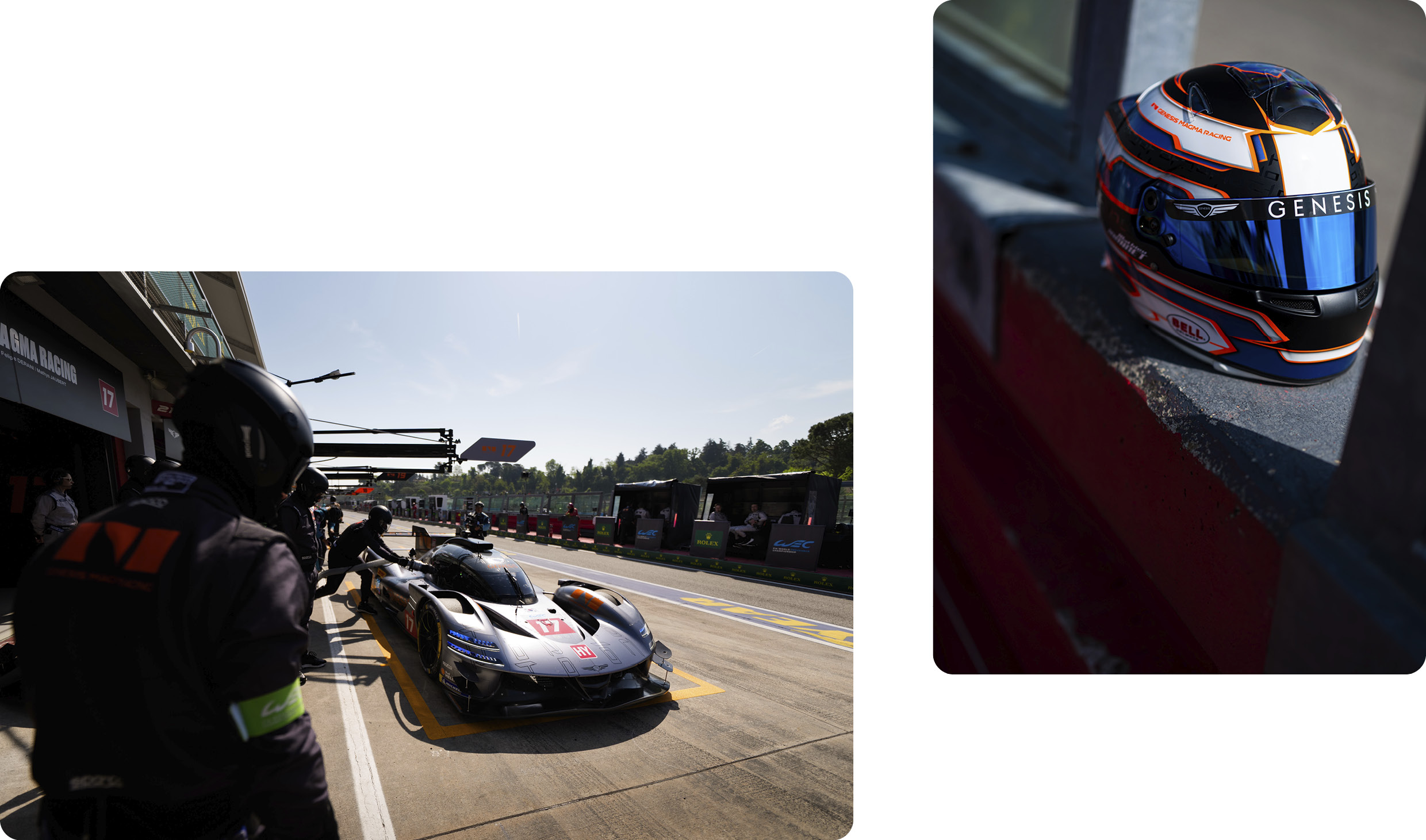
As the field rotated through that second wave of stops, Toyota’s #8 moved to the front—and the race snapped into a heavyweight fight that stayed hot deep into the closing hours. Up top, Toyota #8 and Ferrari #51 traded control for the win. In the next lane over, third place became its own feature bout: Toyota #7 vs. Ferrari #83. When the checkered flag landed, Toyota walked out of Europe with a statement—P1 and P3, a double podium on Ferrari’s home turf.
Ferrari and Toyota gave the opener exactly what you want: a pressure-cooker. And the midfield didn’t get any quieter. Peugeot flashed real pace in qualifying, and Alpine—set to step away after this season as it refocuses on F1—still delivered a strong P4.
LMGT3 delivered the most endurance-racing ending imaginable. The Lexus duo that qualified P2 and P3 unraveled early, and McLaren #10 looked lined up for a straightforward win—until a late technical issue, about an hour from the finish, flipped the outcome. BMW’s #69 inherited the moment. It was the cleanest reminder of the WEC rulebook that matters most: pace puts you in position; reliability pays the bill.
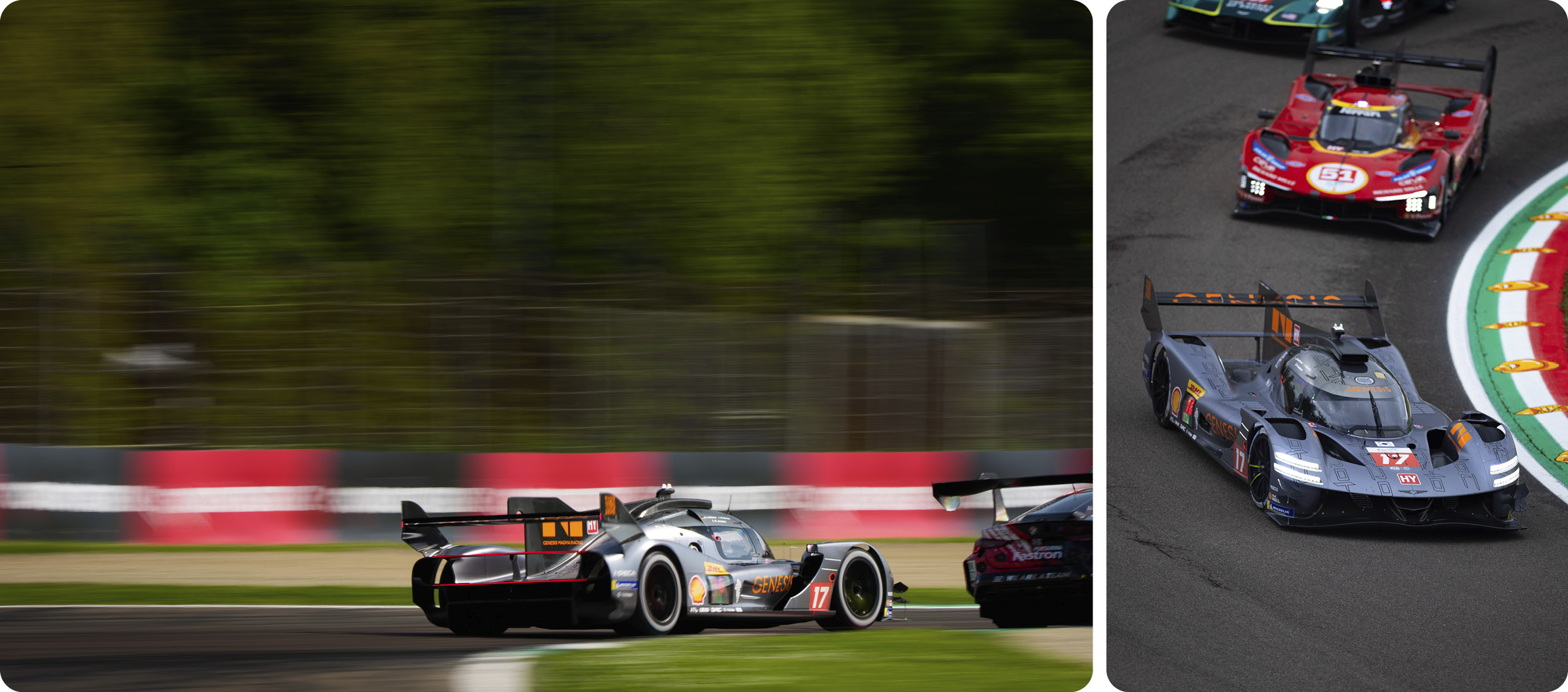
For a brand-new program, Genesis Magma Racing left a louder first impression than a simple finishing position suggests. The laps lost to that early repair on #19 weren’t coming back—but the bigger goal did: run clean, avoid secondary trouble, and bank a mountain of real race data. Mission accomplished.
Genesis Magma Racing’s Hypercar showed razor-sharp cornering—enough to irritate a Ferrari driver. Video: FIA WEC (https://www.fiawec.com)
The #17 is the car that really started to lean on the established teams. Lotterer’s veteran stint pulled it up to 11th before the stop. Then Mathys Jaubert—the youngest driver on the roster and a Hypercar rookie—climbed in and just… kept it going. Around the midpoint, he lined up Aston Martin’s #009 and made a clean, confident pass—no drama, no slop, just a proper move.
Ferrari’s Nicklas Nielsen (#50) got stuck behind it and couldn’t immediately answer. His team radio said what everyone else was thinking: “I don’t understand. Why is that car faster than us in the corners?” Half complaint, half respect—exactly the kind of reaction you only get when a new car does something unexpected in plain view.
Genesis Magma Racing delivered a signature moment by passing an Aston Martin Hypercar during the race. Video: FIA WEC (https://www.fiawec.com)
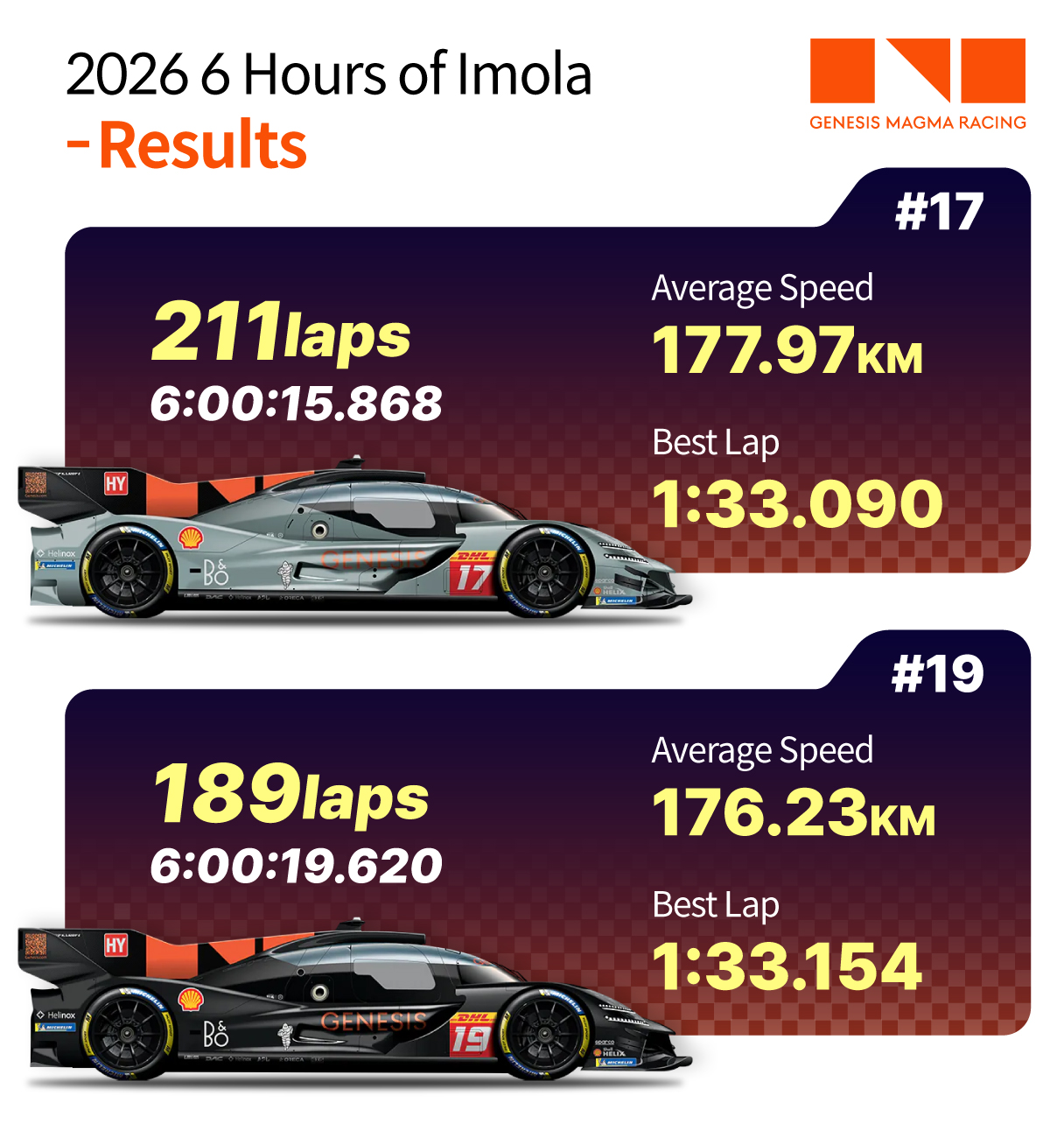
When #17 handed off to Pipo Derani, the climb continued—briefly reaching as high as ninth. Strategy eventually pulled it back: Genesis held station on tires expecting rain that never arrived, and keeping pace got tougher as the track stayed dry. But the bigger point held. The GMR-001 didn’t just circulate—it raced. It ran in the same frame as the established names and, at times, showed Ferrari-level cornering confidence. Both GMR-001s reached the finish. The #17 completed 211 laps (the winner ran 213), and the #19 logged 189.
If you want the real “can this thing run up front later?” signal, don’t start with finishing position. Start with lap time. Even while running a controlled, finish-first strategy, the #17’s pace sat just 0.6 second off the winning Toyota #8’s benchmark lap (Toyota #8: 1:32.490). In qualifying, the #19’s 1:31.258 was only 0.26 second off the next car up (#93 at 1:30.995) and 1.17 seconds off the pole-setting #50 (1:30.088). Genesis also logged a best race lap quicker than the Peugeot Hypercar that finished 12th overall.
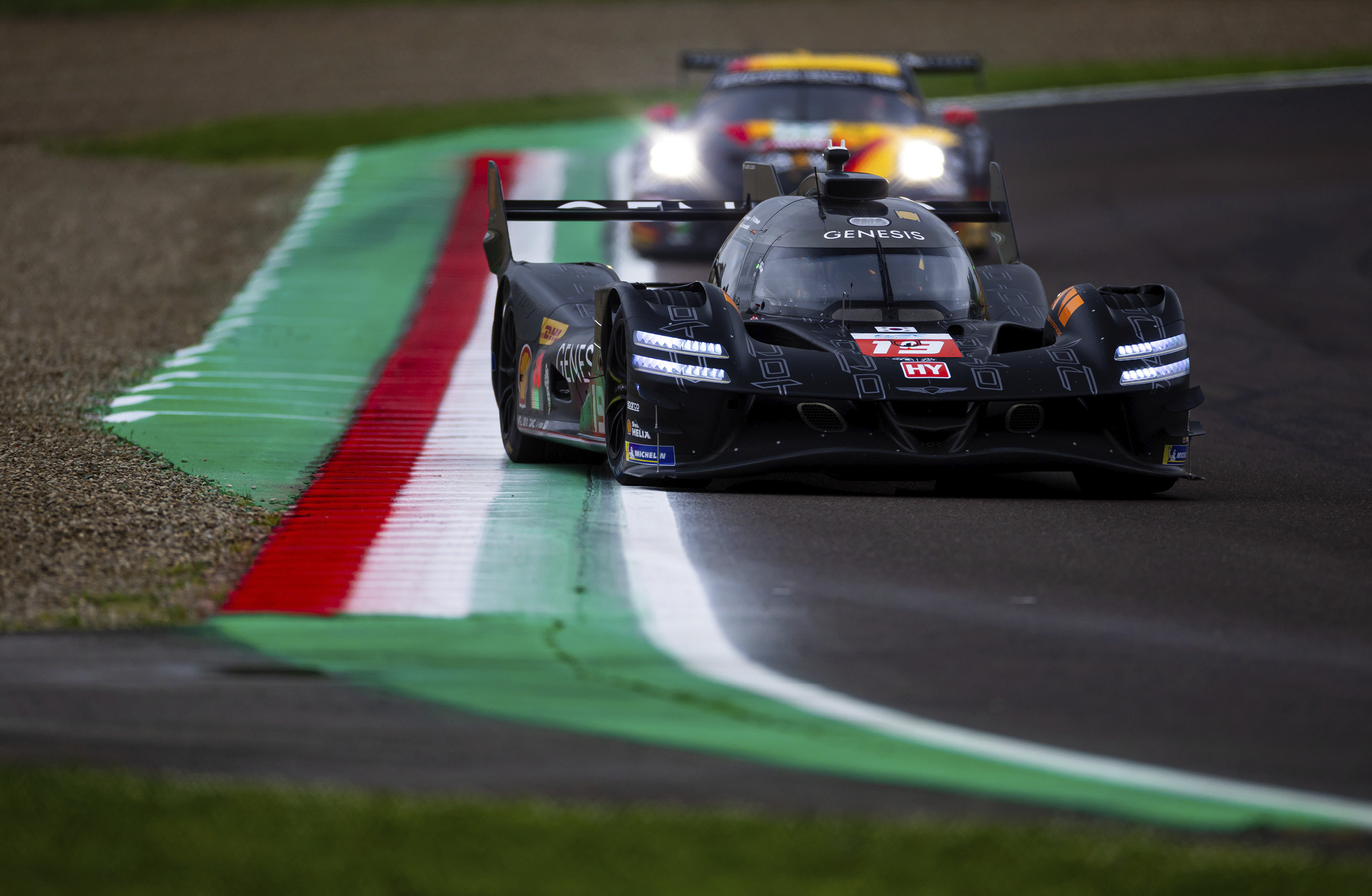
Bottom line: Genesis didn’t show up just to “finish its first one.” It finished and flashed real pace—right out of the gate. Historically, most new factory Hypercar programs spend their early races simply learning how to survive: reliability, setup window, strategy discipline, the full six-hour chess match. By completing the race cleanly while posting genuinely competitive lap times, Genesis Magma Racing signaled a faster learning curve than the norm—and that’s the kind of first weekend that ages well.
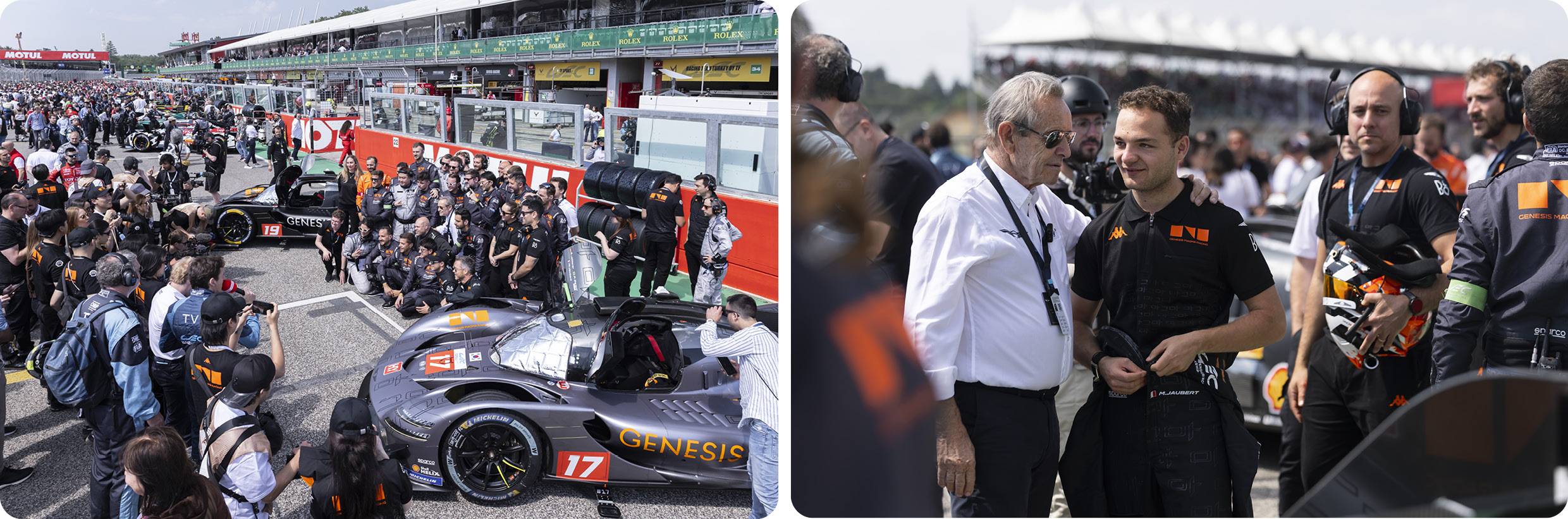
Watching from trackside, Jacky Ickx summed it up simply: “It’s a big success,” offering direct praise to the people involved. Coming from Ickx, that’s not throwaway encouragement. The Belgian icon—six-time Le Mans winner and forever “Mr. Le Mans”—understands better than almost anyone how hard it is for a brand-new endurance program to simply get to the finish cleanly. These days, he also serves as an official advisor to Genesis Magma Racing.
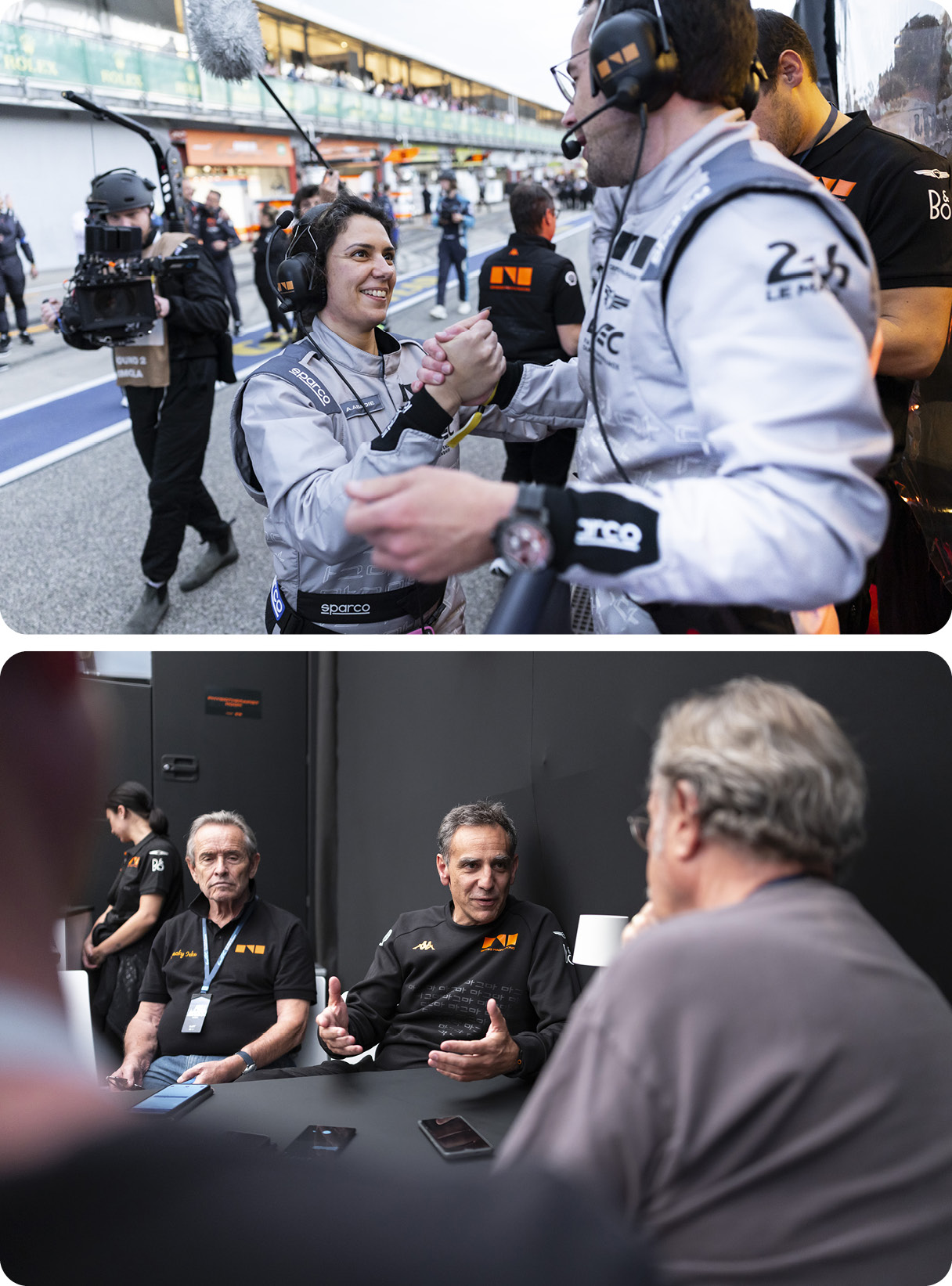
Cyril Abiteboul, Genesis Magma Racing Team Principal, said: “All the way since we arrived for the Prologue, the team had a very encouraging start. As new entrants, we would never be set on outright performance; therefore we had assigned ourselves targets of reliability and execution. We started the week by focusing on accumulating mileage, something we achieved without issue or mistake during the Prologue and the free practices. Qualifying went to plan, but we could feel for the first time the pressure from a real competitive session. It was no different today, and the race did not start well, with an electronic issue on the #19 car that we elected to fix in the pits. On their side, André and Mathys in the #17 car could enjoy some very exciting racing against a number of other cars, but unfortunately the rain expected did not come when we pitted P9 for driver change. From that point, Pipo had to manage both tires and energy until the end. The main conclusion of this week is the strength of our foundations, and the potential of our racing team. I am very grateful to everyone who have entrusted both Luc Donckerwolke and myself to establish this program, our Executive Chair, our Vice Chair, our CEO. I really hope that we made them and the entire Hyundai Motor Group proud of Genesis’ debut in such a highly skilled World Championship. I am very pleased with the work achieved by the team and after this week we have lots to analyze back at base. But for today we are exactly where we worked to be at the start of our program.”
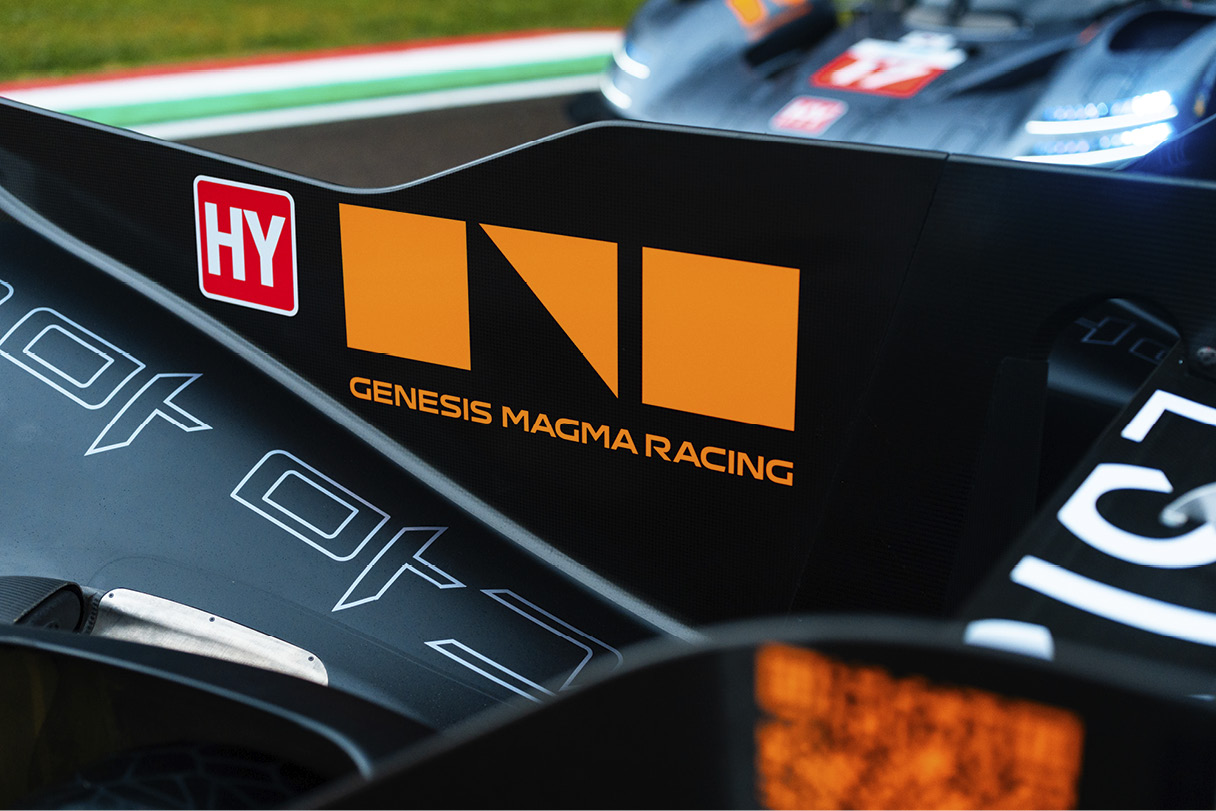
Online, the response was just as heated. With most Korean fans unable to watch in person, many piled into Genesis Magma Racing’s onboard live feed and filled it with support. Onboard streams are team-run camera channels that show the race from inside the car—separate from the main broadcast—and they’re a different kind of addictive. You don’t just see the lap; you feel the rhythm: the steering inputs, the bumps, the traffic, the brake pickups. During pit stops, the feed often flips to inside-the-garage angles—driver swaps, quick fixes, hands on the car—while the raw sounds (engine note, air guns, radio chatter) come through more directly, which is exactly why hardcore fans love it.
Genesis Magma Racing’s debut onboard stream reportedly hovered above 5,000 concurrent viewers and cleared 120,000 total views—serious numbers for a first race. There was even a very 2026-style moment: when the #19 went into the garage and the feed briefly cut due to the battery being isolated, viewers flooded into overseas live channels—and the chat sud-denly turned into a wall of Korean comments. With WEC’s first race generating that kind of engagement back home, the feeling is that Genesis Magma Racing could become real fuel for growing Korea’s motorsports fan base—because people don’t just watch a program like this. They follow it.
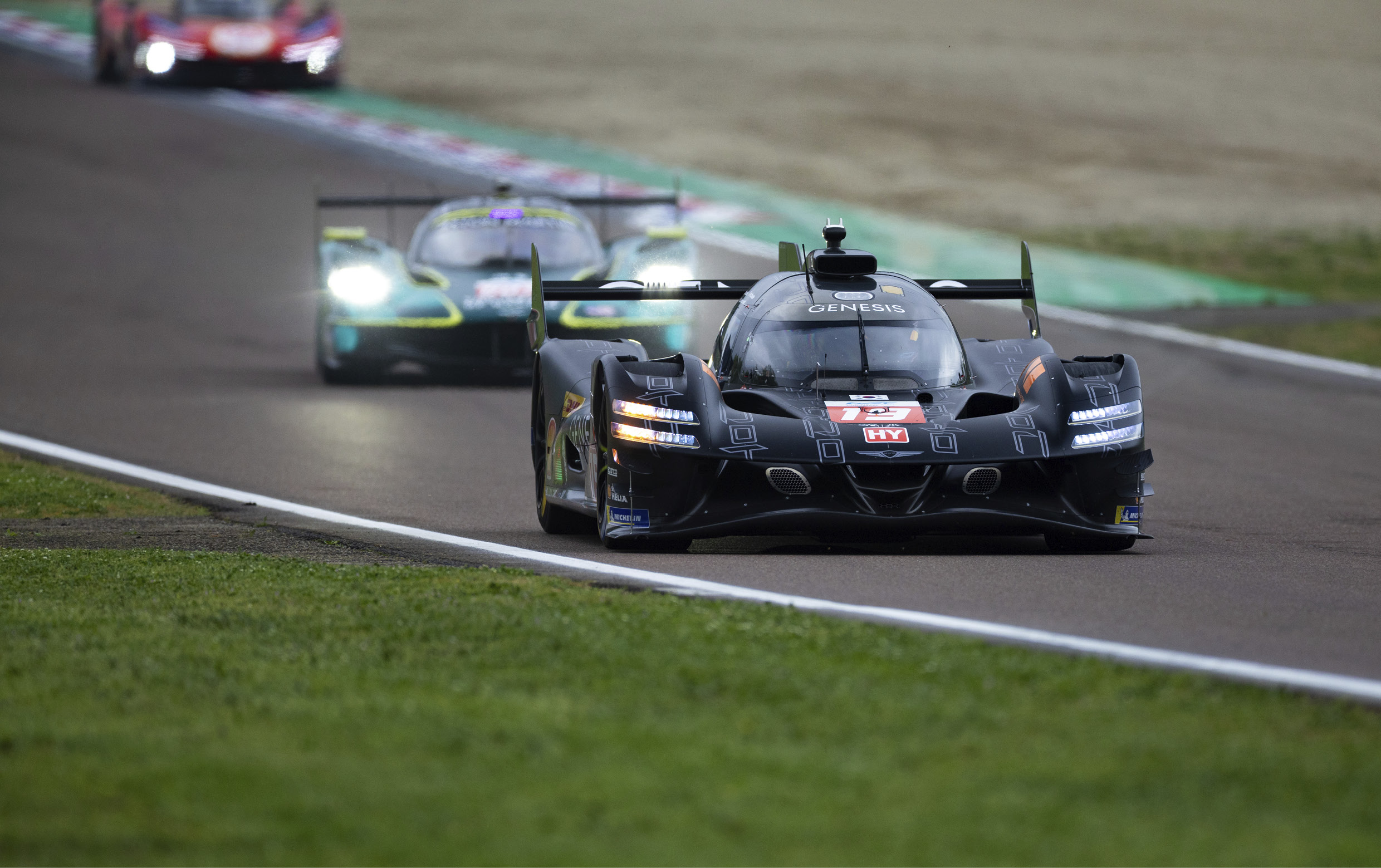
The positive take didn’t stop at fan excitement. International motorsports outlet RACER referenced Genesis Magma Racing in its 6 Hours of Imola review and called it a very encouraging race.
Fans picked up on it immediately in the WEC highlights comments—more than a few called it “a great result for a new team,” and others zeroed in on the part that actually matters: the GMR-001 looked legitimately quick through certain corners, even when a Ferrari was in the same frame. For a first outing, that’s the kind of signal people don’t ignore.
On the onboard stream itself, one comment landed with real weight—framing the debut as part of Hyundai Motor Group’s decades-long arc, not just a one-off race result. It was addressed directly to Chairman Chung Ju-yung and, essentially, said this: a dream that started with hands-on wrenching had now arrived on one of the world’s biggest motorsports stages, burning brighter than ever. That’s the kind of buy-in factory programs work years to earn—because it means fans are invested in the journey, not just the finishing order.
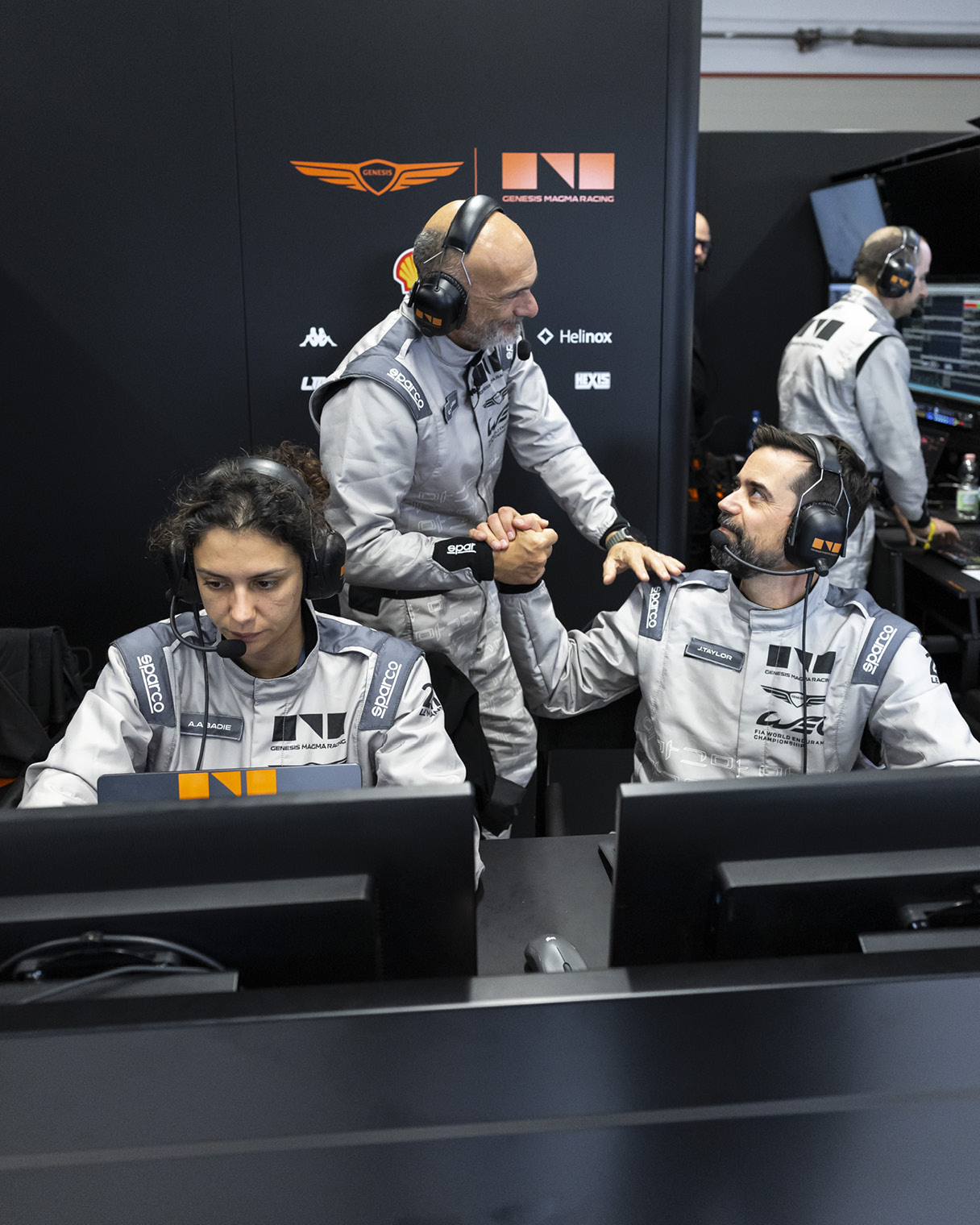
Over on Reddit, the r/WEC community was on the same wavelength. One user said Oreca clearly delivered on the chassis side and that Genesis “did a great job with everything else,” while another called the debut impressive on its own—and even more so when you consider the program went from announcement to first race in just 499 days.
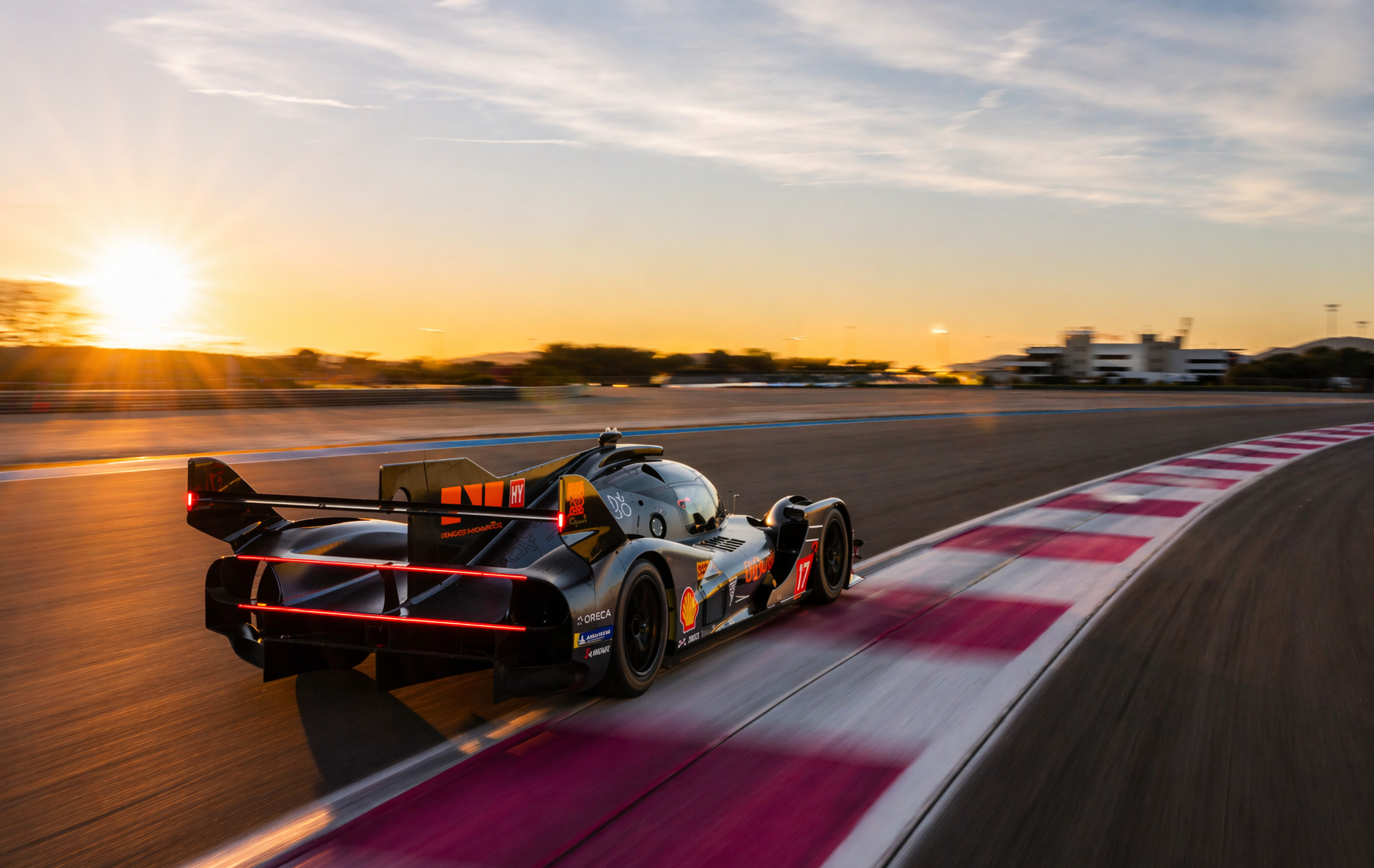
Round 2 runs May 9 at Spa-Francorchamps—six hours at a track that exposes every weakness in the car and every mistake on the pit wall. Round 3 is the one that defines careers: June’s 24 Hours of Le Mans. Genesis was at Le Mans last year under the IDEC Sport banner in LMP2. This year, it’s different. This time it’s a Genesis-built Hypercar with Genesis on the nose, taking its shot at the top class—making Genesis the first Korean automaker to enter Le Mans’ premier category in the modern Hypercar era.
Written by: Soo-jin Lee
In 1991, Lee’s passion for cars led him to enthusiastically write letters to the newly launched Korean car magazine Car Vision. This unexpected connection led him to start his career as an automotive journalist. He has served as editor and editorial board member for Car Vision and Car Life, and now works as an automotive critic. While eagerly covering the latest trends like electric vehicles, connected cars, and autonomous driving technology, he is also a car enthusiast who secretly hopes that the smell of gasoline engines will never disappear.