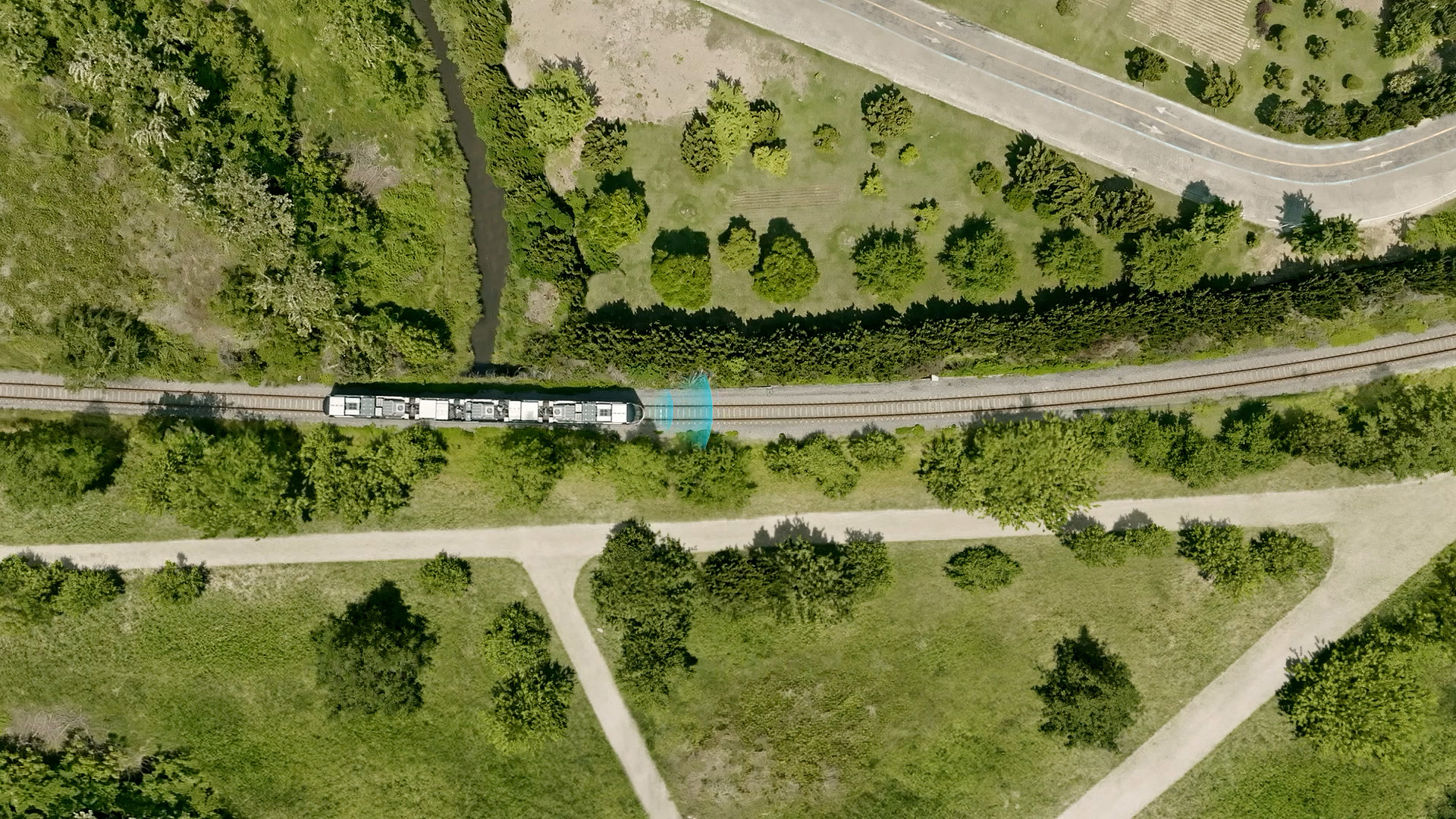
Trains run on fixed tracks. Unlike cars, they cannot simply steer around an obstacle or change lanes. The movement of a single train can directly affect those behind it and, ultimately, operations across the entire route. That is why rail automation cannot rely on the independent decisions of one vehicle alone. Rolling stock, tracks, signaling, and control systems must operate as one integrated whole.
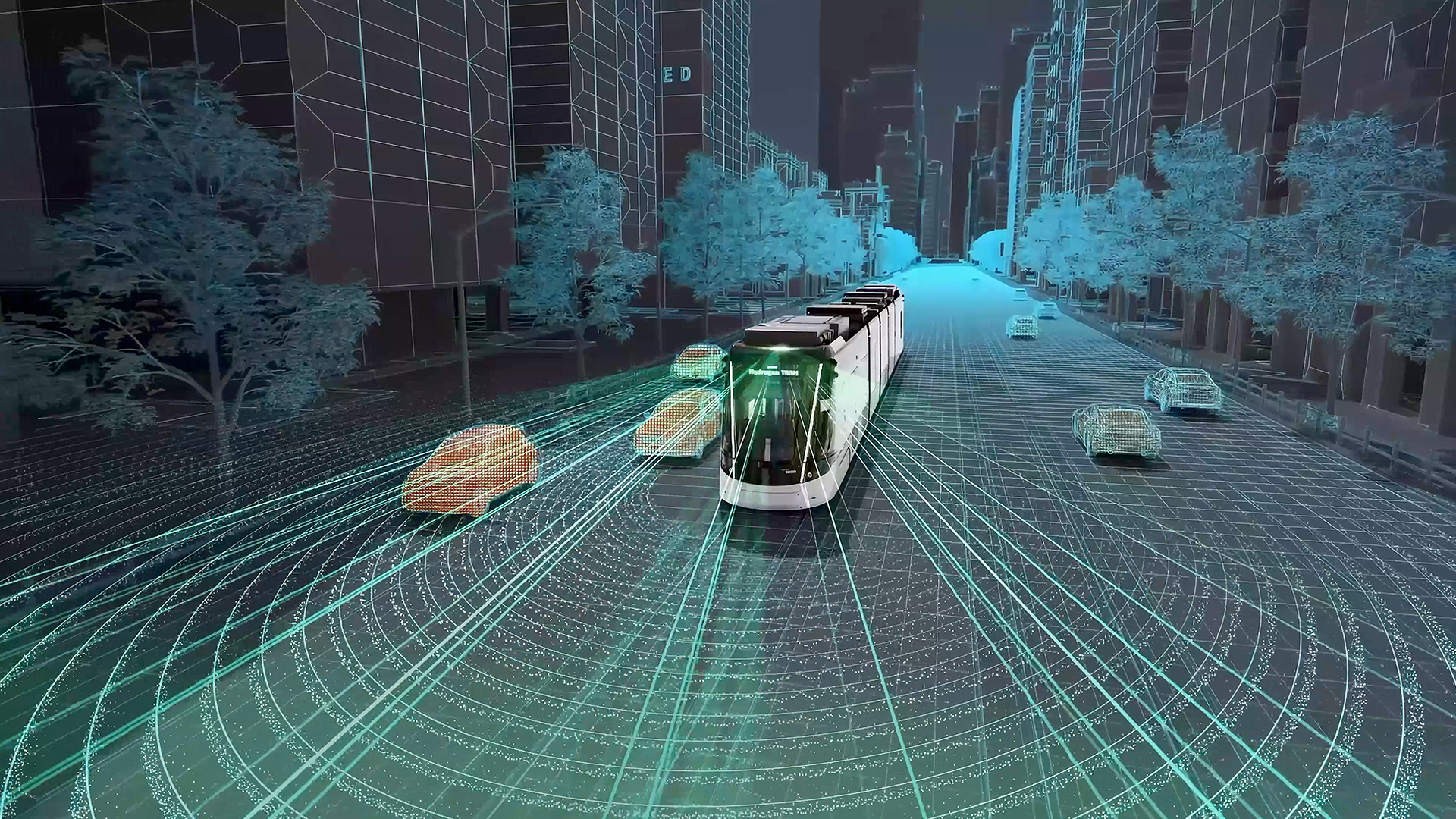
Hyundai Rotem has developed two technologies for rolling stock: Autonomous Driving Assistance System (ADAS) and Intelligent Energy-Efficient Operation System (IEOS). ADAS helps a train recognize tracks ahead, detect obstacles, and assess risks. IEOS calculates the most energy-efficient driving strategy that will keep the train on schedule, then applies it to train control.
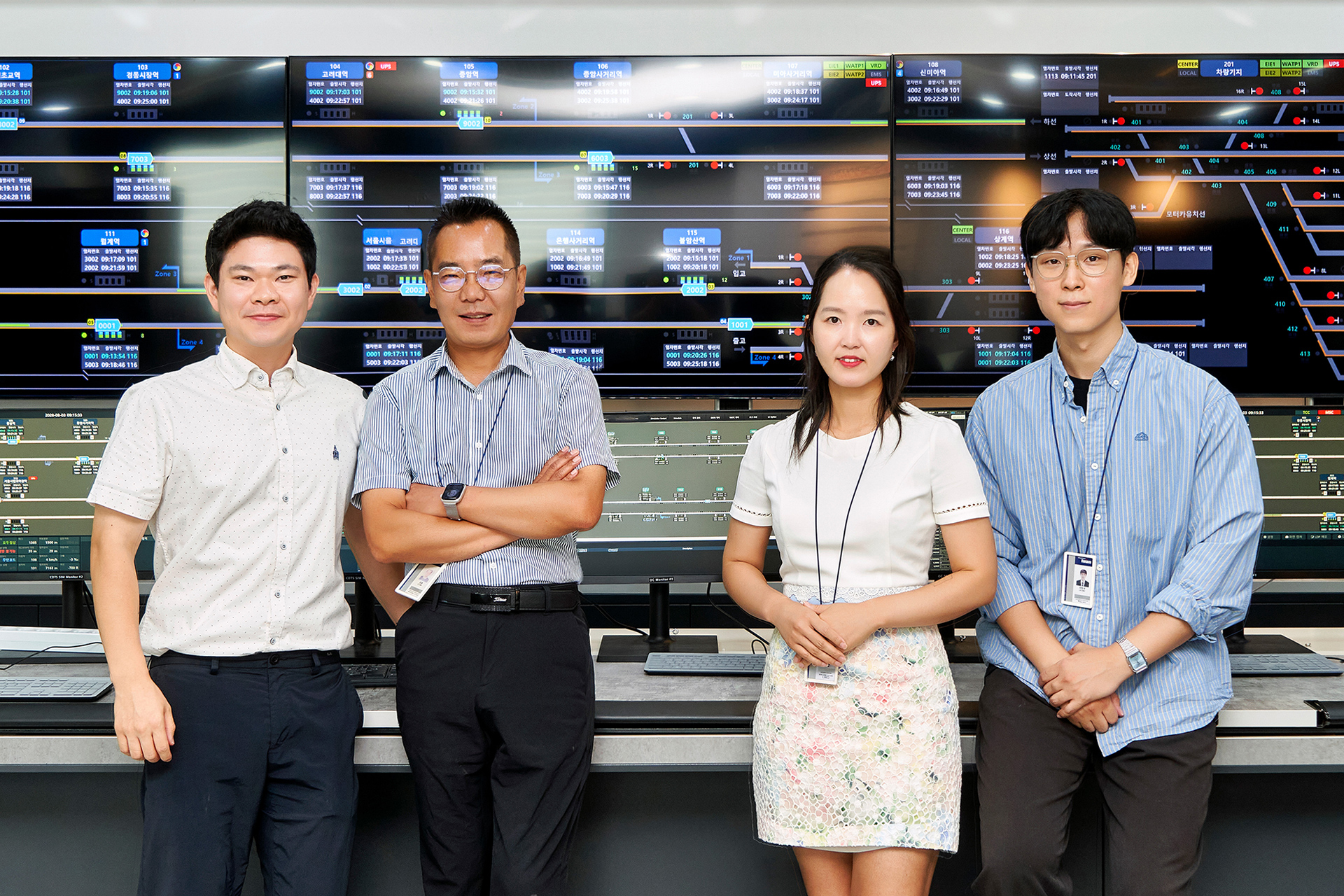
One is designed to make operations safer and the other to make them more efficient, but both begin with the same idea: combining a train driver’s experience and judgment with sensors, data, and software to control the train more precisely. To learn more about the present and future of rail technology, we spoke with Hun Kim, Team Leader of the TCMS Development Team; Jeongkyu Seo, Research Engineer, and Yunseok Ji, Researcher, both on the TCMS Development Team; and Yeonseo Lee, Senior Research Engineer Researcher on the Urban Rail Signaling Development Team.
Autonomous driving for road vehicles is classified under the SAE International standards according to how much of the driving task the vehicle performs on its own. Railways, by contrast, use Grades of Automation (GoA), the standard classification for automated train operation on mainline and urban rail systems. GoA defines how responsibilities are divided between the driver and the system during train operation.
At GoA 0, the driver manually performs every driving task, from starting to stopping. At GoA 1, the driver remains in control while signaling and safety systems help prevent speeding and collisions. From GoA 2 onward, the system automatically controls acceleration, deceleration, and stopping; the driver monitors operations and manages the doors and emergencies.
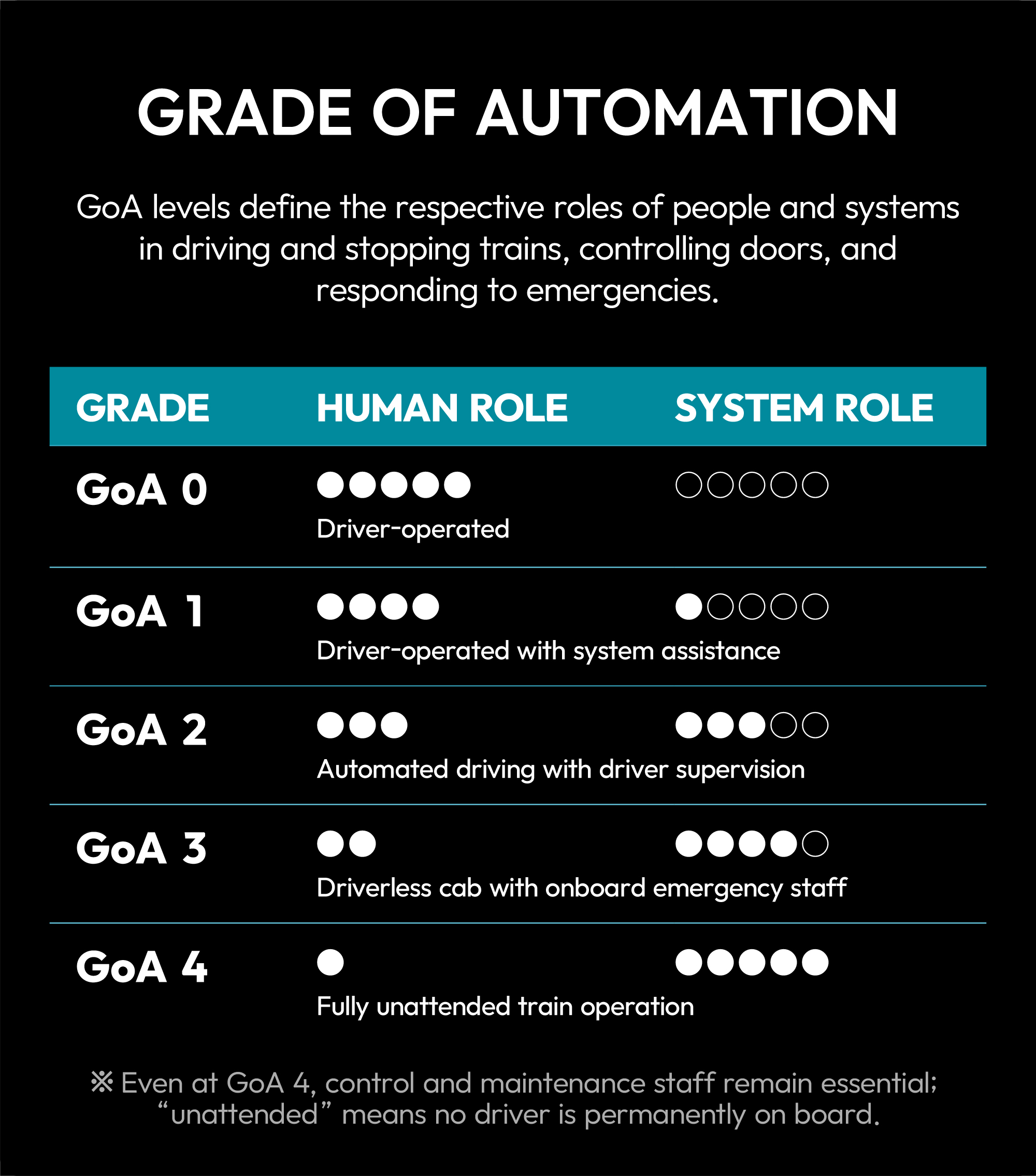
At GoA 3, the driver is not permanently stationed in the cab although an attendant remains on board to respond to emergencies. At GoA 4, the highest grade, the system handles all normal operations, including starting, driving, stopping, and door control. Yet “unattended operation” does not eliminate the human role. Control centers and maintenance personnel continue to monitor and manage the lines and rolling stock.
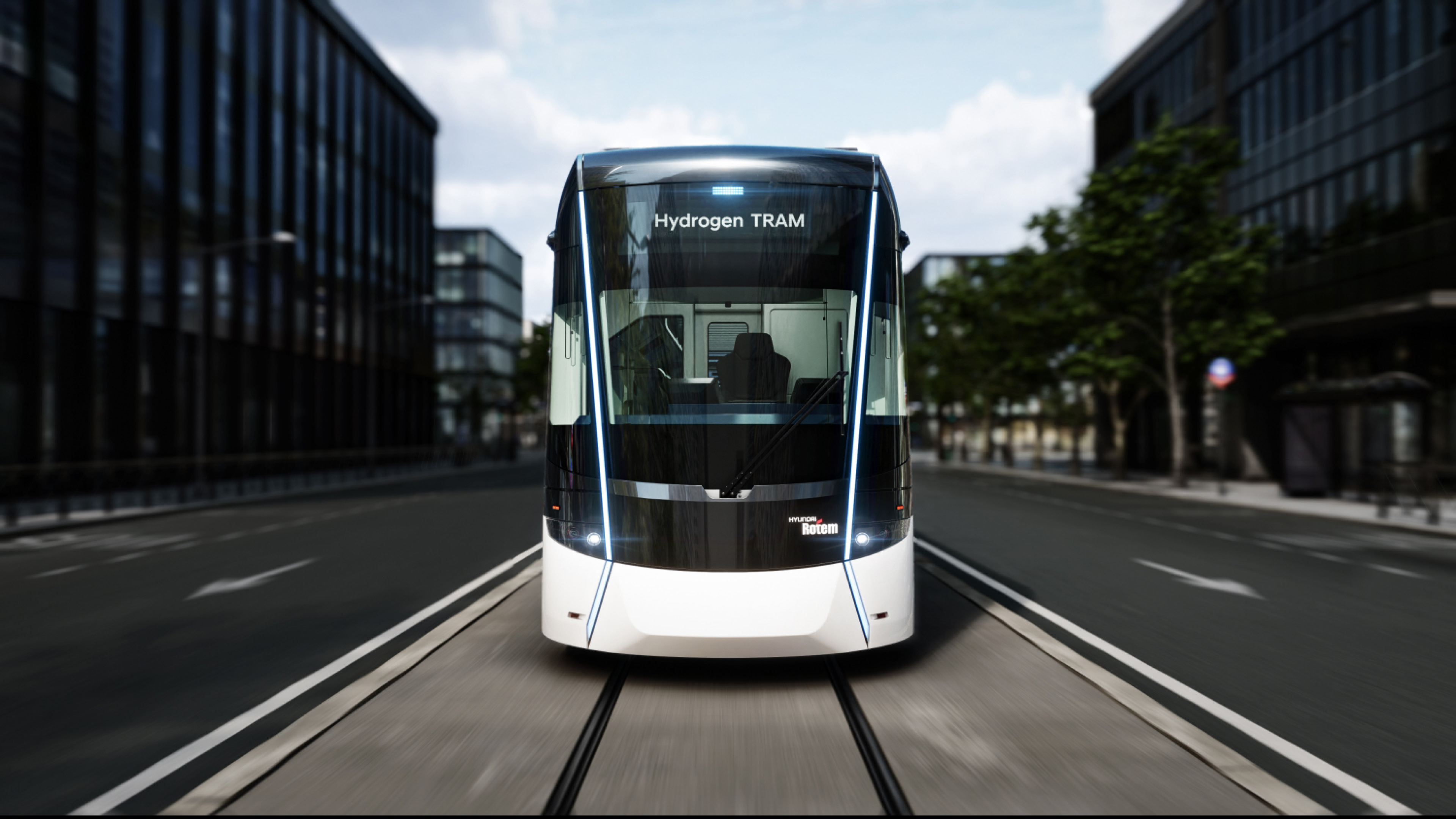
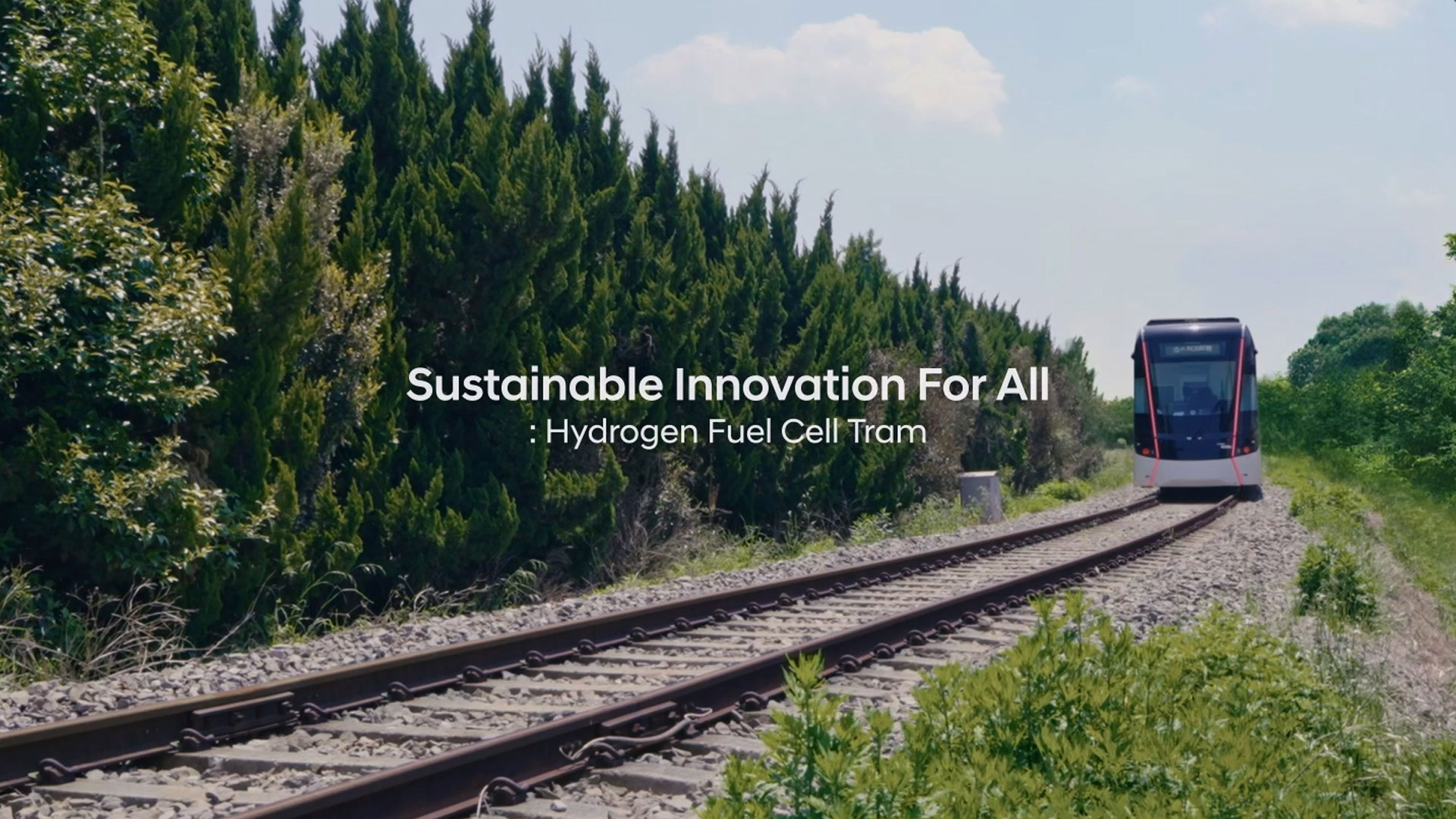
Hyundai Rotem has accumulated extensive expertise in automation by supplying GoA 4 driverless rolling stock for dedicated lines governed by signaling and control systems. Trams, however, operate under very different conditions, sharing roads with cars, bicycles, and pedestrians. Predetermined signals alone cannot address every unexpected event, such as a vehicle suddenly cutting across the tracks or a pedestrian approaching the right-of-way. This is where ADAS for rolling stock comes in, helping the train perceive its surroundings and assess risks for itself.
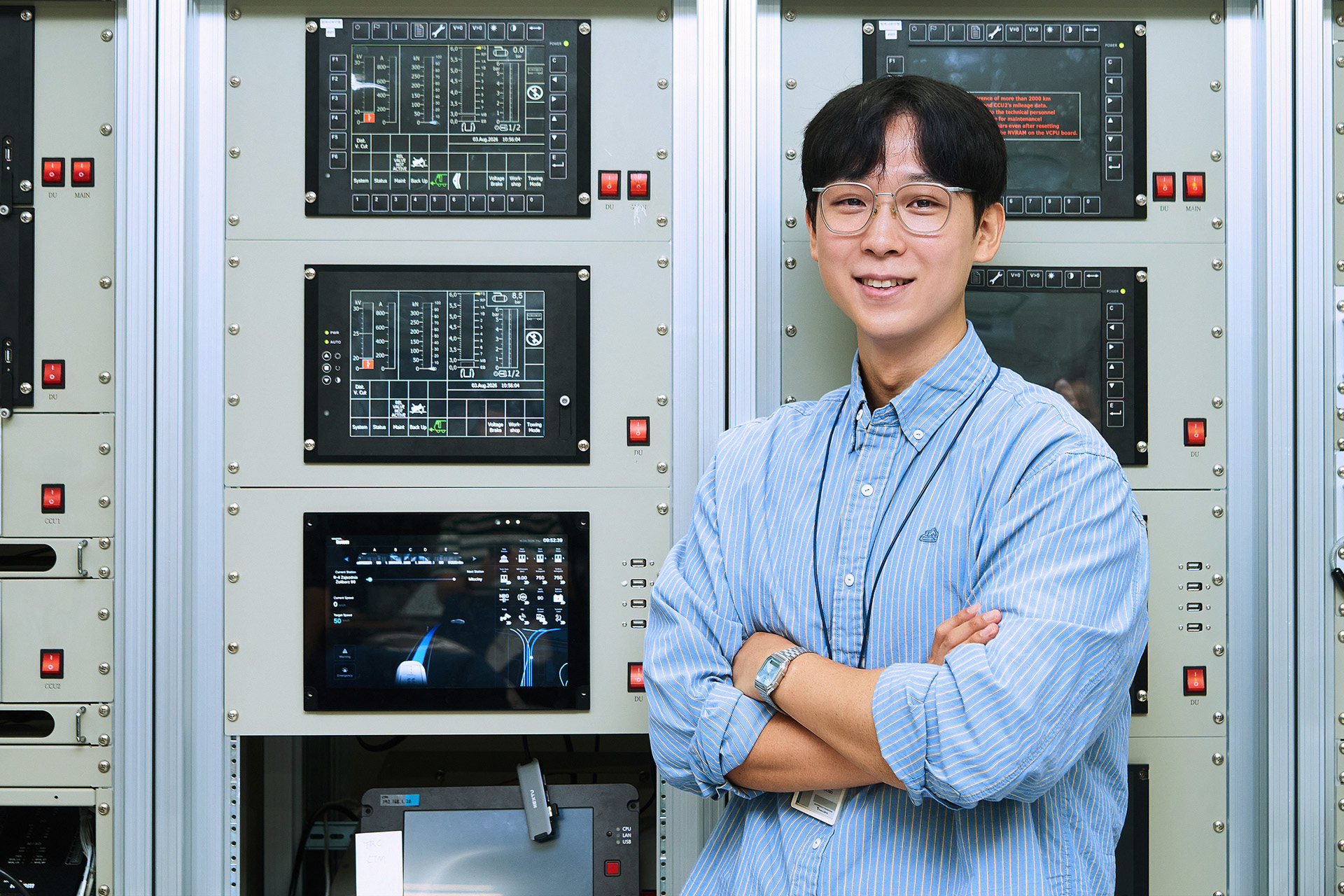
How does ADAS for trains differ from autonomous driving technology for cars? Jeongkyu Seo, a research engineer on the TCMS Development Team who worked directly on the technology, explains what makes rail ADAS unique.
INTERVIEW
Jeongkyu Seo, Research Engineer, TCMS Development Team
Q. How does ADAS for rolling stock differ from automotive ADAS?
“The biggest difference is that trains run on tracks. A car can steer around an obstacle, but a train cannot. Trains are also much heavier and have far longer braking distances, so potential hazards must be detected and assessed much earlier.
Rail ADAS does more than simply identify a person or a car. It must determine whether the detected object is in the train’s path, whether it is likely to enter that path, and whether it is moving or is a fixed structure.”
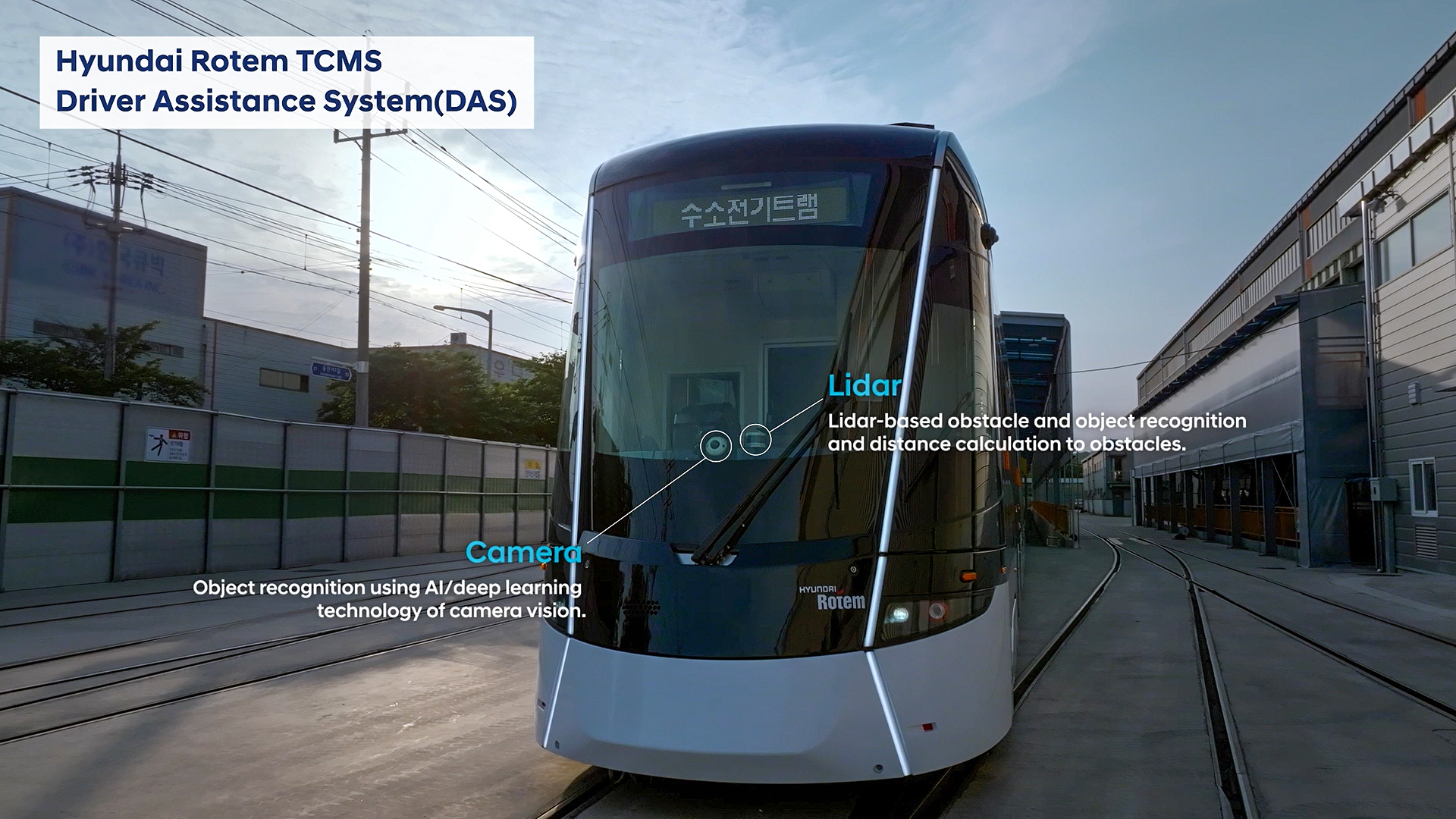
Q. How do cameras, LiDAR, and TCMS recognize tracks and obstacles?
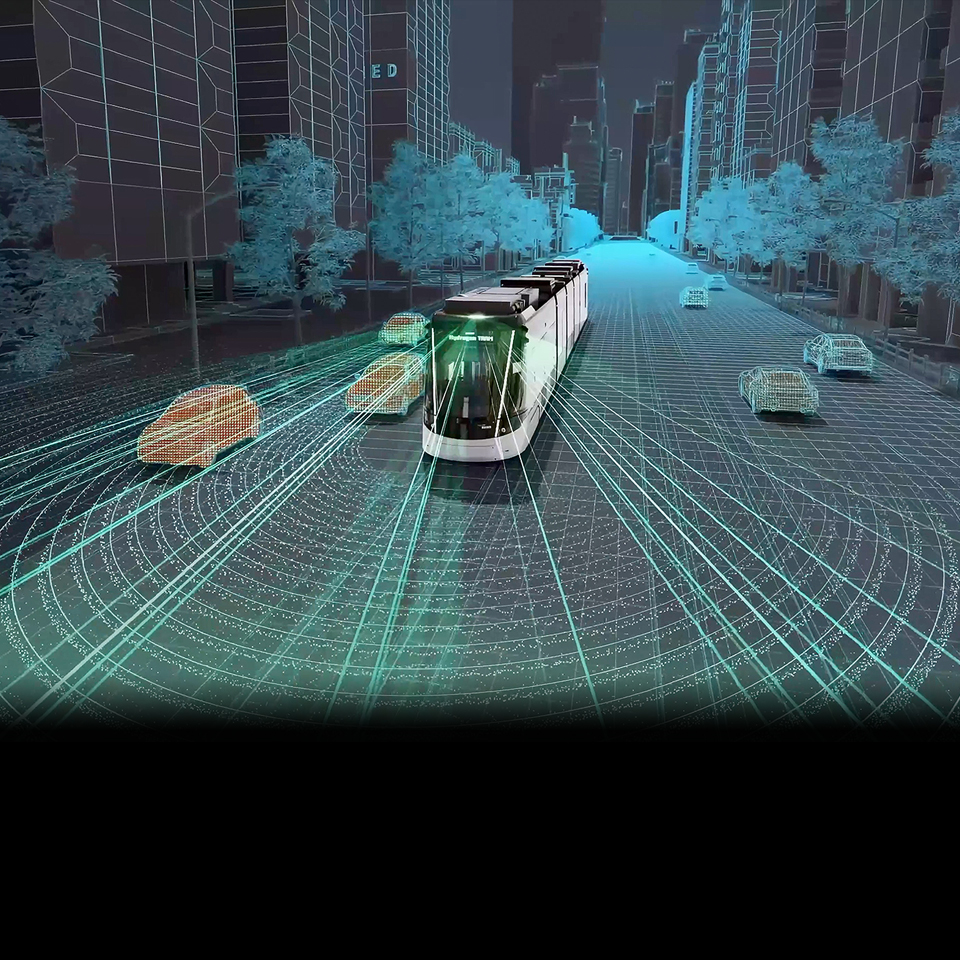
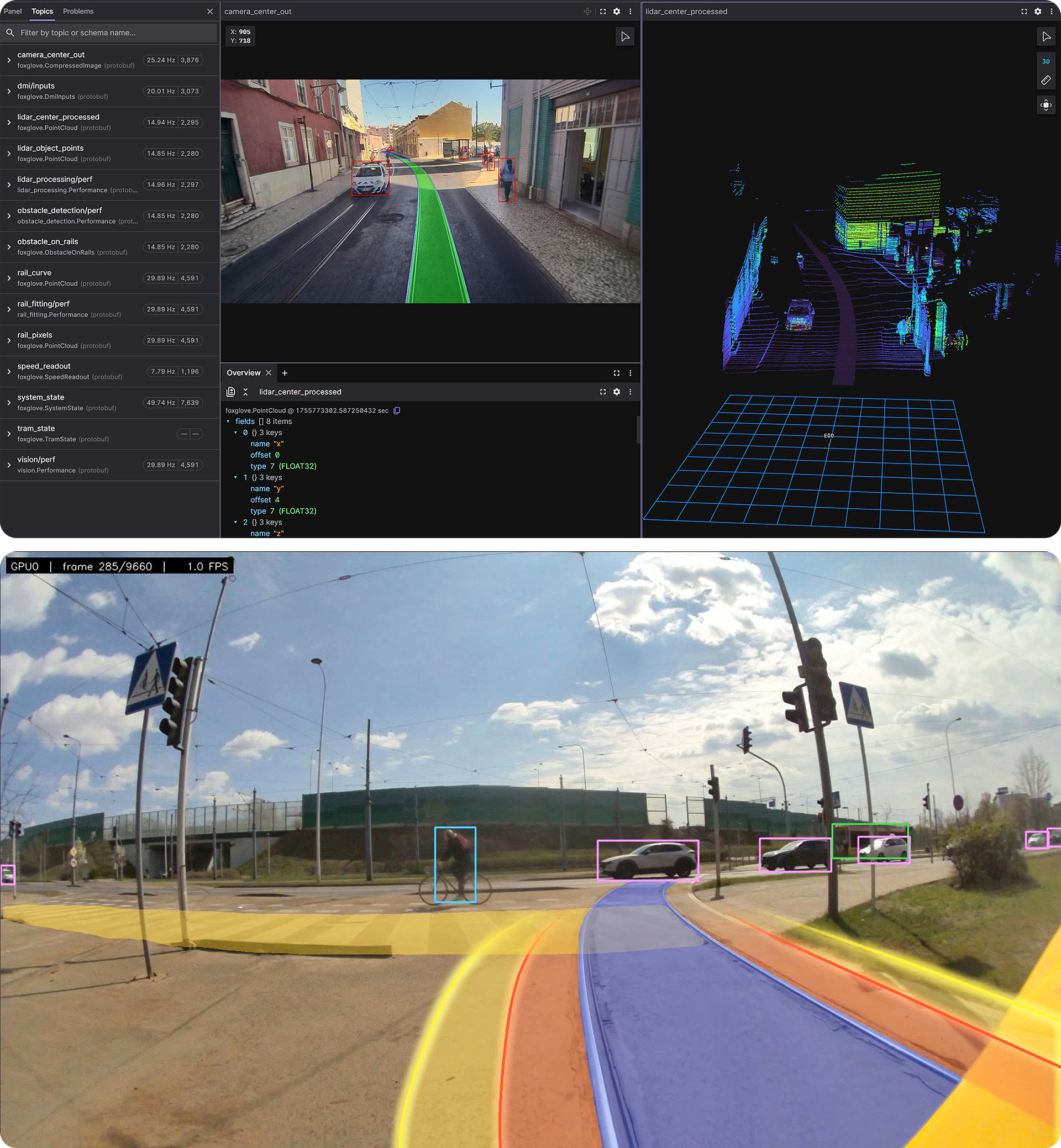
“We use cameras and LiDAR together. Cameras are good at distinguishing the shape and category of an object—whether it is a person, a car, or a section of track, for example. LiDAR measures how long emitted light takes to return, allowing it to determine the distance to an object and map the shape of the surrounding space. Fusing data from the two sensors enables us to identify an obstacle and determine its distance more accurately.
But we do not use sensor data in isolation. We also use information from the Train Control and Monitoring System (TCMS), including the train’s speed, position, direction of travel, and switch status. The TCMS acts as the train’s central computer, overseeing its key equipment and operating status. At a junction where the track branches, the system must consider both sensor and vehicle data to determine which track the train will follow.”
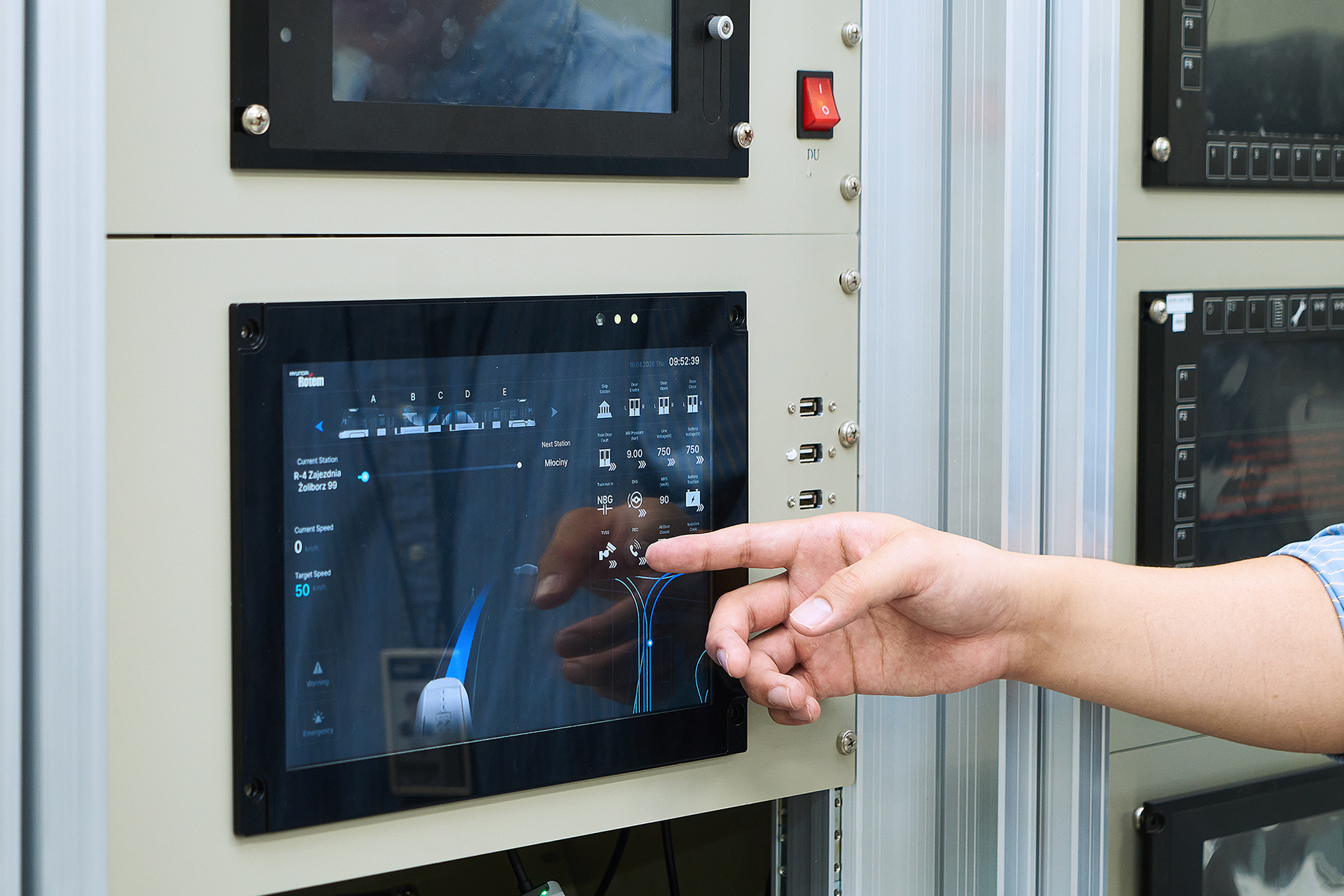
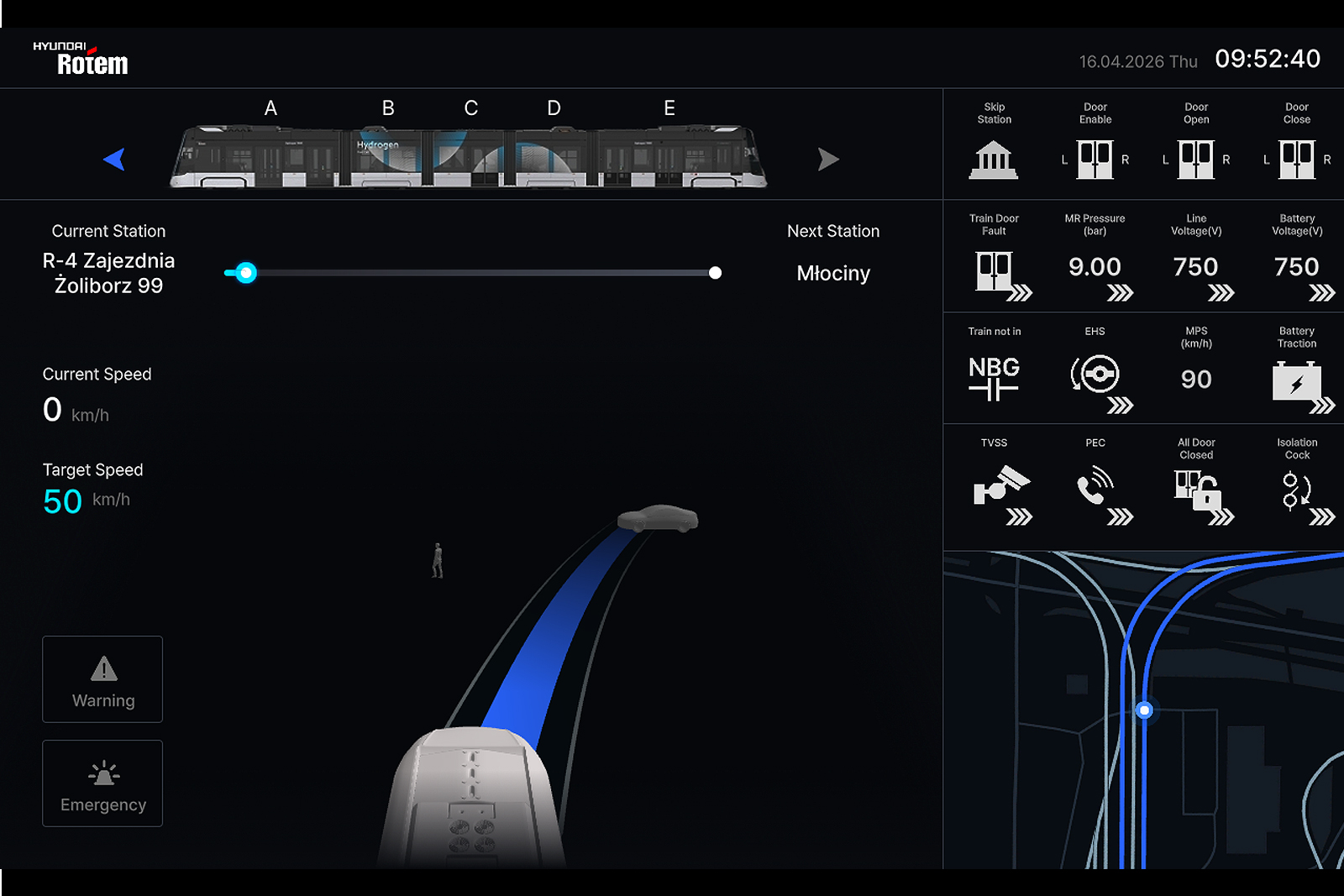
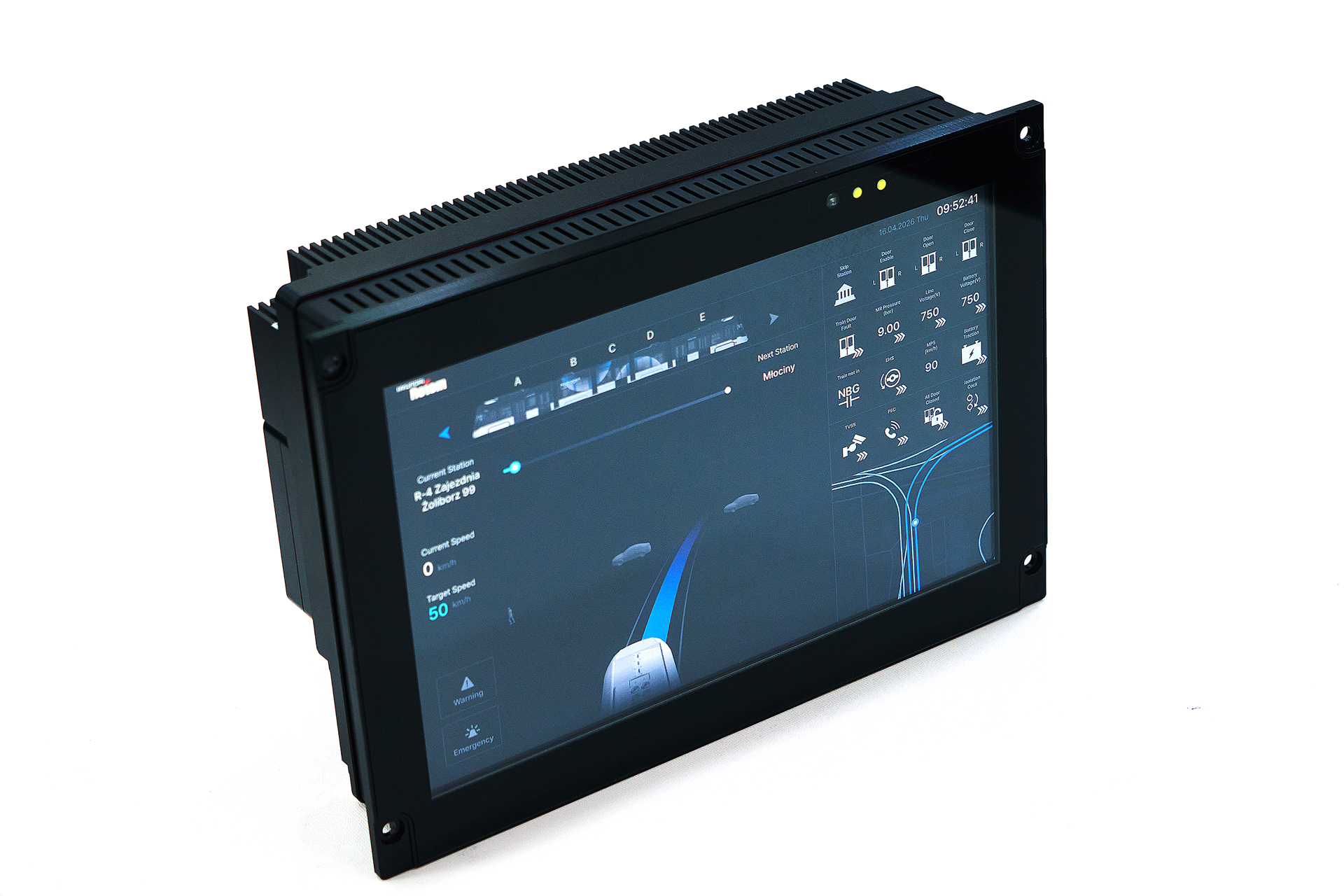
This is precisely why track recognition is so important for rail ADAS. Conventional tracks laid on ballast look different from tram tracks embedded in roads, while tangents, curves, and turnouts all have distinct configurations. A switch that is not correctly aligned can pose a serious derailment risk. The system therefore needs to examine not only obstacles, but also the precise condition of the tracks ahead.
Q. How was data collected from trams in Poland used to develop ADAS?
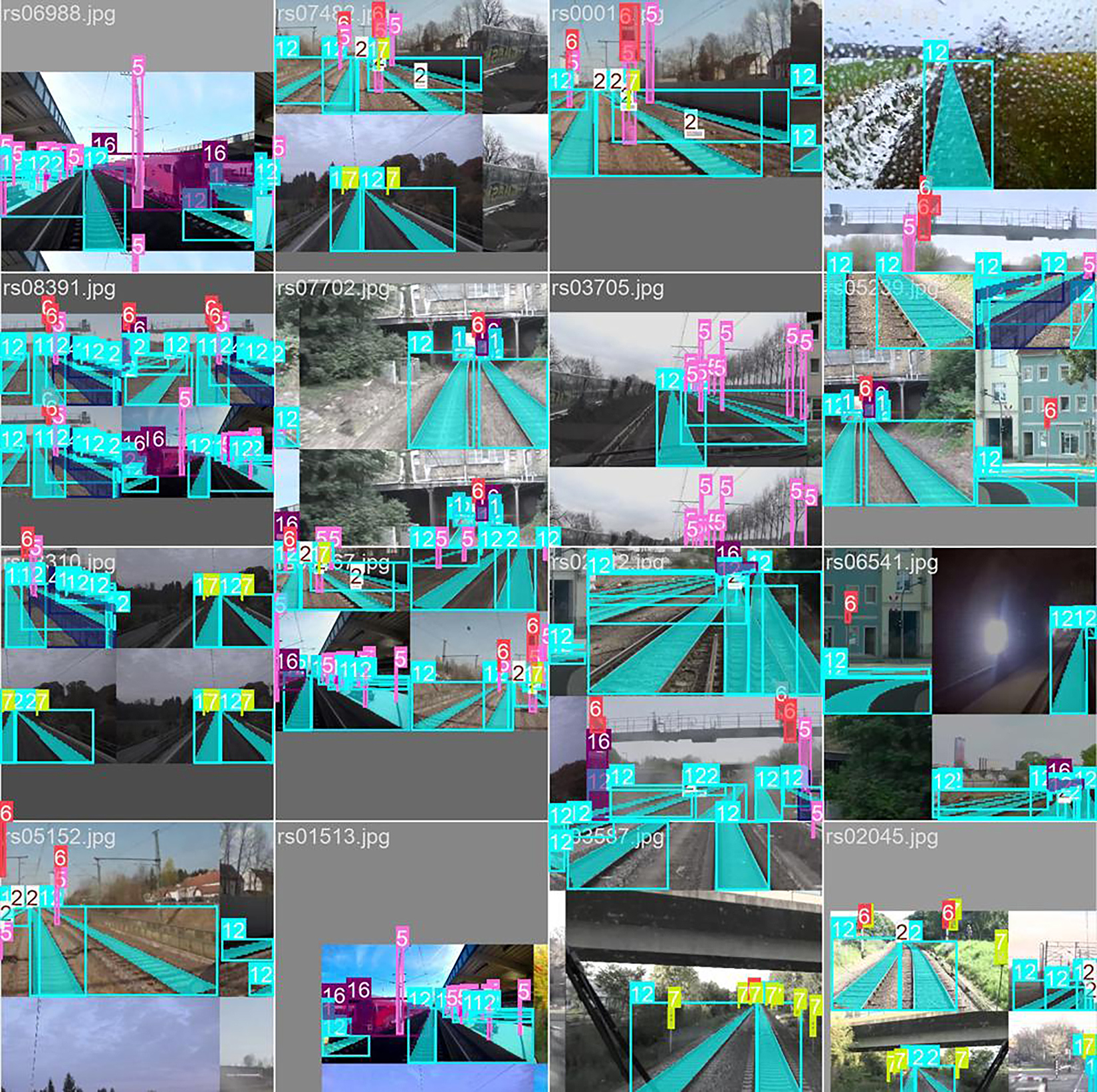
“Since there was not enough tram operating data available in Korea, we installed cameras and LiDAR units on trams in service in Warsaw, Poland. We then used the footage and sensor data we collected to develop algorithms that recognize tracks and identify obstacles.
The driver can see the train’s route ahead and any detected obstacles on the onboard display. If the system identifies a hazard, it issues visual and audible warnings. The development team also uses a separate program to verify that the algorithm is correctly distinguishing tracks from obstacles.”
Q. Did the constantly changing rail environment present any challenges?
“The biggest challenge was the way the track configuration kept changing. Conventional rail tracks can transition into road-embedded tram tracks, and the route can branch in multiple directions. In rain, droplets on the windshield can obstruct the camera’s view, and train vibrations can shake the sensors. We repeatedly checked these issues against real-world data and refined the algorithms accordingly. Since we cannot physically recreate every possible accident scenario for training, we are advancing the technology by testing and validating a range of hazardous situations in virtual environments.”
After beginning research into a driver assistance system for hydrogen fuel cell trams in 2023, Hyundai Rotem developed a series of technologies: monocular-camera-based obstacle distance measurement, AI-based track-area recognition, and camera–LiDAR sensor fusion.
Today, the system first uses LiDAR to detect objects at distances of approximately 80 to 250 meters. Within roughly 80 to 100 meters, it combines camera and LiDAR data to determine an obstacle’s type and location more precisely. Building on these capabilities, Hyundai Rotem is further advancing technologies that predict the risk of an object entering the train’s path and track its movement.
Hyundai Rotem is evolving this technology into domestically developed physical AI. Its physical AI for trains uses cameras and LiDAR to perceive real-world conditions, then translates the AI’s assessment into a physical response, such as issuing a warning or controlling the train. The company is working to achieve the technological maturity and reliability needed to meet local operating conditions and safety requirements in markets including Poland, Egypt, and Taiwan. On that foundation, Hyundai Rotem plans to lead the global rail market and drive innovation in rail safety. For now, ADAS primarily supports drivers by detecting hazards and issuing alerts; control system integration and automatic train control are being introduced progressively.
If ADAS serves as the train’s “eyes,” identifying hazards where they arise, signaling and control systems manage the overall flow of traffic so that multiple trains can move safely. When one train suddenly stops or changes speed, those behind it are affected as well.
As autonomous train technology evolves, how will the role of control systems change? We asked Yeonseo Lee, Senior Research Engineer Researcher on the Urban Rail Signaling Development Team, and Hun Kim, Team Leader of the TCMS Development Team, how autonomous trains and control systems will work together.
INTERVIEW
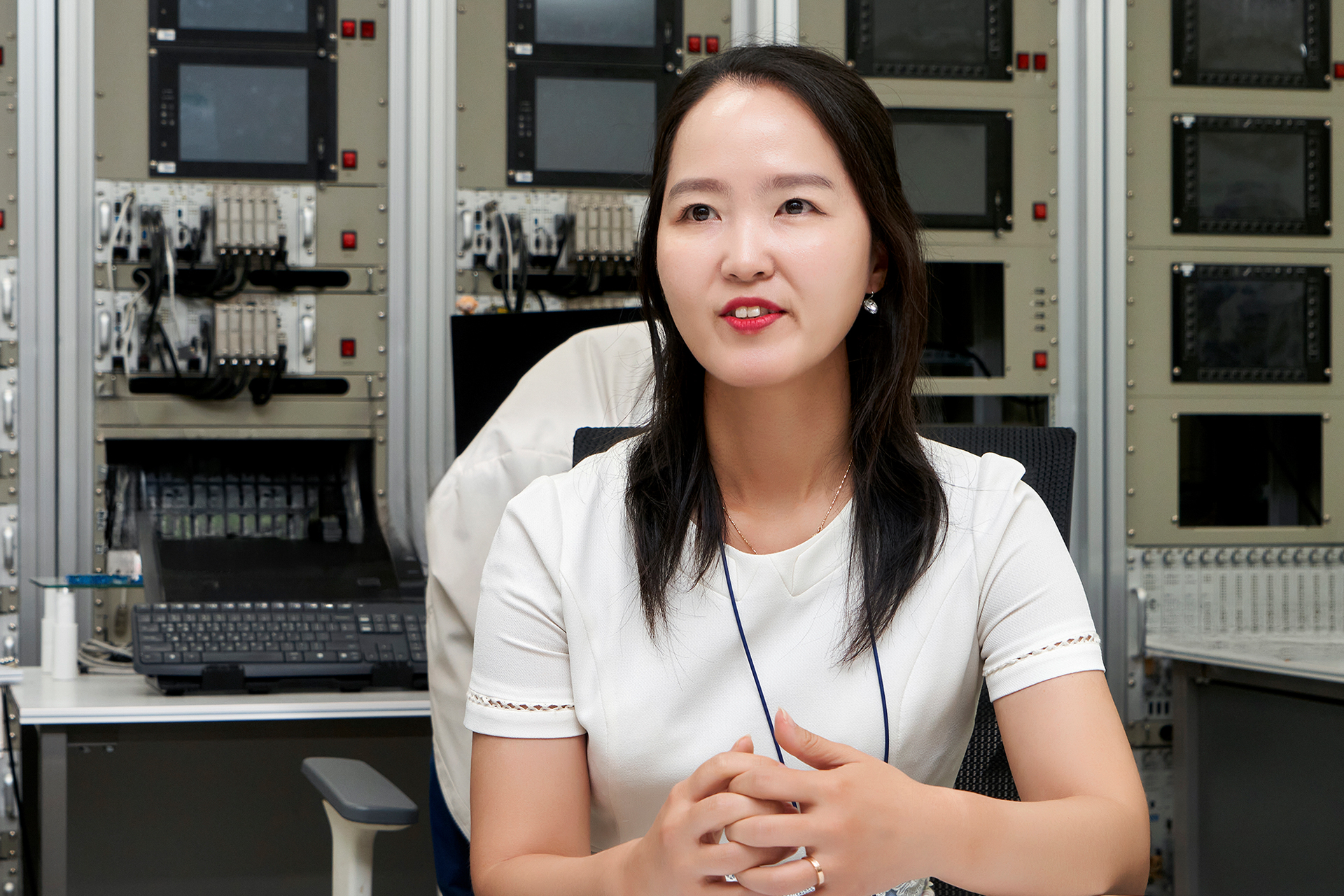
Yeonseo Lee, Senior Research Engineer, Urban Rail Signaling Development Team
Q. As trains become better at making decisions, will the role of rail control systems diminish?
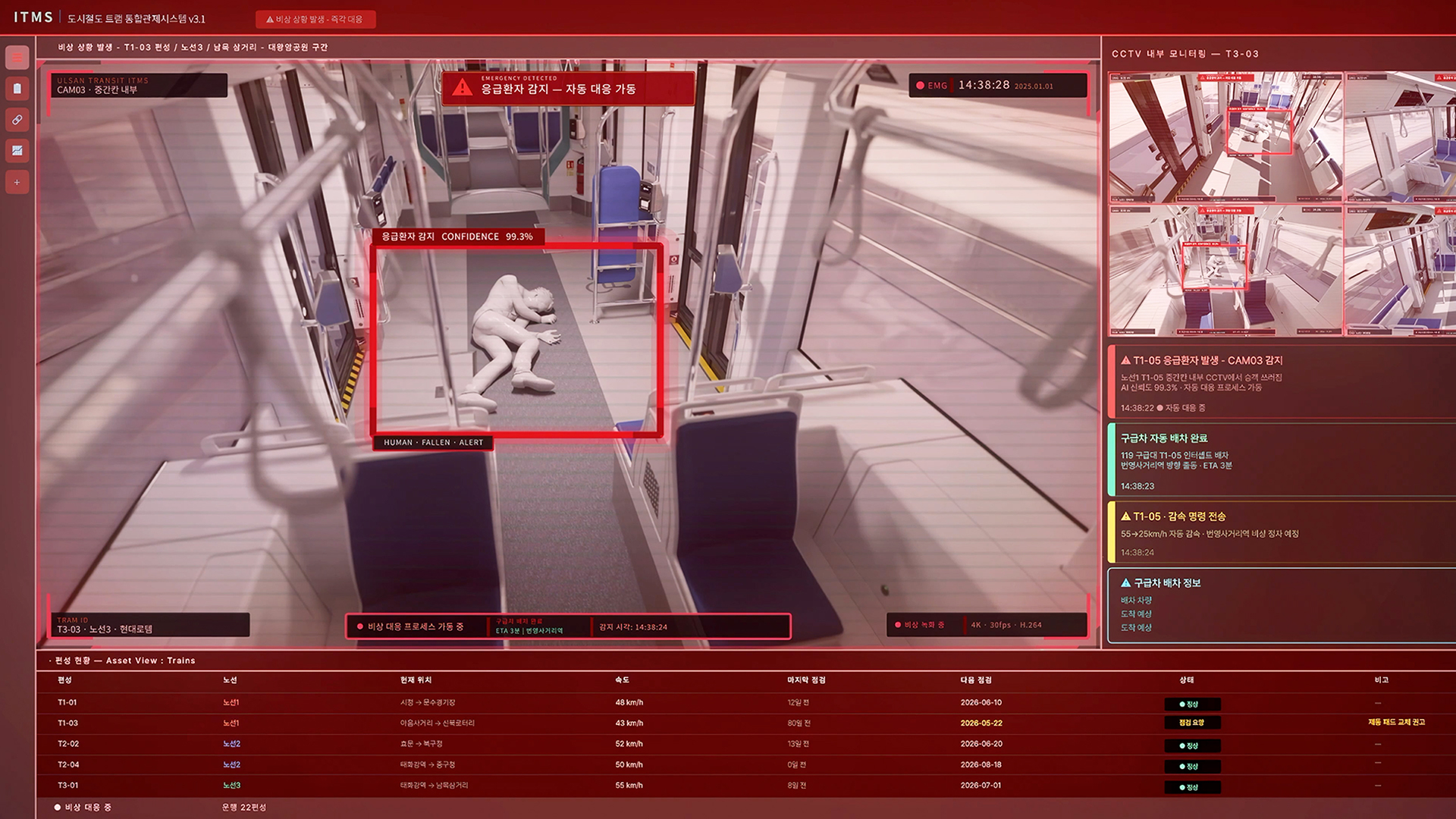
“No. In fact, control will become even more important. As driverless operation expands, the control system must assume responsibilities that were previously handled by drivers. If one train is delayed, it must also make network-wide decisions: readjusting the headways of following trains and, when necessary, adding trains to or removing them from service. The responsibilities of the control center will therefore expand.
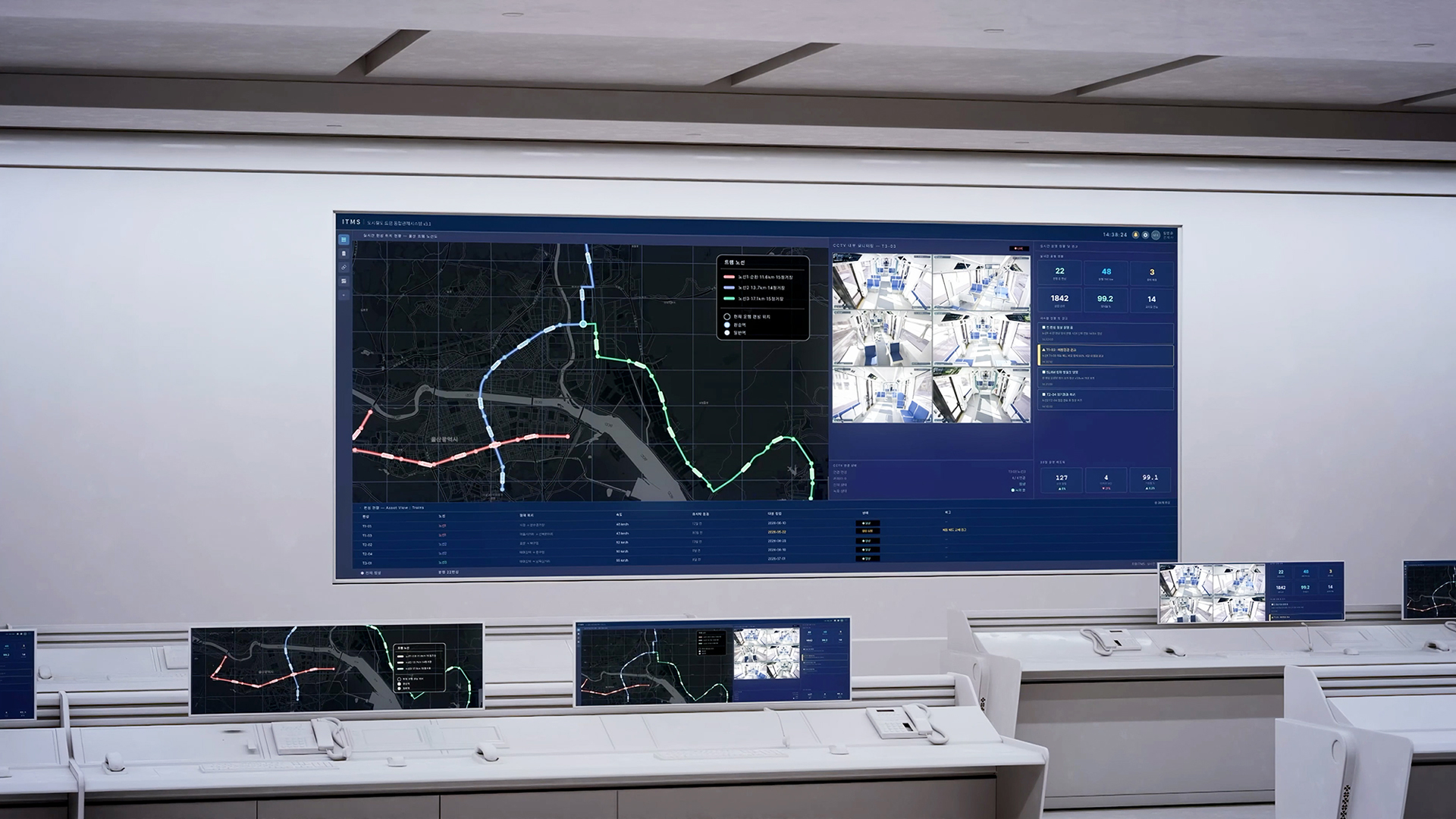
That is why we are developing the existing control architecture—which has primarily focused on signaling and train-position control—to incorporate and connect video data from inside and outside the train. If an abnormal situation is predicted or detected onboard, the control center is alerted immediately. A controller can then review the relevant video and data together before issuing the final command. We are also introducing AI agents that can begin analyzing a situation as soon as an anomaly is detected and recommend a response, helping controllers make decisions and take action more quickly. In this way, the control systems are evolving beyond basic operational management into intelligent systems that use AI to anticipate situations and support rapid decisions and precise control.”
Q. How will autonomous trains and control systems work together in the future?
“A train will be the first to detect a hazard on site while the control center will determine how that information affects other trains and the entire route. If a problem arises ahead of a train, it is not enough to stop only that train. The speeds and headways of nearby trains must also be adjusted. The more closely onboard perception and control-center decision-making are connected, the faster and more systematic the response can be.”
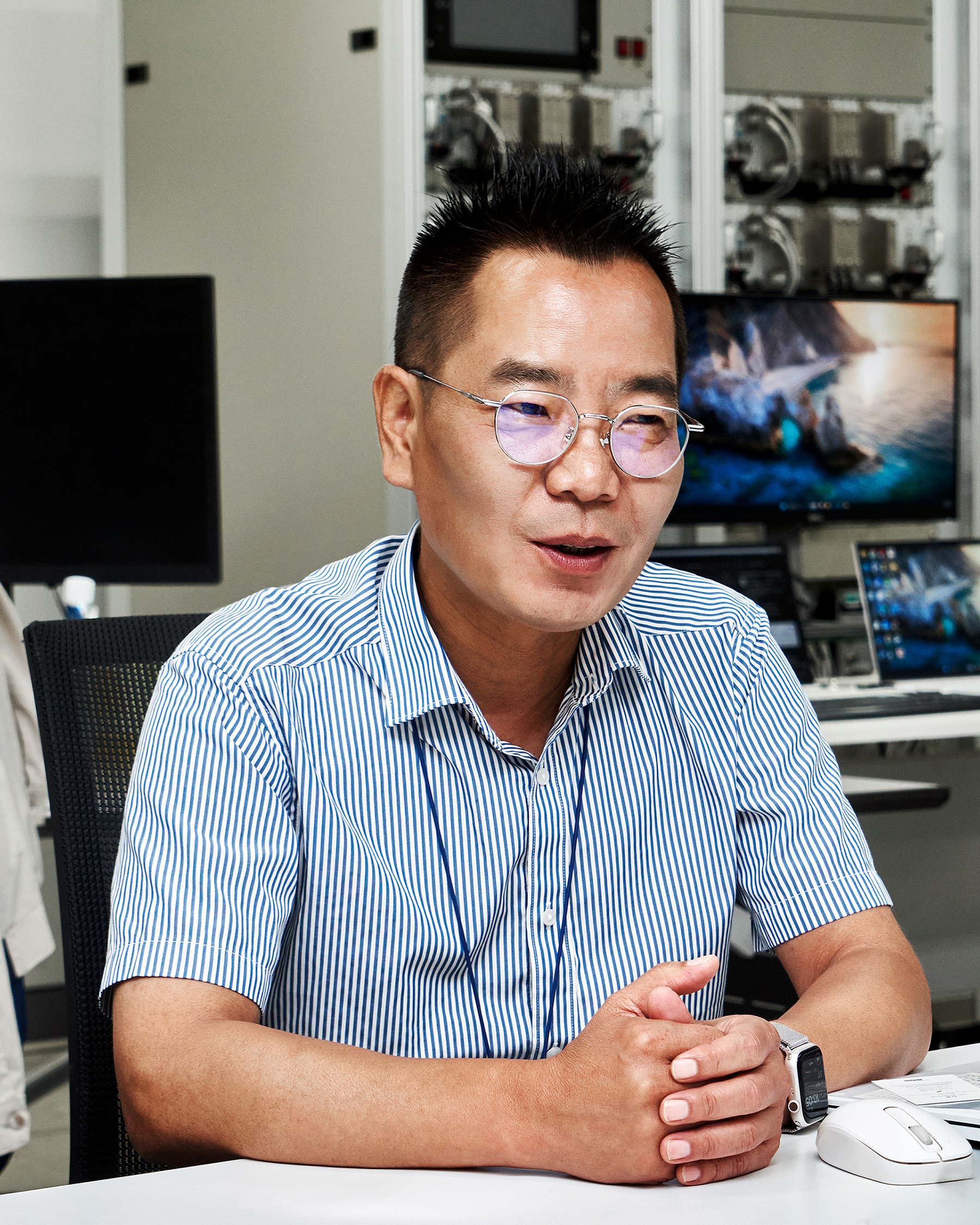
Hun Kim, Team Leader of the TCMS Development Team, likewise emphasizes that ADAS and control are not standalone technologies, but integral parts of a system linking local perception with network-wide control.
“A railway is a system in which rolling stock, signaling, and control all work together. ADAS checks the conditions ahead that a person might miss, signaling and control coordinate rail operations across the line, and the TCMS controls the train’s actual movement. Connecting these technologies is what will enable us to reach higher levels of automation.”
Accurately perceiving the train’s surroundings is essential—but so is completing a journey on time without wasting energy. Following ADAS, which supports safer operations, Hyundai Rotem developed IEOS to optimize train movement for greater efficiency.
Amid geopolitical uncertainty and fluctuating energy prices, reliably managing the power demand and costs of rail operations has become increasingly important. Hyundai Rotem developed IEOS to proactively support energy-saving initiatives by the Korean government and Korea Railroad Corporation (KORAIL), with the aim of improving both operational quality and energy efficiency.
Every driver operates a train a little differently. Two trains may arrive at the same station at the same time, but one driver might accelerate rapidly and brake frequently while the other accelerates only as much as necessary and then coasts. Their energy consumption will inevitably differ. Using track and vehicle data, IEOS calculates the most efficient speed profile and helps the train follow it.
How, then, does IEOS cut energy use without compromising punctuality? Yunseok Ji, a researcher who participated in its development, explains how the system works and what it achieved in demonstration testing.
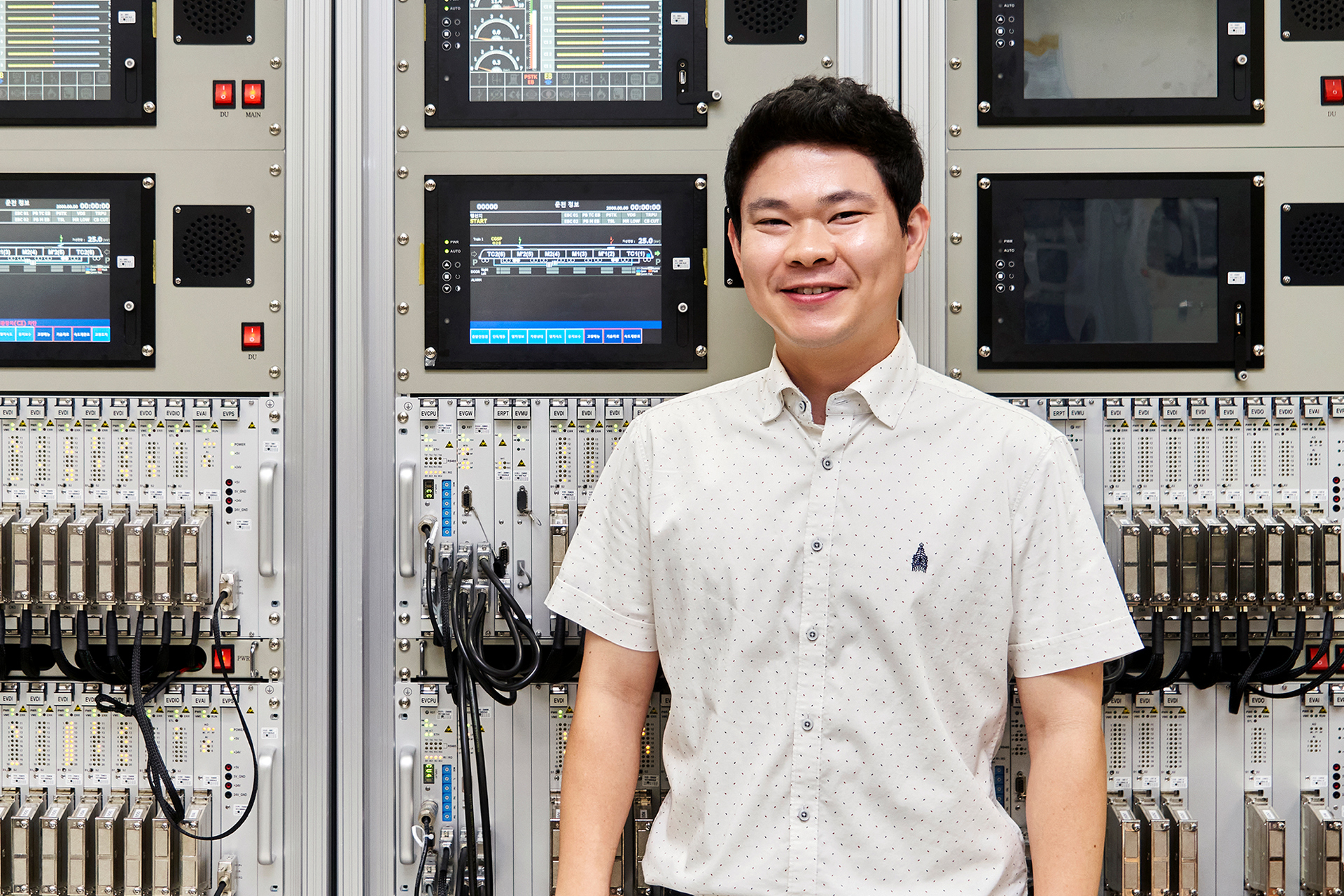
INTERVIEW
Yunseok Ji, Research Engineer, TCMS Development Team
Q. How does IEOS differ from a technology that simply regulates train speeds?
“Trains have to keep the schedules promised to passengers, so simply running more slowly is not an option. Nor is there any reason to run faster than necessary just to arrive early. The key is to arrive on time while minimizing unnecessary acceleration and braking. Once the train reaches its target speed, it can coast, traveling under its own momentum with traction power cut off. IEOS calculates where to accelerate, when to begin coasting, and where to start decelerating.”
Q. How does IEOS determine the optimal driving profile and target speeds?
“We model information such as the train’s weight and performance, track gradients, curves, and speed limits for each section in a virtual environment. We compare countless speed profiles that meet the timetable and identify the one that consumes the least energy. The resulting target speeds are sent to the TCMS, which controls the train so that it follows them without requiring the driver to make continuous adjustments to the traction and braking controls. During actual operation, the system also factors in speed restrictions received from the signaling equipment.”
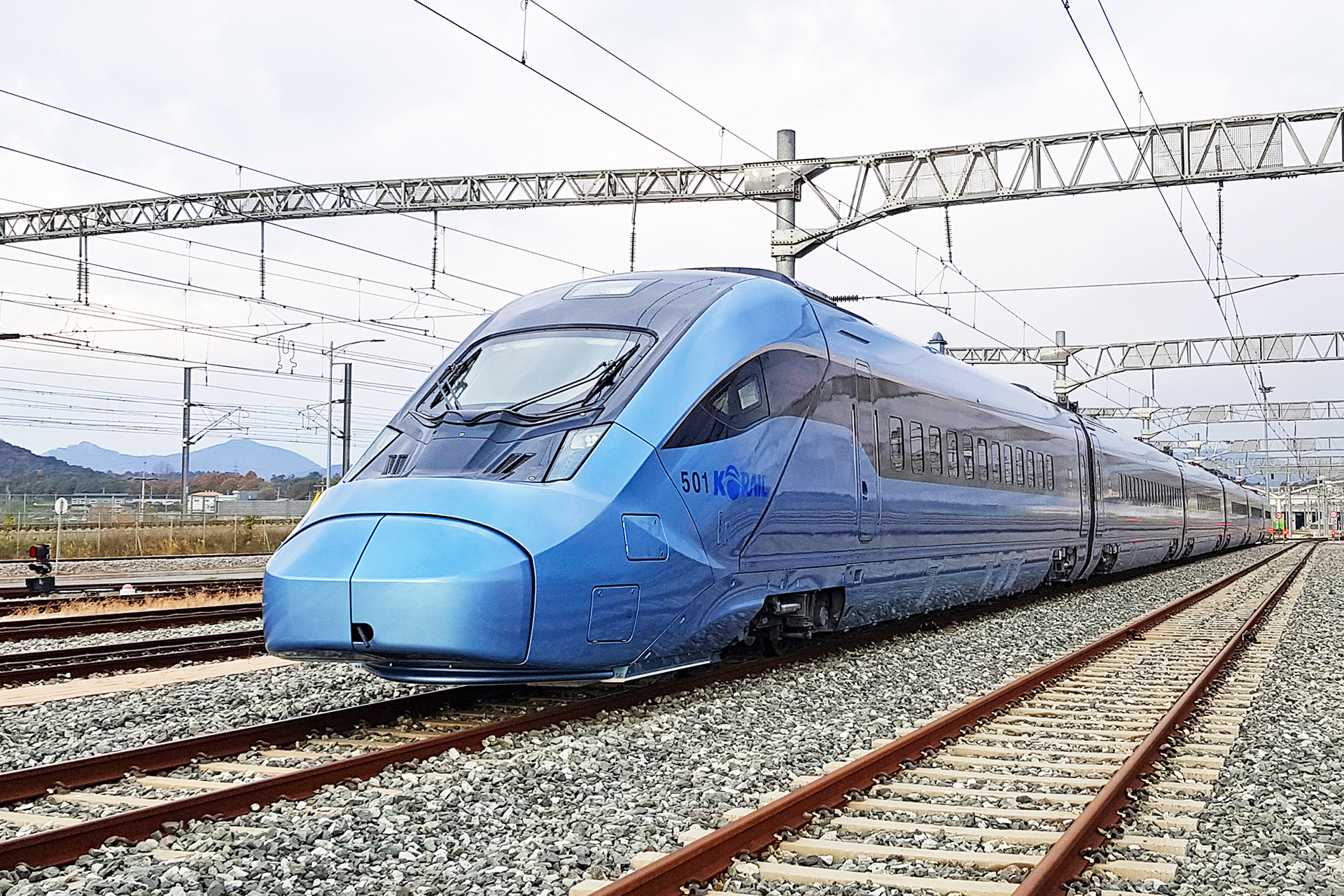
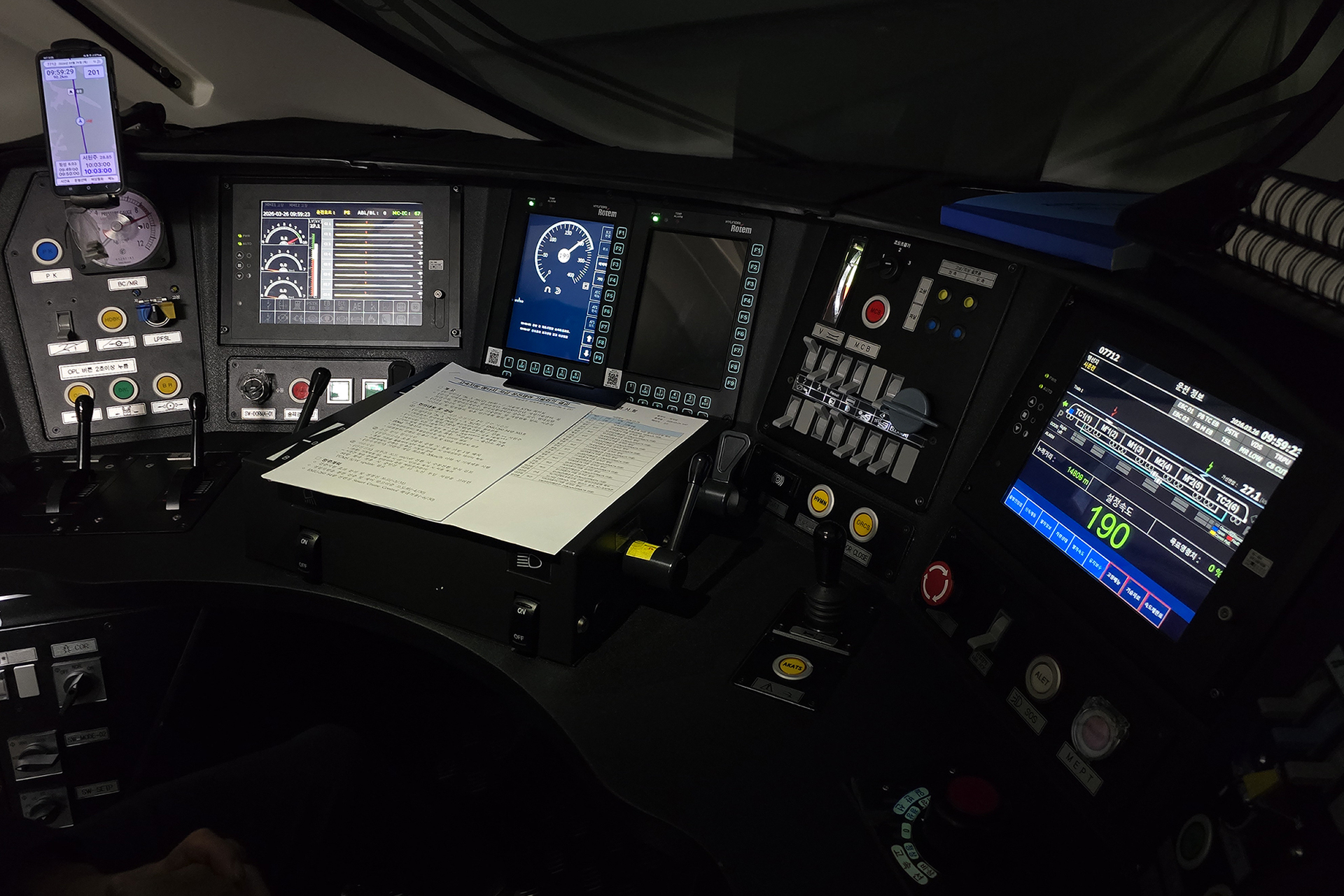
Hyundai Rotem conducted thousands of simulated runs using a digital twin that reproduces the characteristics of rolling stock in a virtual environment, then verified the results on an actual train. Another notable feature of IEOS is that it can improve the way existing trains operate through software upgrades without adding new propulsion equipment or sensors.
Since high-speed trains are heavy, three modes must be carefully coordinated: traction, which uses power to move the train; coasting, which carries it forward under its own momentum; and regenerative braking, which recovers energy during deceleration. IEOS optimizes and controls these three modes according to track conditions.
Q. How much energy did IEOS save in the KTX-Eum demonstration test, and where will it be used next?
“We tested the system on a KTX-Eum train on the Gangneung Line in collaboration with KORAIL and Korea National University of Transportation. Compared with conventional operations, energy use fell by 12.2% from Seowonju to Gangneung and by 10.9% in the opposite direction, for a round-trip reduction of 11.6%.
Applying a consistent driving profile can also reduce variations arising from a driver’s level of experience or physical condition. Drivers can focus more on monitoring the tracks ahead and the condition of the train instead of repeatedly adjusting its speed. This also helps provide passengers with a more consistent ride. Based on the results from the Gangneung Line, we plan to apply the system to next-generation high-speed trains and expand it to a wider range of routes.”
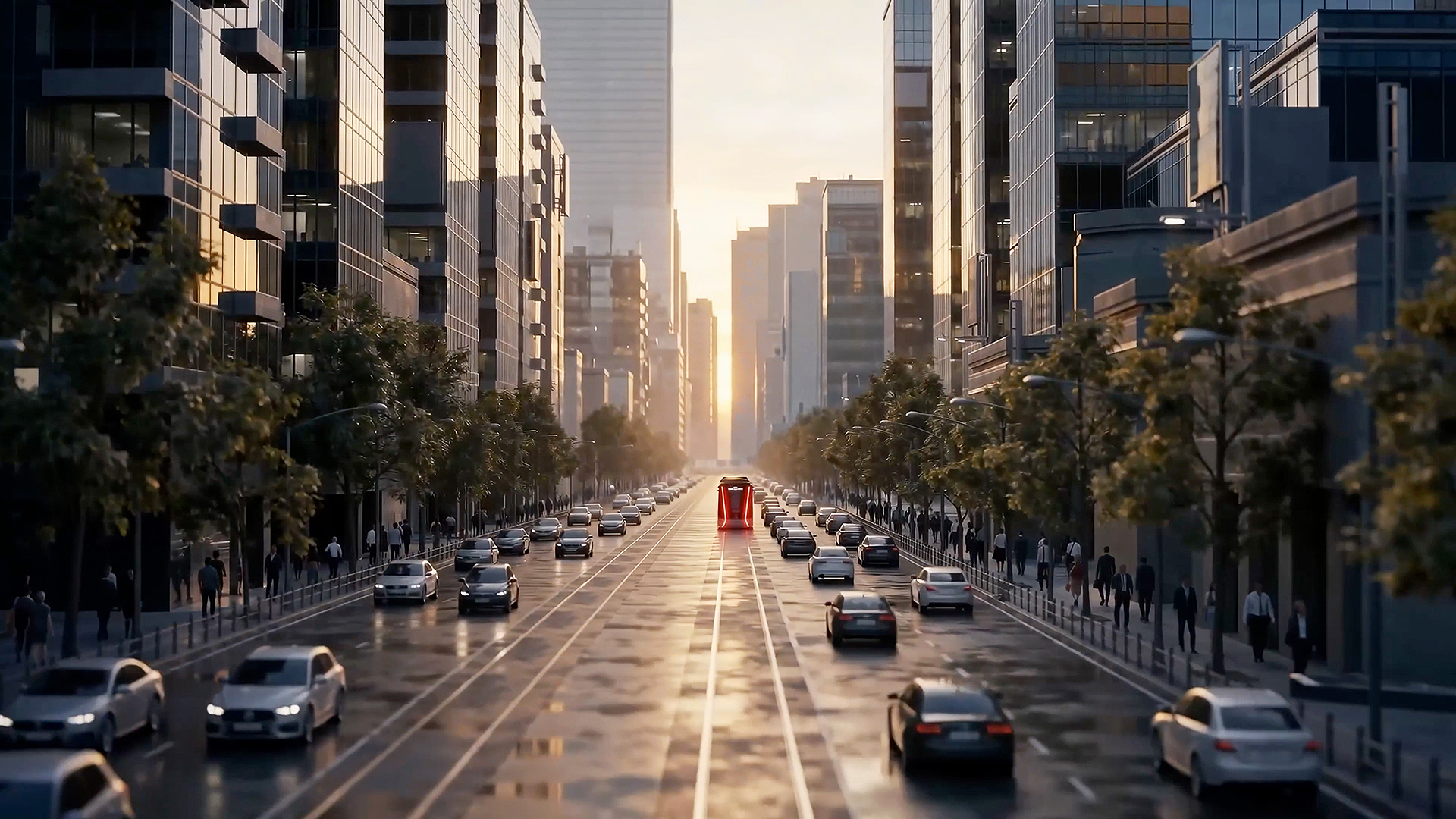
Once built, rolling stock remains in service for decades. Over that time, track environments and operating conditions can change, and more efficient control methods can emerge. In the future, building high-quality hardware will remain essential, but so will the ability to use operational data to improve software.
Railway software, of course, cannot be updated as readily as a smartphone app. As it is directly tied to passenger safety, any update must first undergo extensive testing and certification, along with compatibility reviews that cover existing rolling stock and signaling systems. Testing new functions in a virtual environment and refining algorithms with real-world operational data can make this validation process both more rigorous and efficient.
ADAS helps a train accurately perceive the tracks and its surroundings. The control systems use that information to manage safety across the line. IEOS finds ways for the train to cover the same route using less energy while staying on schedule.
Hyundai Rotem’s vision for the future of rail is not simply a driverless train or one that travels faster. It is a railway in which rolling stock, tracks, signaling, control systems, and operational data are seamlessly connected through physical AI and software. Trains may still follow fixed paths, but they are beginning to understand those paths more precisely—and to move along them in a way best suited to each situation.
Photo: Sungyul Ki