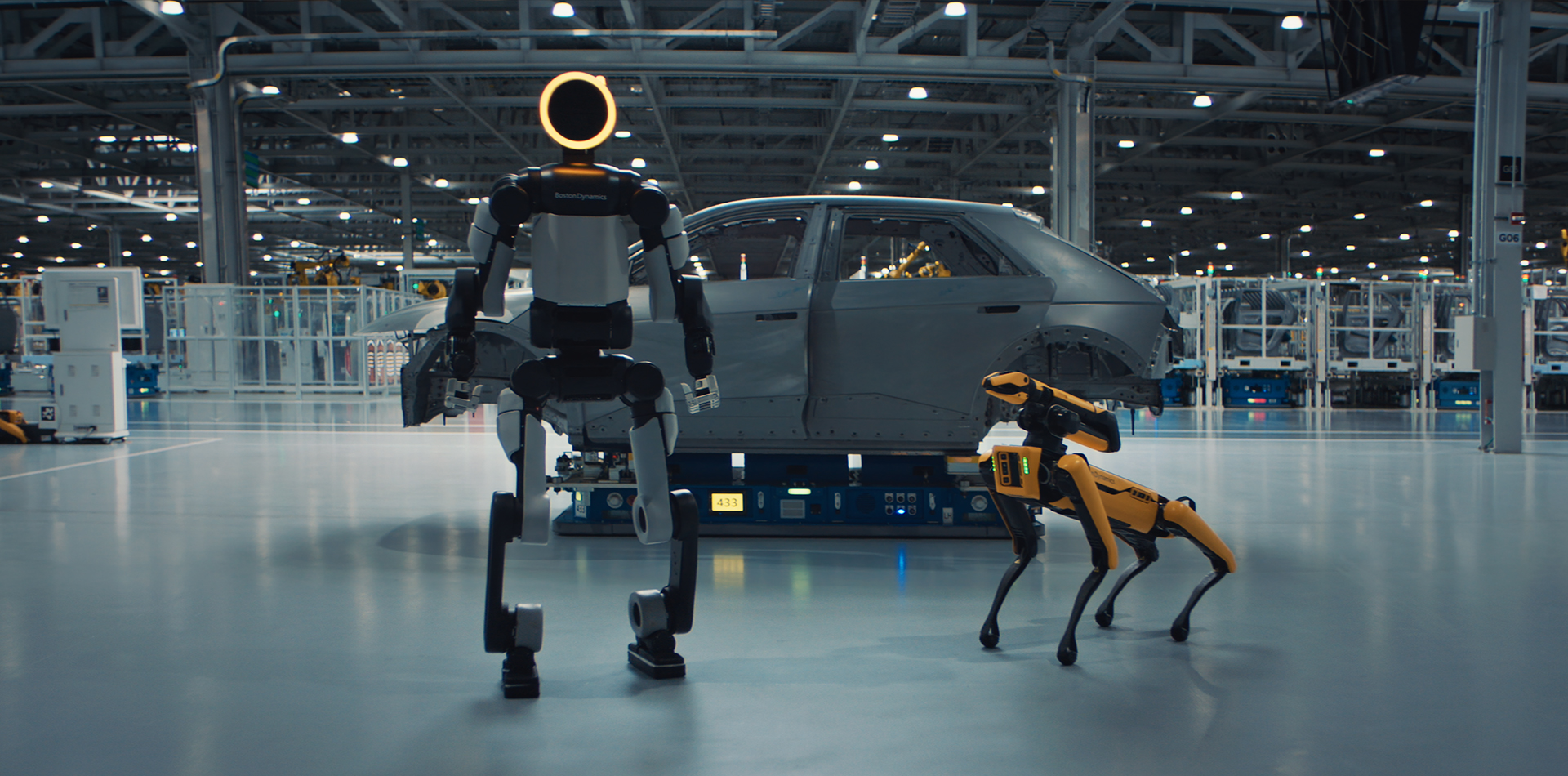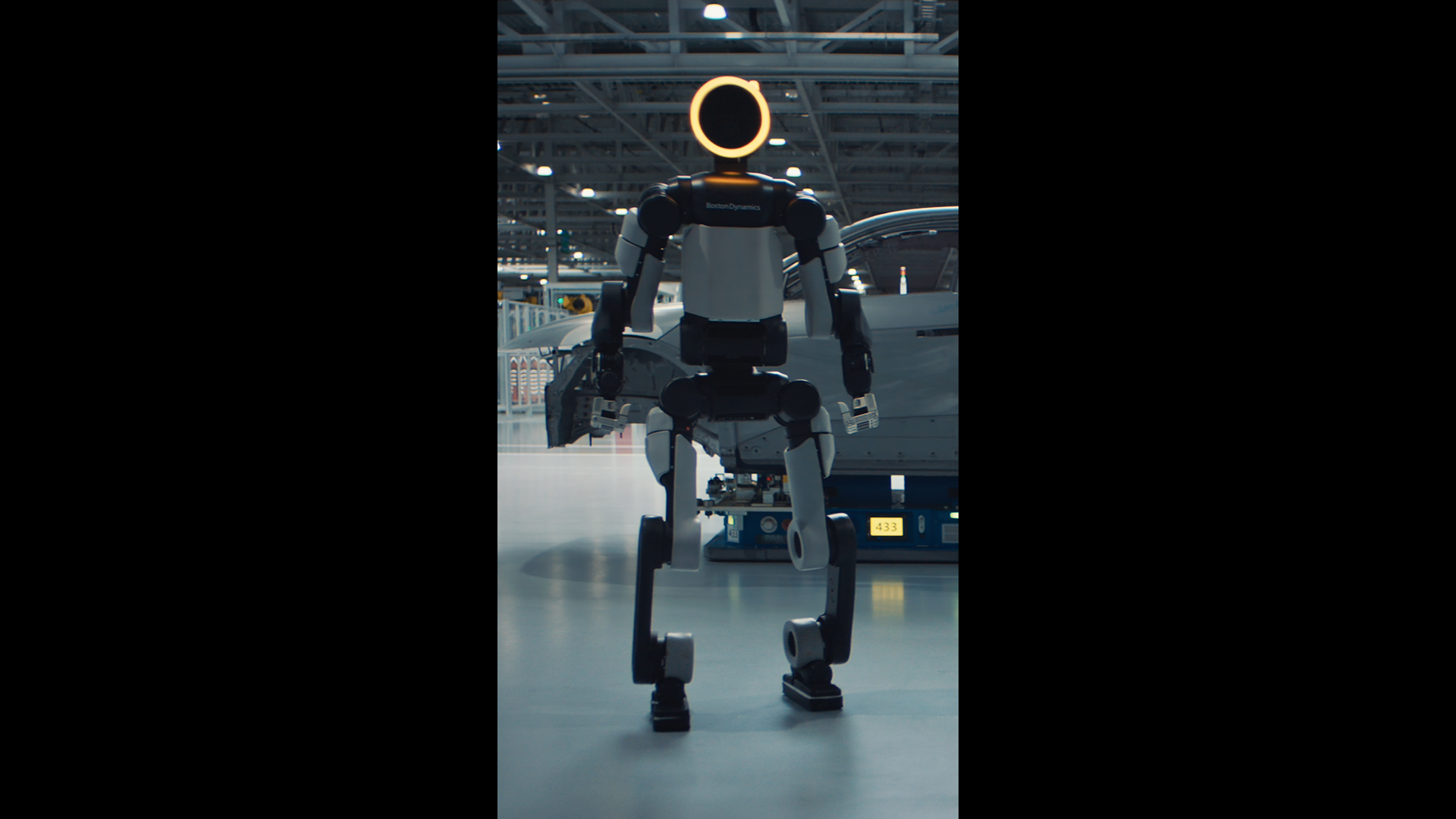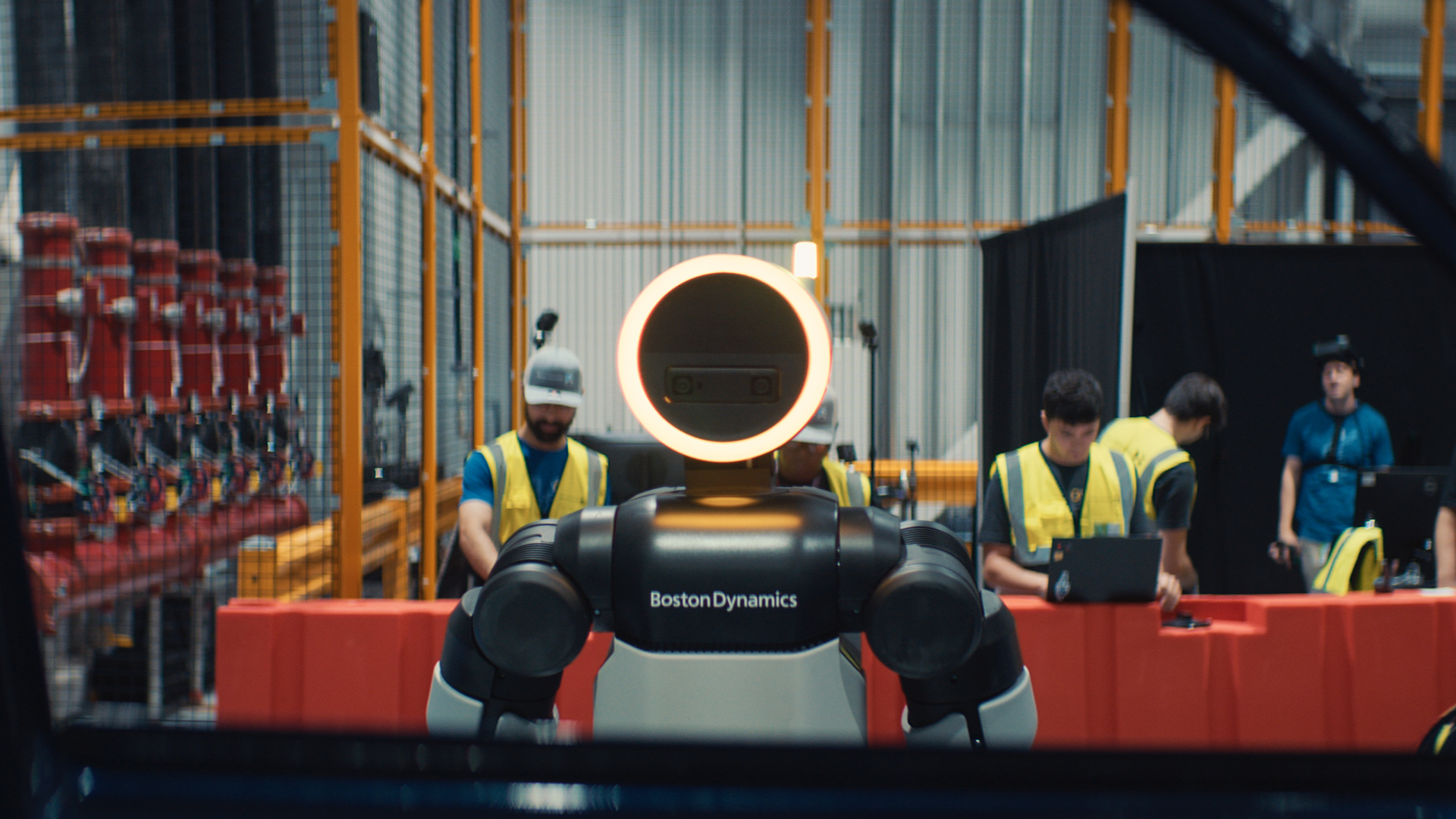
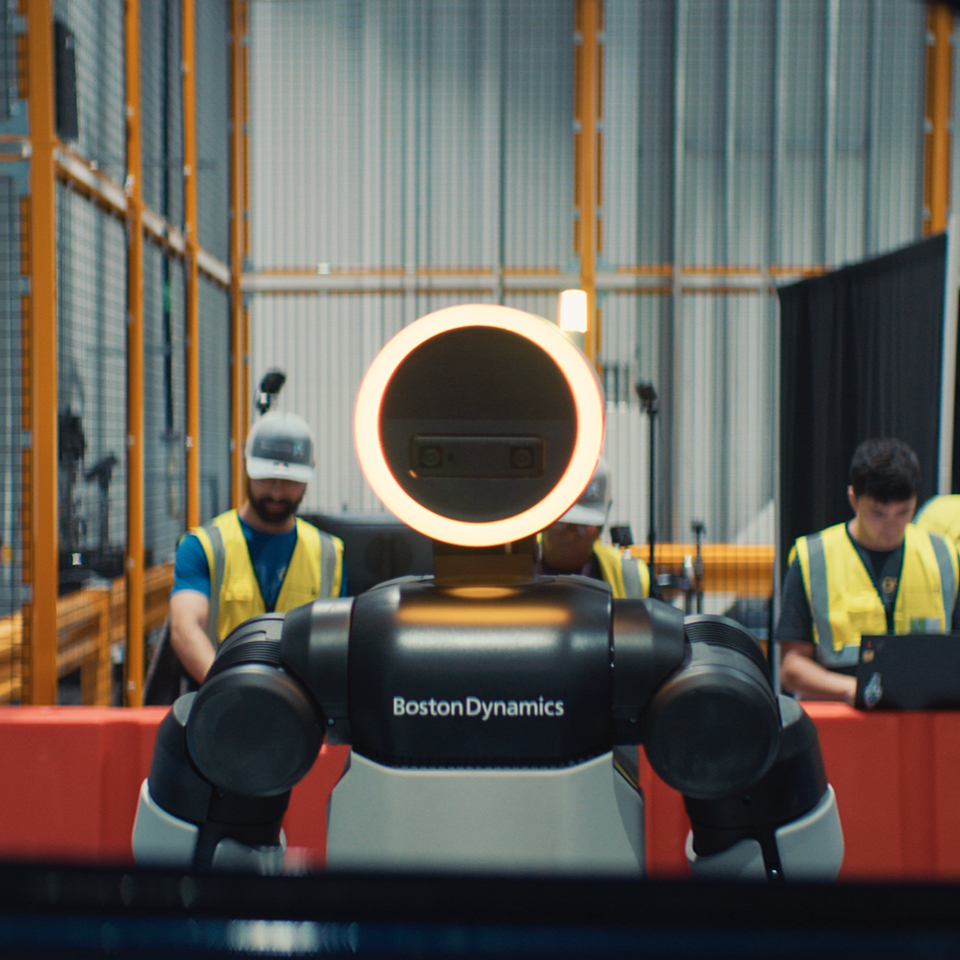
At CES 2026 in Las Vegas this past January, Hyundai Motor Group laid out its vision with the theme “Partnering Human Progress.” Across the Group, capabilities are being combined to build an AI Robotics ecosystem and pursue human-centered robotics applications for everyday life. The event also marked the world premiere of Boston Dynamics's Atlas product model, envisioned as a cornerstone of the future ecosystem.
The presentation outlined a roadmap for phasing Atlas into Hyundai Motor and Kia’s global manufacturing operations, highlighting RMAC, a facility built for the continuous training and validation of robots. In effect, it was a blueprint for leading the “robotics race” toward humanoid commercialization.
To show how this vision is actually being carried out, and how Boston Dynamics’s technical progress is taking shape on the ground, Hyundai Motor Group and Boston Dynamics partnered with Bloomberg to produce this video around the opening of RMAC. It includes the first public footage of Atlas training at the RMAC site.
The video highlights Atlas’s journey from Hyundai Motor Group’s AI Robotics vision unveiled at CES 2026, through RMAC and the foundational validation stages that precede real-world deployment, and ultimately to the future of human-robot coexistence envisioned by the Group.
We spoke with the people behind the content: Manager Yujeong Lee of the HMG Brand Planning Team, Senior Manager Dahoon Chung and Manager Yeongin Cho of the Brand Communications Team, and Boston Dynamics.
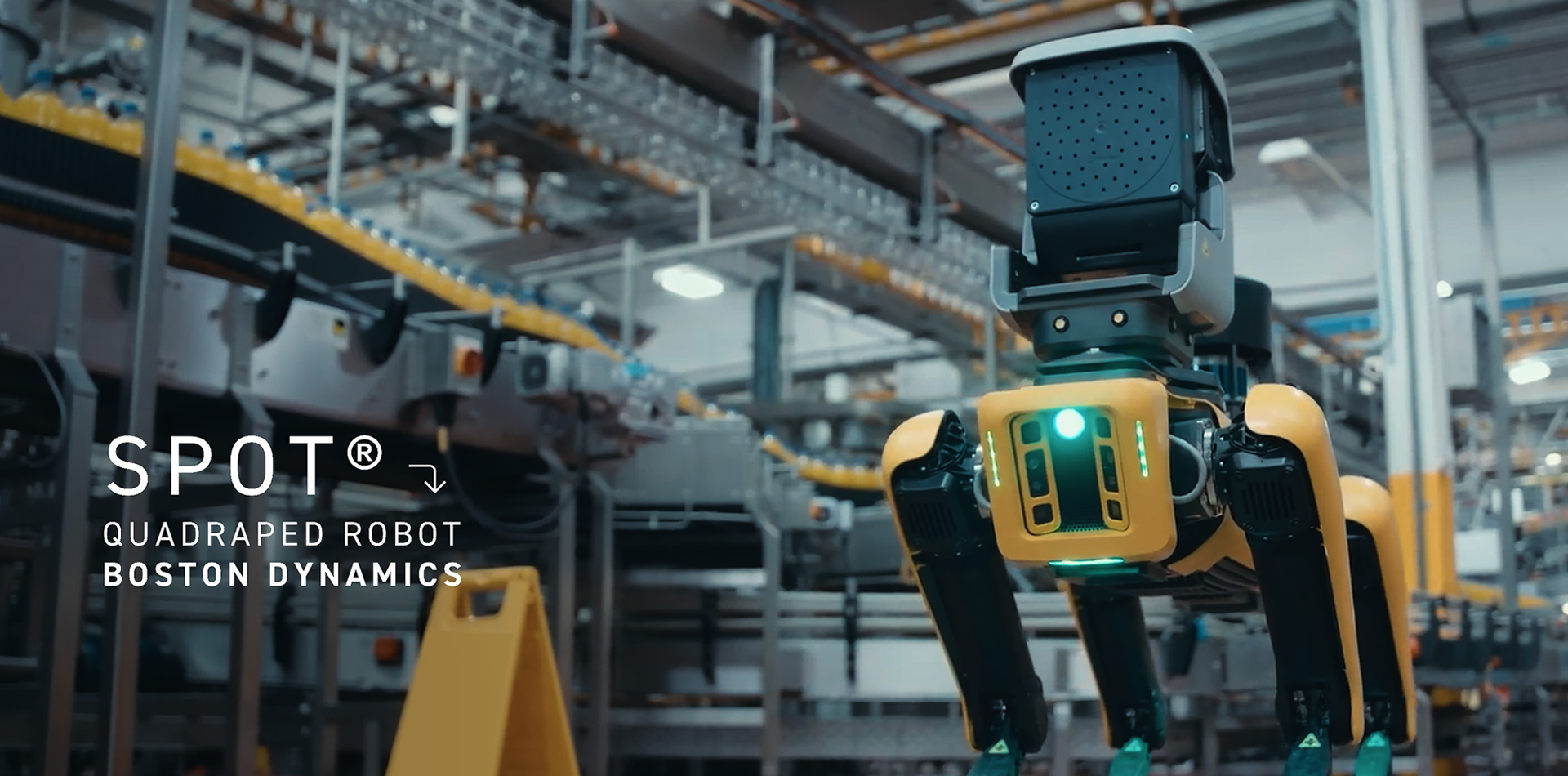
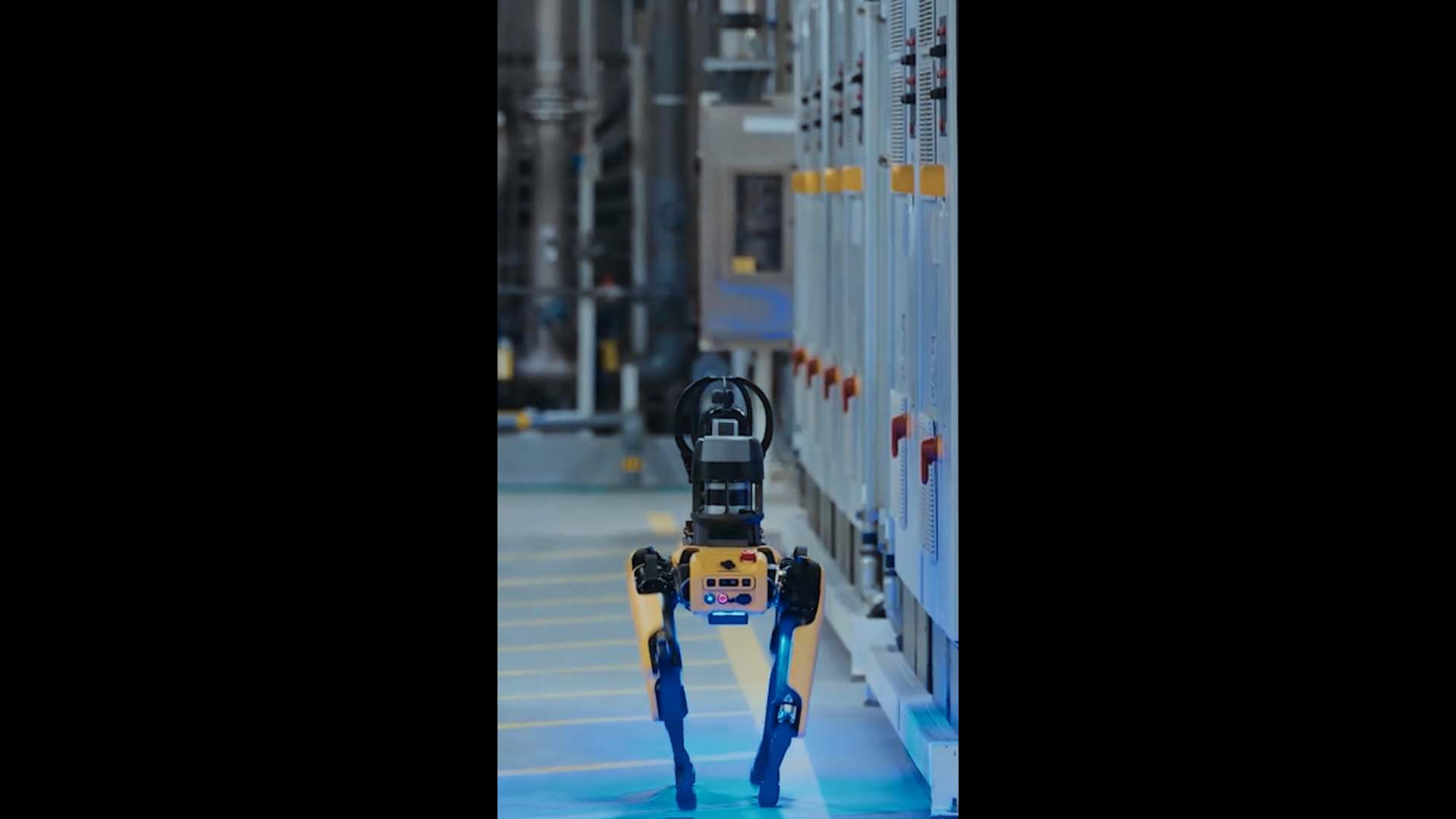
For more than 30 years, Boston Dynamics has worked at the forefront of robotics, building up commercialization know-how through its quadruped robot Spot and logistics robot Stretch. That accumulated experience is now an important asset for validating the real-world industrial potential of humanoid robots and laying the groundwork for their future commercialization. Spot is already well represented in the market, with more than 500 clients in 46 countries, operating across a wide range of industrial settings. Building on this commercialization experience, Boston Dynamics has set an important target: reducing a robot’s return on investment period to within two years.
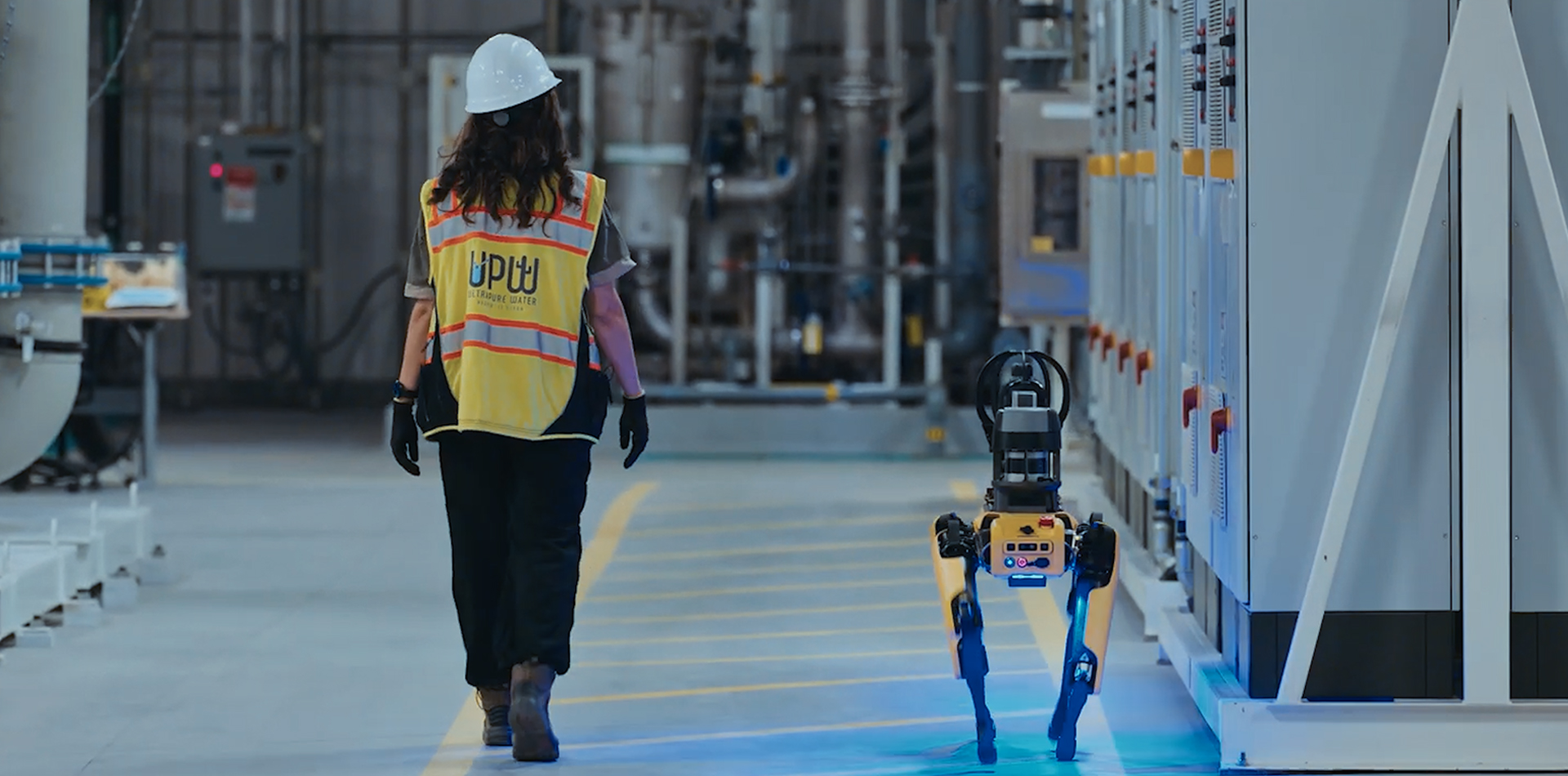
According to Boston Dynamics, “Atlas is the direct result of the technology, product experience, and field-operation know-how we’ve validated through Spot and Stretch. We’re now building on that foundation to move into a stage of validating commercial viability.” The company added that its core strength “isn’t just developing robots in a lab — it’s the commercialization capability of building the surrounding environment needed to deploy robots at scale in customer settings.”
This kind of commercialization experience matters because growth in the humanoid market is now picking up in earnest. Barclays Research, the research arm of the global investment bank Barclays, projects that the humanoid robot market could reach roughly USD 200 billion by 2035. Boston Dynamics is currently advancing Atlas’s training at RMAC as it works to lead this fast-growing market with an eye toward eventual deployment in manufacturing processes.
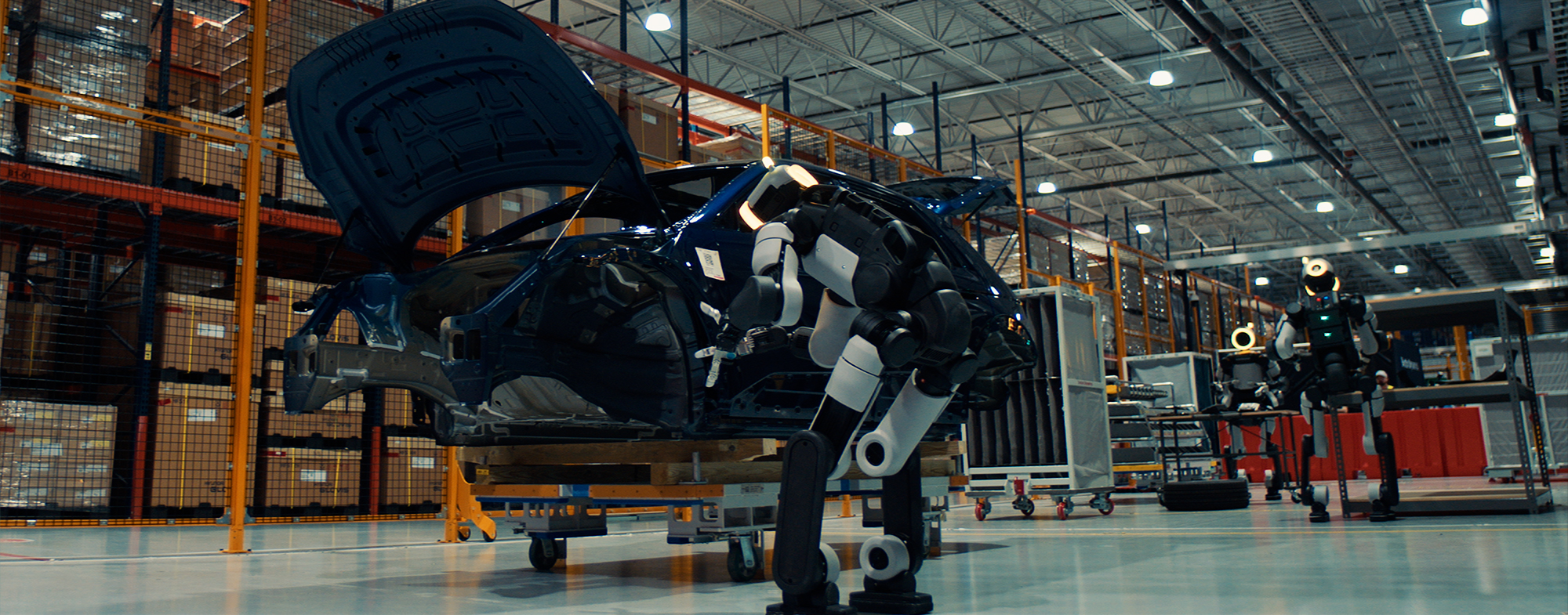
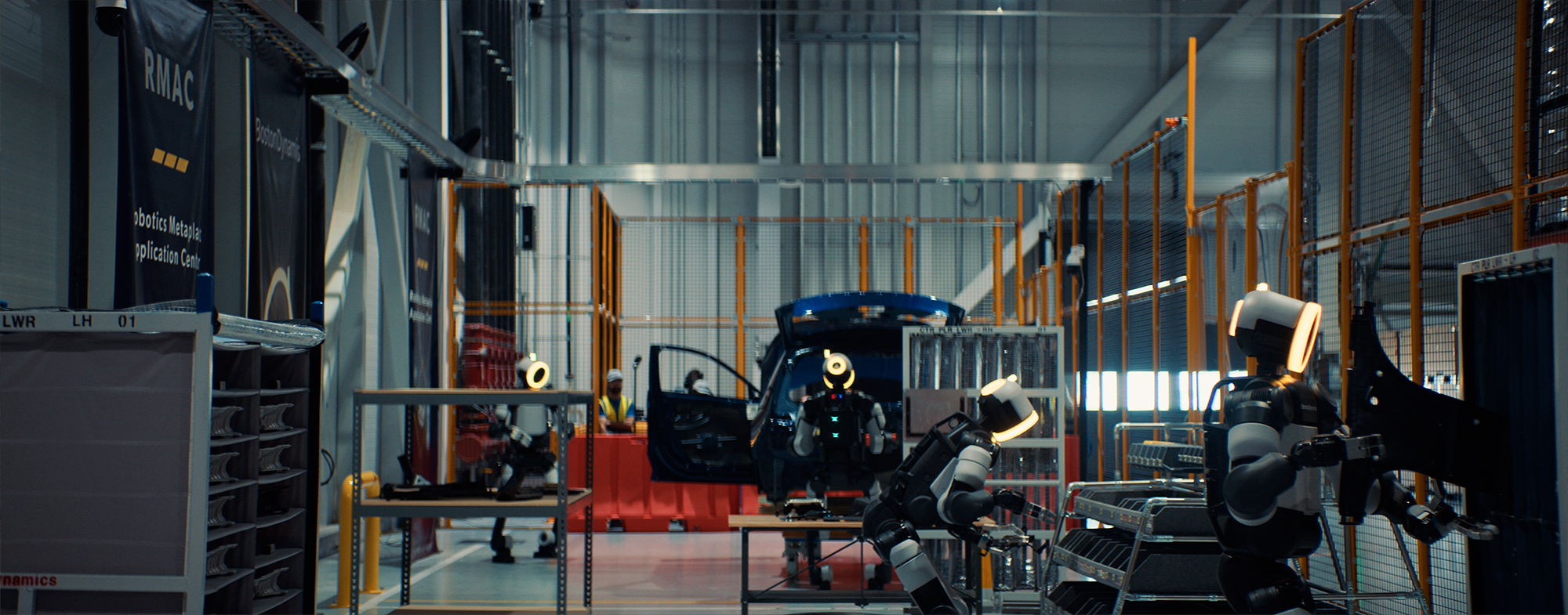
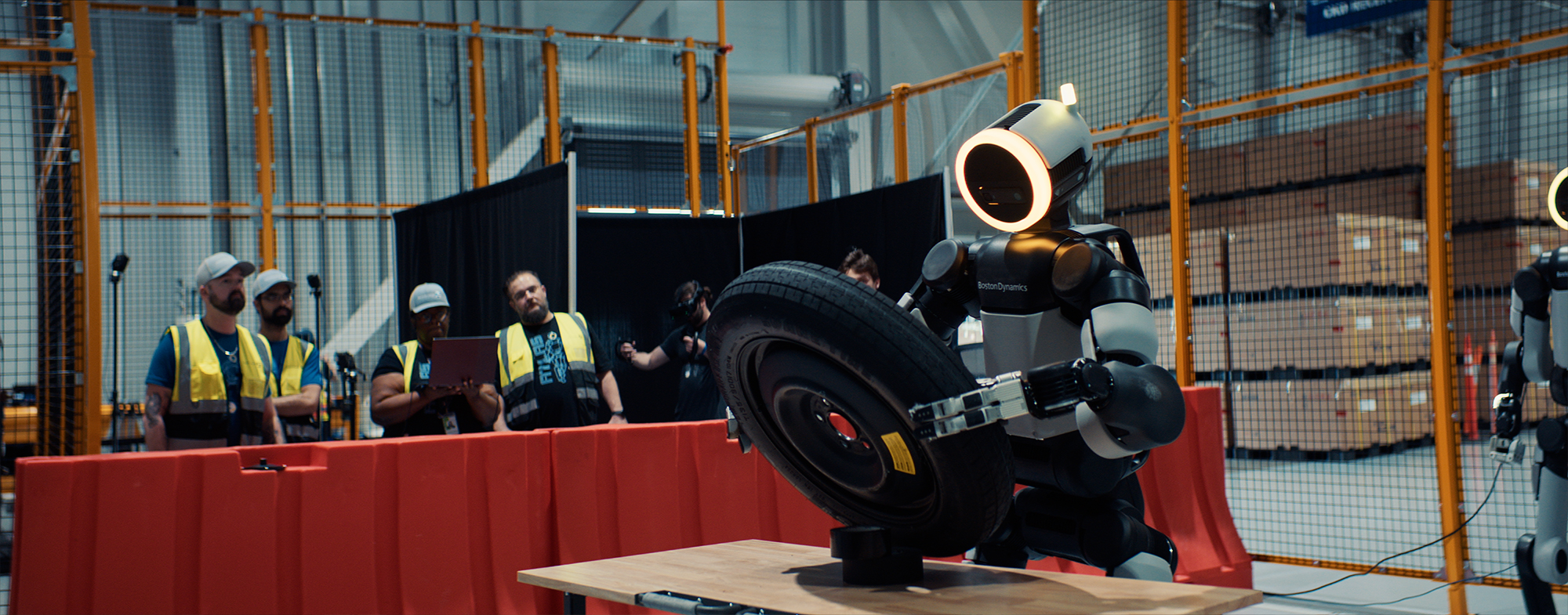
For a humanoid robot to be deployed in an actual manufacturing process, it needs a level of validation that goes well beyond the lab. RMAC is the facility responsible for that work — a research and validation site located within Hyundai Motor Group Metaplant America (HMGMA) in Bryan County, Georgia.
Boston Dynamics explains the difference between the earlier Atlas Lab and RMAC this way: “The original lab was where we developed technology and validated individual functions. RMAC is where we collect data under conditions similar to an actual manufacturing environment and continuously train and refine the AI model. You could call it a ‘robot training ground’ that tests real-world readiness before a robot goes onto the production line.”
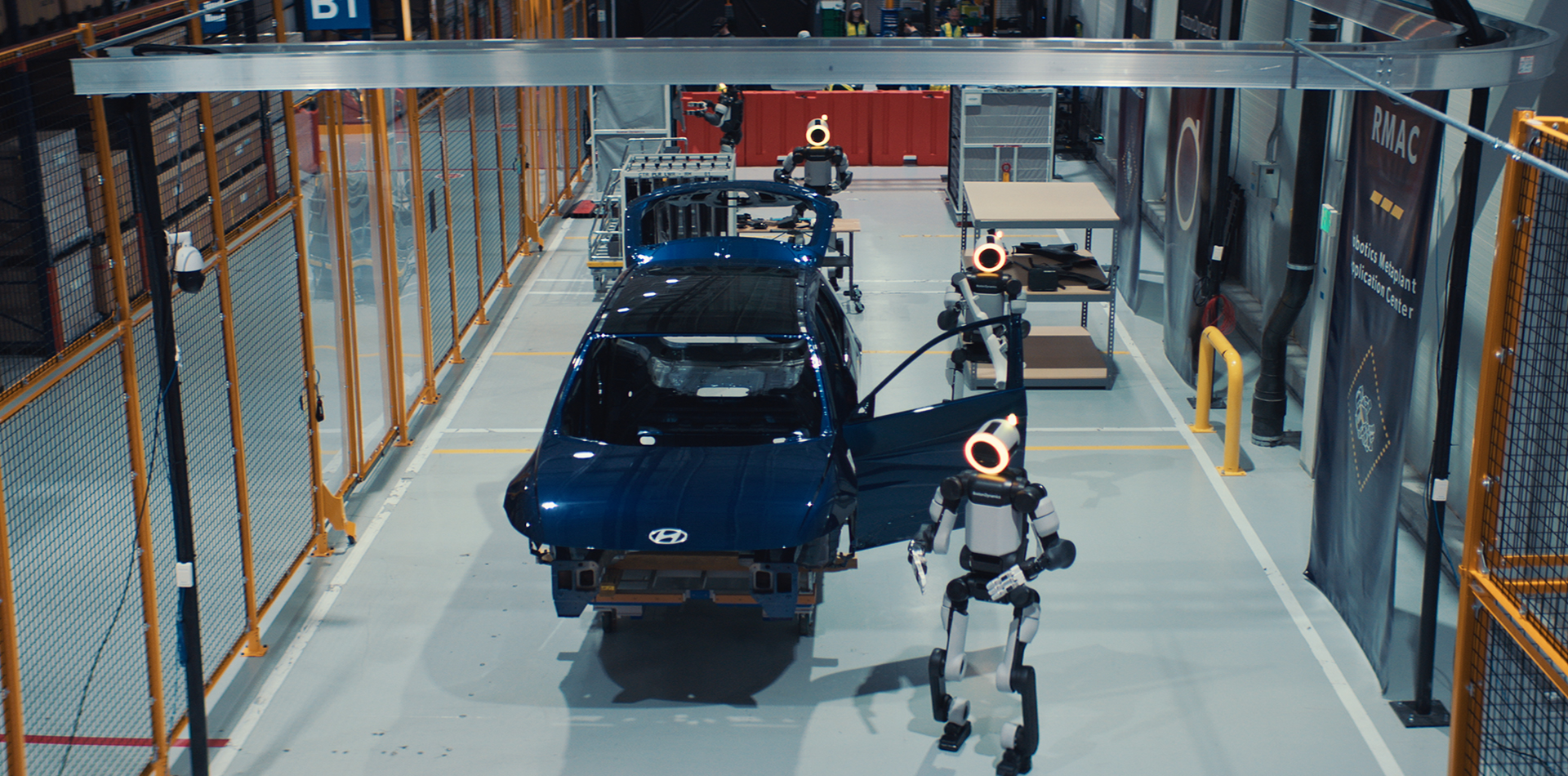
Following its training at RMAC, Atlas will go on to gain experience across a wide range of tasks within the Group's manufacturing environments. Data collected from real-world tasks is then sent back to RMAC, where it’s used to retrain and revalidate the AI model, and the resulting improvements are then applied back in the field. This repeating cycle of training, validation, and field experience forms what the team calls a “Data Flywheel,” aimed at steadily improving Atlas’s performance over time.
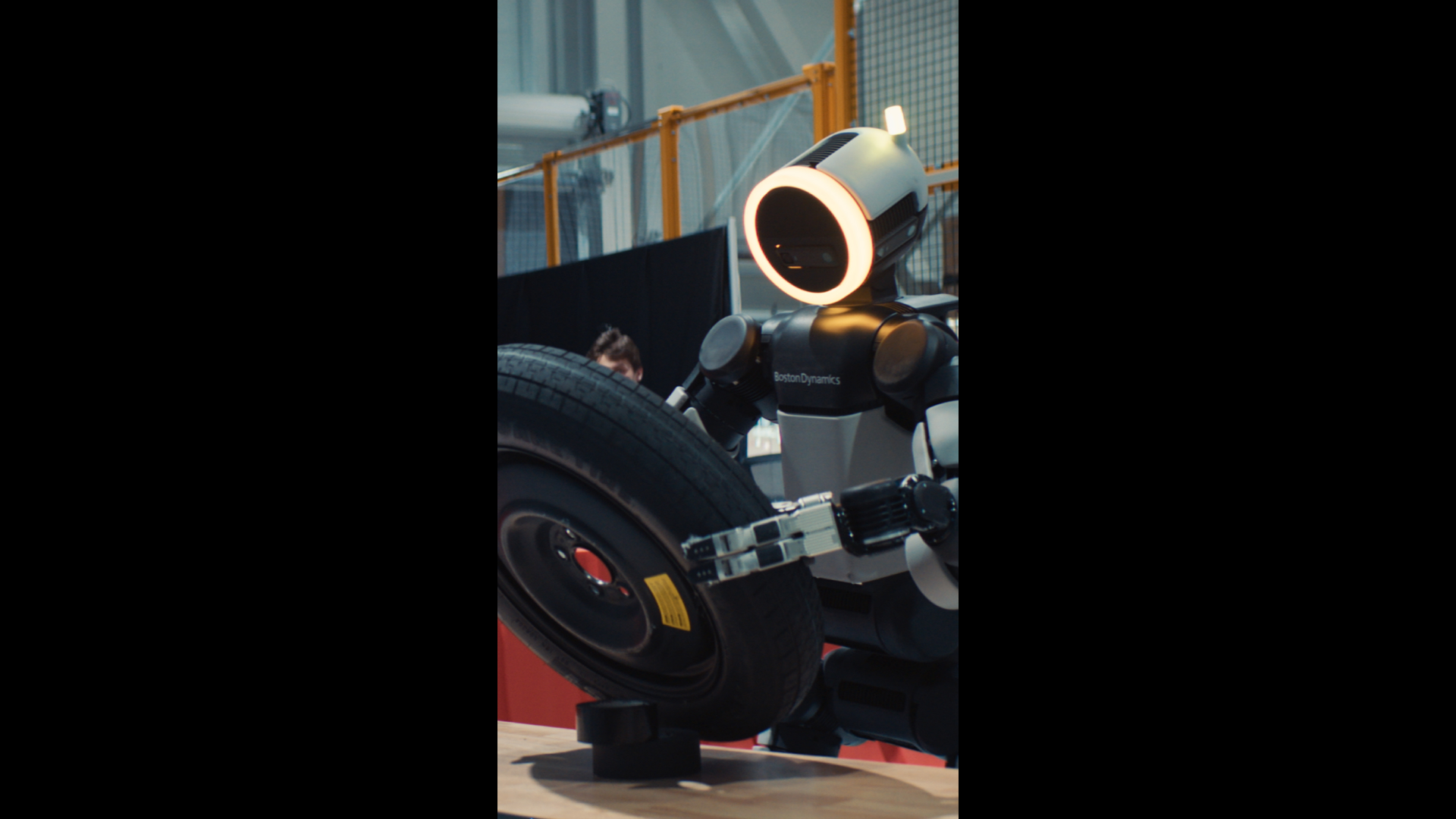
This approach is possible because, unlike conventional industrial robots that simply repeat pre-programmed motions, Atlas is built on “Physical AI” — designed to learn from high-quality physical-world data rather than follow a fixed routine. At present, RMAC training and validation focus on tasks that occur frequently on an automotive manufacturing floor, such as parts sequencing* and material handling. The successes and failures gathered along the way are fed back into improving the Atlas AI model.
*Atlas is slated to be deployed in parts-sequencing work at HMGMA starting in 2028, with expansion into parts-assembly processes planned from 2030.
So how does Atlas assess a situation and react accordingly? Atlas’s intelligence is organized around two systems — Physical Intelligence, which governs bodily control, and Reasoning Intelligence, which handles judgment and planning.
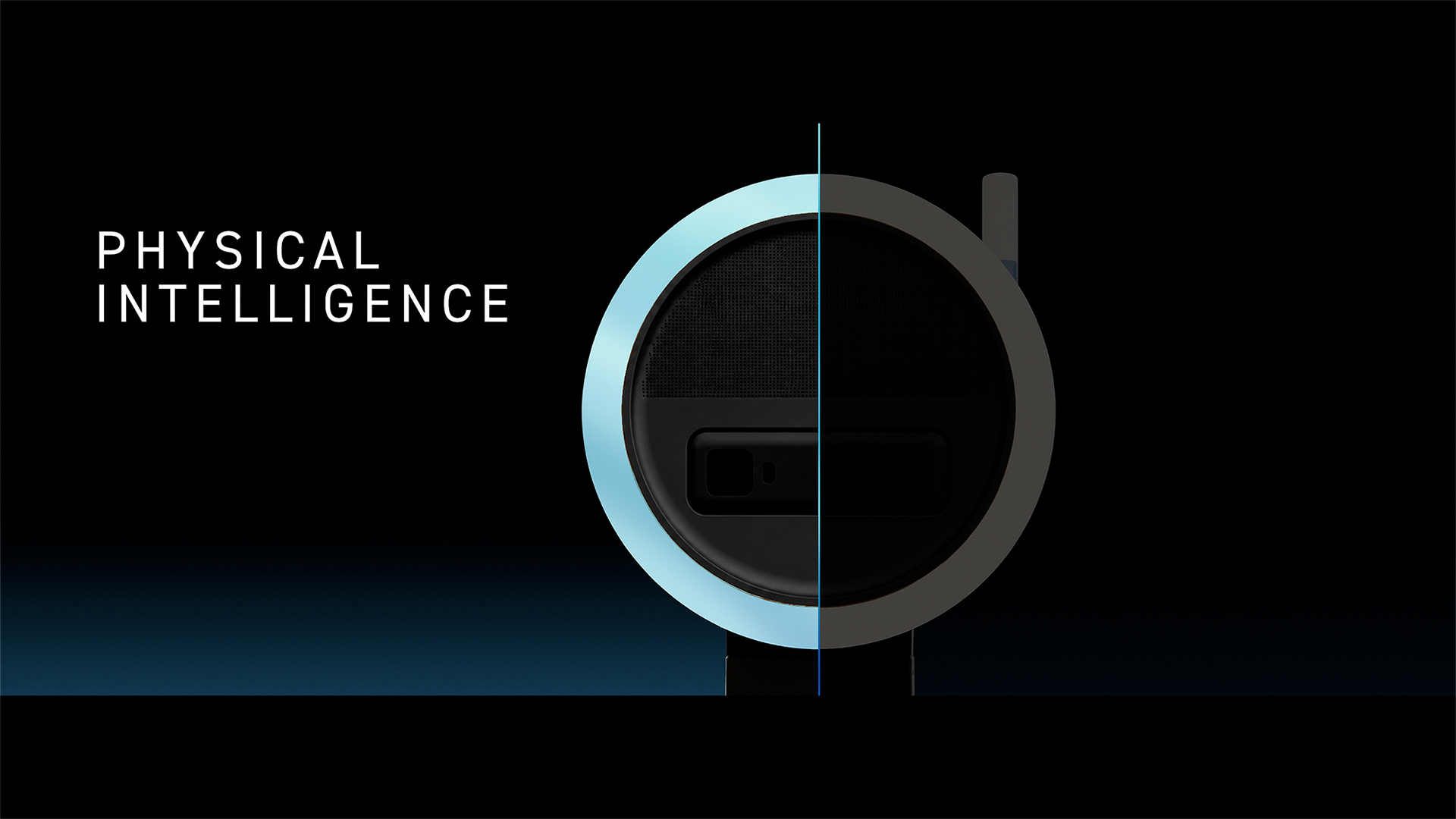
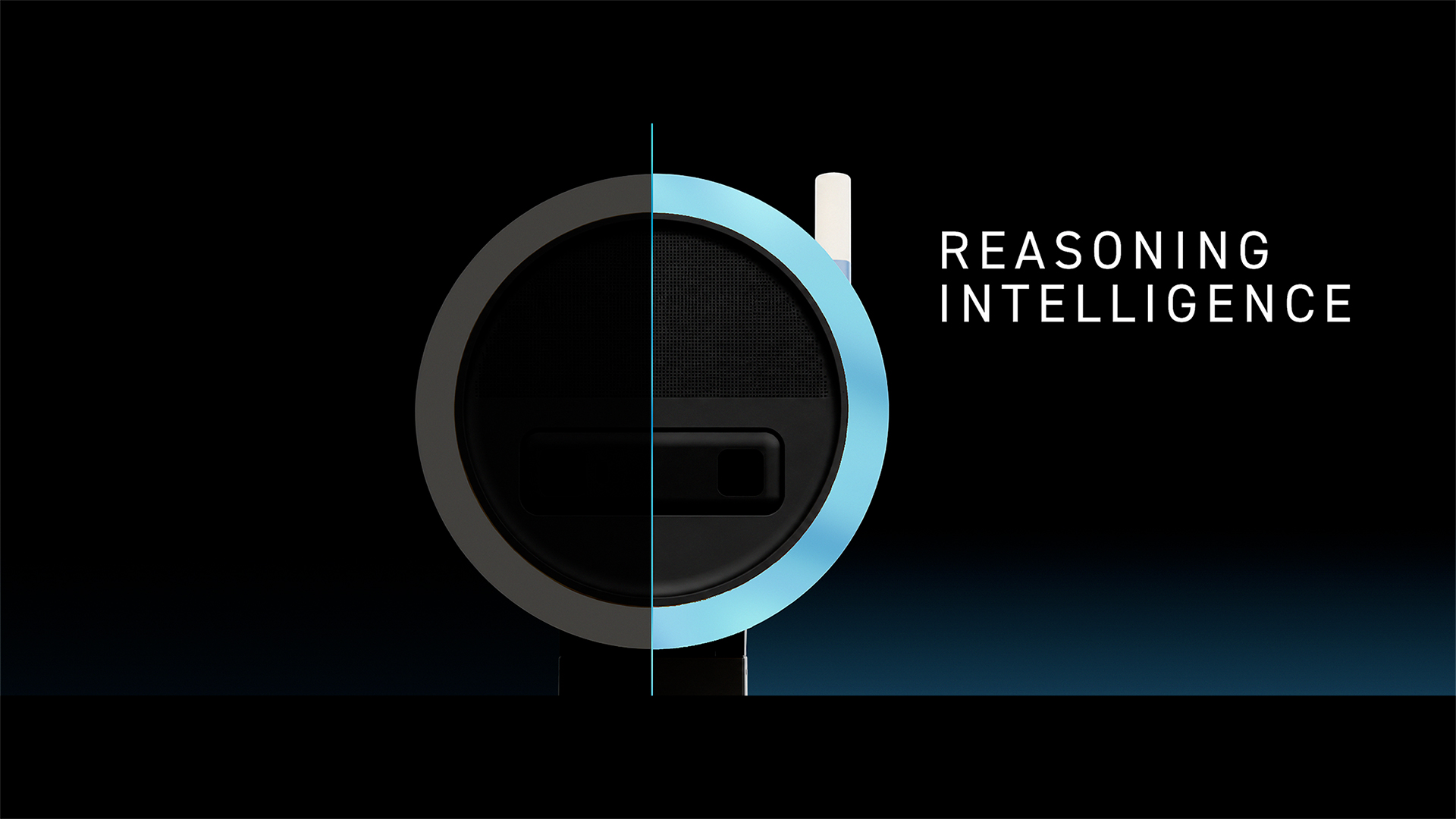
Boston Dynamics uses furniture assembly as an analogy:
“Reading the instructions and working out the sequence of steps — that’s the role of Reasoning Intelligence. Positioning a part precisely and using a tool to assemble it — that’s Physical Intelligence.” The two systems don’t operate independently: Once Reasoning Intelligence sets a goal, Physical Intelligence carries it out as precise physical action.
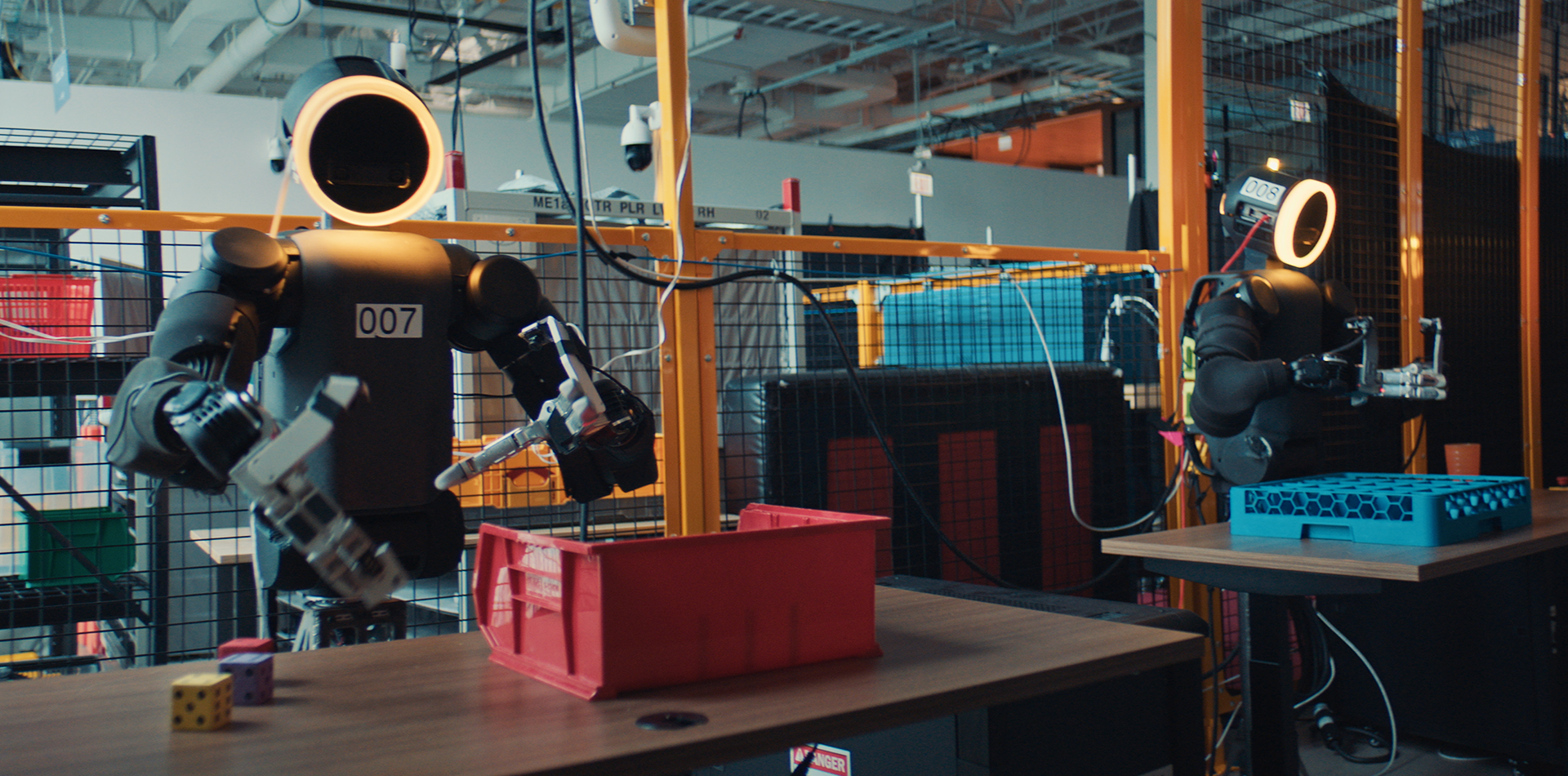
Accelerating the data flywheel that drives the growth of these “two brains” depends above all on gathering high-quality behavioral data — part of the reason an automotive manufacturing plant was chosen as Atlas’s first proving ground. As Boston Dynamics put it, an auto plant — with its complex parts and processes and its strict standards for safety, quality, and reliability — is one of the most demanding and best-suited environments for testing Atlas’s ability to perceive, decide, and manipulate objects. The company added that the technical reliability and data validated there are expected to form an important basis for exploring potential future applications in industries such as logistics, semiconductors, and pharmaceuticals.
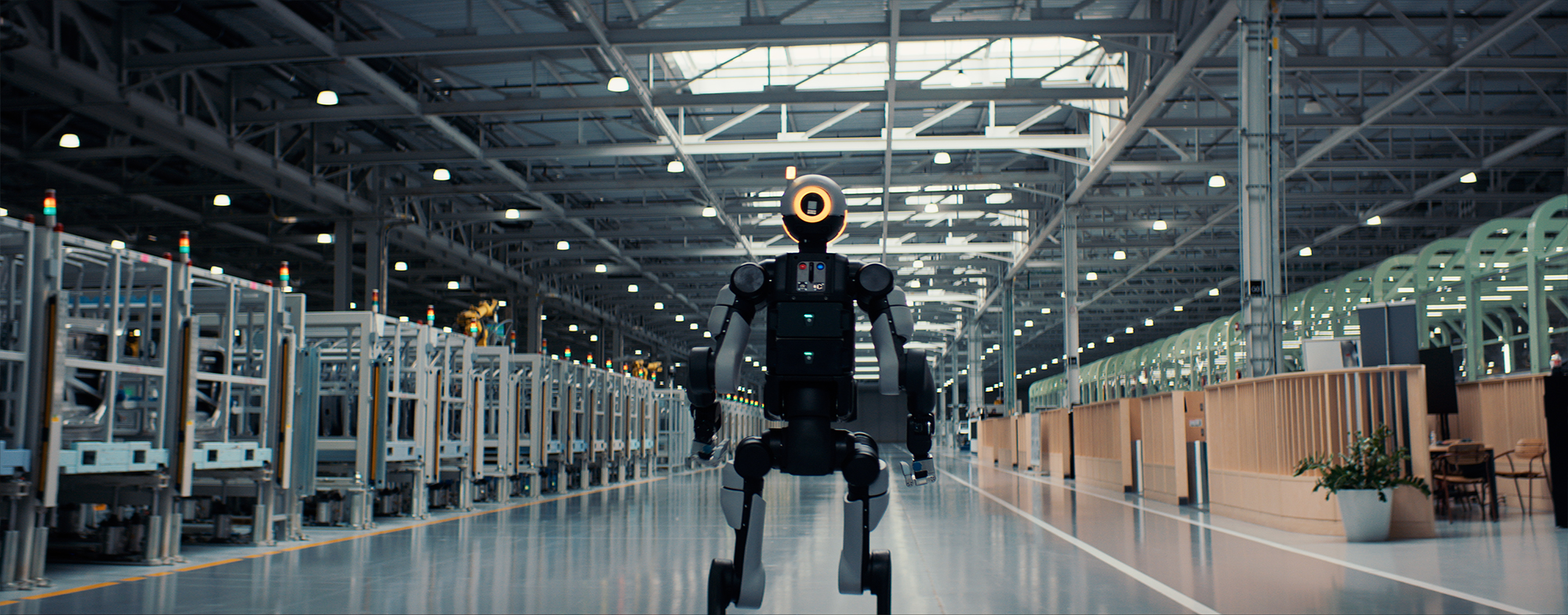
In the competition around humanoid technology, a robot’s own performance is only part of the picture. Bringing a robot into industrial use also requires a broad foundation spanning everything from component supply and manufacturing to logistics, systems integration, and field validation. Hyundai Motor Group is building this end-to-end robotics commercialization ecosystem by linking capabilities across its affiliated companies.
Hyundai Mobis develops and supplies the precision actuators that are core Atlas components. Hyundai Motor and Kia contribute large-scale manufacturing expertise and testbeds for field validation. Hyundai Glovis’s logistics infrastructure and Hyundai AutoEver’s systems-integration (SI) capabilities round out the picture.
These Group-wide capabilities are closely tied to one of the most important factors in the early stages of robot commercialization: cost competitiveness. After all, no matter how capable a robot may be, a competitive cost structure is difficult to achieve without a stable supply chain and a strong partner ecosystem.
Providing the scale and systems Atlas needs for production is a key role that Hyundai Motor Group plays.
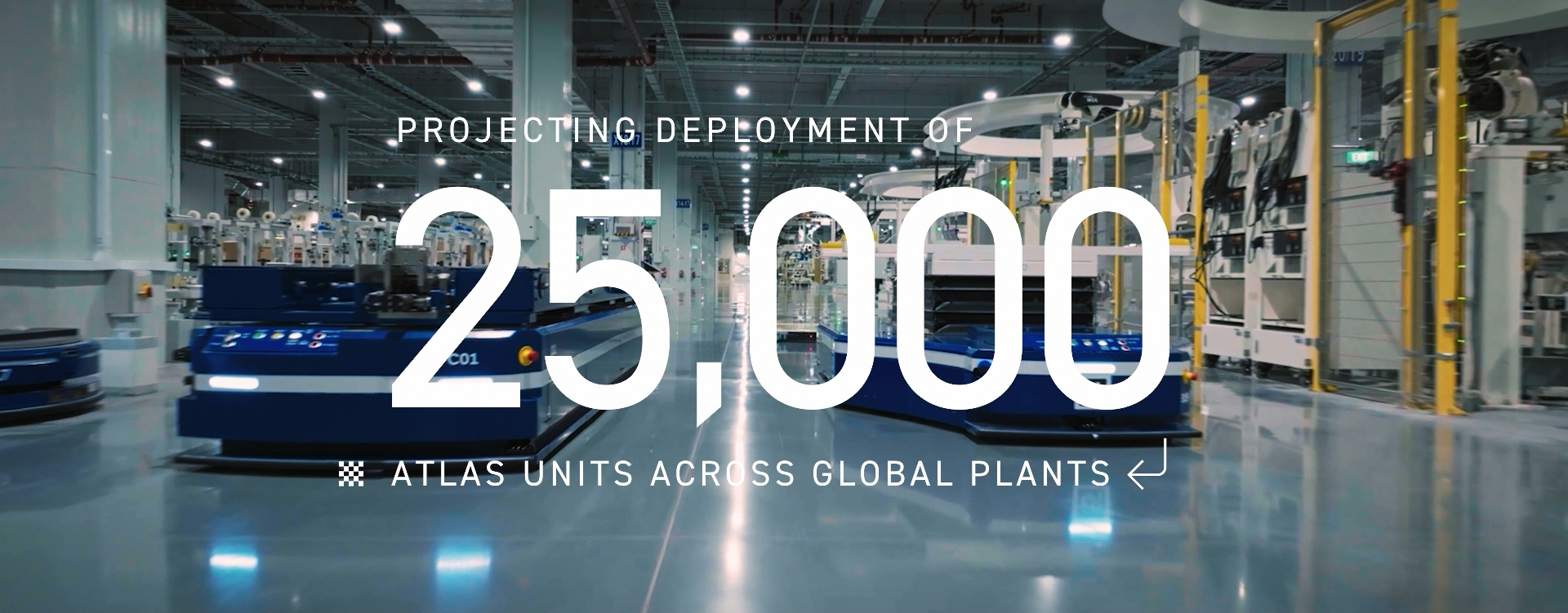
Accordingly, the Bloomberg-produced video emphasizes the execution-focused side of the business: mass-production capability, the RMAC validation system, and the two-year customer ROI target. In a joint interview, Senior Manager Dahoon Chung and Manager Yeongin Cho of HMC’s Brand Communications Team, described this Bloomberg collaboration as follows:
“The humanoid industry can’t succeed on flashy demos or showcases alone. Robots need to be safe and reliable enough for customers to actually use in the field, and their economic value has to be clearly demonstrated as well. This partnership video with Bloomberg isn’t simply an introduction to our technical achievements — it’s a story about the concrete foundation and ecosystem Hyundai Motor Group is building to bring humanoid robots into industrial use.”
Hyundai Motor Group is planning to deploy roughly 25,000 Atlas units across its global plants. Beyond that, the annual production capacity of 30,000 robots is expected to help bring down per-unit component and manufacturing costs, supporting price competitiveness. At the same time, the validation process itself should also generate substantial physical-world data and operational know-how, helping bring Atlas closer to real-world deployment at scale.
In that sense, Hyundai Motor Group’s role with Boston Dynamics has grown beyond that of a customer or investor: The Group is positioning itself as a strategic partner that also brings manufacturing environments, supply chains, and mass-production capability to the table, helping build the validation and commercialization foundation that Atlas needs for real-world industrial use.
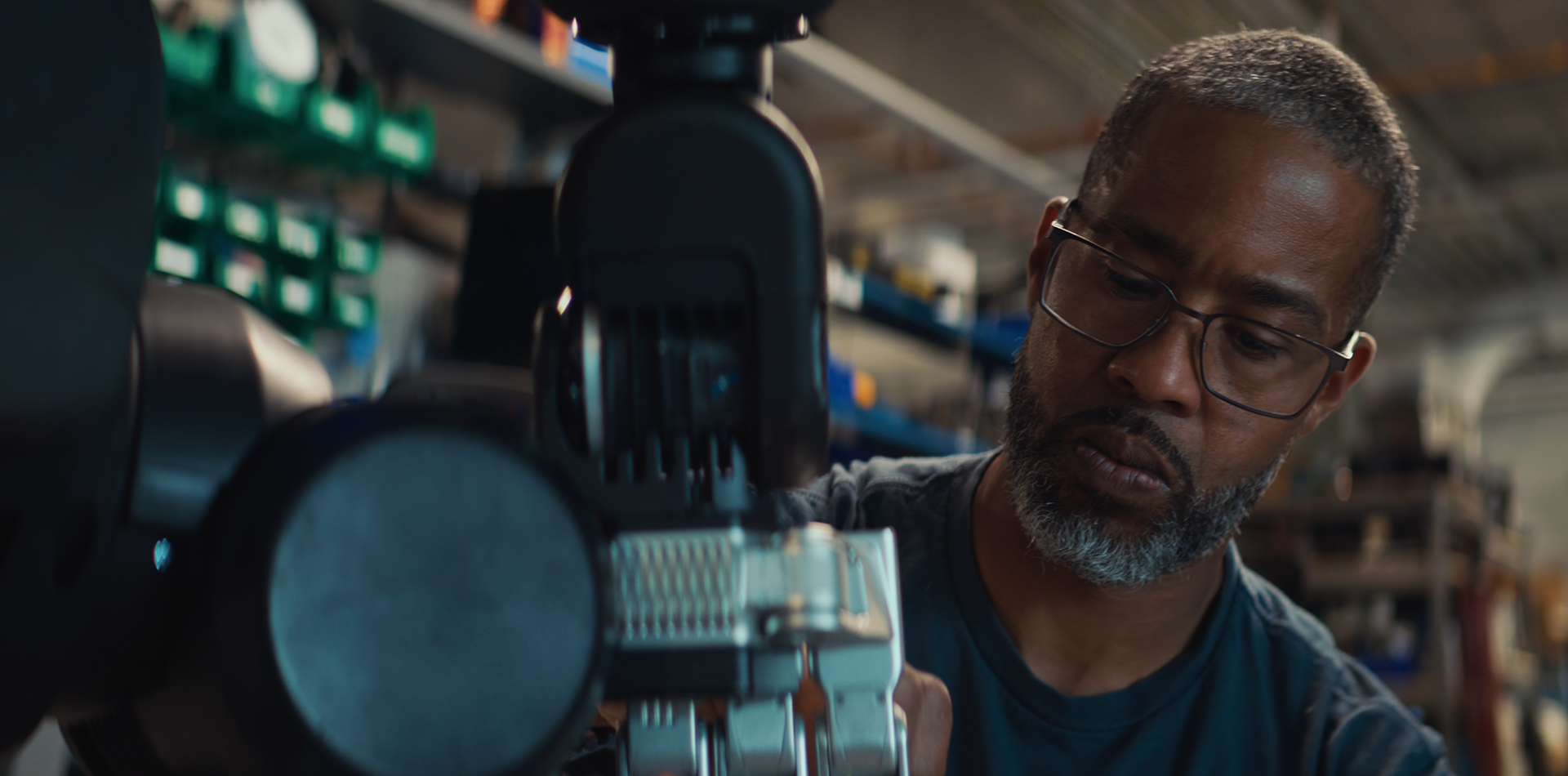
Manager Yujeong Lee of HMG Brand Planning Team explained, “Hyundai Motor Group defines robotics as ‘a partner that creates limitless possibilities together with people’. The Group develops robots in service of human progress, envisioning a future where robots work alongside people to solve difficult problems together.”
Industrial workplaces in particular still involve plenty of repetitive, physically demanding, or hazardous tasks. When robots take on a share of that work, people are freed up to focus on higher-level tasks — judgment, creativity, and problem-solving. In this way, robots help expand people’s roles and capabilities, while making workplaces safer.
This partnership video does not claim to show a finished robot. Atlas is still in development, learning through a repeating cycle at RMAC — trained, tested in the field, and refined again. A future where people and robots share the same workspace won’t arrive all at once — it is taking shape gradually, through this step-by-step validation.