Motion That Starts at the Wheels: The Future of the Automobile Transformed by InWheel Motors
- Hyundai MOBIS
- 2026.08.12
- 분량9min
- 조회수 5,483Views
AI summarized the main points
AI-generated summary. Please refer to the full article for precise details.
Cars have been constantly evolving. With the advent of the engine, horse-drawn carriages were replaced by automobiles, and electrification technology is now replacing internal combustion engines with electric motors. Recently, autonomous driving and Software-Defined Vehicles (SDV) have been driving further changes. However, even amid these innovations, one thing remains unchanged: the way a car moves.
We often discuss a car’s performance in terms of engine or motor output. But what actually propels a car is the system that transmits energy to the wheels. No matter how much power is generated, if it cannot be transmitted efficiently, the desired movement cannot be achieved. This is why, throughout the automotive industry’s more than 100-year history, transmission technology has been just as important as power generation technology.
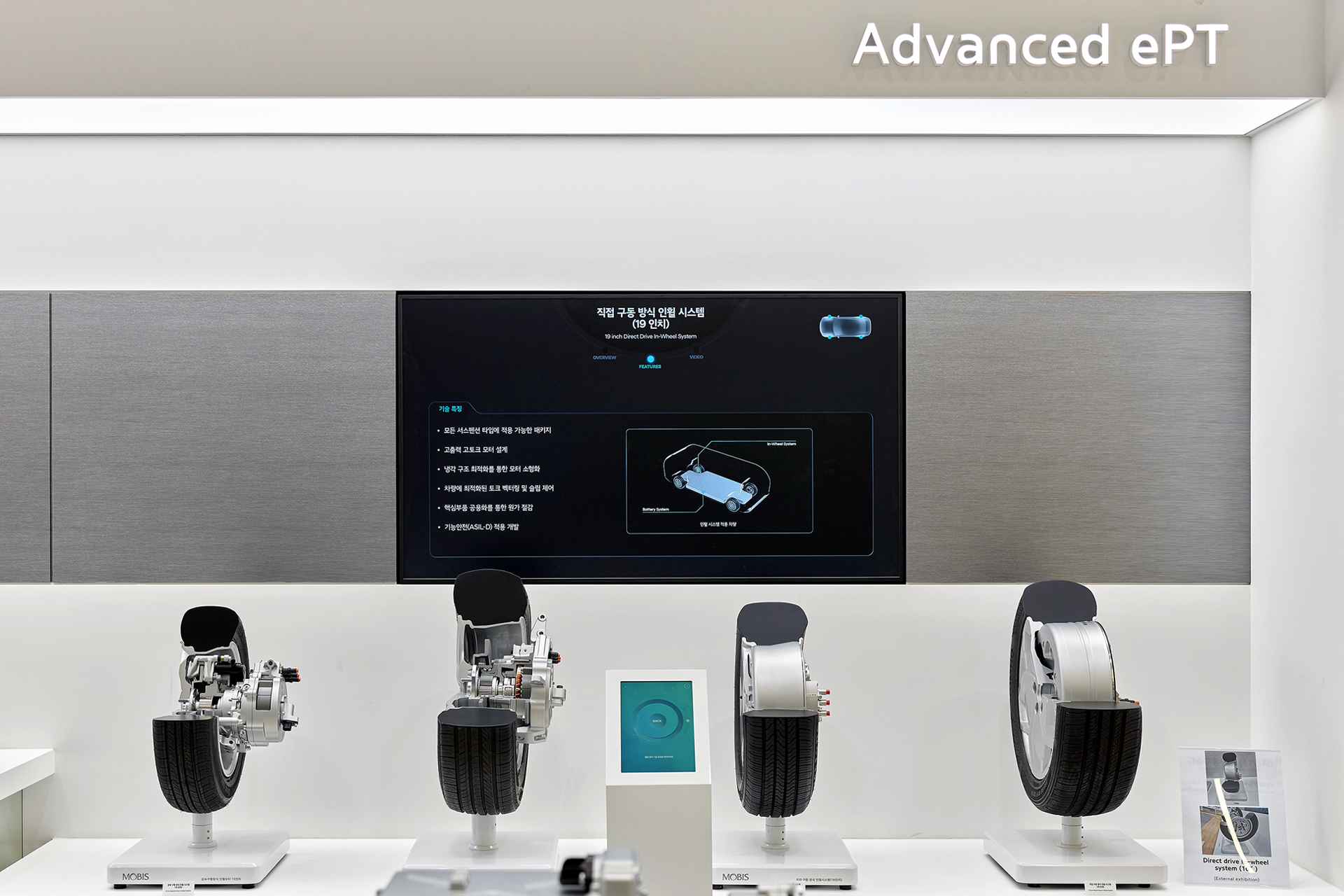
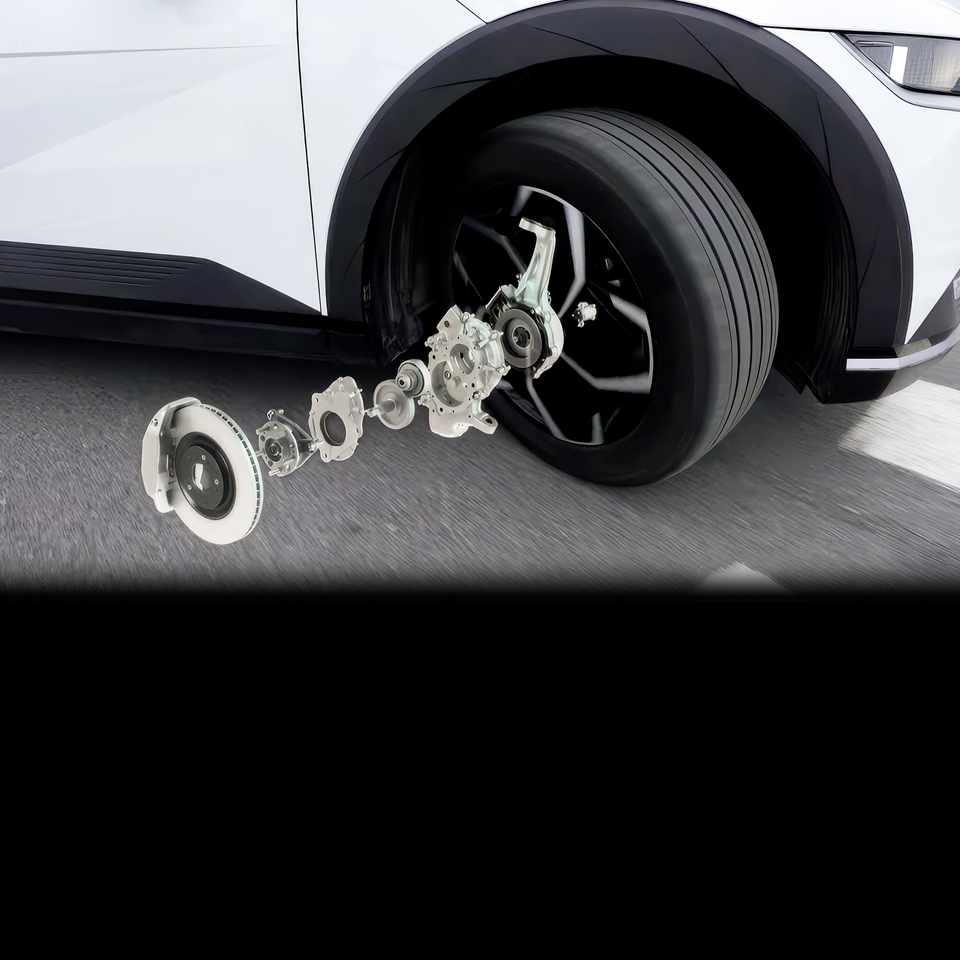
So where does a car’s power originate? And will cars continue to move the same way in the future? The in-wheel motor currently under development by Hyundai Mobis stems from these very questions. As the name suggests, this technology involves mounting the motor directly inside the wheel; at first glance, it might seem as though only the motor’s location has changed. However, the in-wheel motor is regarded not merely as a simple relocation of a component, but as a technology that transforms vehicle structure, control systems, and—ultimately—the very possibilities of future mobility. Although development is still underway to verify reliability and ensure market viability prior to mass production, it is gaining attention as a core technology for future mobility, with its applicability being validated across various sectors ranging from passenger cars to PBVs and multipurpose autonomous vehicles.
Why Do Cars Generate Power from the Center?
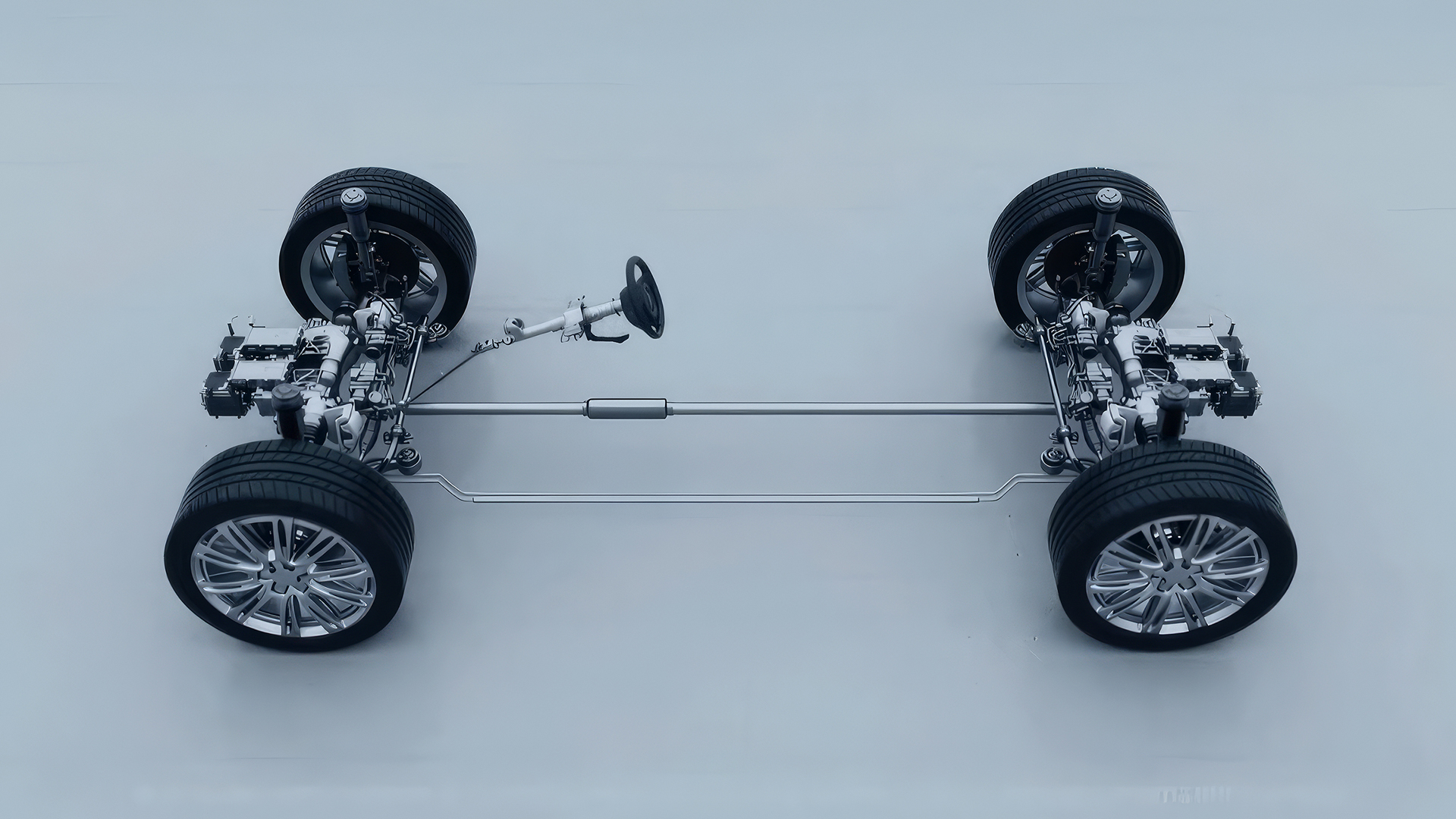
Most cars share a similar structure. In internal combustion engine vehicles, the engine is located at the front or rear of the vehicle, and the power generated there is transmitted to the wheels via the transmission, drive shaft, and differential. Electric vehicles are no different in their basic concept—they simply replace the engine with a motor and the transmission with a reduction gear. The reason this structure has persisted for so long is clear. Placing the power source in the center of the vehicle facilitates maintenance and cooling, and allows power to be transmitted stably to all wheels.

The problem is that, with the advent of electrification and autonomous driving, the existing structure is now facing new demands. For electric vehicles, securing space for the battery is critical. For autonomous vehicles, optimizing passenger space is a priority. Purpose-Built Vehicles (PBVs) are evolving beyond mere modes of transportation to become spatial platforms. As the value of a vehicle’s interior space increases, the space occupied by the conventional powertrain becomes an increasingly significant limitation.
In addition, the demand for more precise vehicle control is also growing. While conventional cars relied on mechanical devices to control vehicle movement, future mobility is software-driven. The time has come to rethink the very structure of the automobile. In-wheel motors represent a new approach to addressing these challenges.
Motors Integrated into the Wheels
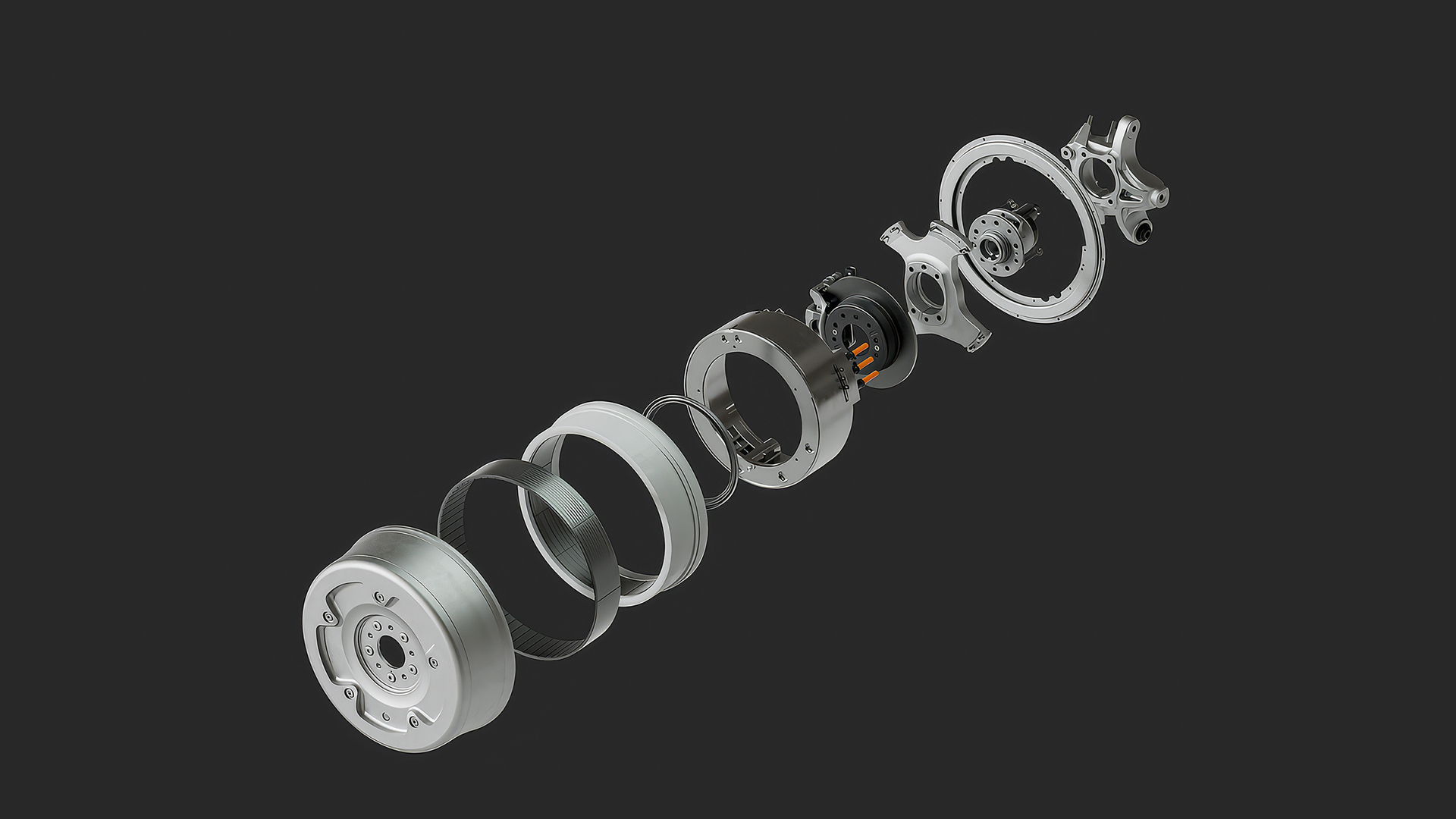
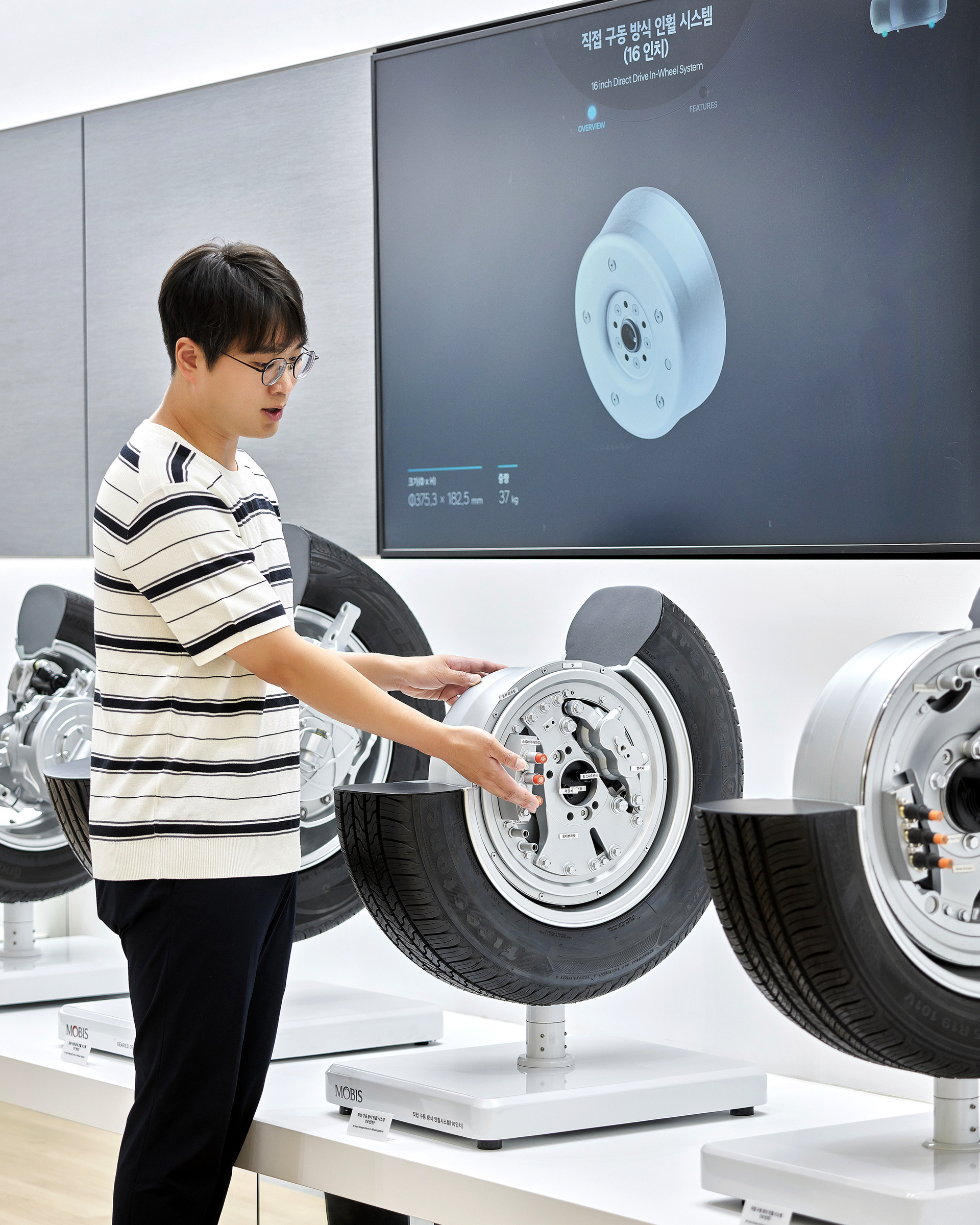
Jonghoe Kim, a Senior Researcher on the Next-Generation Powertrain Systems Development Team at Hyundai Mobis, explains, “In conventional electric vehicles, torque generated by the motor is transmitted to each wheel via a reduction gear, differential, and drive shaft, but in-wheel motors are installed directly inside each wheel to drive the wheels without the need for separate transmission components.”
This difference is greater than one might think. In conventional designs, a certain amount of energy is lost as the power generated by the motor passes through various mechanical components. This is due to mechanical resistance, such as friction and vibration. However, with in-wheel motors, the location where power is generated and the location where actual movement occurs are virtually identical. As a result, drivetrain efficiency is improved, along with vehicle responsiveness.
One of the key features of Hyundai Mobis’ in-wheel motor is its external rotor design. While conventional motors have an internal rotor, Hyundai Mobis' in-wheel motor features an external rotor. This design allows it to deliver high torque without the need for a reduction gear. However, improved efficiency isn’t the only reason the in-wheel motor is attracting attention. The real change is just beginning.
The Moment When Movement Changes
A car is propelled by its four wheels in contact with the ground. However, in conventional cars, the four wheels cannot move completely independently because they must operate within an interconnected drivetrain. In-wheel motors, however, change this premise. Senior Researcher Jonghoe Kim cited the ability to control each wheel independently as the most significant feature of the in-wheel motors.

This change makes a significant difference in actual driving. A prime example is cornering. When a car turns a corner, the outer and inner wheels rotate at different speeds. In conventional vehicles, the driver uses the brakes and the differential to control the vehicle attitude. In-wheel motors, however, can deliver different amounts of torque to each wheel. For example, during a sharp turn, they can deliver greater drive torque to the outer wheel while applying regenerative braking to the inner wheel. As a result, the vehicle can navigate the turn stably without significantly reducing speed.
The same applies to slippery road conditions, such as snow-covered or wet roads. In conventional designs, if a specific wheel slips, the entire drivetrain is affected. However, in-wheel motors individually detect and control the slip ratio of each wheel. This system delivers more power to wheels with sufficient traction and immediately controls slipping wheels. This represents more than just a performance improvement; it fundamentally changes the way a car understands and responds to road conditions.
Why is control technology becoming more important than in-wheel motors?

Interestingly, as in-wheel motor technology advances, the importance of control technology grows even more than that of the motors themselves. Many people view in-wheel motors as a hardware innovation, but in reality, they are closer to a software innovation. The role previously performed by mechanical devices, such as the differential, in conventional cars will now be handled by software. After all, having four wheels move independently means that all four wheels must be calculated and controlled independently in real time.

Senior Researcher Jonghoe Kim says, “Since the mechanical torque distribution function provided by the conventional differential is eliminated, vehicle stability must be ensured through control technology.” This is a much more complex issue than one might think. This is because a vast amount of data—including acceleration, deceleration, road surface conditions, steering angle, vehicle attitude, and wheel rotation speed—must be analyzed in real time. Since each of the four wheels can be in a different state, the number of variables that must be considered increases exponentially.
In-wheel motors, in particular, have extremely fast response times. Therefore, the control system must also assess situations and respond just as quickly. That is why Hyundai Mobis views the core of the in-wheel system not as simple motor technology, but as the combination of motor technology and control technology, and has developed both of these technologies in-house.
Beyond the Automobile: Toward New Mobility

The field where in-wheel motors show the greatest potential is future mobility. When the conventional powertrain is eliminated, the interior space of the vehicle can be used much more freely. Battery placement can be optimized, creating a more spacious interior. Senior Researcher Jonghoe Kim describes this as “technology that transforms vehicles from mere means of transportation into spatial platforms.”
These advantages are particularly pronounced in PBVs. This is because vehicles can be designed for a wide range of purposes, such as logistics vehicles, shuttles, mobile offices, and mobile stores. As the space previously occupied by the powertrain is reduced, the interior can be used more flexibly for specific purposes, further expanding the scope of future mobility applications.
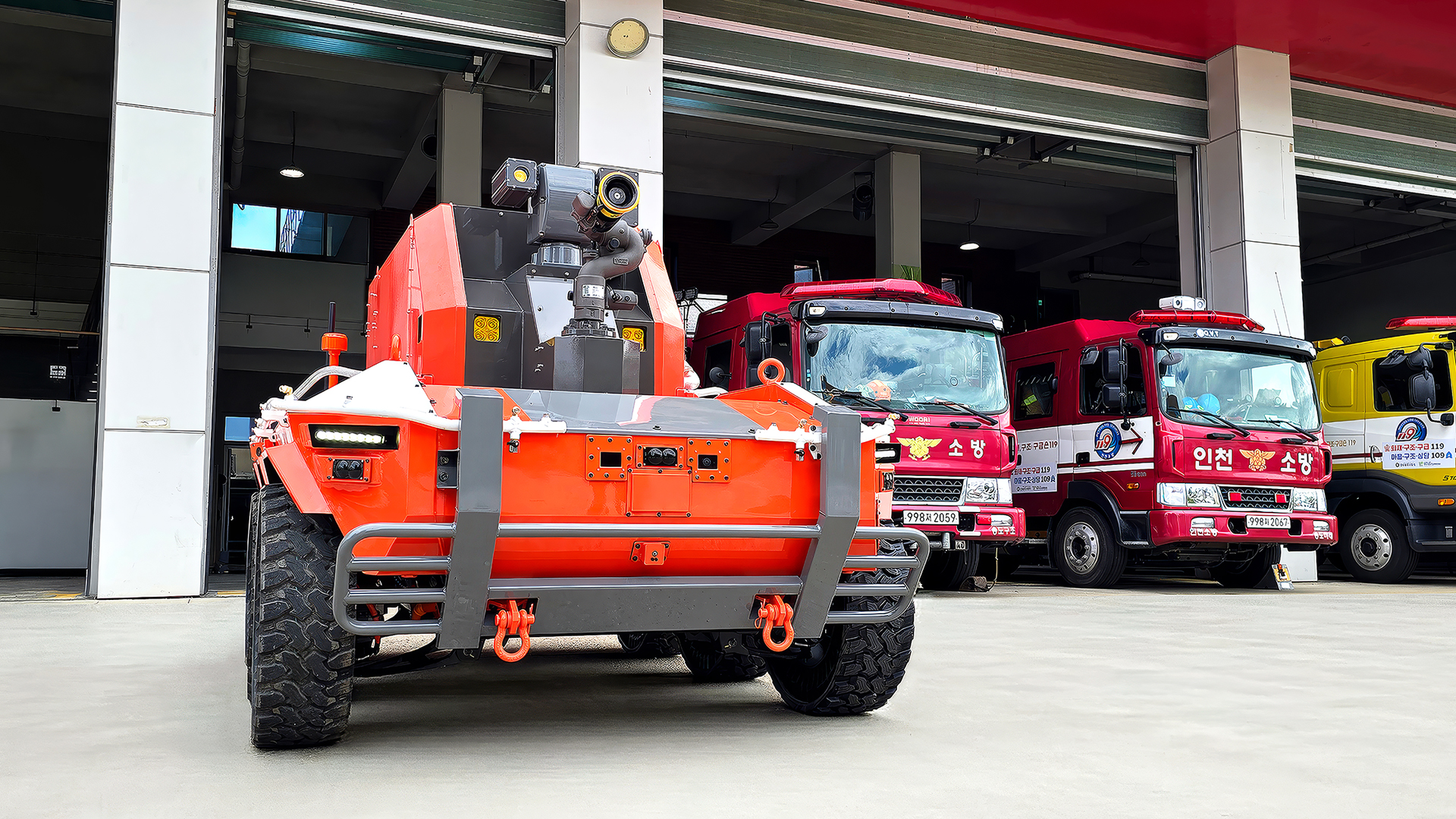
The potential of in-wheel motors extends beyond passenger cars. Hyundai Mobis is currently validating the applicability of in-wheel motors across various fields, including multipurpose autonomous vehicles, PBVs, and passenger cars. A prime example is the autonomous firefighting robot based on Hyundai Motor Group’s HR-Sherpa multipurpose autonomous vehicle. This robot was developed to be deployed in place of humans at sites with a high risk of fire or explosion to carry out firefighting operations. Since it must move reliably and control its direction with precision even in hazardous areas, high maneuverability and precise control are required; in-wheel motors are used as one of the core technologies that meet these conditions.
This demonstrates that in-wheel motors not only improve the driving performance of passenger cars but can also be extended to special-purpose mobility and robotics applications that perform missions in environments that are difficult for humans to access.
Expanding the Freedom of Movement
In-wheel motors also enable new types of movement. A prime example is ‘Zero turn’. Zero turn is a technology that allows a vehicle to turn in place—a maneuver that was difficult to achieve with conventional automotive designs. However, the situation changes when each of the four wheels can be controlled independently.
This technology makes turning in narrow alleys or parking in complex urban environments much easier. It can also be used to enhance the maneuverability of special-purpose vehicles such as logistics vehicles, construction equipment, unmanned military vehicles, and disaster response robots. By expanding the possibilities of movement beyond conventional automotive functionality, in-wheel motors are gaining attention as a core technology for future mobility.
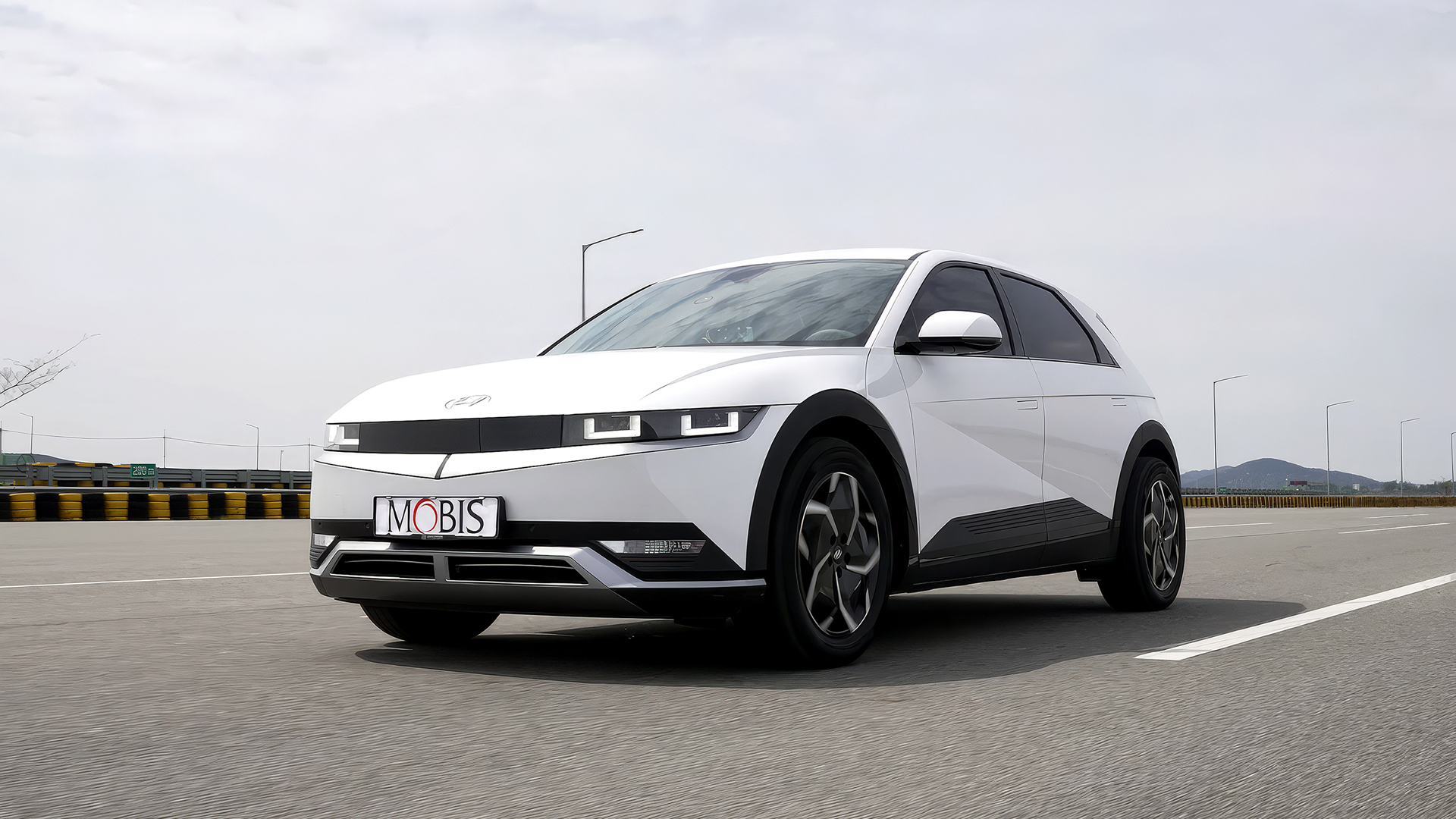
Hyundai Mobis has been working on the development of in-wheel technology since 2010. Currently, the company is validating its potential across various sectors—including passenger cars, PBVs, and multipurpose unmanned vehicles—thereby preparing for the new forms of movement required by future mobility. However, challenges remain to be addressed. In particular, ensuring durability, reliability, and mass production readiness remains a critical challenge.
The reason in-wheel motors are attracting attention is clear. It’s not just that they improve the efficiency of the powertrain; they also hold the potential to fundamentally change the way cars move. Perhaps future mobility innovation won’t stem from a massive transformation, but rather from a small change that begins inside the wheel. We look forward to seeing the new mobility experiences that Hyundai Mobis' vision for in-wheel motors will make possible.
Photo: Sangkuk Park