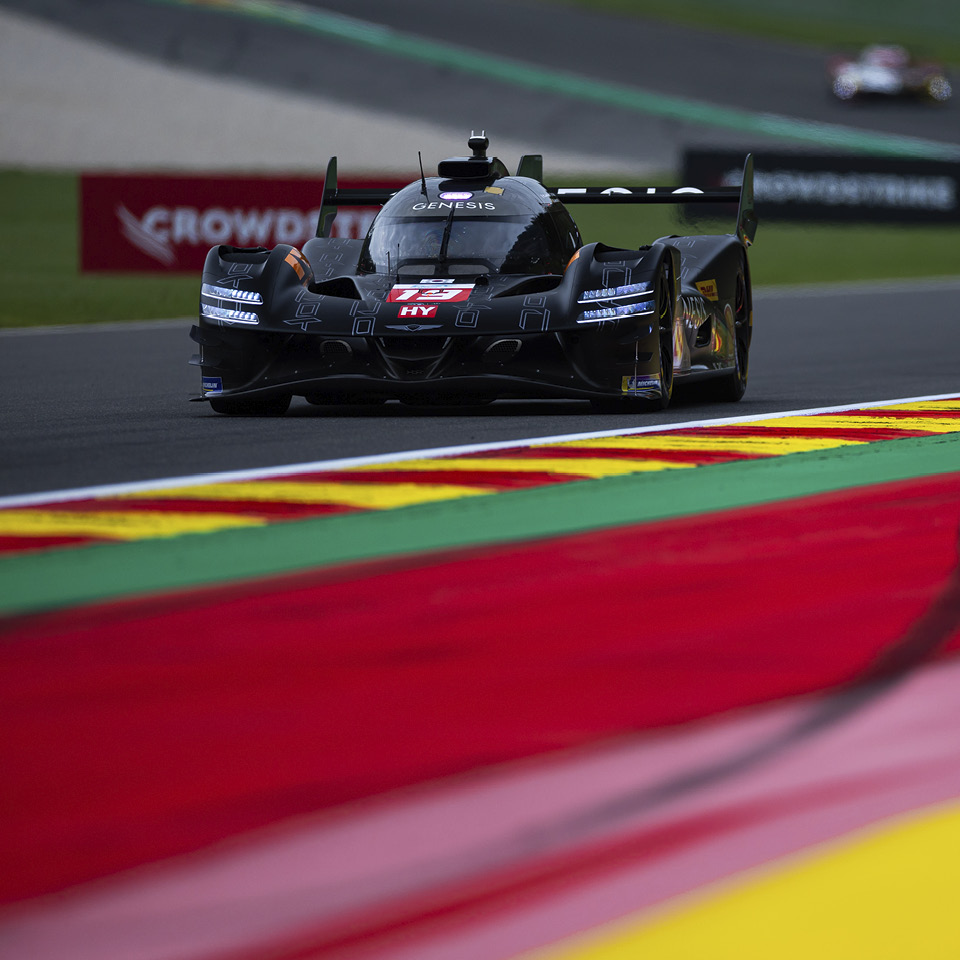
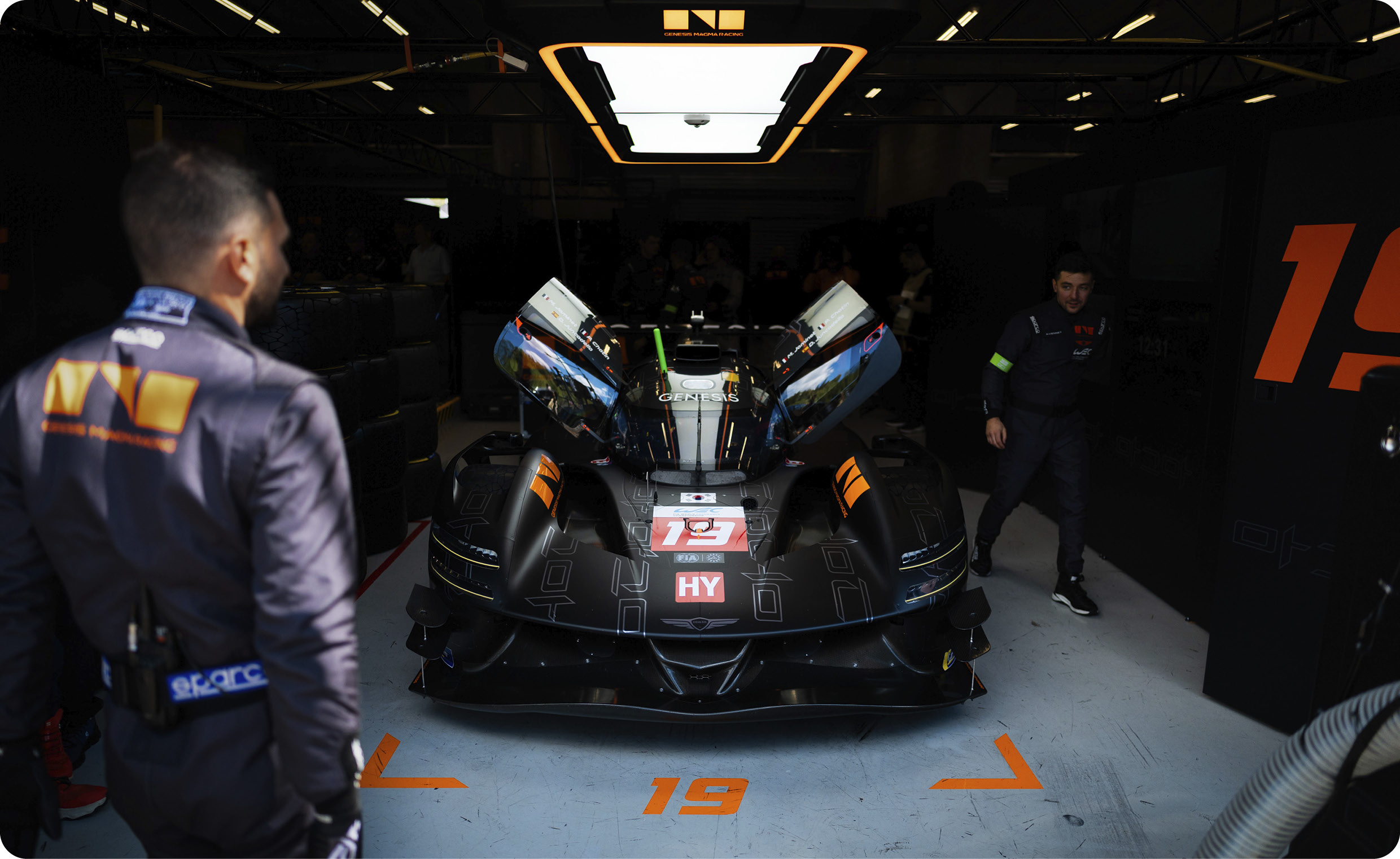
After bringing both cars home at the 6 Hours of Imola for a clean, confidence-building debut, Genesis Magma Racing headed to Spa-Francorchamps on May 9 for its second outing. Spa is a cathedral for motorsport fans and drivers alike—an iconic circuit that opened in 1921, six years before the Nürburgring. The region itself has a complicated history: until just before World War I it was under Prussian control, then became Belgian territory after Germany’s defeat.
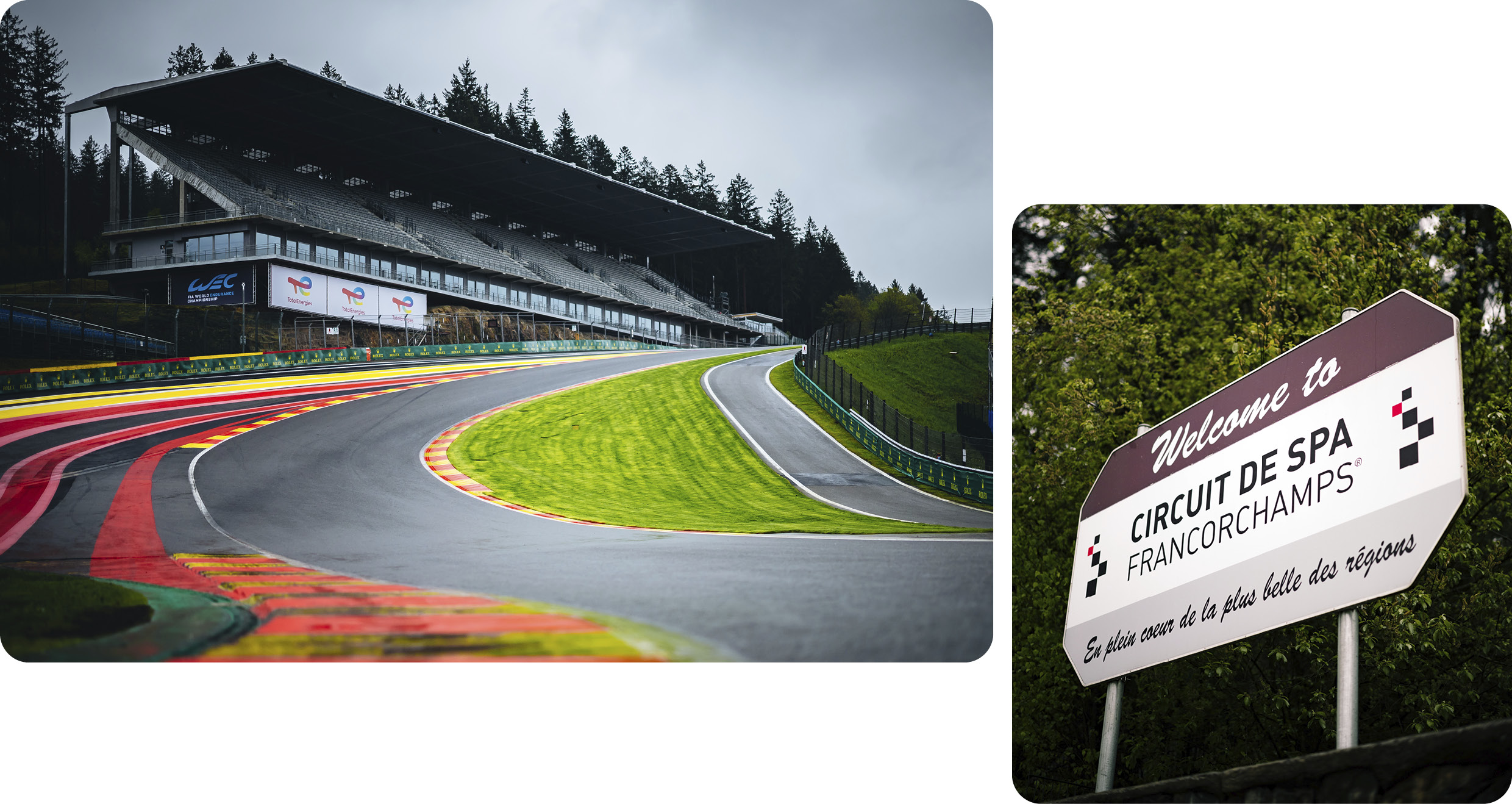
Like many early circuits, Spa started life as public roads linking towns—originally a massive 14.1-km layout. Combine sustained high speed with famously unpredictable weather and it earned a reputation as one of Europe’s most dangerous tracks. That danger became impossible to ignore; in 1969, F1 drivers boycotted the Belgian Grand Prix over safety concerns. A major redesign in the late ’70s shortened Spa to roughly 7 km, but by modern standards—where many circuits sit in the 4–5 km range—it’s still big.
Spa’s endurance-racing identity runs deep. The 24 Hours of Spa began in 1924, originally as a touring-car race, and today it’s a GT3-only showcase.
WEC’s 6 Hours of Spa traces its roots to the Coupe de Spa, first held in 1953 as a smaller event. It later evolved into the Spa 1000 km and became a round of the World Sportscar Championship (WSC), before fading away after 1990 as the WSC declined. After a nine-year gap, sportscar racing returned to Spa in 1999, then became part of the Intercontinental Le Mans Cup (ILMC) in 2011—and when WEC launched as the ILMC successor the following year, Spa returned to the calendar in a six-hour format.
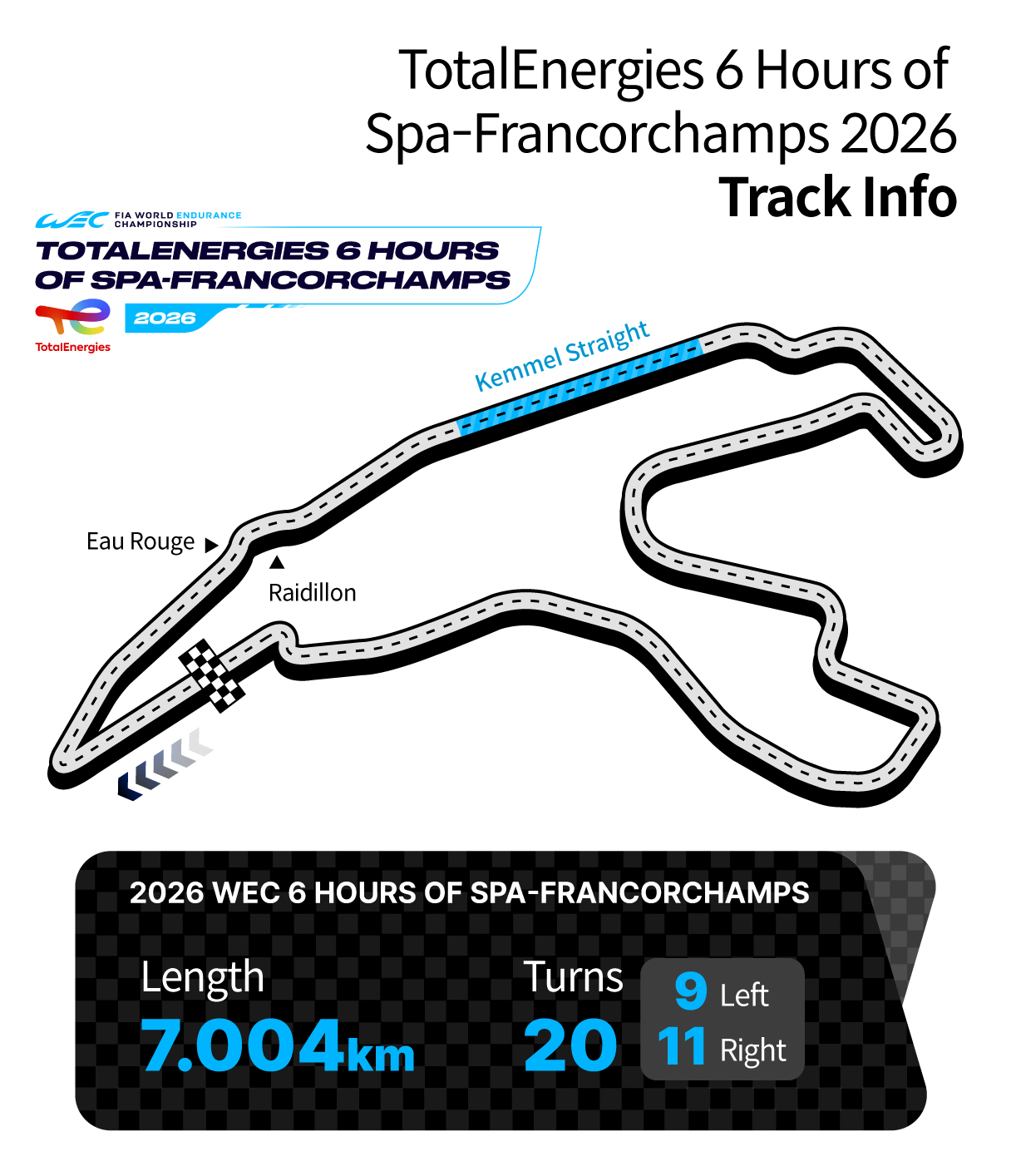
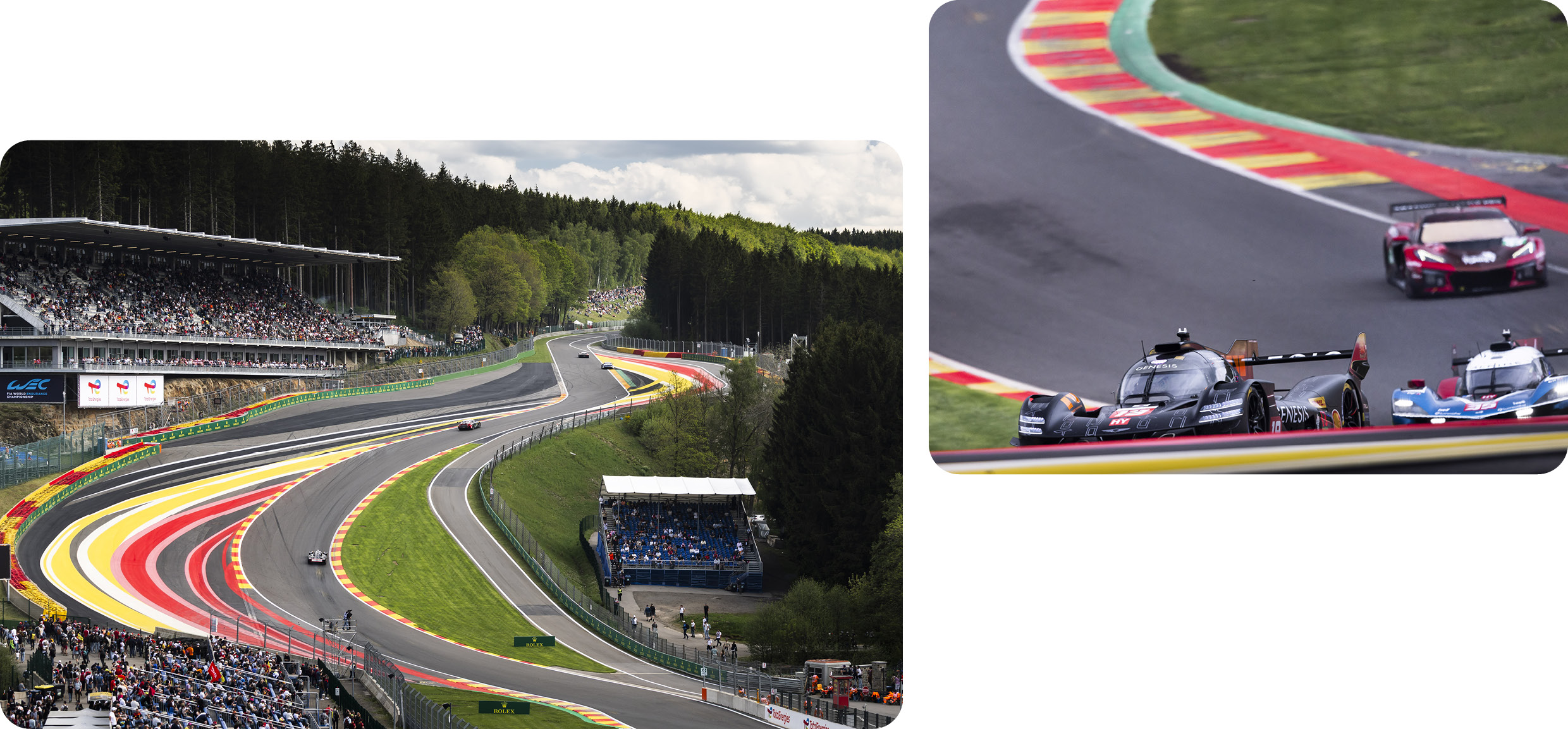
Spa’s long straights and downhill, high-speed corners drive average speeds up, and the elevation changes are big enough that the place is often nicknamed the “Ardennes rollercoaster.” In Hypercar, that means serious lateral load, over and over again. Eau Rouge and Raidillon look simple on a track map, but in real life they’re anything but—especially when you’re arriving after accelerating to roughly 300 km/h downhill and then slamming into that steep uphill rise. Drivers often describe it as charging toward a wall. And because the Kemmel Straight that follows is such a key passing zone, you have to attack that sequence aggressively if you want to race—not just survive.
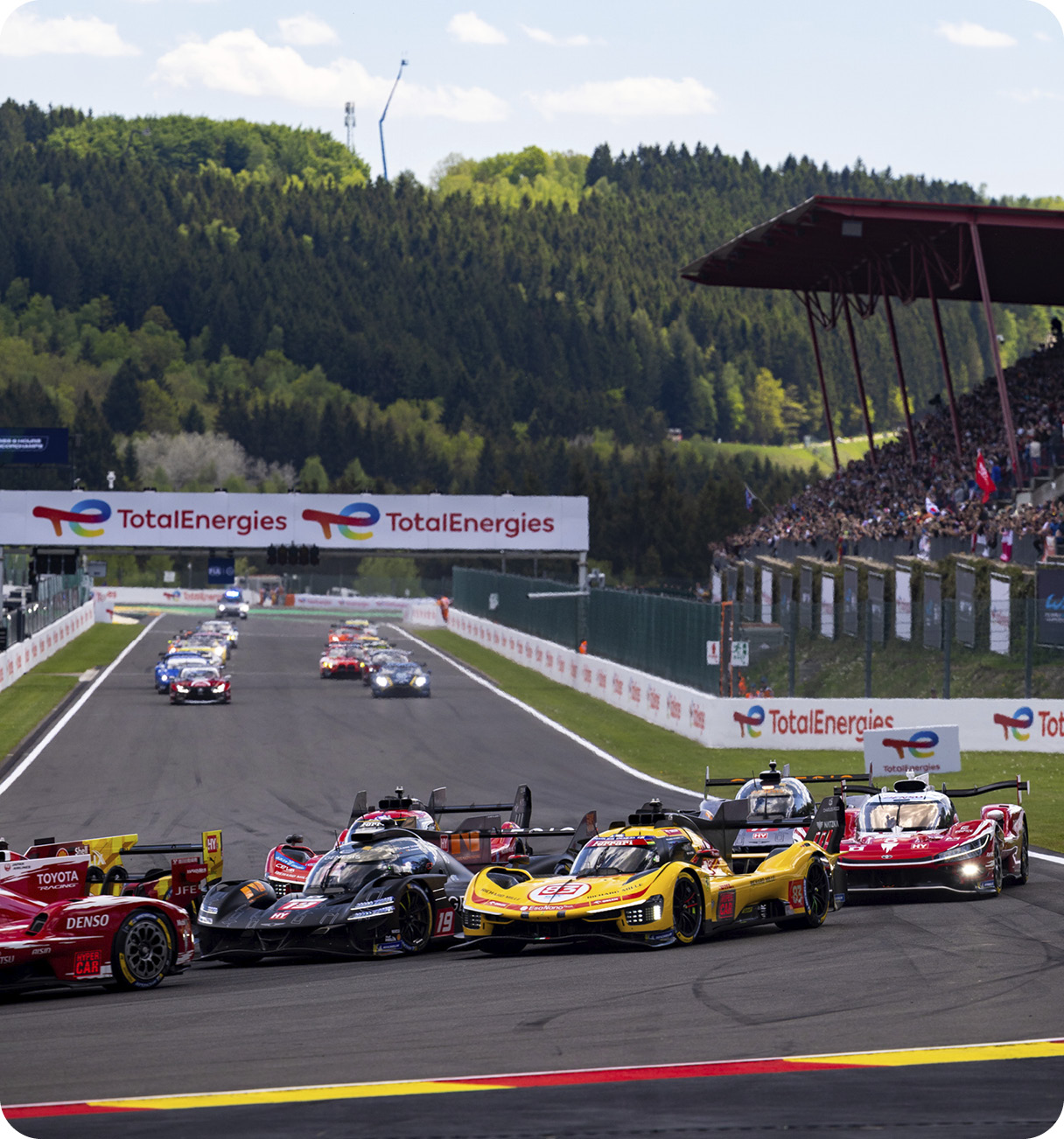
Qualifying gave the weekend a surprise right away: the French brands were flying. Alpine showed strong pace in practice, then in Hyperpole (the second qualifying session that sets positions 1–10), Peugeot’s #94 grabbed pole and turned heads.
Cadillac’s #12 took second on the grid, and the Alpine duo locked out third and fourth. Toyota—winner at the season opener—didn’t even make Hyperpole. The paddock noise immediately turned to “sandbagging” rumors, with some suggesting Toyota was hiding pace ahead of Le Mans, but Toyota denied it. Genesis Magma Racing qualified further back: #19 in 14th, and #17 last in 17th. Still, the goal was unchanged and very clear—stack real race experience and data, and get both cars to the flag.
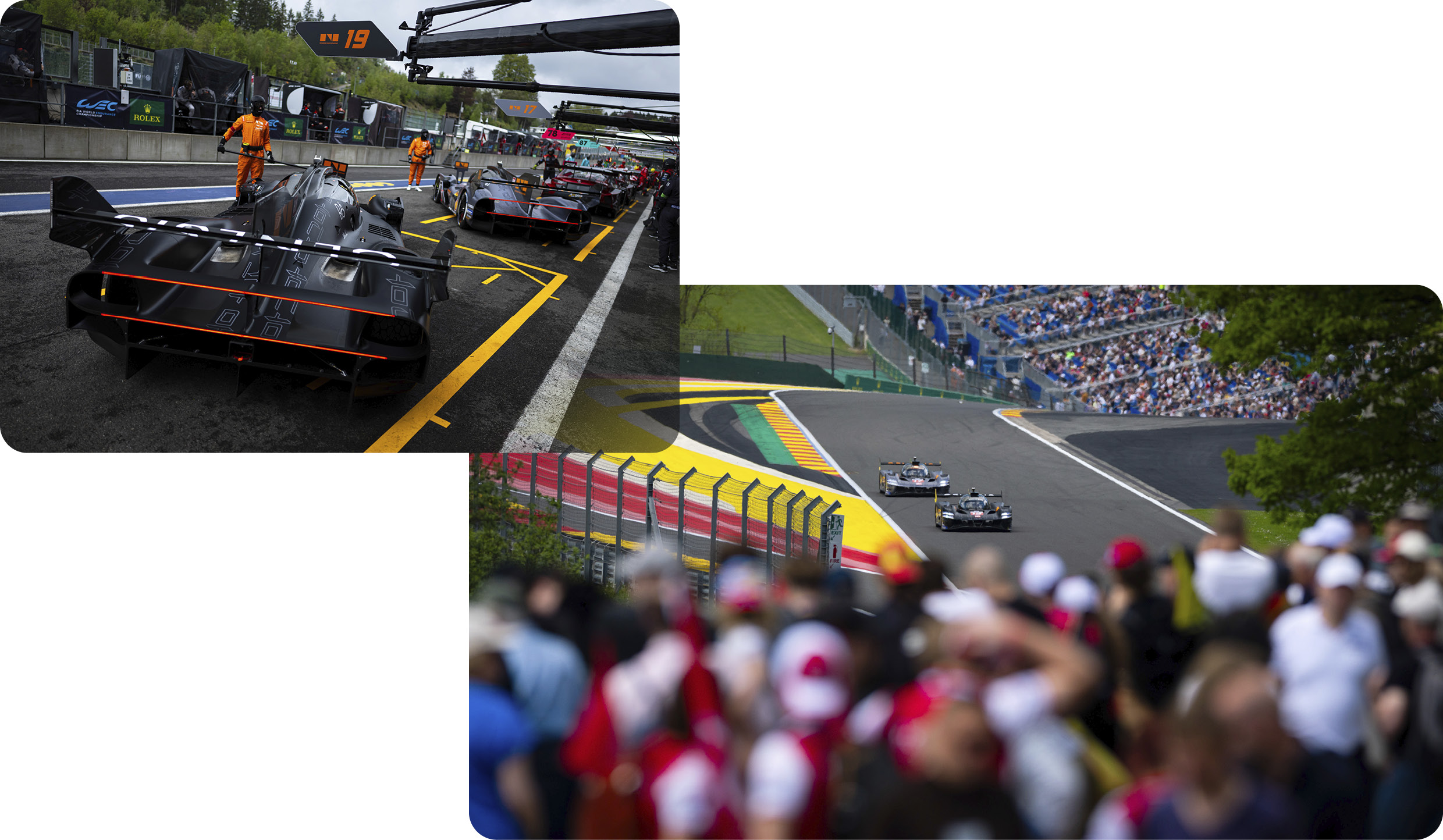
On Saturday, May 9 at 2:00 p.m., the 6 Hours of Spa went green. Fifteen minutes in, the #77 Ford Mustang GT3 went off, triggering the first Safety Car. As the opening hour played out and most of the field cycled through early stops, the #20 BMW moved into the lead, with the #8 Toyota—having pitted early—right behind. Genesis Magma Racing was still running 15th and 16th at that point. And then #19 took a hit: early in the race its pace sud-denly dropped and it had to come in. The cause was an electrical issue—not catastrophic, but disruptive. Genesis turned it around quickly and sent #19 back out.
The early “mover” was Miguel Molina’s #50 Ferrari. Starting eighth, it climbed all the way to second after two hours and joined the lead mix alongside Cadillac, Alpine, and Peugeot.
Then #19’s race got complicated again. After returning from the earlier fix, the #19 GMR-001 came to a stop at Les Combes. Power steering had gone dead, and the team executed an emergency reset to get the system back online before bringing the car in. With the leaders about seven laps ahead, #19 pivoted into pure learning mode—using the remaining hours to collect usable setup and strategy data. That included running experiments like changing only the rear tires to measure how the car’s behavior shifted under real race conditions.
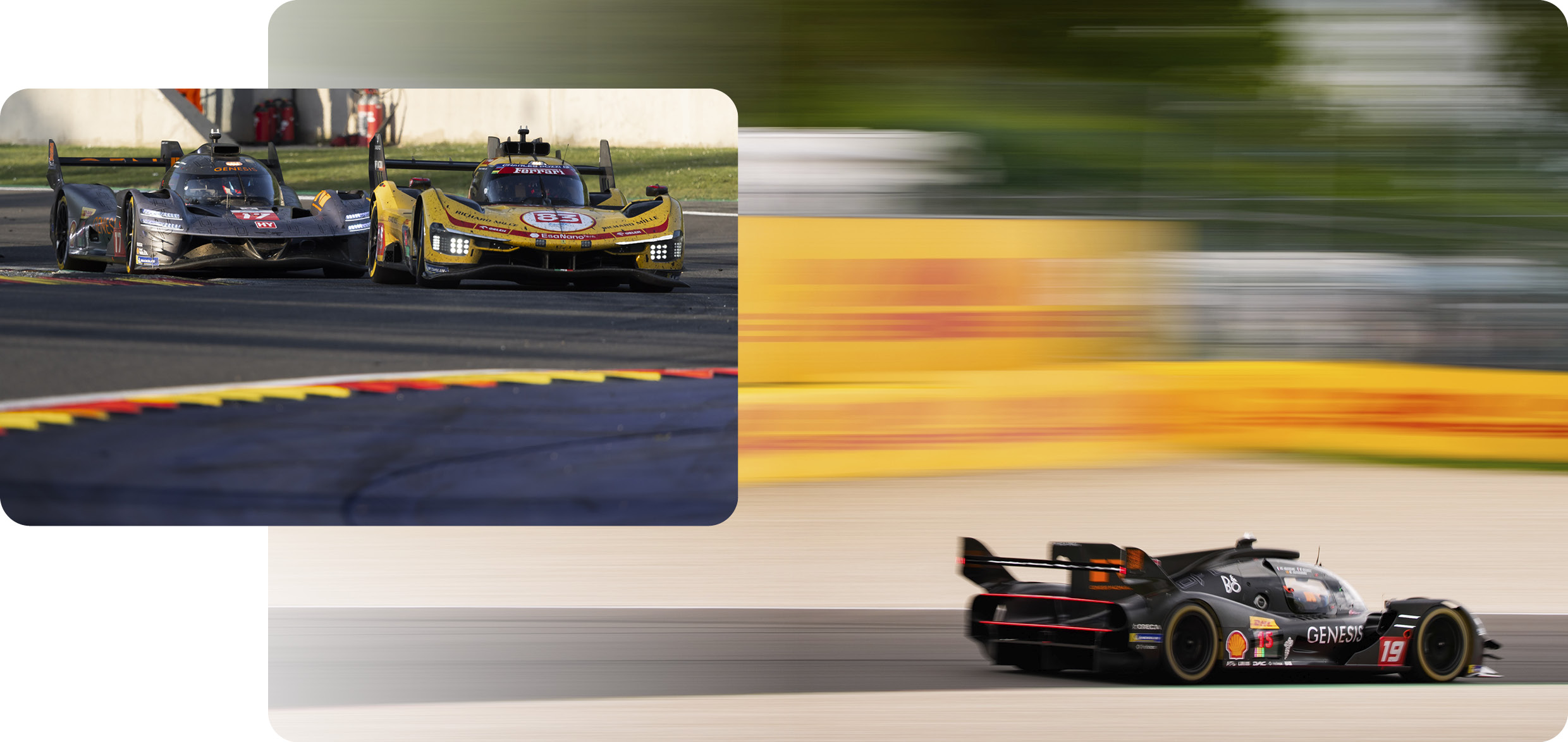
As the race moved into its final phase, BMW’s camp started to look like the home team. WRT—BMW’s factory operator—is a Belgian outfit, and Spa is basically their backyard. They leaned into an early-fuel strategy, and Sheldon van der Linde began stretching the gap up front. Behind, the #8 Toyota—now up to second from the back of the grid—joined #12 Cadillac and #35 Alpine in a hard chase of the #20 BMW.
#17 kept its pace deep into the race, waiting for a midfield opening. Video: FIA WEC (https://www.fiawec.com)
With about an hour left, the race flipped again. A multi-car incident involving the #32 BMW M4 GT3, the #51 Ferrari, and a Porsche GT car created a major moment. Ferrari took damage to a side radiator and had to pit while venting steam.
That was the opening Genesis was waiting for. As soon as race control called a Virtual Safety Car (VSC), Genesis pulled the #17 in—and made the key call: short fueling. While most teams filled the tank, Genesis took only a partial load. It was a calculated gamble—borderline, because it could leave you short at the end—but it also meant #17 got out of pit lane faster than anyone around it and rejoined in eighth.
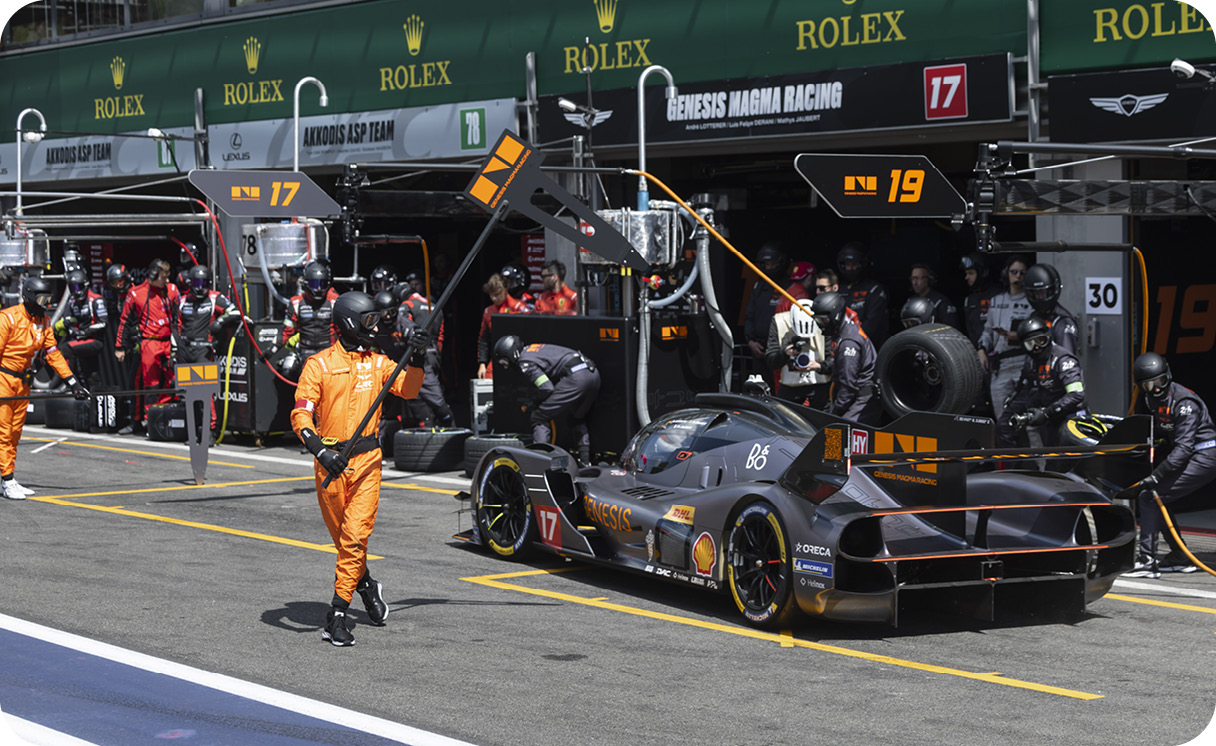
The stop was short, but the risk didn’t disappear. With less fuel on board, finishing could become a question mark. And Genesis had also skipped a tire change, meaning #17 would have to defend and sprint late on already worn rubber. Yes, a lighter car can be quicker, but the cars behind would be chasing on fresher tires. Fuel and tires—both were now liabilities. Whether the call would pay off was still very much unresolved.
Then, with about 30 minutes to go, the race handed Genesis exactly what it needed. On the Kemmel Straight, an overtaking attempt went wrong: the #009 Aston Martin, squeezed by Alpine’s defense, hit the barrier hard—bringing out another Safety Car. Under Safety Car, fuel burn drops and tire temperature comes down, making it easier to stretch what’s left. In one stroke, Genesis’ two biggest worries—fuel margin and tire life—got dramatically more manageable. While others got caught up in the incident and the reset, the #17 climbed to seventh, and the odds of converting the gamble into a real finish—and real points—sud-denly jumped.
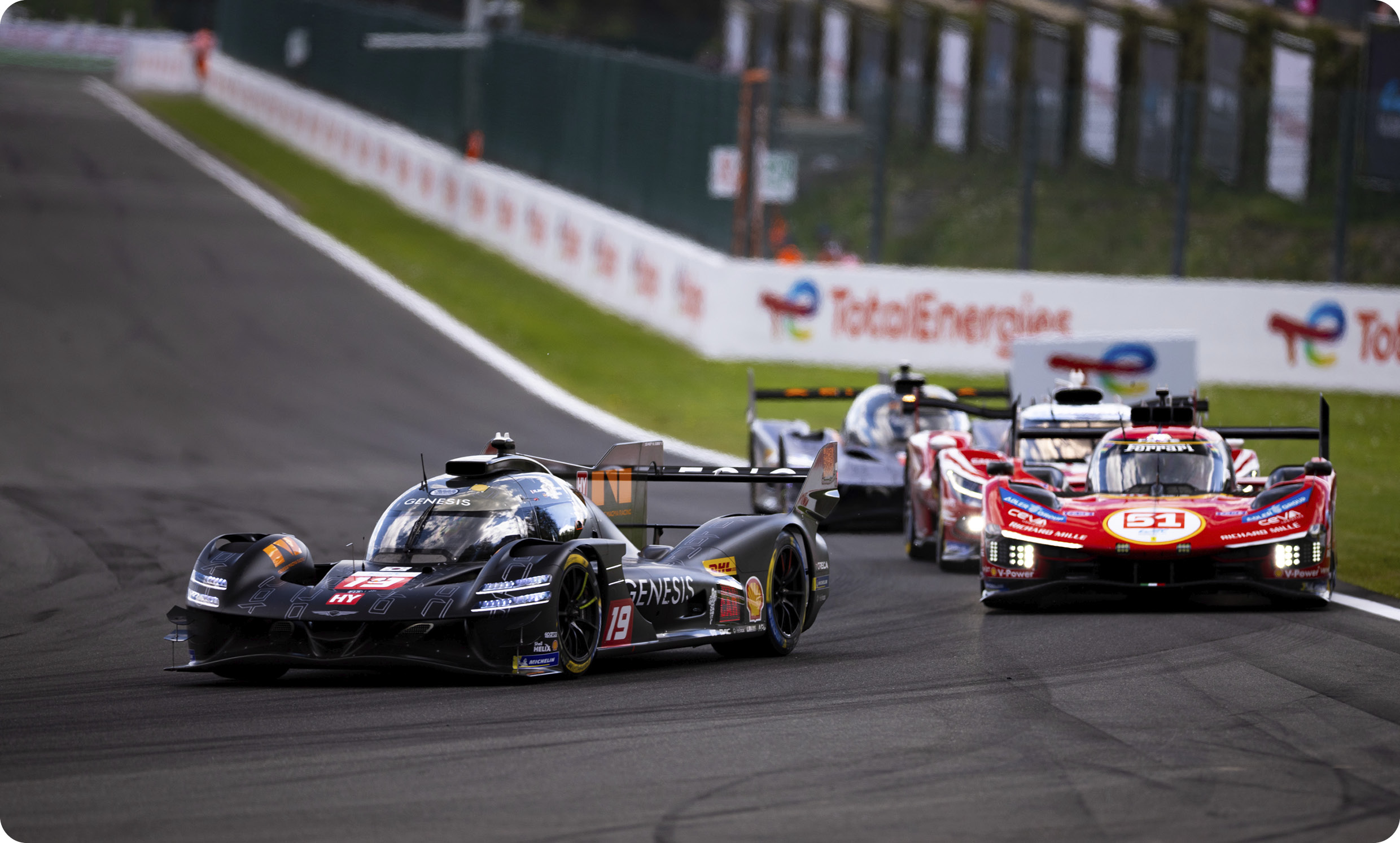
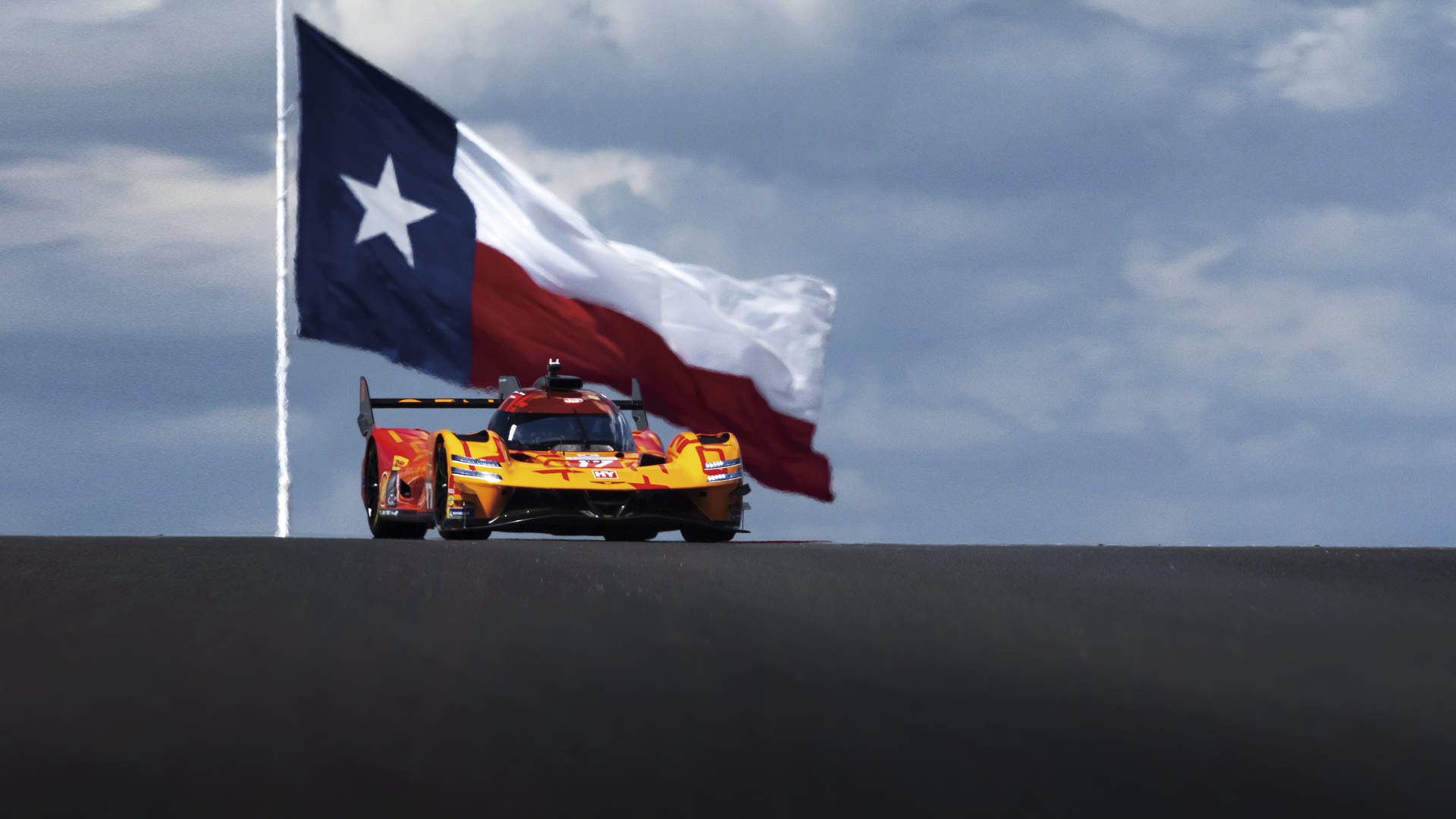
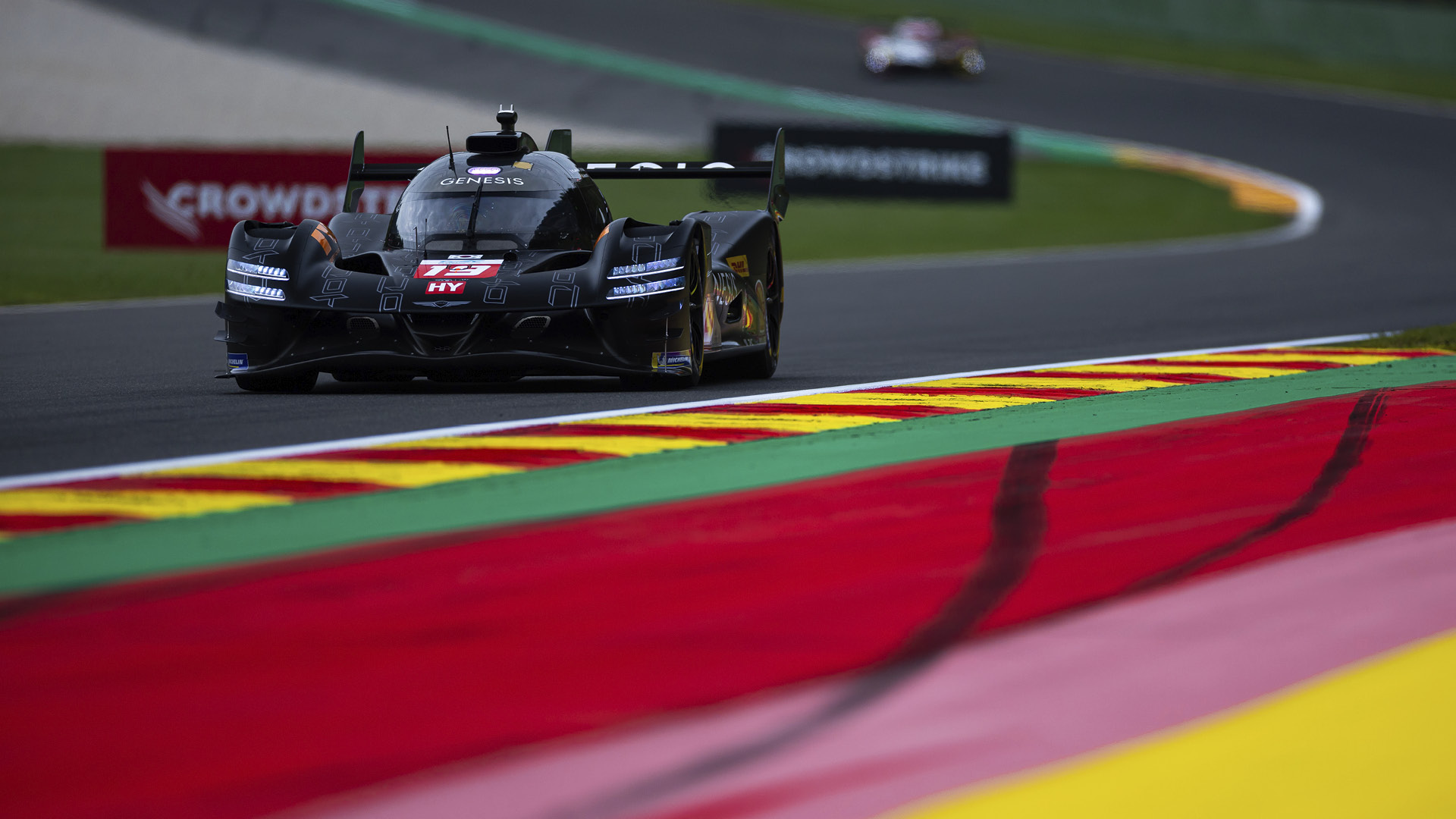
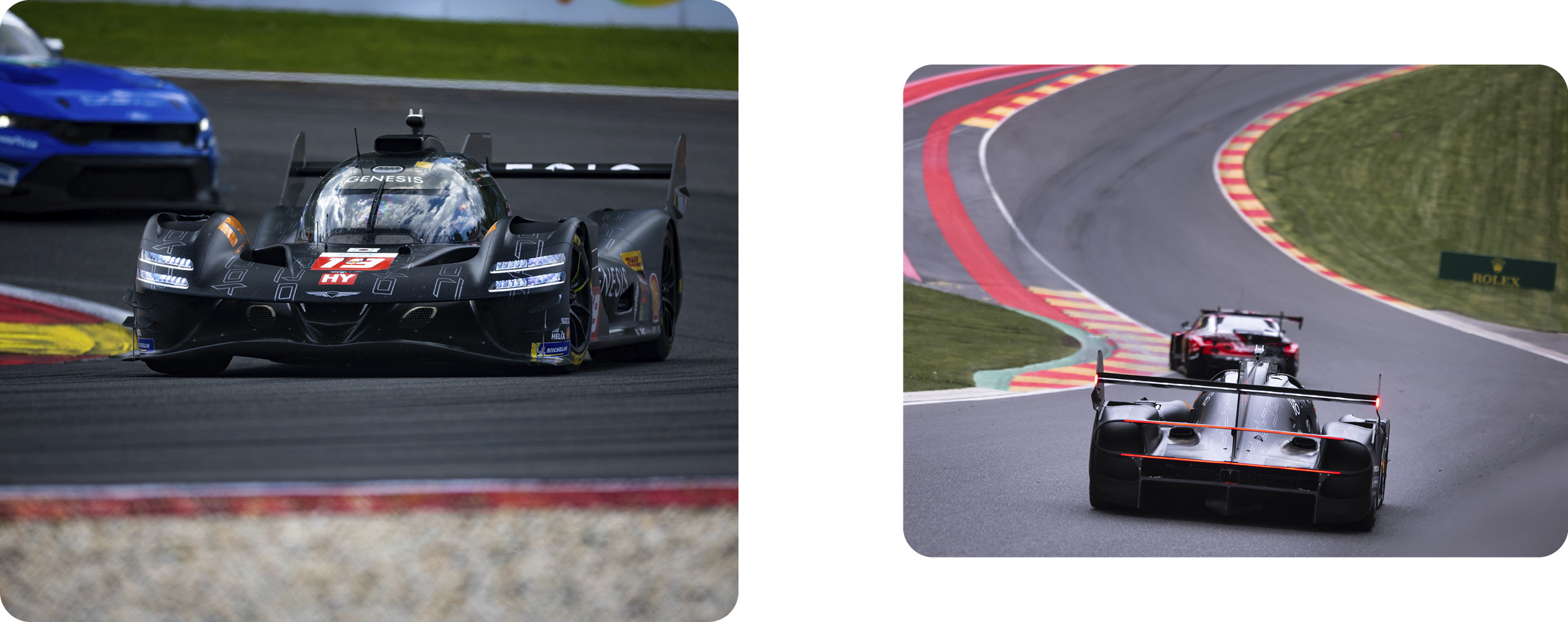
After the Safety Car finally peeled off, the race snapped into a roughly 24-minute sprint to the flag. With Pipo Derani in the #17 GMR-001, Genesis had a target on its back: the #93 Peugeot, #12 Cadillac, and #8 Toyota were all queued up behind, waiting for an opening. Derani gave up one spot to the Peugeot right after the restart—but then locked the door on everyone else. When the clock hit zero, the #17 took the checkered flag eighth in Hypercar, officially putting Genesis Magma Racing on the WEC points board for the first time. Two races in. A result almost nobody would’ve predicted this early.
Scoring in WEC Hypercar is never “easy points.” Just look at how steep the learning curve can be: Lamborghini debuted in WEC in 2024 and managed 11 points across eight races, and it didn’t even score its first points until Round 4. Against that backdrop, Genesis grabbing points in its second start lands as a genuine statement—not a lucky footnote.
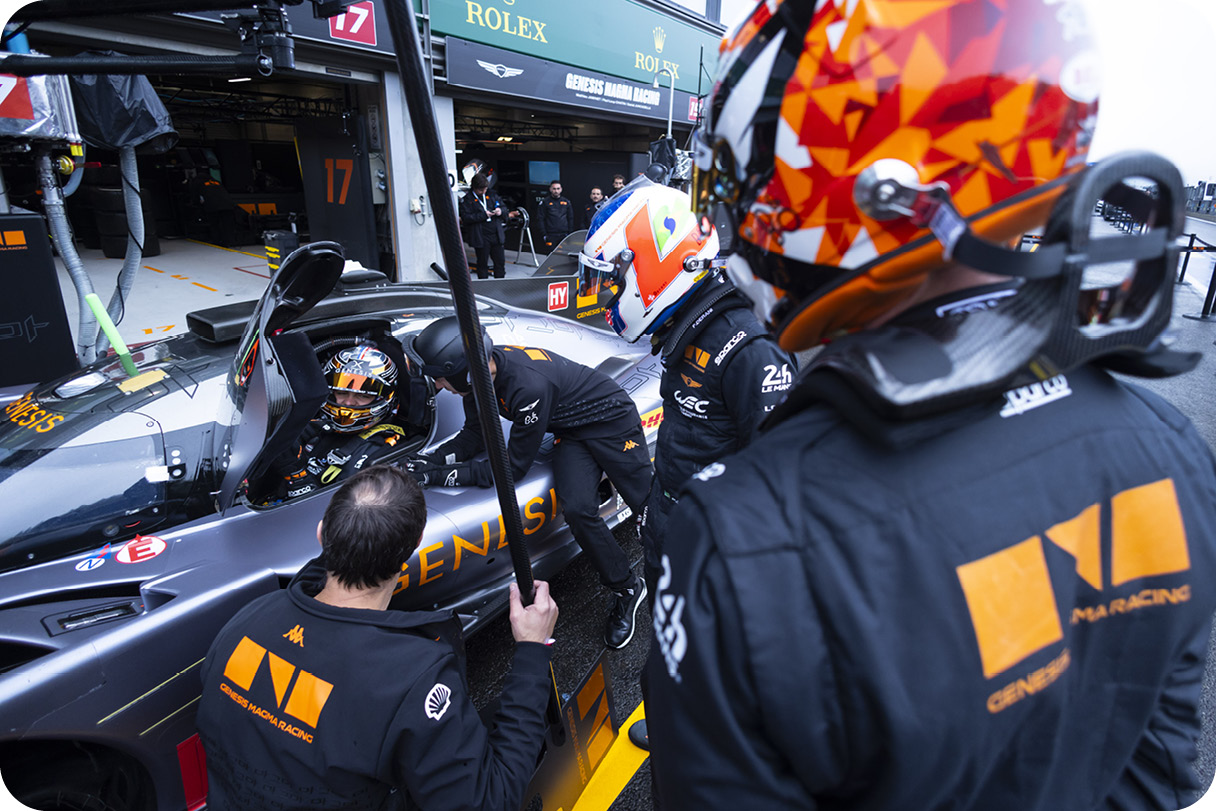
Late in the race, the #17 GMR-001 started leaning on the midfield—and putting the pressure on the cars ahead. Video: FIA WEC (https://www.fiawec.com)
Right after the finish, Derani said that from the moment he climbed into the car, he was fighting a string of issues. The job, he explained, was simply to hang on—keep learning, keep improving what he could, and get the car safely to the flag. He also shared how the final stint played out on the radio: “I asked our race engineer, Mathieu Leroy, for a strategy that would let us hold position and keep the cars behind stacked up. I was managing energy and checking the numbers with him, and in the end, his advice helped me defend against multiple cars.”
Derani ad-ded that he was genuinely proud of the team and thrilled to deliver its first points. It had been a long time coming, he said—but in his mind, this still feels like the beginning.
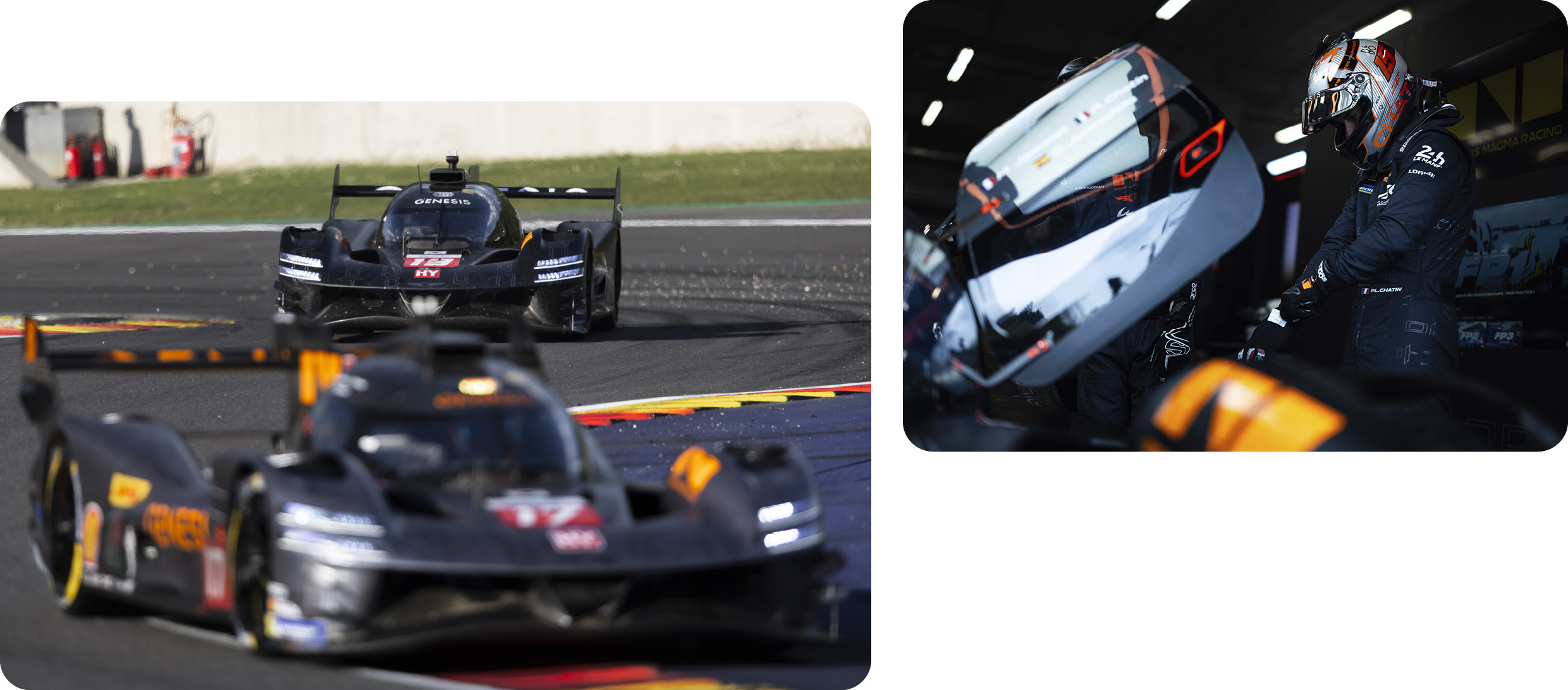
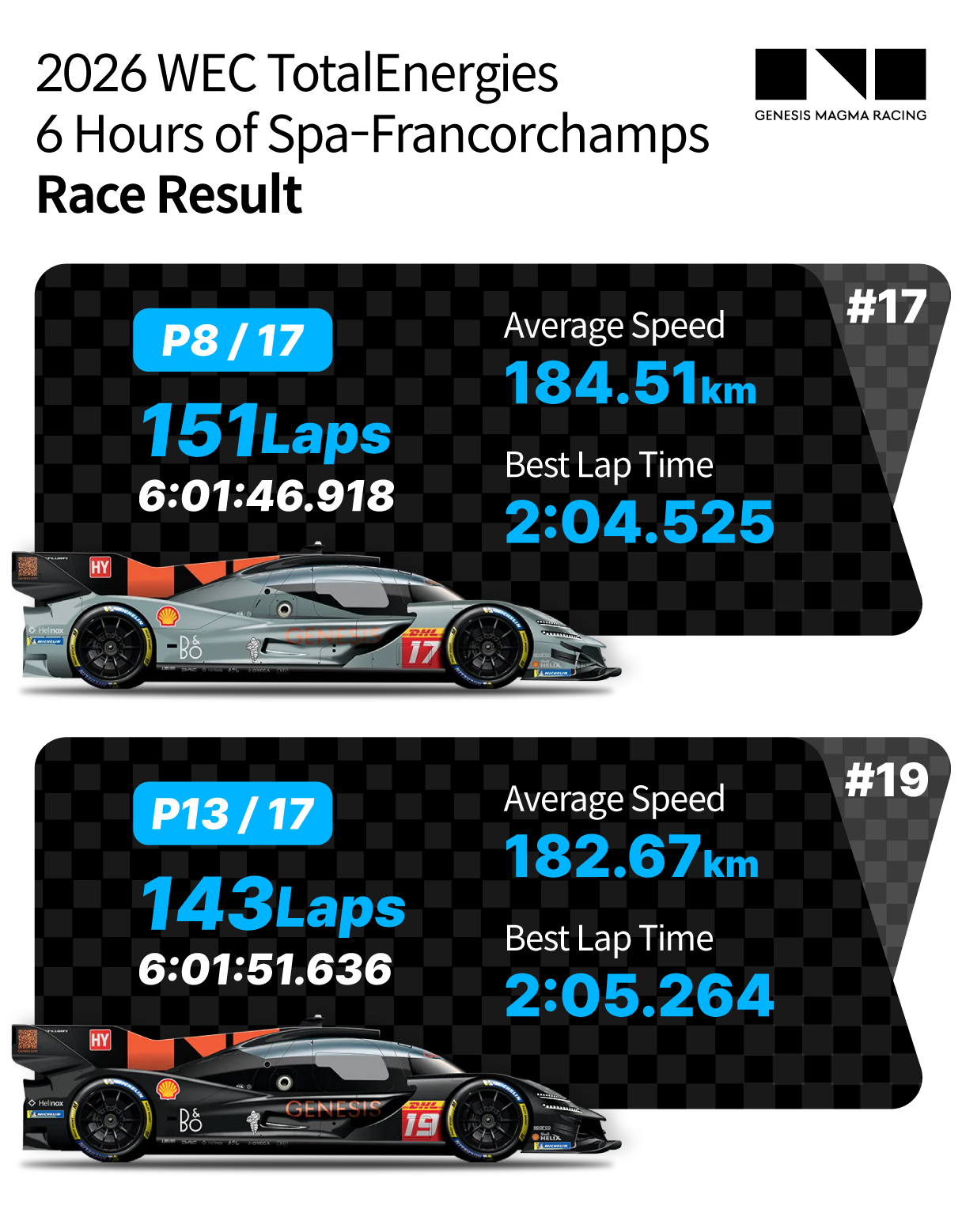
Finishing #19 mattered. The car lost time early with an electrical issue that sent it to the garage, but Genesis got it sorted, got back on track, and brought it home 13th. For a new program, that isn’t just “salvage”—it’s hard mileage, clean data, and another chunk of the learning curve logged under real race pressure.
The pace trend is the bigger headline. At Imola, Genesis was about 0.6 second off the front on race lap time. At Spa, that gap tightened to roughly 0.4 second. With only two races’ worth of real setup reads, that’s meaningful progress in a hurry. And when the race turned into a late sprint, the car’s cornering confidence—stable, repeatable, and quick—was exactly what let the #17 hold its ground and keep the pack from turning the finish into open season.
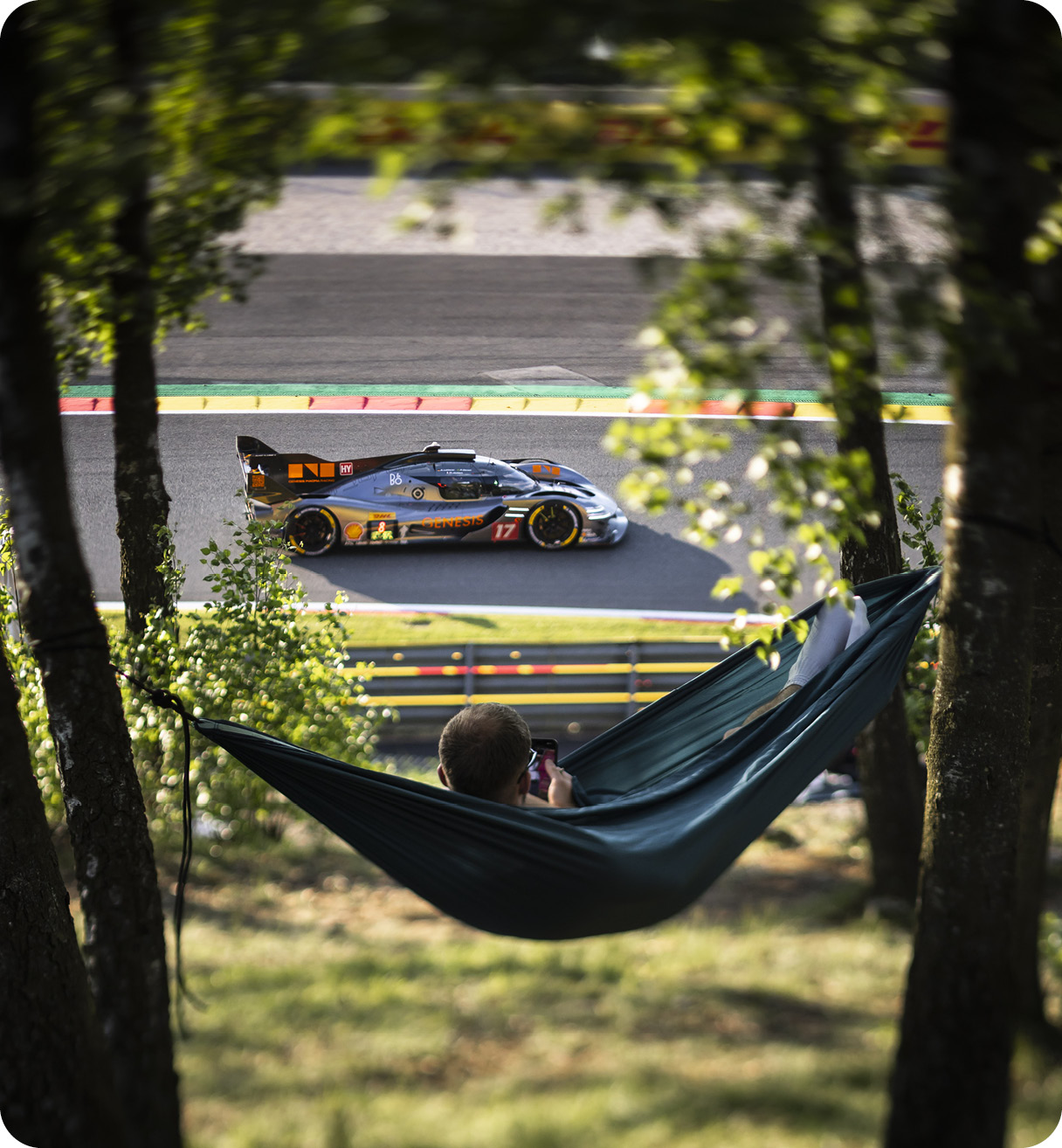
With four Safety Car periods constantly reshuffling the deck, the 6 Hours of Spa ended with a WRT BMW one-two. Starting 10th and 11th, BMW went aggressive early—pitting to grab clean air, avoiding the mess, then cashing that track position as the race settled. For BMW, it was a long-awaited endurance breakthrough: a major win on this stage for the first time since Le Mans in 1999. LMGT3 delivered its own redemption arc. McLaren’s #10—after leading at the opener and retiring—came back at Spa and won from 15th on the grid, the kind of endurance comeback that only works when the car stays intact and the team stops the bleeding at exactly the right moments.
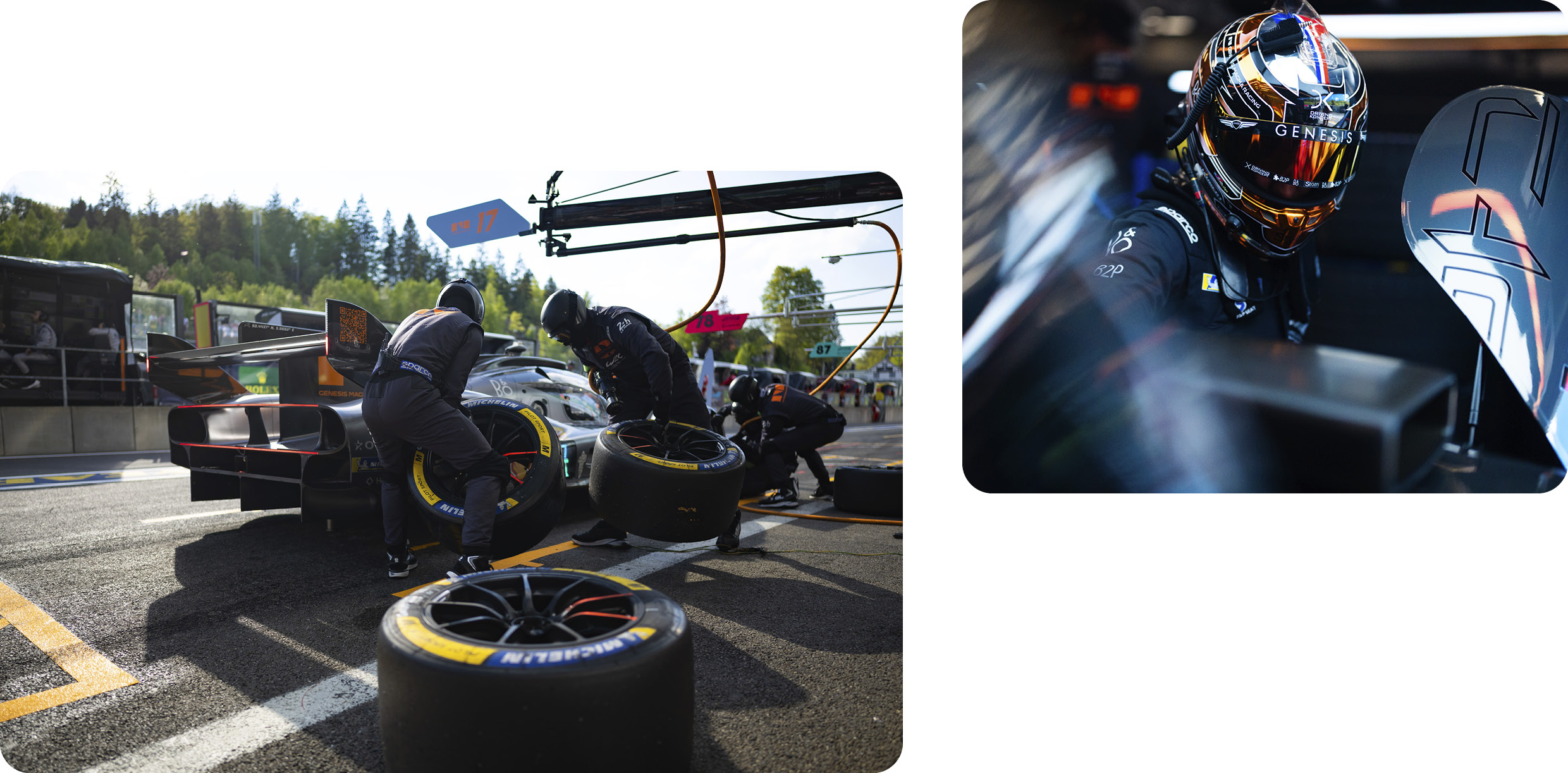
Spa was a reminder of what WEC actually rewards: execution over hours, and the nerve to make the call when the window opens. Genesis did both. The late short-fuel gamble turned into points in race two, and even with a handful of technical headaches along the way, the team kept fixing, learning, and stacking meaningful race data all the way to the checkered flag.
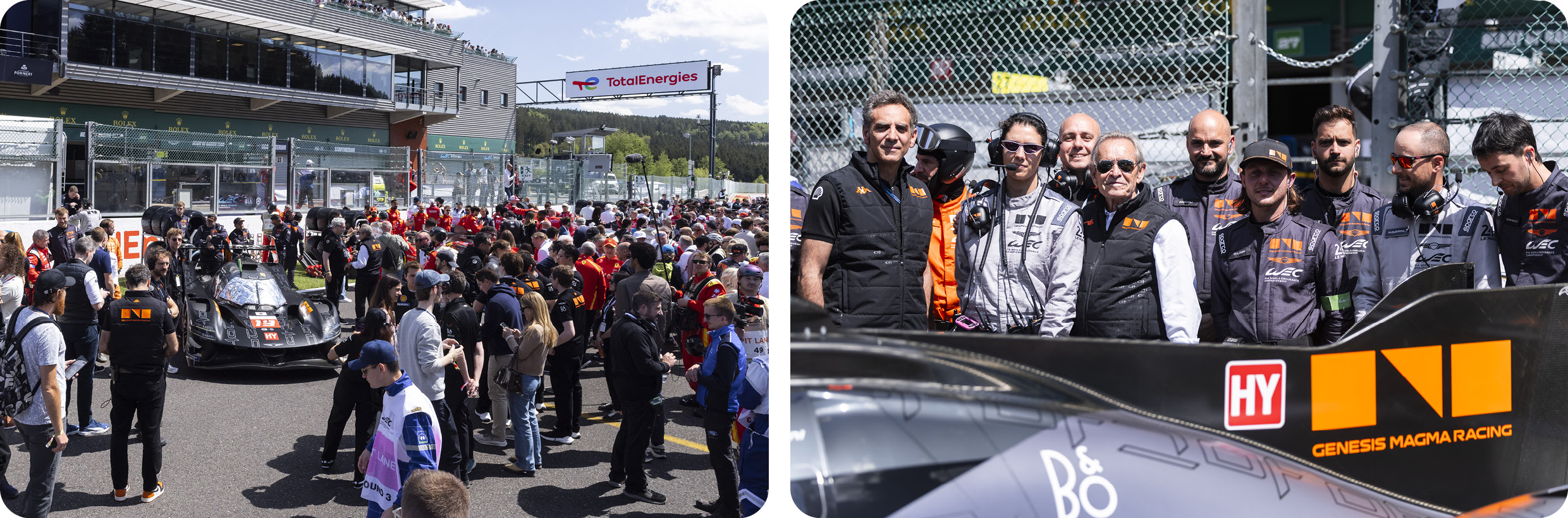
Cyril Abiteboul, Genesis Magma Racing Team Principal said, “In only our second participation in an endurance race, we could not have dreamt of a better place than Spa to score the very first points in the history of Genesis Magma Racing. We are still a very young team, and this result is an extremely emotional moment for all its members, and I hope that will make the entire Hyundai Motor Group proud.”
“As we had some issues with power and with energy consumption, we decided to make an aggressive strategic move towards the end of the race with a very short stop with the #17 GMR-001 Hypercar perfectly executed by the pit crew and Pipo, and it played out very nicely. We need to continue to consolidate our foundation so that we can be here and beyond on a regular basis, but it's great that it's coming now because it also gives us the momentum to tackle as many of the issues we have been facing before the next major milestone in our program in Le Mans.”
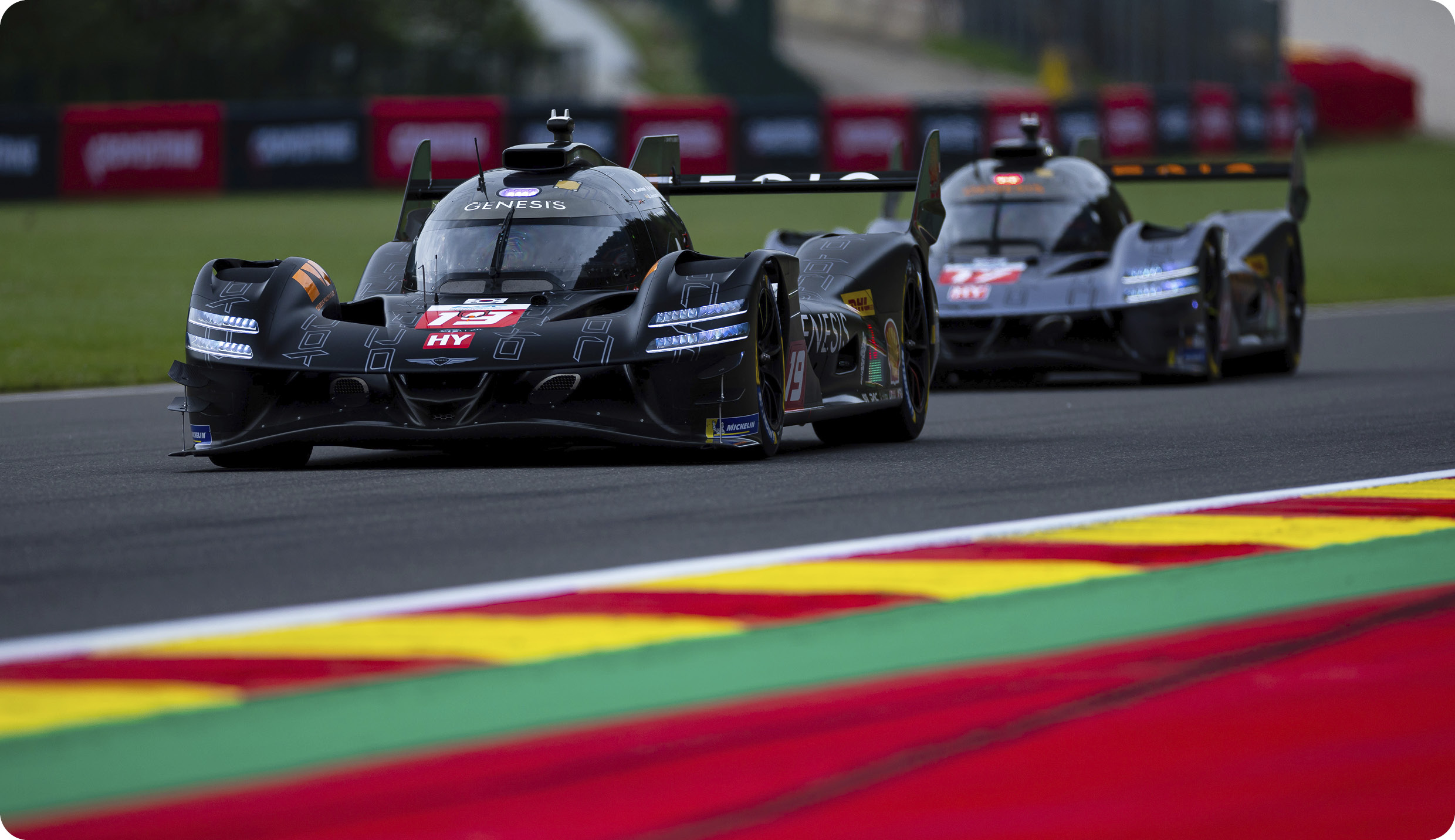
The reaction—inside and outside Korea—hit fast. On WEC’s official YouTube channel and Genesis Magma Racing’s #17 onboard stream, international fans jumped in immediately. One comment called an eighth-place finish in the team’s second race “hard to believe.” A UK fan ad-ded, “Genuinely happy for Genesis—cheering for you in the next race.” Overseas outlet Divebomb framed the result as the kind of early points finish that lightens the load heading into Le Mans—while putting more credibility behind the project.
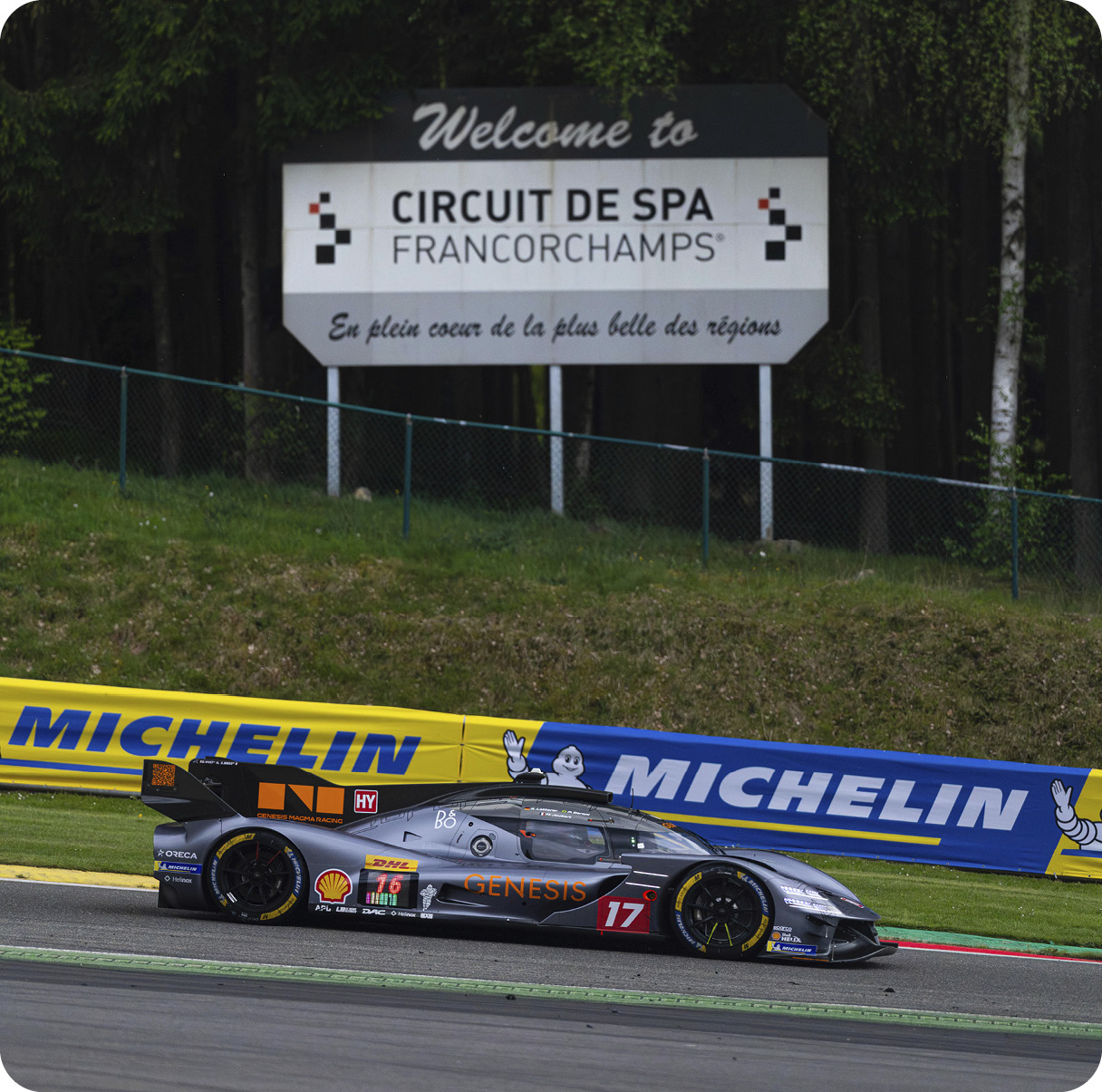
Korean fans matched the energy. One of the most-liked comments on the highlight video captured the disbelief: “Sure, luck played a role—but eighth on your second start is still crazy.” Another did the context-setting for newer viewers: plenty of teams go an entire season without scoring a point, which is exactly why points in race two is genuinely rare.
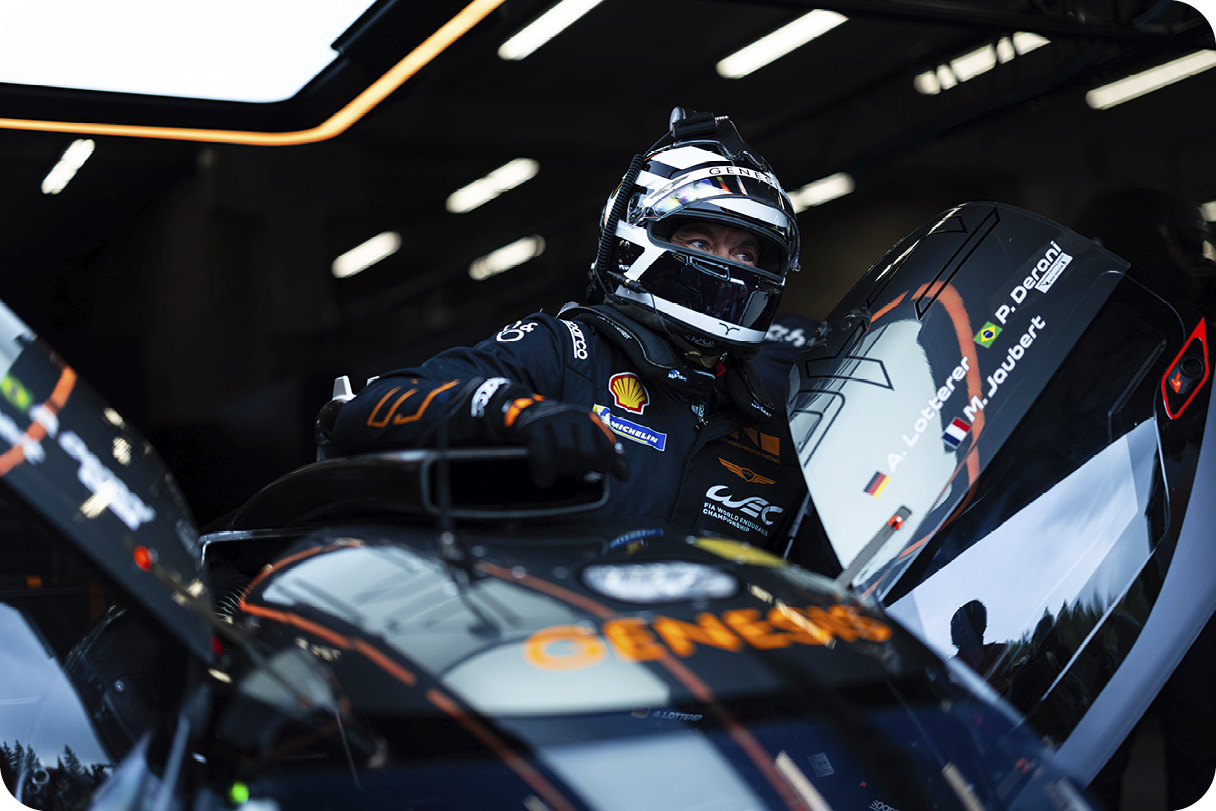
The next-step takes came quickly. “Proud—now I can’t wait for the 24 Hours of Le Mans.” Others noted Genesis still looked a bit down the straights, but argued the trajectory matters more—especially given Hyundai’s track record across series like WRC. One more summed up the stakes: “Now the real one is coming. If Genesis just finishes Le Mans, that’s success. If they score points too, nobody can ignore them anymore.”
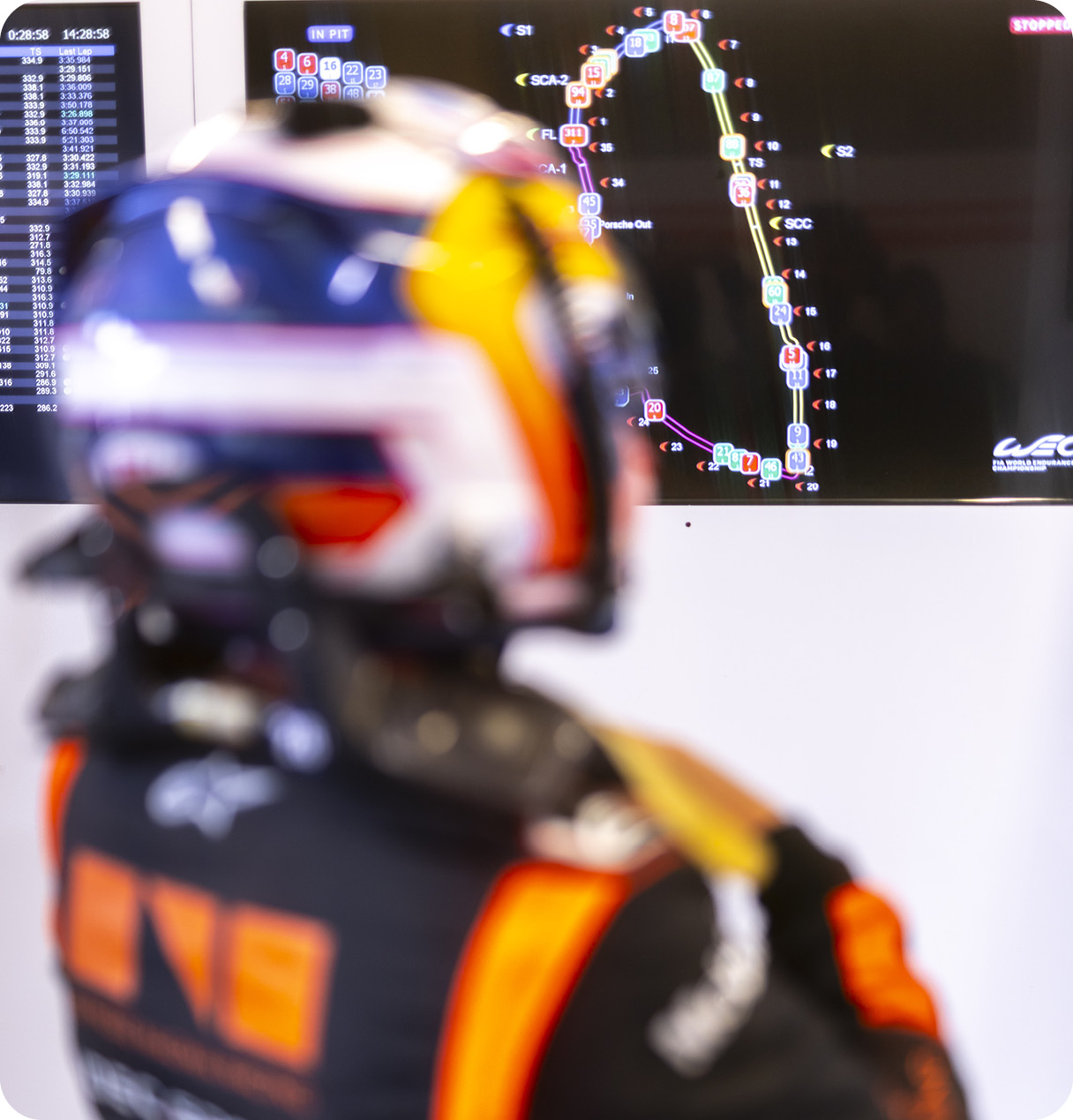
Next up is the centerpiece: the 24 Hours of Le Mans, June 13–14 on the 13-km-plus Circuit de la Sarthe. Genesis Magma Racing showed up in WEC, finished its debut, scored points in race two, and now heads straight for endurance racing’s summit with real momentum—measured in cleaner execution and a shrinking pace gap. At Le Mans, simply lasting 24 hours is a win on its own. But after Spa’s bold call—and the speed curve already moving the right way—it’s hard not to see the learning curve steepening.
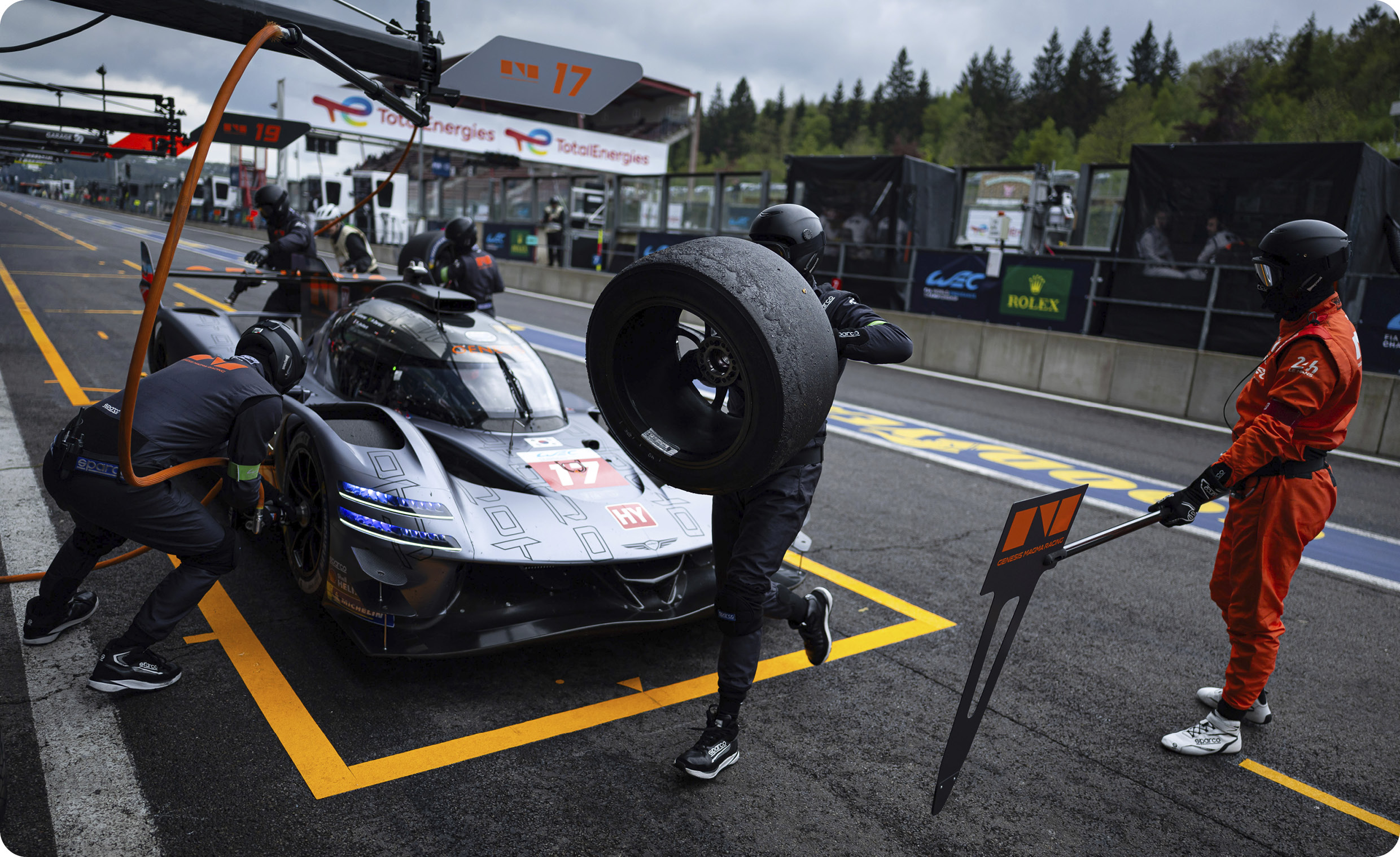
And there’s a bigger ripple effect, too. Genesis is bringing new fans into WEC—expanding the audience back home while putting a Korean brand on the Hypercar points sheet. And at Le Mans, there’s an extra layer behind the results: Genesis’ self-developed V8 race engine will run in the top class on the world’s most famous endurance stage. That alone makes the next chapter worth watching.
Written by: Soo-jin Lee
In 1991, Lee’s passion for cars led him to enthusiastically write letters to the newly launched Korean car magazine Car Vision. This unexpected connection led him to start his career as an automotive journalist. He has served as editor and editorial board member for Car Vision and Car Life, and now works as an automotive critic. While eagerly covering the latest trends like electric vehicles, connected cars, and autonomous driving technology, he is also a car enthusiast who secretly hopes that the smell of gasoline engines will never disappear.