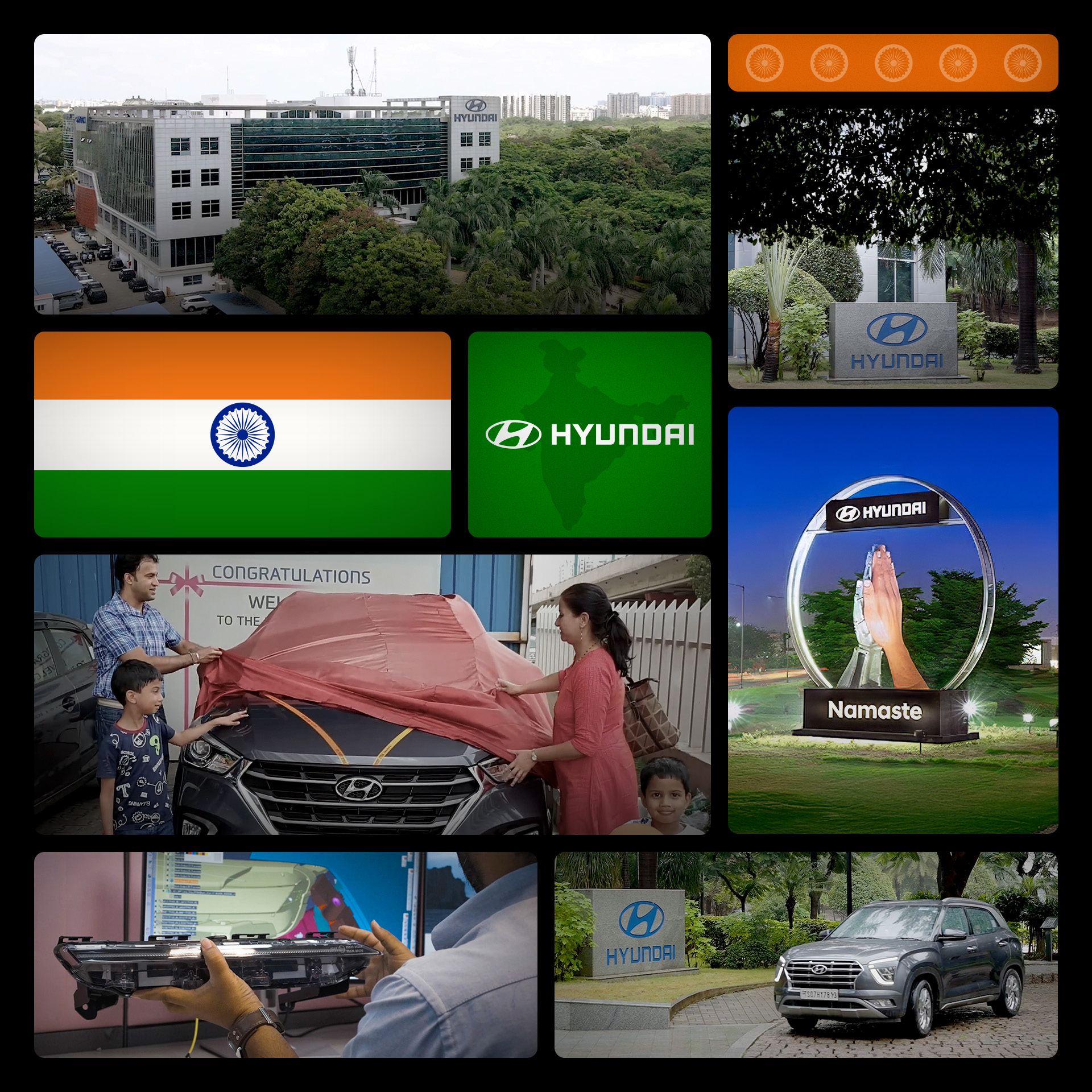

India and Southeast Asia aren’t just “big markets.” They’re fast markets. Tech adoption happens quickly. Customer expectations keep stepping up. And the day-to-day conditions—roads, climate, infrastructure—can be downright harsh. HMIE sits right in the middle of that churn, evolving into a key R&D base for compact vehicles aimed at emerging markets.

HMIE didn’t begin as a lead development hub. At first, it was a support organization—backing the Hyundai Motor Group Namyang R&D Center and helping develop vehicles optimized for local markets. But that support work built real engineering muscle. Over time, HMIE’s role expanded from “assist” to “solve”—becoming a research organization that hunts for the balance point India and ASEAN markets demand: performance and quality without losing price competitiveness.
India’s living environment and driving conditions are simply different, and there are limits to applying the old formulas unchanged. Extreme heat, monsoon climate*, rough roads, high traffic density, and region-by-region usage patterns all stack up as development variables. At the same time, customer expectations keep rising. HMIE has responded by converting local requirements into development targets, overcoming constraints through engineering, and translating new tech into product competitiveness. With independent development capability now in place, HMIE is setting standards as a forward base for compact-car development spanning India and ASEAN—helping define the baseline for vehicles built for emerging markets.
* Tropical Monsoon Climate: A climate in which rainfall concentrates during the rainy season due to monsoon winds.
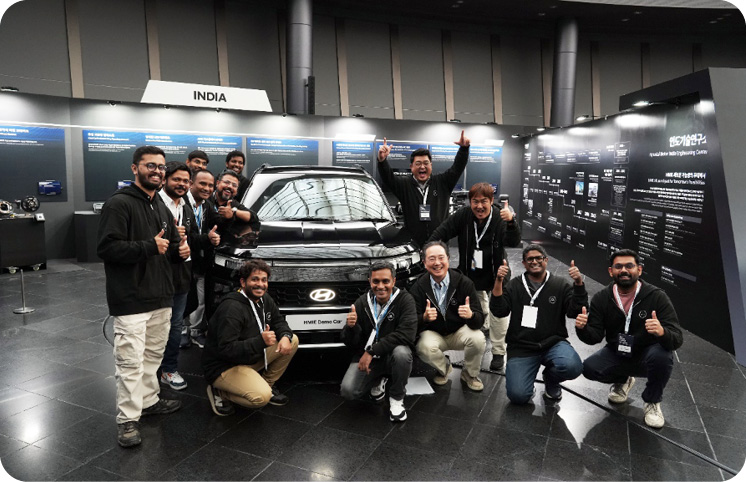

① Supporting Namyang R&D Center and Learning India (2006–2014)
Hyundai Motor Group’s decision to establish an R&D footprint in India wasn’t incidental. After Hyundai Motor entered the market in 1998, India’s economy accelerated under liberalization, and with it came a clear rise in engineering capability and the broader foundation for technology development. Demand grew, customer needs became more segmented, and India’s region-by-region usage conditions expanded the engineering checklist dramatically. A local R&D system—one that could interpret needs accurately and respond without delay—became a necessity.
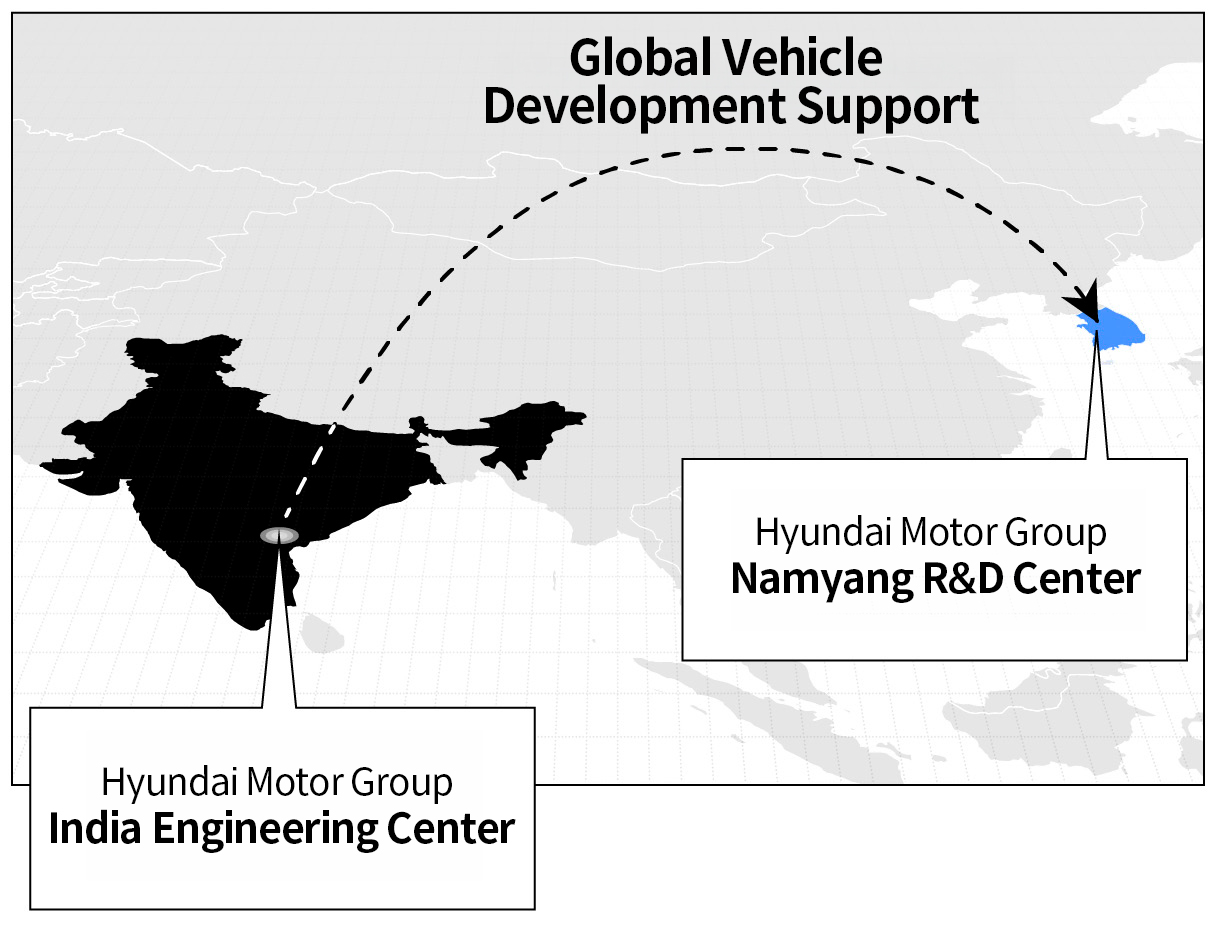
HMIE was first set up in 2006, and in the early days it built teams focused on monitoring regulatory change and supporting the plant—creating the practical groundwork for vehicles tuned to local realities. At the same time, HMIE opened a dedicated office in Hyderabad, then emerging as a software hub, to secure high-caliber talent. The two sites served different purposes, but shared one objective: embed real-time, on-the-ground responsiveness into the development process to match the pace and volatility of the Indian market. HMIE supported the Namyang R&D Center through CAE analysis* and engineering design, narrowing the distance between market requirements and product competitiveness while steadily accumulating data and experience on what Indian customers expect—and what Indian conditions demand.
*CAE(Computer-Aided Engineering) analysis: A simulation-based process used to predict and validate vehicle performance, including structure, stiffness, vibration, thermal behavior, and fluid flow.
After 2007, HMIE’s growth accelerated. As India-specific projects increased, the scope of development support broadened, and the organization expanded in both scale and function. In parallel, HMIE worked to systematize a deeper understanding of the market and respond with greater precision. The outcome was clear: HMIE moved beyond a support role, built a foundation for full-scale localization technology work, and positioned itself for the next stage.

② Taking the Lead in Localization Development (2015~2022)
To move toward genuine independence in technology development, HMIE began reshaping both its organization and its infrastructure. In 2010, it established a Digital Design Team and an Electronics Design Team, widening its development scope. In 2012, the shift became more pronounced. New testing organizations for body, chassis, and powertrain were created—giving HMIE the infrastructure to lead vehicle development directly. For the first time, performance, durability, and reliability could be verified locally, with improvement points derived directly from real validation. Headcount increased significantly as well. To keep pace with a market defined by speed and complexity, HMIE had to scale development capability quickly—and it strengthened the foundations to do exactly that.

In 2015, the demand for India-specific localization jumped—and HMIE’s job expanded right along with it. The focus moved past basic “make it work here” tweaks and into the pieces that shape the daily experience: infotainment calibrated for Indian conditions, the software underneath it, and the platform layers that make it all run. As localization programs intensified for high-volume models like Creta, Verna, and Venue, HMIE shifted from supporting role to a true center of gravity—helping set the direction and driving the execution.
③ Becoming a hub for emerging-market compact cars (2023–2030)
The capabilities HMIE had been stacking for years became the runway for a larger mission—and a sharper, more complete organization. In 2021, Hyundai Motor Group launched the Advanced Design Team. In 2023, HMIE broadened its toolset with new groups across the development chain, including the India Project Management Team, Cost Team, Engineering Solution Team, and Chassis/Body Test Team. From 2024 onward, India’s demand pivoted quickly toward high-tech vehicles, and HMIE answered by strengthening its development depth in connectivity and driver-assistance technologies. The upshot is straightforward: HMIE has moved beyond reading local conditions to engineering for them—designing and validating solutions that fit India, and scaling that playbook for emerging markets more broadly.
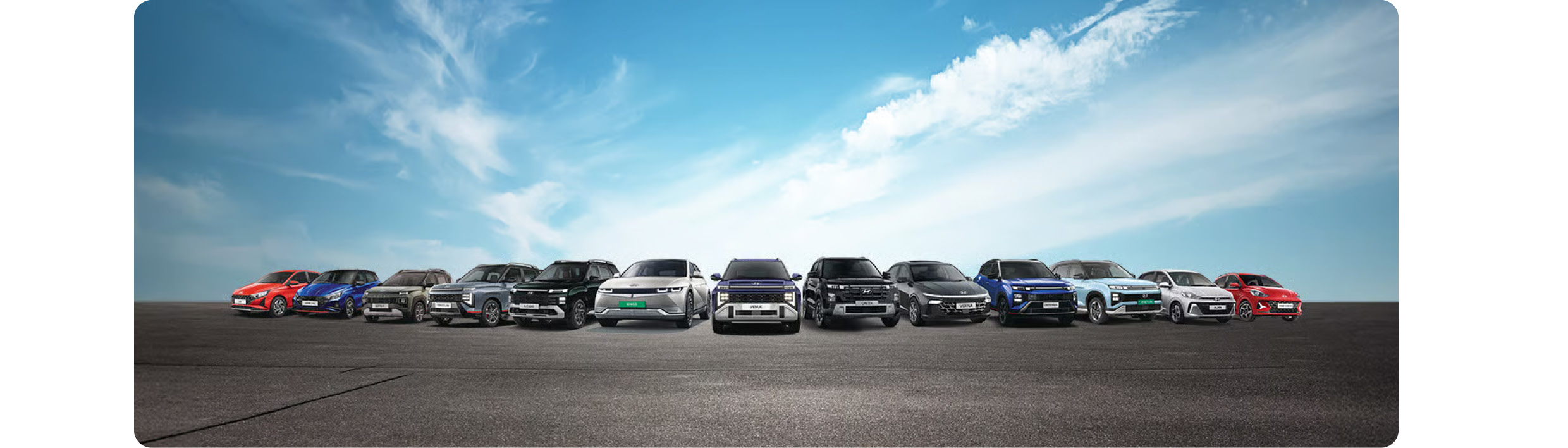
HMIE’s footprint shows up most clearly in the results—especially the standout performance of India-focused strategic models. Those localization-driven vehicles, built in step with shifts in the Indian market, are also a big reason HMIE could evolve into a global hub for compact-car development.
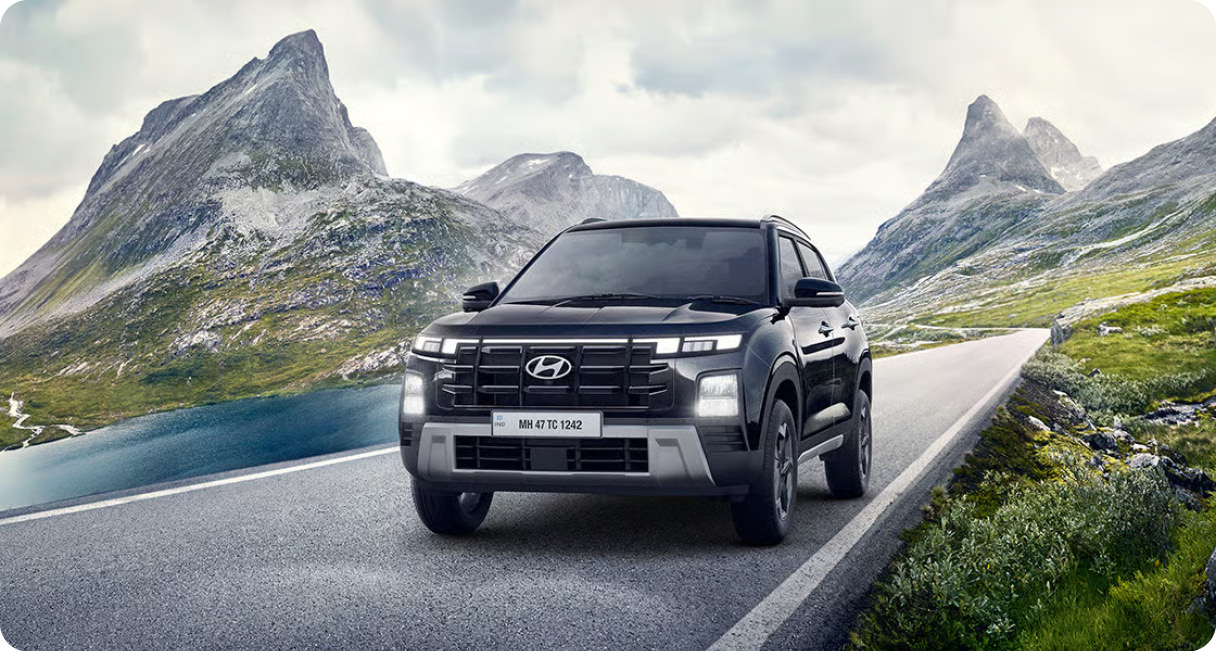
① Hyundai Creta: The model that put HMIE’s localization on the map
HMIE’s first true India-market calling card was the Hyundai Creta, launched in 2015. Hyundai Motor aimed Creta at a specific job: serve as a B-segment flagship SUV that could elevate the brand’s presence in India. To get there, the team poured effort into building product competitiveness tuned to local needs.

What mattered most was how far the project pushed localization. HMIE leaned harder on local testing and direct customer feedback to deliver the “ideal family SUV” image in a way that actually fits Indian roads and Indian usage. The result speaks for itself: Creta has held the best-selling spot in India’s B-segment SUV class since launch—and it’s become a rolling proof point of what HMIE can deliver.

② Big value, tight footprint: Hyundai Venue, Kia Sonet, and Kia Syros
India offers tax benefits for vehicles under 4 meters in length—similar in concept to Korea’s incentives for mini cars. To compete in that sub-4-meter small-SUV space, HMIE teamed with the Namyang R&D Center to develop the Hyundai Venue, Kia Sonet, and Kia Syros, pushing localization that fits both the rules and the realities of the local driving environment.

The mission behind these models is clear: squeeze maximum space, tech, and style into a hard packaging box. And the hard part is exactly what it sounds like. Real cabin room takes careful architecture. Adding features in a small footprint forces you to solve cost and packaging at the same time. Hyundai Motor Group’s answer was to hold the line on price-to-value while still offering advanced content such as connected-car technology.
Kia Syros is a clean example. To maximize day-to-day convenience, it delivers class-leading second-row legroom, second-row ventilated seats, and a second row that slides and reclines. HMIE’s role—reading Indian customer needs precisely and translating them into tangible product value—helps underpin Syros’ competitiveness. Taken together, that same approach helped make Venue, Sonet, and Syros core players in the sub-4-meter small-SUV segment and played a major role in lifting Hyundai Motor and Kia’s market share in India.

③ Hyundai Exter: A micro SUV dialed in for younger buyers
As HMIE’s localization work matured, the target got sharper—less “one-size-fits-all,” more clearly defined customer lanes. The Hyundai Exter is one of the cleanest examples. Developed as a micro SUV for younger Indian buyers, Exter landed by nailing the mix that matters in this class: rational pricing, crisp styling, and real SUV attitude in a compact footprint. And it’s not just a look—its locally aligned safety and digital features, along with strong fuel efficiency, reflect how far HMIE’s capabilities have expanded.
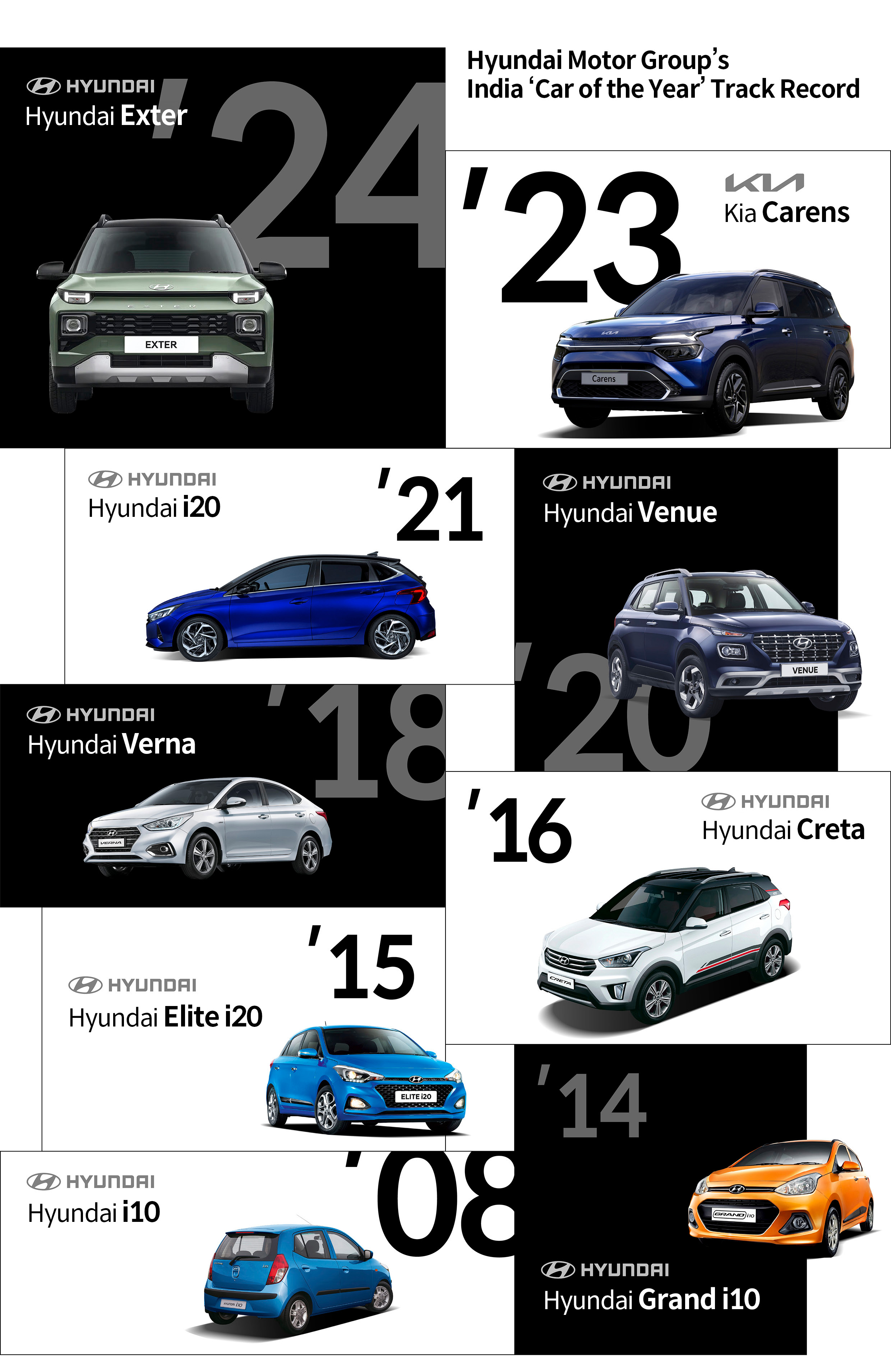
In other words, the playbook that started with Creta didn’t just continue—it scaled. And the impact didn’t stop at expanding the lineup or boosting sales. At Indian Car of the Year, one of the country’s most respected awards, Hyundai Motor has won eight times and Kia once. Those results are widely regarded as indicators that validate the value and importance of Hyundai Motor Group vehicles in the Indian market.

Across India and other emerging markets, the pull is increasingly toward high-tech. As expectations rise for digital features and connectivity, even small, value-focused vehicles are expected to deliver a more premium, seamless experience behind the wheel. To keep pace, HMIE has been strengthening its system—since 2023—to regularly track market shifts and develop the high-tech technologies emerging markets are asking for.
HMIE’s R&D goals are clear. First, it continues monitoring trends and customer needs while expanding collaboration with global institutions and academia to strengthen new-technology development capability. At the same time, it takes on the role of localizing and optimizing new-technology architecture for emerging markets worldwide.

Electrification is moving forward, too—but with eyes wide open. India’s EV market is growing, yet real constraints remain: limited charging infrastructure and high upfront purchase costs are still major hurdles. HMIE is responding by closely analyzing the market and proposing EV lineups that match real-world conditions. Just as important, it’s accounting for how quickly the market can swing. By directly testing variables such as charging environments, road quality, and battery performance, HMIE is surfacing likely issues early—and preparing the technology and infrastructure needed to address them.
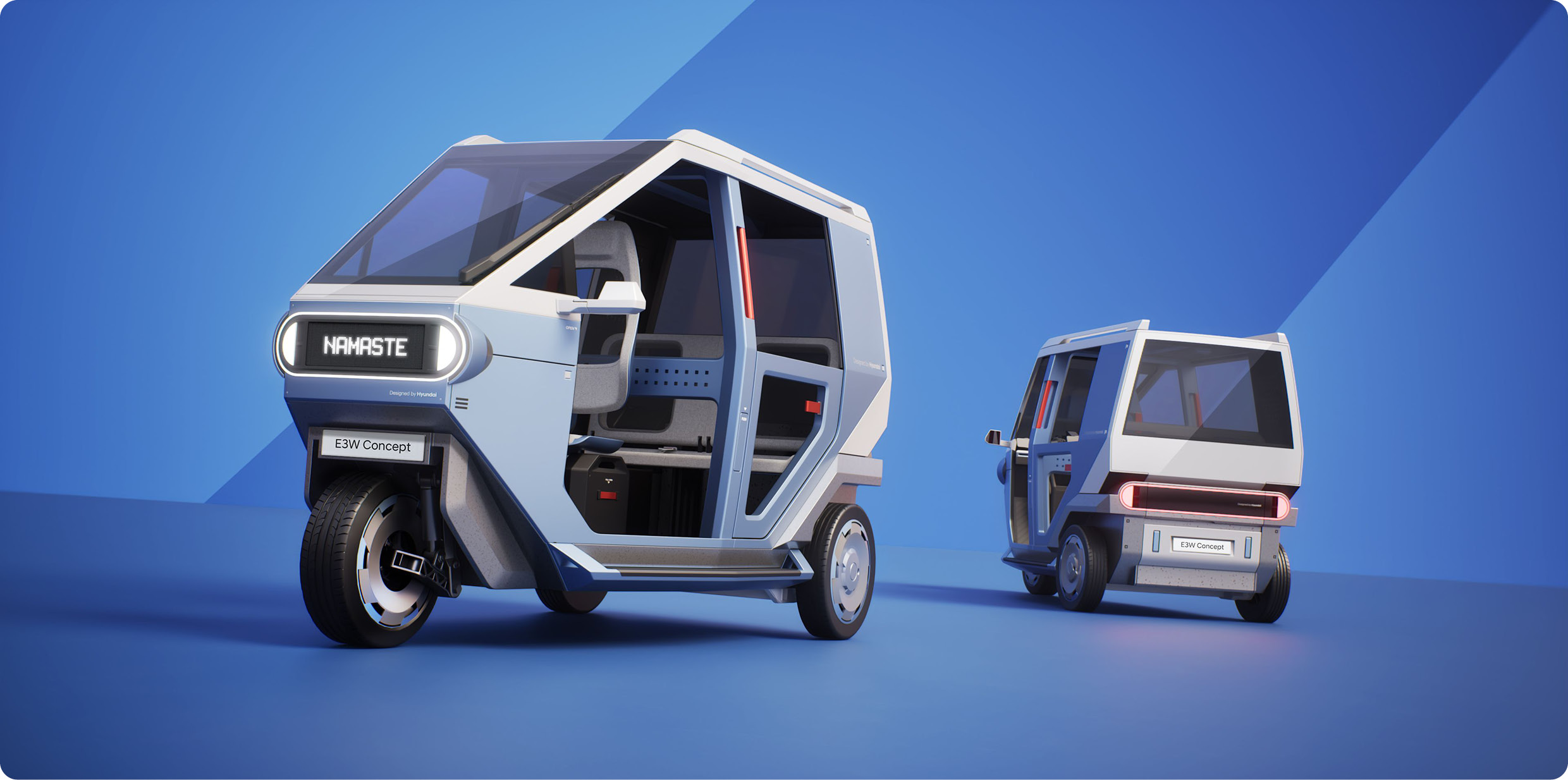
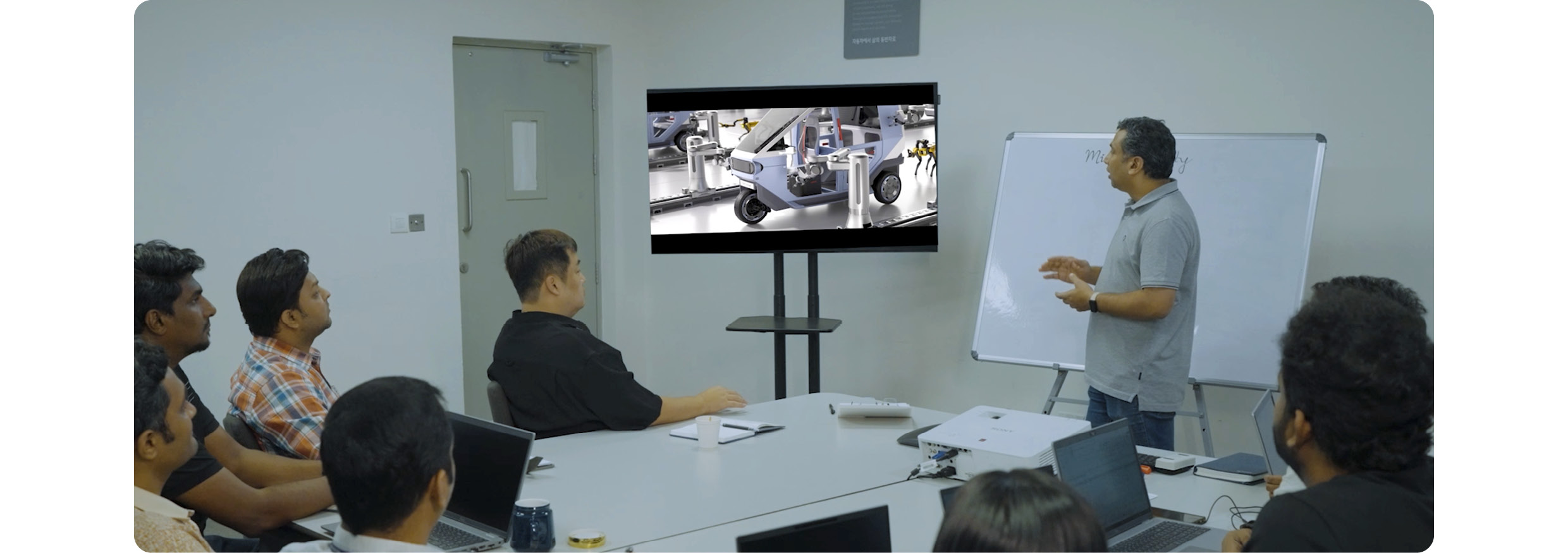
And the ambition doesn’t stop at passenger cars. In India, three-wheelers still play a central role in last-mile mobility and continue to support economic activity—and that segment is electrifying quickly. Under the vision of Progress for Humanity, Hyundai Motor partnered with TVS Motor Company in India to unveil an all-new electric three-wheeler concept model, E3W.

E3W’s concept is simple and local by design. It’s compact and highly maneuverable, built to slip through narrow alleyways with ease. And it adds practical touches aimed at real use: large tires and storage space—details that drew attention the moment it debuted. What E3W signals is just as clear: understand India precisely, raise efficiency and inclusivity, and keep the door open to scaling India-proven solutions to global markets. It’s also a snapshot of HMIE’s evolution—moving from compact-car development toward designing broader mobility solutions for emerging markets.

That trajectory is now getting real hardware behind it. By 2028, Hyundai Motor Group plans to establish a Holistic R&D Hub for Emerging Markets in India—complete with a vehicle test track and a pilot center. The advantage is straightforward: test more where these cars actually have to live, and you shorten the loop while sharpening the result—faster development and higher finished quality at the same time. As HMIE grows into a more integrated end-to-end development operation, it’s setting itself up to help define the next baseline for emerging markets.